Aluminum fencing is an open, decorative system that holds up in San Diego coastal air better than iron or steel, and it is a common pick for pool enclosures, sloped lots, and front yards where you want a view through the line. It does not give privacy. Fence Pros San Diego is a referral service. We do not publish a 2026 per-foot rate, a lifespan guarantee, or a warranty. Compare bids on grade, powder coat, footings, and gate hardware.
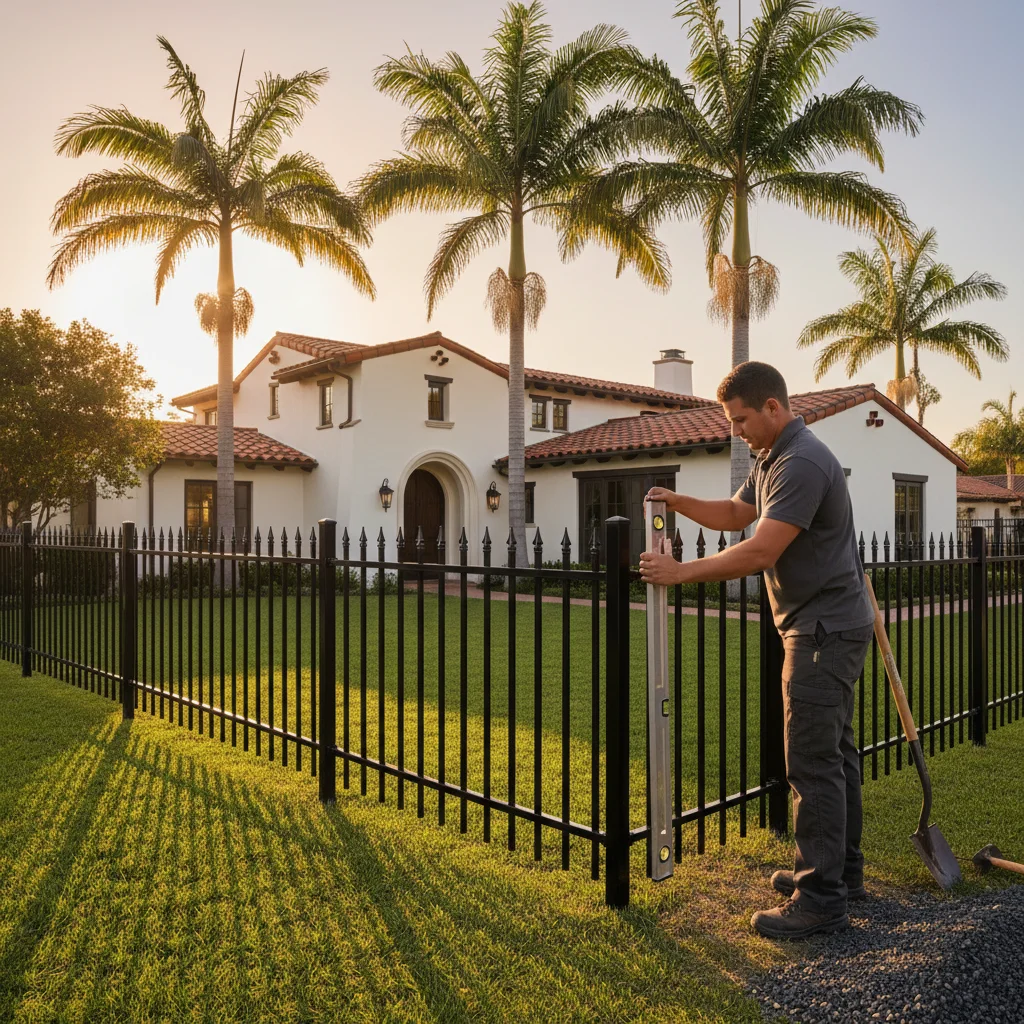
Why aluminum holds up in coastal San Diego conditions
Living anywhere in San Diego County, from Carlsbad to Chula Vista, means dealing with salty, moist air. That marine layer is hard on ferrous metal.
Unlike iron or steel, aluminum does not rust in the same way. When exposed to air, aluminum forms a thin oxide layer that slows further corrosion. Steel rusts and flakes. Aluminum does not throw orange streaks the way iron hardware does.
That is the coastal argument. Salt mist accelerates rust on iron and steel screws, gates, and panels. Aluminum still needs a real finish and the right fasteners. Coastal quotes should name powder coat quality and stainless or equivalent hardware, not “exterior metal.”
Modern aluminum panels are usually powder-coated. Powder coating is a dry powder applied electrostatically and cured under heat. It is tougher than a brush-on paint film. It still chips if it is abused, and UV can fade a cheap coat. Ask the contractor for the product line, not a color chip only.
Aluminum vs wrought iron: look, install, and upkeep
Many people want the look of a wrought iron fence. Aluminum is the usual way to get that profile without custom ferrous fabrication.
Look and feel
From the curb, a high-quality aluminum fence can read like wrought iron: clean lines, spear or flat tops, an open, airy face. True wrought iron is heavier and has a hand-worked texture a metal purist may prefer. Factory aluminum comes in a wide set of profiles that copy the traditional look.
Cost and labor (without a fake number)
Genuine wrought iron is custom-fabricated and welded, and it is heavy to move and set. Aluminum is lighter, so layout and panel hanging are usually faster. That is why aluminum often bids below true iron. We are not printing a San Diego per-foot table. Get two written quotes that name the alloy line, post size, and gate hardware.
Lifespan and maintenance
Wrought iron in this climate needs rust watch: sand, prime, and repaint as the coating fails. Aluminum skips that rust cycle if the powder coat stays intact. It is not zero work. Hose off dust and salt. Check gate latches and hinges. A chipped rail still needs touch-up. Do not treat “maintenance-free” as a warranty.
Where aluminum makes sense (and where it doesn’t)
Strong fits
-
Pool fencing: Open aluminum is a common isolation enclosure material because you can see the water. If the fence is meant to count as a California Swimming Pool Safety Act enclosure, it has to match Health and Safety Code 115923 (60-inch minimum height, 2-inch maximum bottom clearance, no 4-inch-sphere gaps, gates that open away from the pool, self-close, latch no lower than 60 inches, no climbable outside face for a child under five). New or remodeled private single-family pools that take a building permit also need two qualifying features under 115922. Aluminum does not “automatically meet the Act.” Geometry and hardware do. See our California pool fence code guide.
-
Front yards and property lines: For a line that marks the lot without building a visual wall, aluminum lets landscaping and light through. Front-yard height is a zoning question. In the City of San Diego, solid fences on the front or street-side property line are capped at 3 feet, while many open fences can be taller. Confirm with the city before you order panels. Our fence height and permit guides cover the split.
-
Sloped or hilly terrain: Many San Diego lots drop. Aluminum panels are often rackable, so they follow grade instead of stepping in big offsets that leave triangular gaps. Ask the bid whether panels rack or step, and how the bottom gap is kept tight on a pool job.
Weak fits
Aluminum is open on purpose. If the job is blocking a neighbor’s view or a busy street, you want a solid privacy system. Compare wood versus vinyl instead of forcing pickets to do a wall’s job.
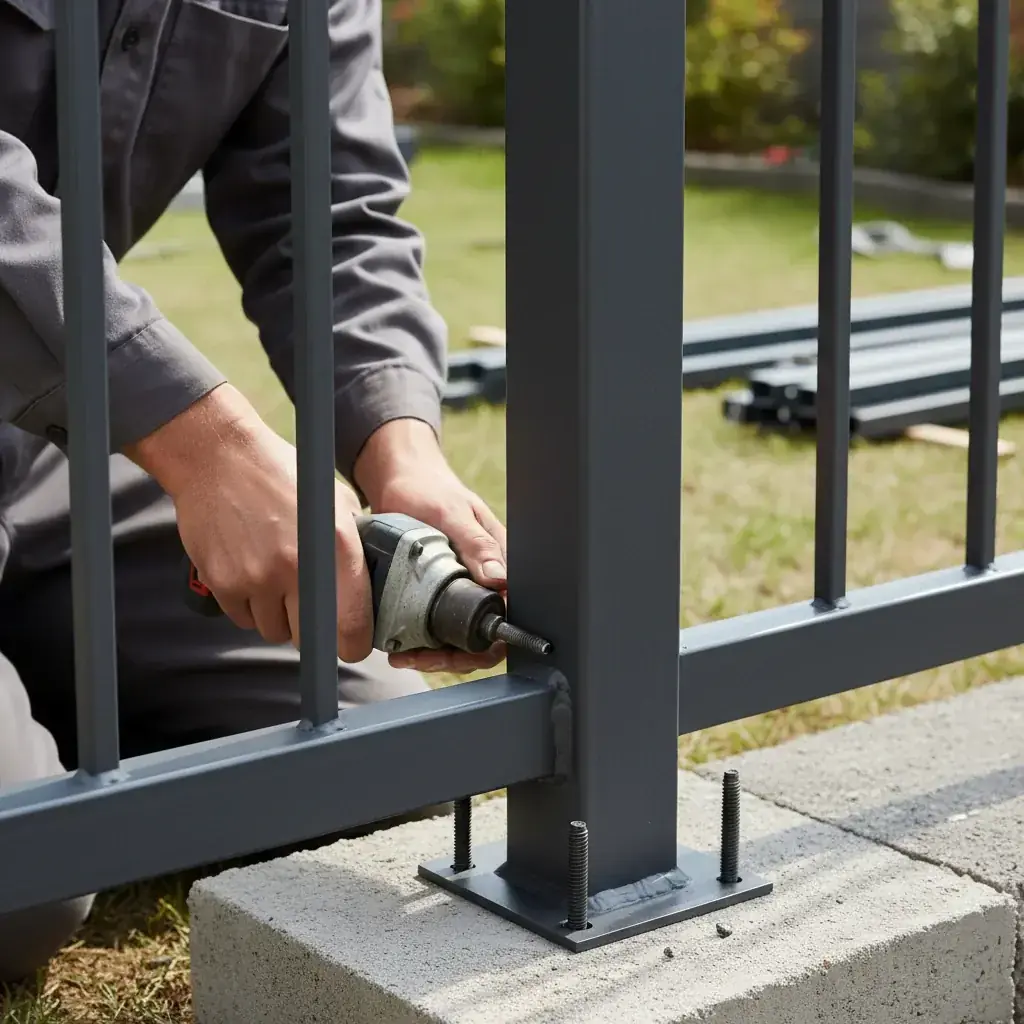
Style options: flat-top, spear-top, puppy-picket, and colors
Panels and posts come in residential and heavier commercial grades. Grade, wall thickness, and post size belong on the quote.
Fence top styles
- Flat-top: Smooth top rail. Contemporary.
- Spear-top: Pickets through the top rail with a finial. Traditional, and a visual climbing deterrent.
- Alternating pickets: Mix of spear and flat for a busier profile.
Special features
- Puppy-pickets: Extra pickets in the bottom third so a small dog cannot squeeze through. Confirm the finished gap, especially next to a pool where 115923 uses a 4-inch sphere test.
- Rings and scrollwork: Decorative rings between the top rails. More welds and more cost. Name them as adders, not as “included style.”
Powder-coat colors
Satin black is the usual San Diego color. Other factory coats include bronze, white, charcoal, green, and beige. Match trim or gate hardware only if the same coat family is actually in stock.
What to compare on an aluminum quote
We will not invent an installed per-foot range. A useful bid names:
- Height and grade (residential vs heavier wall and post)
- Style (flat, spear, puppy-picket, rings)
- Footings (depth and diameter, especially on slope and sand)
- Gates as their own lines (walk vs drive, latch spec, closer)
- Tear-out of the old fence
- Pool geometry if the line is an enclosure (latch height, swing direction, bottom gap)
Site conditions move labor more than color: rock, slope, tight side yards, and demo of old concrete-set posts. A lump sum with no grade is not comparable to a named product line.
Frequently asked questions
How much does an aluminum fence cost per linear foot in San Diego?
There is no single published rate we can stand behind. Installed aluminum is quoted from height, grade, style, gates, footings, access, and whether the line has to meet 115923. Ask for those items in writing.
Is aluminum fencing good for coastal San Diego homes?
It is a strong coastal metal because it does not rust like iron or steel. Salt still attacks cheap fasteners and worn powder coat. Spec corrosion-resistant hardware and a named coat.
How does aluminum compare to vinyl fence in San Diego?
They solve different jobs. Aluminum is open and decorative. Vinyl is usually a solid privacy wall. Aluminum racks on slope more readily than many vinyl panel systems. If you need privacy, vinyl or wood wins. If you want an open iron look with less rust work, aluminum wins.
Does aluminum fencing need a permit in San Diego?
Building-permit thresholds differ by jurisdiction. In the City of San Diego, Table 142-03A in the Municipal Code says a fence under 7 feet does not need a permit from that fence division; 7 feet and up needs a building permit. Unincorporated County rules in PDS 070 treat fences over 6 feet differently. Front-yard height, sight triangles, coastal overlay, and pool enclosures are separate tests. Confirm with the desk that will inspect. See San Diego fence permits.
How long does an aluminum fence last?
We do not publish a year band as a guarantee. Life tracks powder-coat quality, hardware, and whether posts stay plumb. Plan on washing salt and checking gates. Painting cycles belong to iron, not to intact aluminum coat.
Can aluminum fencing be installed on a sloped yard?
Yes, when panels are rackable and the installer follows grade. Ask whether the bid is racked or stepped, and how the bottom gap is handled if the fence is a pool enclosure.
When to call us
Setting posts plumb, racking panels on a hill, and hanging a self-closing pool gate are easy to get wrong. Fence Pros San Diego matches you with an independent fence contractor. You contract and pay that contractor directly. We are not the licensee.
Call (858) 400-4906 to get matched with a licensed fence pro.