The lowest-cost fence that still stands in San Diego is usually galvanized chain link. The lowest-cost fence that also blocks the neighbor’s kitchen window is usually pressure-treated pine. Cedar, vinyl, ornamental aluminum, and glass are different products. They are not “the affordable option” on a first invoice.
Fence Pros San Diego does not publish per-foot market rates. A 2026 number on a blog is not your lot. What you can decide before anyone measures is material class, height, gate count, and whether you will stain wood. Then you compare written bids on that same scope. Call (858) 400-4906 when you want a match with an independent contractor.
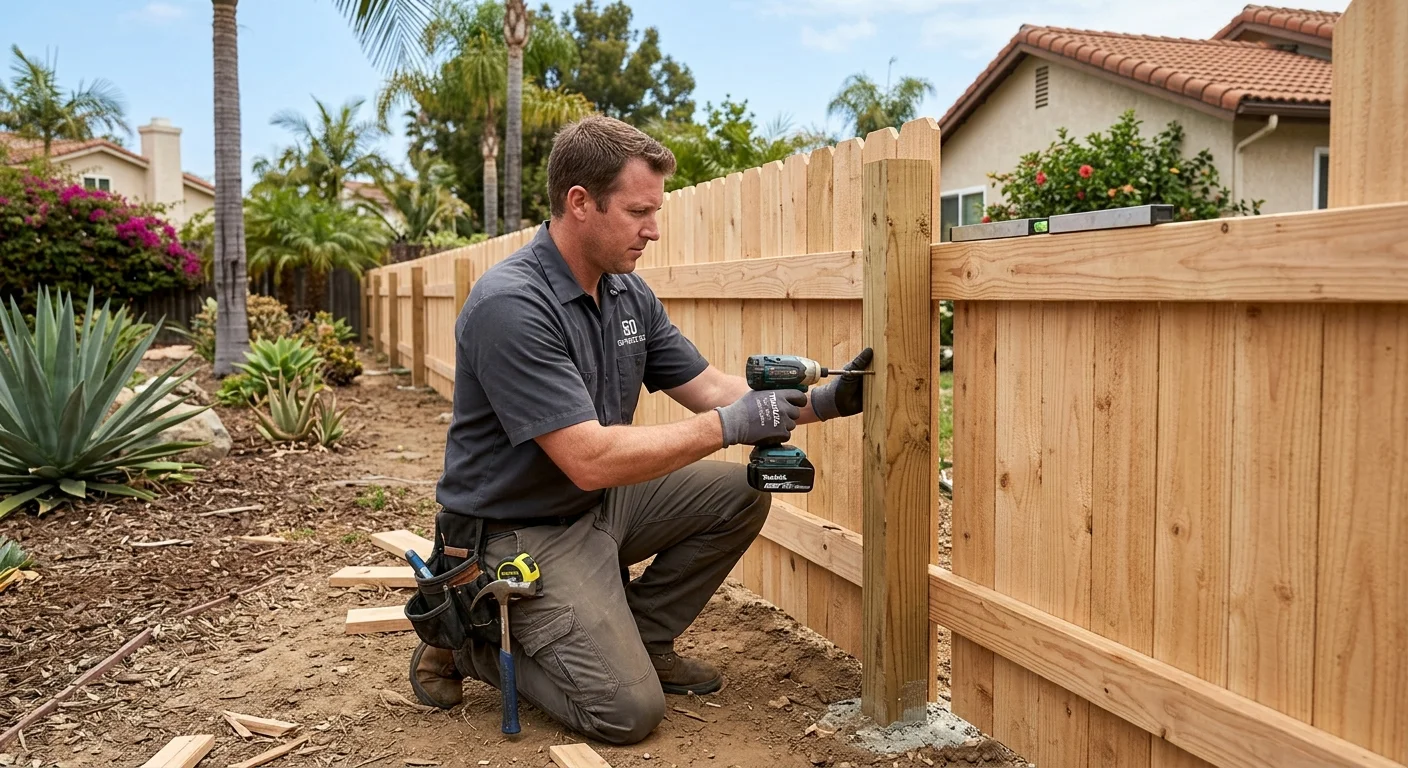
What are the most affordable options for residential fencing?
Three products sit at the bottom of a typical San Diego bid stack:
- Galvanized chain link on metal posts. Fastest install, open view, decades of mesh if the coating holds. Vinyl-coated black or green costs more than mill galvanized and hides in landscaping better.
- Pressure-treated pine picket or privacy. Real wood look and real privacy. You own a stain calendar.
- Welded wire on wood posts. Farm-and-dog fencing. Cheap enclosure, almost no privacy, not an HOA street elevation.
Over ten years, the cheapest fence is often the one you do not restain and do not rebuild. Chain link wins that math for most yards that do not need a solid screen. Pine can still be the right cheap privacy if you will actually coat it.
Pool lots are not a free choice. A budget mesh or picket still has to meet the enclosure rules in our California pool fence code article. Cheap and non-compliant is not affordable.
Chain link when function is the job
Chain link is cheap because the mesh is a manufactured roll and the labor is posts, stretch, and ties. A solid privacy fence is framing plus every board.
Galvanized steel handles Santa Ana wind better than a solid wall because air goes through it. Coastal air still attacks cut ends, fittings, and cheap hardware. A vinyl coat is the usual upgrade on chain link near the water, not a second fence.
Privacy slats thread into the mesh when you want some screen without paying for cedar. They are not 100 percent opaque, and wind loads them. Use them as a budget screen, not as a substitute for a privacy spec.
Chain link is the usual pick for dogs, side yards, and lots you need to enclose without blocking light. If you are torn between mesh and boards, read chain link vs wood fence in San Diego.
Pressure-treated pine when you need a wood screen
Pine is cheaper than cedar or redwood because it is a plantation species. Untreated pine in this climate is a short experiment. The pressure treatment is the product: it is what resists rot and termites in the ground-contact and above-grade pieces the installer actually uses. Confirm the rating on the quote (ground-contact vs above-grade). A fence built from the wrong stamp fails at the posts first.
Pine still needs UV protection. If you skip stain or seal, it grays, checks, and cups. That maintenance is part of the price even if it is not on the install invoice. If you will not coat it, chain link or vinyl is the more honest budget.
Style is simple on purpose. Dog-ear and board-on-board in a standard 6-foot height are what keep a pine bid in the affordable column. Horizontal slat, custom caps, and extra gates are how a “cheap wood fence” stops being cheap.
Design choices that lower the install bid
Labor, not the mesh roll, is where homeowners accidentally spend.
- Straight, one-height runs. Every corner, step, and racked panel is extra layout.
- Standard 6-foot rear-yard height. Taller means more material, heavier posts, and sometimes a permit.
- Fewer gates. Each gate is a framed opening with hardware.
- Clear access. If the crew cannot walk the line, someone is paying to clear ice plant, a junk pile, or a slope. Ask who demolishes what.
- Stock panels. Custom radii and mixed heights are not budget work.
Decorative caps, lattice tops, and custom stain are fine. They are not how you win a low bid.
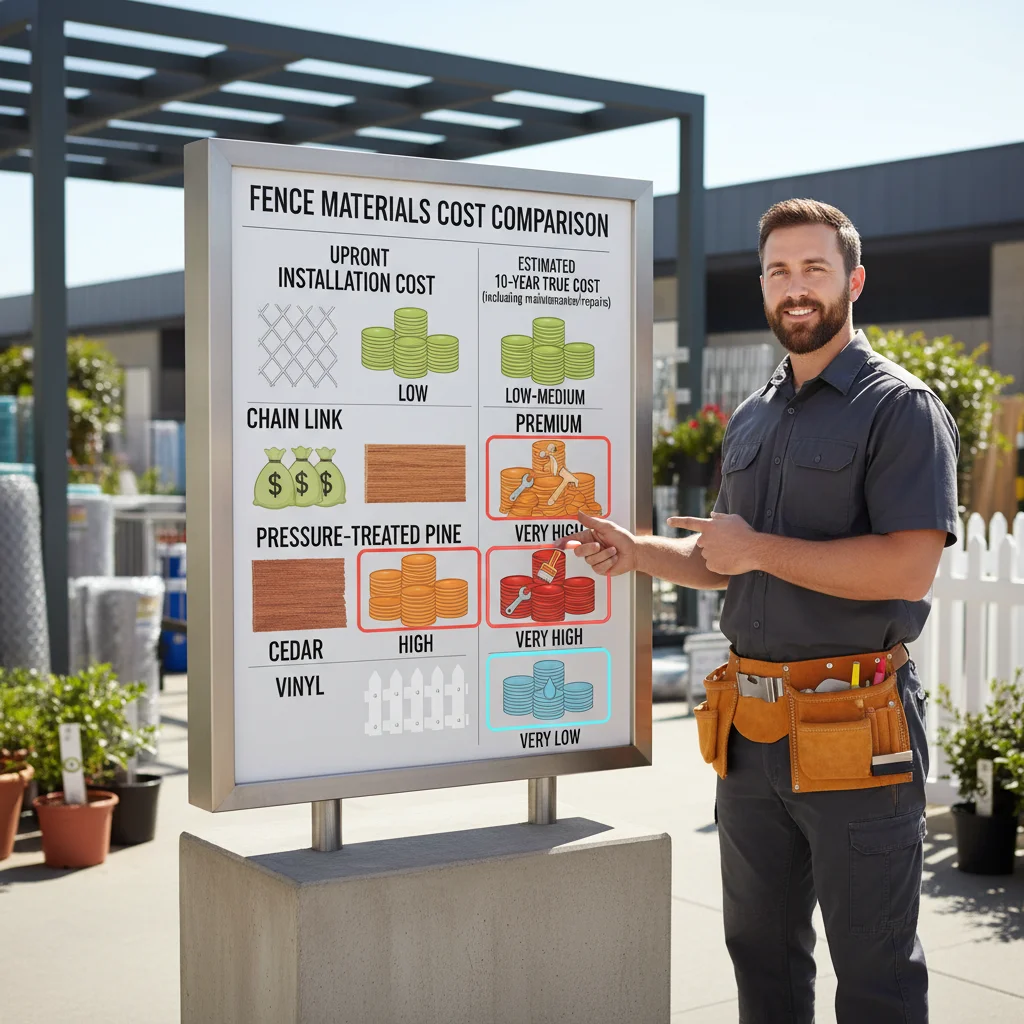
True cost over 10 years, without fake tables
Chain link. Low install class. Wash the mesh, keep tension bands tight, oil the gate. You are unlikely to restain anything. Damage is a mesh patch.
Pressure-treated pine. Lower than cedar on day one. Then you buy cleaner, stain, and time every few years, or you watch the fence go gray and open at the joints. Skip that cycle and you buy boards twice.
Vinyl or composite. Higher install class. Hose-down maintenance. That can beat pine on a 10-year calendar if you would have paid someone to stain. It is not the cheapest fence to put in. See the San Diego fence cost guide for the full material stack as a decision, not as invented rates.
HOA street elevations often veto mill chain link. A cheap product that gets rejected is the expensive one. Read the architectural guidelines before you fall in love with galvanized.
Frequently asked questions
What is the cheapest fence to install in San Diego?
Galvanized chain link is the usual lowest install. Vinyl-coated chain link costs more and looks quieter. Pine is the usual lowest solid-wood privacy. None of those is a per-foot number we can publish without your footage, gates, and access.
What is the most affordable wood fence option?
Pressure-treated pine, if the posts are the right stamp and you will coat the fence. Cedar and redwood are a different budget.
How can I lower my fence installation cost?
Keep height standard, keep the line straight, limit gates, and clear the work path. Ask each bid to itemize posts, infill, gates, and haul-off so you are not comparing a stripped quote to a complete one.
Is a cheap fence durable in San Diego’s climate?
Chain link is durable when the coating and fittings match coastal or inland air. Pine is durable when it is treated for the application and resealed. Untreated pine and recycled thin vinyl are how “cheap” becomes a rebuild.
Which is cheaper over 10 years, chain link or wood?
Chain link, for most owners, because it has no stain cycle. Wood wins only if you needed privacy on day one and you will maintain it. Compare that trade in chain link vs wood.
When to call us
A low material choice still fails if posts are shallow or the line is out of plumb. We match you with a licensed independent fence contractor. You verify the license at cslb.ca.gov. Call (858) 400-4906.