The right automatic driveway gate in Chula Vista starts with the driveway, not the operator catalog. Grade, side clearance, vehicle position, and daily access determine which layout belongs in the proposal. Compare quotes only after both installers measure the same opening and describe the same operating plan.
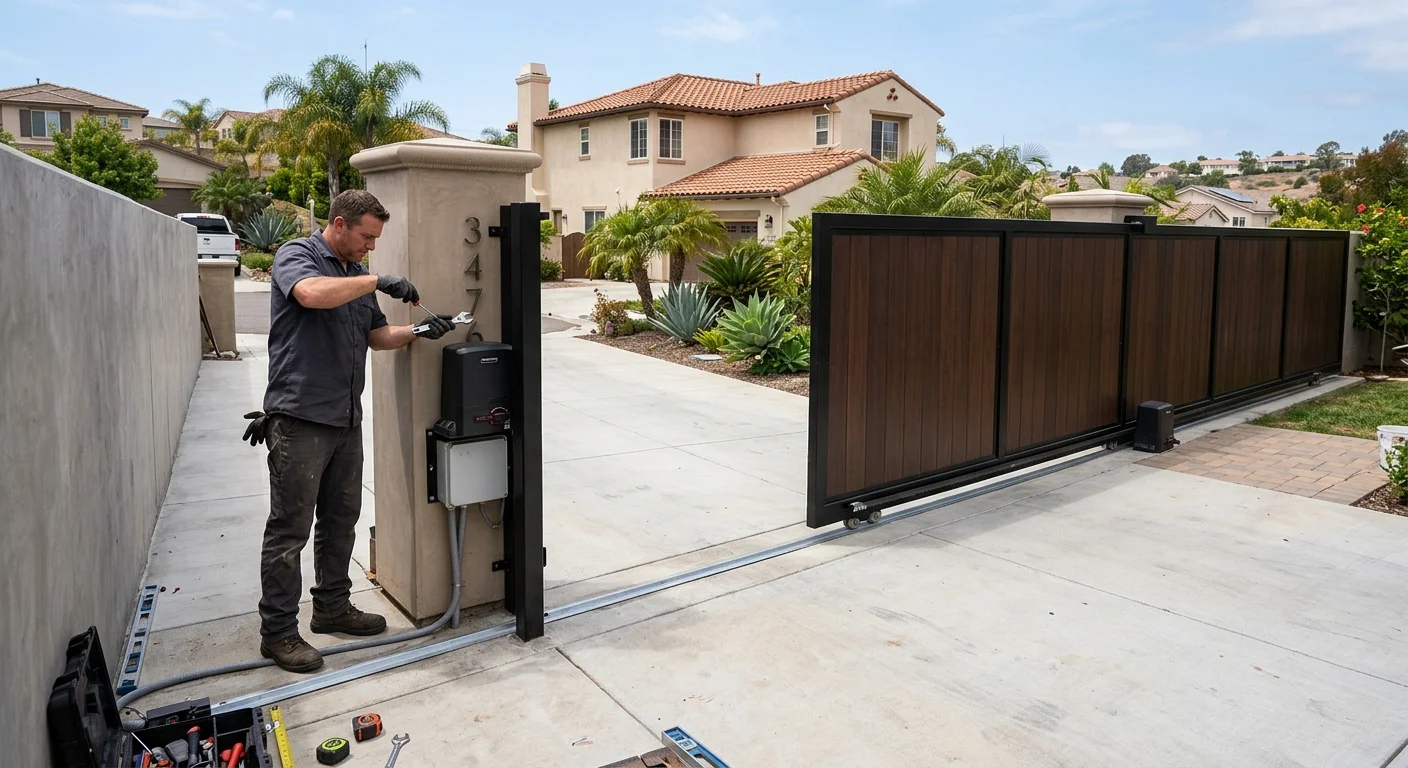
How driveway grade and side clearance shape the gate layout
Start with the clear opening vehicles will actually use. That measurement can differ from the distance between existing walls, posts, or landscaping. Ask each installer to record the opening at the ground and above it. The proposal should also identify the planned post locations.
Grade needs more than a quick description such as “sloped.” The installer should measure how the driveway rises through the opening. They should also check whether it falls across the gate from side to side. Those conditions affect the bottom clearance, hinge position, and available swing path.
A swing gate needs an unobstructed arc. Park a vehicle where it usually waits, then mark the proposed arc on the driveway. Include mirrors, bumpers, trash bins, and any pedestrian route. A gate that clears an empty driveway might interfere with normal parking.
A sliding gate needs clear space beside the opening. That space isn’t the same as the driveway width. Fences, masonry, utility equipment, drains, slopes, and planting can interrupt the proposed travel line. Ask the installer to show where the entire gate sits when open. The drawing should also identify any track, support hardware, or cantilever section.
Chula Vista properties don’t share one driveway pattern. An opening near Third Avenue can pose different constraints than one in Eastlake or Otay Ranch. Even neighboring lots can drain, slope, and park differently. The site measurement should control the design, not a neighborhood assumption.
The approved claims ledger doesn’t confirm a Chula Vista setback, encroachment, or automatic-gate permit rule. Before signing, check the current requirements for your parcel with the City of Chula Vista. Ask the installer to state who will confirm permits and property boundaries. Any gate movement near a sidewalk, street, alley, or public area deserves parcel-specific review.
When swing and sliding gates fit different properties
Swing gates fit openings with enough clear space behind the entrance. A single leaf places the full opening on one hinge side. A paired design divides that movement between two leaves. Either choice must account for parked vehicles, the driveway grade, and the space people use to walk through.
Don’t assume the gate can simply swing toward the street. Its proposed arc should be reviewed against the property line and public areas. Current Chula Vista requirements for that exact location should come from the City. The installer should show the opening direction on the plan before materials are ordered.
Sliding gates keep the opening arc out of the parking area. They can suit a short driveway when adequate side room exists. A tracked gate travels along hardware across the driveway. Its proposal should address the surface, drainage path, and how the track will be maintained. A cantilever layout suspends the moving section, but it needs additional room for its supporting portion.
Consider two local examples. At a tight entrance near Broadway, a swing leaf could occupy space needed by a waiting vehicle. Sliding may fit better if one side of the opening remains clear. On a sloped Eastlake driveway, a swing design needs measured elevations before anyone selects its direction. These are site conditions, not neighborhood rules.
The gate’s weight, frame, and fill pattern also belong in this decision. Ask how those details affected the post and operator selections. A decorative open frame and a solid privacy-style gate shouldn’t be treated as interchangeable products.
Our broader guide to an automatic driveway gate in San Diego explains the main system parts. For this Chula Vista project, bring the discussion back to the measured opening. The best-looking option on a brochure still has to fit the driveway.
Which controls and safety details belong in the proposal
The controls should match how people enter the property. List every user before comparing equipment. That can include household drivers, regular visitors, service providers, and pedestrians. Then ask each installer to describe the proposed method for each group.
Common choices include remotes, keypads, intercoms, vehicle-detection equipment, and connected controls. Don’t accept a proposal that says only “access system.” It should identify the selected equipment, where it will be mounted, and what isn’t included. Ask whether any feature depends on internet, cellular service, an app, or an ongoing subscription.
Power deserves its own line in the scope. The quote should show the proposed power source and route. It should identify trenching, conduit, surface repairs, and work assigned to another trade. Ask what happens during an outage, including how the manual release works and where it can be reached. If battery backup is offered, request its model and operating limitations in writing.
Automatic-gate safety details also need names, not vague assurances. Ask the installer to list every proposed photo eye, contact edge, warning device, obstruction control, and manual release. The proposal should show where each component will sit. It should also identify the gate operator by manufacturer and model.
The approved claims ledger doesn’t confirm which safety devices Chula Vista currently requires for a particular residential gate. A general checklist can’t establish compliance. Confirm current parcel-specific requirements with the City of Chula Vista. Have the installer connect each proposed device to the operator manufacturer’s instructions and any applicable approval.
California’s official C-13 classification permits a fencing contractor to construct, alter, or repair gates, but it excludes masonry walls. You can check a contractor’s license with the CSLB. If the project includes new masonry columns or electrical work, ask who will perform that portion and under what scope.
Fence Pros San Diego is a referral service. Our gate installation and automation page explains how we connect homeowners with licensed, independent local contractors. You’ll contract with and pay the selected professional directly.
How to compare two Chula Vista gate quotes
Put both proposals beside one site sketch. Each installer should be pricing the same opening, motion, controls, and finish. If one contractor measured a sliding layout and another assumed a swing gate, the totals don’t represent the same project.
A useful quote should make these items easy to find:
- Measured clear opening and planned gate position
- Swing direction or full sliding travel path
- Gate frame, infill, finish, and visible design
- Post locations and proposed support details
- Operator manufacturer and model
- Remotes, keypad, intercom, and other access controls
- Listed protective devices and their locations
- Power, conduit, trenching, and surface restoration
- Manual release and any backup-power option
- Permit, community review, and inspection responsibilities
- Work assigned to another contractor or trade
- Product, labor, and manufacturer warranty terms
- Payment stages, exclusions, and change-order process
Read exclusions as carefully as included work. One proposal might omit demolition, hauling, electrical work, masonry, finish repairs, or access controls. Another might include those tasks under separate line items. Ask both installers to revise unclear language before comparing totals.
Don’t compare an unnamed “gate opener” against a specified operator. Model information lets you review the manufacturer’s instructions and included accessories. It also exposes differences in controls, power needs, and gate compatibility. Apply the same rule to keypads, intercoms, hinges, rollers, tracks, and safety equipment.
Check the contractor name on each proposal against the CSLB record. If another company will handle part of the project, ask for that company’s name and responsibility too. The official C-13 scope includes gates but excludes masonry walls, so a proposal involving columns should explain that division clearly.
Price still matters, but the lowest total may also contain the largest gaps. Fence Pros San Diego doesn’t set contractor prices or warranty terms. Compare the written scope first, then ask each installer to explain any remaining difference.
For more local hiring points, see our guide to choosing a fence company in Chula Vista. Keep the final gate drawing, equipment list, approvals, and contract together. That record gives everyone the same description of the finished project.
When to call us
Call when your Chula Vista driveway needs measured gate planning, operator selection, or coordination with fence work. A licensed fence pro can evaluate the opening and prepare a site-specific proposal. Call us at (858) 400-4906 and we’ll connect you with a licensed fence contractor.