For most San Diego homes, a semi-transparent stain in a warm cedar, walnut, or weathered gray is a strong all-around choice, offering UV protection without hiding the wood grain. Fence Pros San Diego is a referral service. We do not stain fences, publish a per-foot staining rate, or warrant how long a color will last. Coastal properties tend to favor lighter naturals and weathered grays, while inland homes often go darker with walnut or mahogany that complement dry landscapes. The right color depends on your architecture, landscaping, and how much sun the fence takes.
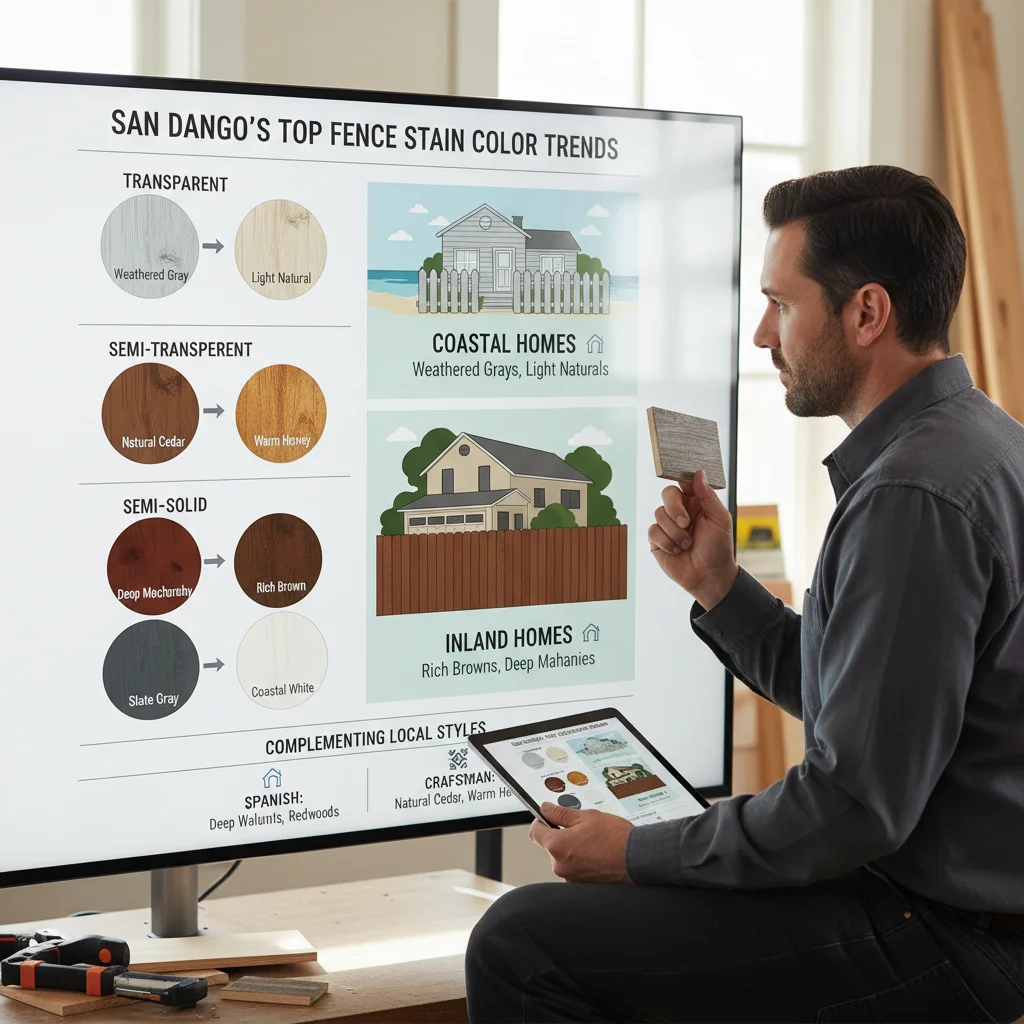
Colors that complement San Diego’s Spanish and Craftsman styles
San Diego’s architectural landscape is rich with distinct styles, primarily Spanish Colonial Revival, Craftsman, and variations of Ranch and Mid-Century Modern. Your fence stain should ideally harmonize with these elements, not clash.
For Spanish Colonial Revival homes, which often feature stucco exteriors, red tile roofs, and dark wood accents, warmer, richer stain colors tend to work best. Think deep walnuts, rich mahoganies, or even a classic redwood tone. These shades echo the natural wood beams and ornate doors typical of the style, creating a cohesive, upscale look. A semi-transparent dark brown, for example, can highlight the wood grain while offering a depth that pairs beautifully with terracotta and warm white stucco. It provides a grounded, historic feel that is authentically San Diegan.
Craftsman homes prioritize natural materials and handcrafted details. Their exteriors often incorporate stone, brick, and earthy paint colors like deep greens, browns, and ochres. For a Craftsman-style home, a natural cedar, warm honey, or medium-brown stain emphasizes the wood’s inherent beauty without overpowering the home’s intricate design. The species you start with matters too, so it helps to know the best wood for a San Diego fence before you pick a color. A semi-transparent finish here allows the wood’s texture to remain visible, reinforcing the artisan quality. Avoid anything too stark or artificial. The goal is to blend the fence smoothly into the naturalistic aesthetic of the home and surrounding landscape.
Even for more contemporary Ranch or Mid-Century Modern homes, which might have clean lines and simpler forms, stains like natural cedar or even a subtle gray can provide a sophisticated backdrop. The key is to select a color that feels intentional and contributes to the overall architectural story of your property.
How to choose a stain that won’t fade in the intense sun
San Diego enjoys abundant sunshine, which is great for outdoor living but tough on wood fences. UV rays can quickly break down wood fibers and fade pigments, turning a vibrant stain into a dull, chalky mess. Choosing a stain engineered for our climate is crucial for long-lasting color and protection.
When selecting a stain, pay close attention to its opacity and its UV protection qualities.
- Transparent stains offer the least UV protection. They highlight the wood’s natural grain but contain minimal pigment, meaning they’ll fade fastest. You’ll primarily see the natural wood tone with just a hint of color.
- Semi-transparent stains contain more pigment, providing better UV resistance while still allowing much of the wood grain to show through. These are a popular choice for their balance of beauty and protection, offering a rich color that holds up well. They often contain UV inhibitors that reflect or absorb harmful rays, slowing down the fading process.
- Semi-solid stains have even more pigment, offering significant UV protection and a more uniform color. You’ll still see some wood texture, but the grain will be less prominent. These stains are excellent for older fences that might have slight imperfections or uneven coloring.
- Solid stains behave more like paint, completely covering the wood grain. They offer the highest level of UV protection and hide surface flaws. While they provide maximum durability, some homeowners prefer to see the natural wood grain, so it’s a trade-off. If you’re torn between a solid stain and actual paint, our breakdown of painting vs. staining a fence covers how each holds up here.
Always look for products specifically marketed as having “UV inhibitors” or “enhanced UV protection.” Lighter pigments often reflect more sunlight, potentially fading slower than very dark, heat-absorbing stains. However, modern dark stains with strong UV packages can also perform well. No stain lasts forever in our climate, which is why regular maintenance is essential. To learn more about maintaining your fence, check out our guide on how often to stain a fence in San Diego. A quality stain job, properly applied, acts as a sacrificial layer that takes the brunt of the sun’s assault, protecting the wood underneath.
Popular color choices for coastal vs. inland properties
San Diego County’s diverse geography means a fence in La Jolla faces different environmental conditions and aesthetic expectations than one in Poway or Alpine. Stain choices often reflect these regional differences.
Coastal Properties: Along the immediate coast, homes often lean towards lighter, airier aesthetics. The pervasive ocean mist, salt air, and bright light influence color preferences.
- Weathered Gray: This has become a very popular choice for coastal homes. It mimics the look of naturally aged wood, blending smoothly with driftwood tones and the muted blues and greens of the ocean. Semi-transparent or semi-solid grays give a sophisticated, beachy vibe that perfectly complements modern coastal architecture.
- Light Naturals: Stains like clear, natural cedar, or light honey tones allow the wood’s inherent beauty to shine, creating a fresh, open feel. These lighter shades can make a fence feel less imposing, helping to integrate it into the expansive coastal landscape.
- Soft Blues/Greens (Solid): For certain highly contemporary coastal homes, a solid stain in a muted blue or seafoam green might be used to complement specific exterior paint schemes, especially when aiming for a distinct modern look.
Inland Properties: As you move further inland, temperatures can be hotter, and the landscape shifts towards chaparral, rolling hills, and more traditional suburban settings.
- Rich Browns: Deep, warm browns like walnut, dark oak, or even a subtle redwood are incredibly popular inland. These colors resonate with the natural earth tones of the region and provide a classic, grounded look that pairs well with stucco, stone, and traditional landscaping.
- Deep Mahoganies: For homes with a more formal or Mediterranean influence, a rich mahogany or reddish-brown stain can add a touch of elegance and warmth, especially against lighter-colored homes.
- Natural Cedar: Always a timeless choice, natural cedar tones work well everywhere. Inland, they offer a rustic charm that fits beautifully with larger lots and naturalistic gardens.
- Muted Greens (Semi-solid/Solid): In areas with abundant trees and greenery, a semi-solid or solid stain in a muted forest green can help a fence recede into the landscape, providing a subtle boundary without drawing too much attention.
Understanding these regional trends helps you pick a stain that not only looks good on its own but also feels right within its specific San Diego context.
Pairing your fence color with drought-tolerant landscaping
San Diego homeowners are increasingly embracing drought-tolerant landscaping, incorporating succulents, native plants, and low-water shrubs. Your fence stain color can dramatically enhance these plantings, making your outdoor space truly shine. The goal is to create contrast or harmony that accentuates the unique textures and colors of arid-friendly flora.
-
Natural Cedar or Light Honey Stains: These warm, inviting tones provide a beautiful, neutral backdrop that makes vibrant succulents like agaves, sedums, and echeverias truly pop. The bright greens, silvers, and purples of these plants stand out vividly against the warmth of the wood. This pairing creates an organic, welcoming feel that highlights the natural beauty of both the wood and the plants. It’s an excellent choice for a garden that feels like an extension of nature.
-
Gray Stains (Weathered or Modern): A semi-transparent weathered gray or a more uniform charcoal gray stain offers a sophisticated, contemporary contrast. The cool tones of gray make the rich greens, deep reds, and striking forms of drought-tolerant plants even more prominent. Imagine a vibrant bougainvillea spilling over a modern gray fence, or the sculptural silhouette of a mature agave framed against it. Gray fences also complement the subtle tones of decomposed granite or natural stone pathways commonly used in water-wise landscapes. This pairing delivers a clean, architectural look that is both stylish and sustainable.
-
Dark Brown or Walnut Stains: Deeper brown stains create a rich, earthy canvas. They provide a grounding presence that allows lighter-colored foliage and flowers to shine. For instance, the silvery-green leaves of California native sages or the delicate blooms of ceanothus will appear brighter and more defined against a dark brown fence. It’s a classic choice that adds depth and a sense of establishment to any drought-tolerant design. These darker hues also help to absorb heat, which can be beneficial in cooler microclimates, although in direct, intense sun, lighter colors reflect more.
Consider the dominant colors and textures in your drought-tolerant garden. If you have many plants with silver or blue-green foliage, a warm natural or dark brown stain can offer a striking contrast. If your landscape leans towards more greens and browns, a gray stain might provide a subtle, elegant backdrop. Remember, the San Diego County Water Authority provides excellent resources for designing beautiful, water-wise landscapes, and your fence can be a key part of that aesthetic. A well-chosen stain color elevates your entire landscape design, making your fence an integral part of your garden’s appeal.
Frequently asked questions
What is the most popular fence stain color in San Diego?
Weathered gray and warm cedar tones are the two most common choices across San Diego County. Gray dominates in coastal neighborhoods like La Jolla and Encinitas because it pairs well with ocean-facing architecture, while cedar and walnut tones are more popular inland in areas like Poway and Santee where earthy, traditional landscaping is the norm.
How long does fence stain last in San Diego’s sun?
There is no supported lifespan or warranty on this page. Southern exposure and coastal salt air usually shorten a finish compared with a shaded inland run. Read the product label and ask the independent contractor what recast interval they expect for that product, wood, and exposure. Regular cleaning helps any finish last longer, but it is not a guarantee.
Do I need to prime a wood fence before staining?
Primer is not required for stain, but proper prep is. New wood should dry for at least a few weeks before staining so it can absorb the product evenly. Previously stained wood needs cleaning, light sanding, and any peeling or gray-weathered layers removed. Skipping prep is the most common reason stain peels or blotches within the first season.
What fence stain colors work best with drought-tolerant landscaping?
Natural cedar and light honey stains work well as a warm neutral backdrop that makes succulents and native plants stand out. Weathered gray pairs well with decomposed granite paths and structural plants like agaves. Dark walnut or brown tones give a rich, grounded contrast that lets lighter foliage and flowers read more clearly against the fence.
Is fence staining something I can do myself, or should I hire a pro?
Color selection is a great DIY decision, but even coats without streaks or lap marks take prep, the right tool, and timing around dew and heat. For a large fence or one that needs repairs first, an independent fence staining contractor can quote prep and product as separate items.
How much does fence staining cost in San Diego?
Fence Pros San Diego does not publish a staining rate. Height, wood condition, product, and prep change the quote. Ask each independent contractor to price prep, product, and application separately, and to name any repairs that are excluded.
When to call us
Selecting a color is a planning step. Application still depends on prep, product, and the independent contractor’s written scope. If the fence is old, damaged, or needs cleaning, sanding, or repairs first, put that work in the proposal before anyone stains. Fence Pros San Diego does not apply stain. For fence staining and sealing, we can connect you with a licensed fence professional.
Call us at (858) 400-4906 and we’ll connect you with a licensed fence contractor.