In San Diego County the chain-link vs wood decision is privacy versus calendar, not a published per-foot contest. Chain link is the lower install class: manufactured mesh, faster stretch, almost no stain. A wood privacy fence is the higher install class: framing, boards, and a finish cycle in this sun. Fence Pros San Diego does not have a current invoice set on this page, so we will not invent 2026 rates or a “30 to 50 percent cheaper” headline.
Your first question is still the useful one: do you need a solid screen, or do you need a boundary that air and light can pass?
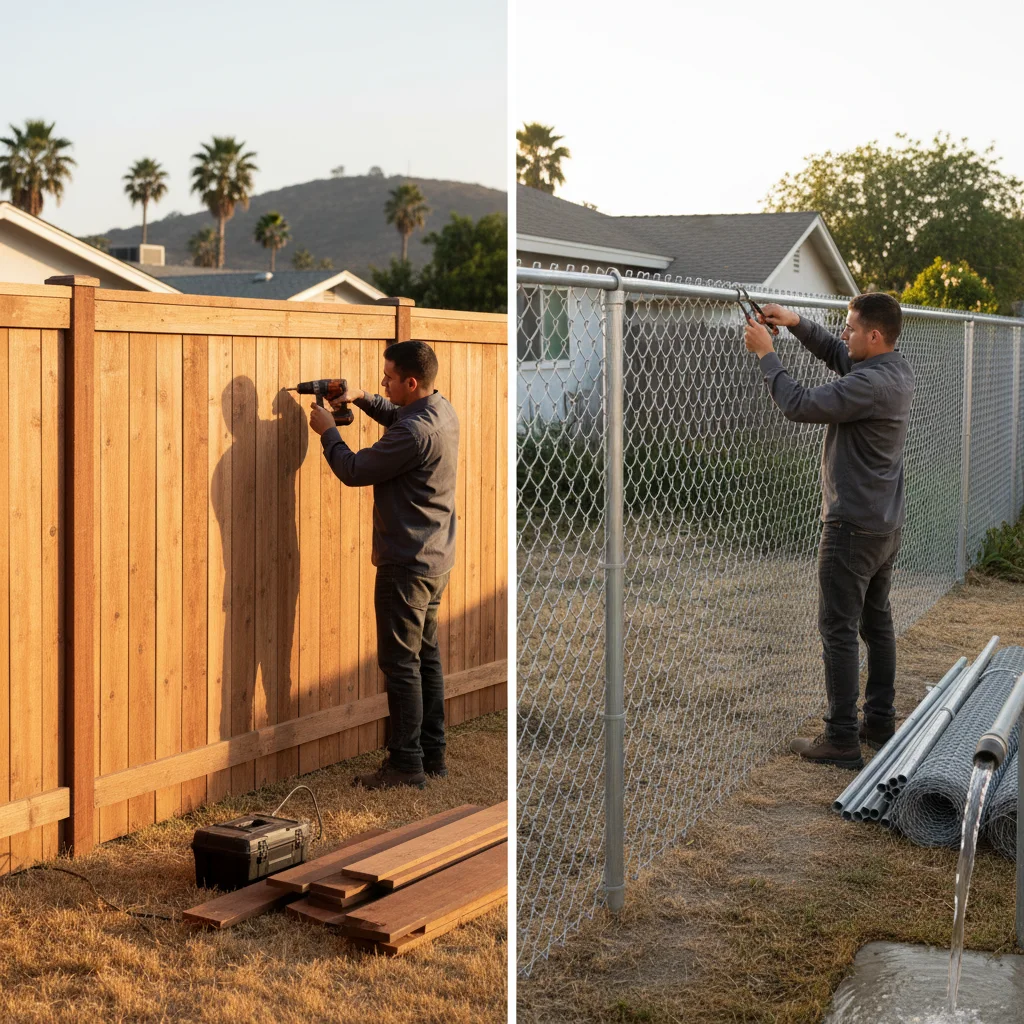
Is a chain link fence cheaper than a wood fence?
Usually, yes, on the first invoice, for the same height and length with a similar gate count. Mesh and steel posts cost less to make and take less carpentry time than a board fence. The gap then grows if the wood is cedar you intend to stain every few years and the chain link is vinyl-coated and left alone.
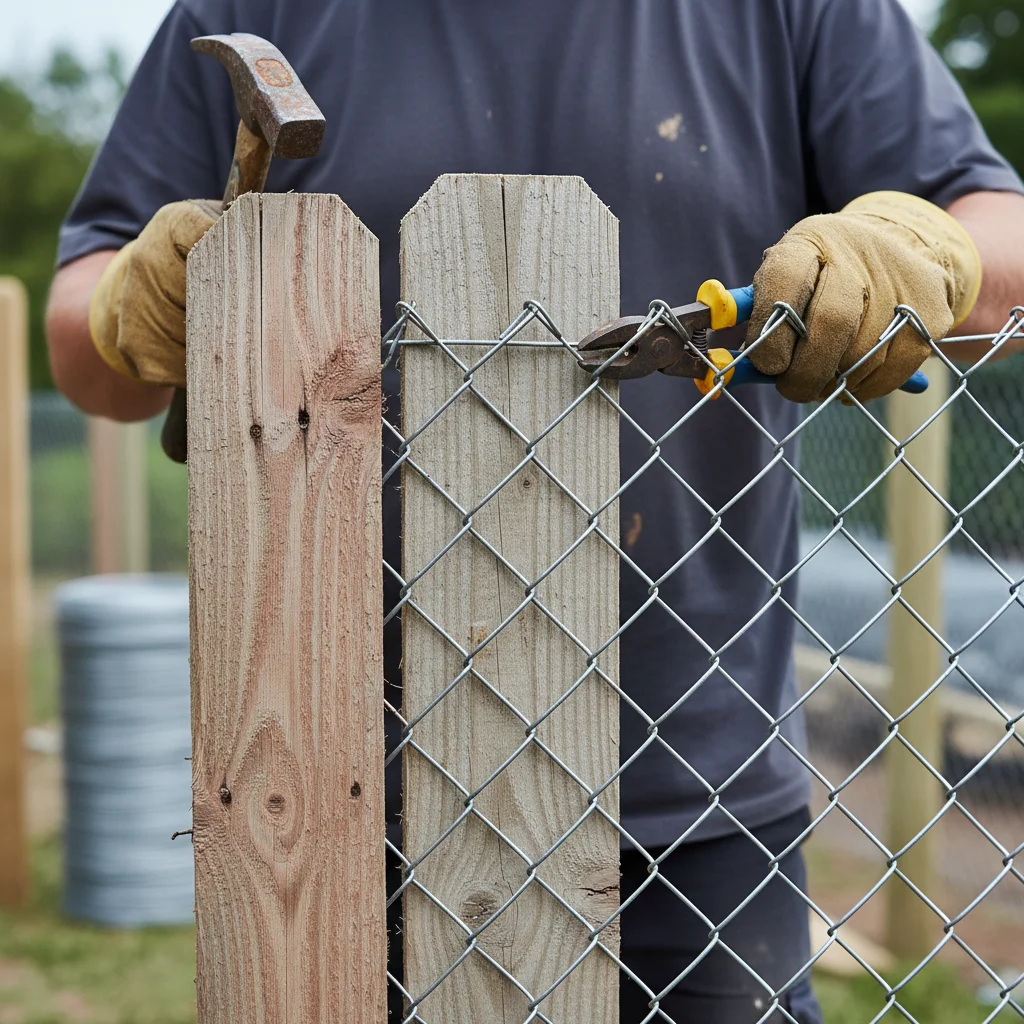
Wood still wins the job when the point of the fence is that nobody can see in. Slats in chain link are a partial screen. They are not a board-on-board wall.
Why the install classes differ
Chain link: set posts, pour, stretch mesh, tie. Terrain, extra corners, and gates still matter. The infill itself is a roll.
Wood fence: posts, rails, then every picket. Grade changes mean stepping or racking boards. That is why a “same footage” wood bid is not a scaled chain-link bid.
Length, height, gates, rock, and access move both numbers. For chain-link scope notes, see chain link fence installation costs in San Diego.
10-year ownership: stain vs almost none
Wood
San Diego UV dries and fades boards. Rain and irrigation wet the lower rails. A wood fence that lasts is a wood fence that gets a real stain or seal on a cycle, plus the occasional board or post. Skip that and the life shortens. Termites and ground-line rot show up on the cheap pine jobs that were never the right stamp.
Chain link
Galvanized or vinyl-coated mesh is a coating product. Vinyl coat is the coastal preference because salt sees fittings and cut ends. Maintenance is wash, tension, and a gate that still latches. A hit section is a mesh patch, not a restain.
Over a decade, chain link’s extra cost is mostly the original install. Wood’s extra cost is install plus finish plus repairs. That is the comparison, even without dollar columns.
Privacy and security
Privacy. Wood, especially dog-ear or board-on-board, is the visual barrier. Pools, patios, and tight side yards are why people pay for it. Chain link is see-through. Privacy slats help and still leak light and wind.
Security. Chain link removes hiding spots and is awkward to climb at 6 feet. Wood hides the yard, which is privacy and also cover for anyone who is already inside. Neither one is a lock. Gates and hardware are the working security.
| Feature | Wood fence | Chain link fence |
|---|---|---|
| Install class | Higher | Lower |
| 10-year upkeep | Stain, seal, board repairs | Wash, fittings, mesh patches |
| View from the street | Screen | Open (unless slatted) |
| Wind | Solid sail | Open weave |
| Coastal salt | Finish cycle, hardware | Coating and fittings |
| HOA street face | Often preferred | Often restricted |
| Best when | You need privacy | You need a boundary and a light calendar |
Which one for your lot
Choose chain link if budget and maintenance come first, the yard is large, pets need a run, or you want visibility. On the coast, specify vinyl-coated mesh and fittings, not mill galvanized leftovers.
Choose wood if privacy is the job, the street elevation has to look like a house not a yard, or the association’s book shows wood. In Del Mar and similar coastal streets, confirm the architectural guidelines before you bid mesh.
A vinyl-coated chain link line in La Jolla will outlast neglected wood in the same salt. A stained cedar privacy fence will still be the right product when the neighbor is 8 feet off your patio.
Frequently asked questions
Is chain link fence cheaper than wood fence in San Diego?
On a like-for-like length and height, chain link is the lower install class. Wood adds carpentry and later stain. We are not printing per-foot bands or a percent discount. Compare two itemized bids.
How much does a chain link fence cost per foot in San Diego?
It depends on height, gauge, galvanized vs vinyl-coated, gates, and access. A backyard enclosure is not a front-yard HOA elevation. Ask for mesh, posts, gates, and haul-off as separate lines.
How much does a wood fence cost per foot in San Diego?
Species, height, board style, and grade drive it. Cedar is the common privacy spec because it handles moisture better than cheap pine. Gates and steps are extra. Same rule: itemize.
Which fence lasts longer in San Diego’s climate?
Coated chain link, if you wanted mesh. Maintained wood, if you wanted a screen and you actually coat it. Untreated or unstained wood is the short life in this UV.
Does a wood fence or chain link fence need a permit in San Diego?
Height and location matter more than material. Rear-yard fences at or under 6 feet often skip a building permit. Front yards, coastal overlays, and taller fences may not. Confirm with the city. Pool barriers have their own statute.
Which fence is better for coastal neighborhoods in San Diego?
Vinyl-coated chain link for salt and low upkeep. Wood if you need the screen and will seal the ocean-facing side more often. See La Jolla, Del Mar, and Coronado guidelines before you assume mill chain link is allowed on the street.
Can I add privacy to a chain link fence without replacing it?
Yes. Slats thread the mesh and cut sightlines. They are a DIY-scale materials run for many owners, and they still are not a solid privacy fence. Wind loads them. If you need a real screen, bid wood or a privacy panel system.
When to call us
Post depth and stretch (chain link) or post depth and board layout (wood) decide whether the cheap choice lasts. Verify any contractor at the California Contractors State License Board. Fence Pros San Diego matches you with an independent pro. Call (858) 400-4906.