Yes. California law requires a licensed contractor for any job where labor and materials together total 500 dollars or more, and fencing has its own license classification, C-13 Fencing Contractor. If a company quoting your fence isn’t licensed and your job is over that threshold, hiring them is illegal on their end and risky on yours, since you lose bonding, insurance, and workers-comp protection the moment something goes wrong.

The 500-dollar rule
Under the California Business and Professions Code, the Contractors State License Board (CSLB) requires a license for any construction project where the combined cost of labor and materials is 500 dollars or more. Almost every real fence job in San Diego County clears that number easily, a single gate repair might not, but a fence run of any real length will.
This isn’t a technicality. It’s the line California draws between “handyman favor” and “licensed construction work,” and it exists because fencing involves things that can go wrong in expensive ways: property line disputes, underground utility strikes, structural failure in wind, and injury on the job site.
What the C-13 license actually covers
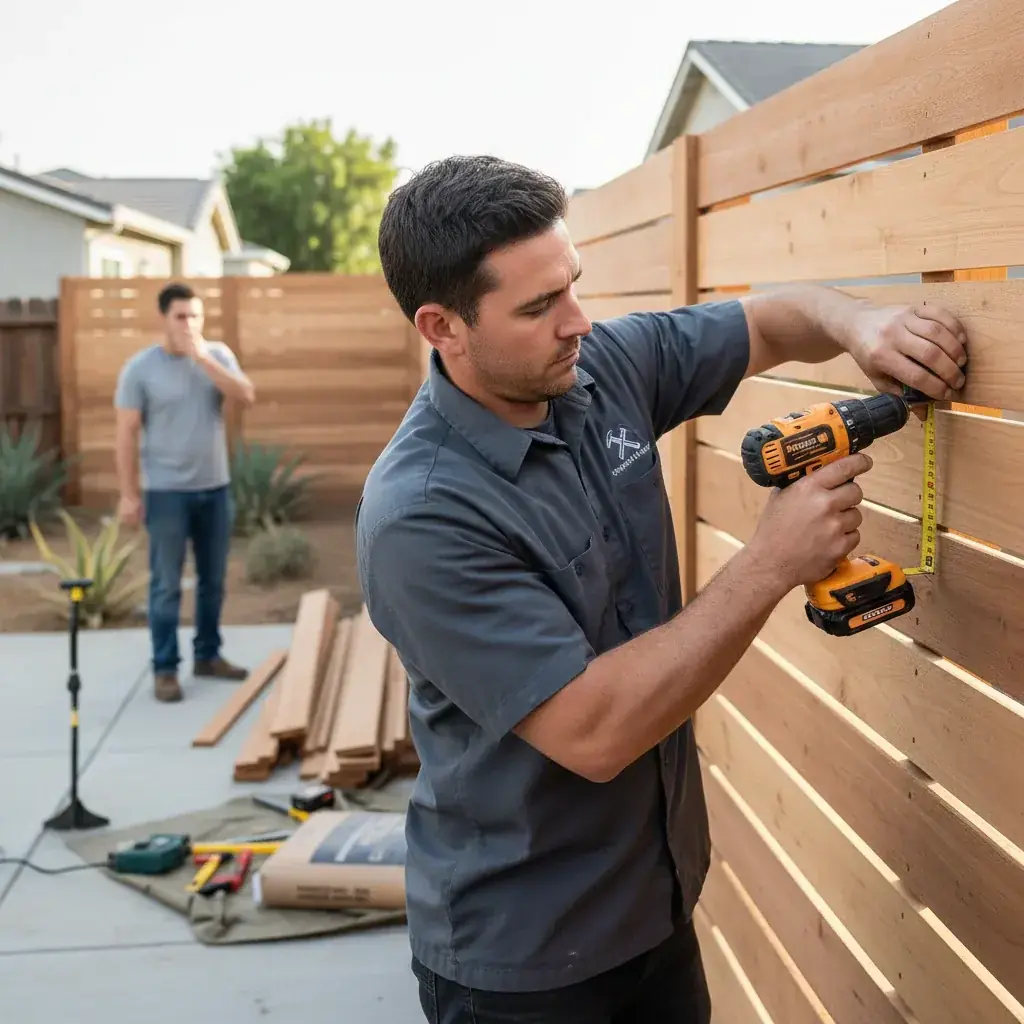
C-13 Fencing Contractor is its own specialty classification under the CSLB, separate from general contracting. It covers installation of fences and fence-related structures, wood, vinyl, chain link, ornamental metal, and gates. A company holding a C-13 has passed a trade exam specific to fencing and carries the bonding and insurance the state requires to hold that license.
Some general contractors (Class B) can also legally take on fencing work as part of a larger project. But a company whose primary business is fence installation should be operating under C-13, and it’s worth asking directly which classification they hold.
Why hiring unlicensed is a real risk, not just a technicality
An unlicensed installer working a job over the 500-dollar threshold is breaking the law, and that puts more risk on you as the homeowner than most people realize.
- No bonding. Licensed contractors carry a contractor’s bond. If the job goes badly or the company disappears mid-project, the bond is your recourse. Unlicensed work has none.
- No workers-comp protection. If a worker gets hurt on your property and the company isn’t licensed and insured, you can be held liable for their medical costs. That’s not a rare edge case, it’s the exact scenario workers-comp insurance exists to prevent.
- No liability insurance. If a fence installation damages a neighbor’s property, hits a utility line, or causes some other loss, an unlicensed company likely has no policy to cover it. The cost lands on you.
- No CSLB recourse. Licensed contractors are accountable to the CSLB complaint process. Unlicensed operators aren’t, which means a bad job has no formal path to resolution beyond small claims court.
- Permit problems. Many San Diego jurisdictions require a licensed contractor’s information on permit applications for larger fence jobs. An unlicensed installer can leave you unable to pull a required permit at all.
How to verify a license before you sign anything
Checking a license takes about two minutes on the CSLB website. Go to cslb.ca.gov and use the license lookup tool. Search by the company name or license number, and the record will show:
- Whether the license is active, expired, or suspended
- The classification (confirm it’s C-13 or a relevant Class B)
- Bond and workers-comp insurance status
- Any disciplinary history or complaints on file
If a company hesitates to give you their license number, or the number doesn’t come up in the lookup, that’s a hard stop. A legitimate fence contractor will give you the number without being asked twice.
Questions to ask before hiring
- What’s your CSLB license number, and what classification is it under?
- Can I see proof of current liability insurance and workers-comp coverage?
- Will your license and insurance information be listed on the written contract?
- Who pulls the permit, if the job requires one?
- What happens if a worker is injured on my property during the job?
A company that answers these without friction is operating the way the law expects. A company that dodges them is telling you something too.
What a legit fence company should carry
At minimum, a company installing fences in California should have an active CSLB license in the right classification, current general liability insurance, and workers-comp coverage for its crew. We’re a licensed local fence company built around exactly that standard, and we’re happy to walk you through our license and insurance details before you commit to anything. If you’re still weighing your options, our guide on choosing a fence company in San Diego covers the broader vetting checklist beyond just licensing, and our DIY fence vs hiring a pro breakdown is useful if you’re deciding whether to take the job on yourself in the first place.
If your project also needs a permit, our San Diego fence permits guide explains when that applies and who’s responsible for pulling it. And when you’re ready for a quote from a licensed fence installation crew, call us at (858) 400-4906.
Frequently asked questions
What’s the difference between C-13 and a general B license for fence work?
C-13 is a fencing-specific classification with its own trade exam, meant for companies whose core business is fence and gate installation. A Class B general contractor can also legally do fencing as part of broader construction work. Either can be valid, but a fence-only company should typically hold C-13.
Can I hire an unlicensed person for a small fence repair?
If the total labor and materials come to less than 500 dollars, California doesn’t require a license for that specific job. Most real fence repairs and installations exceed that quickly once materials are factored in, so this exception covers very minor work only.
How do I know if a license number is fake or expired?
Run it through the CSLB license lookup at cslb.ca.gov. The tool shows current status, classification, bond, and insurance information in real time, so you’re not relying on anything the contractor tells you directly.
What happens if I hire an unlicensed contractor and something goes wrong?
You have limited recourse. There’s no bond to claim against, no CSLB complaint process available, and if a worker is injured on your property, you may be personally liable for their medical costs since there’s no workers-comp policy behind the job.
Does a licensed contractor cost more than an unlicensed one?
Sometimes, since licensed companies carry insurance and bonding costs that unlicensed operators skip. But the price difference is the cost of the protection you’re buying. An unlicensed quote that looks cheaper is shifting risk onto you, not eliminating it.
Should the license number be on my written contract?
Yes. A legitimate contractor’s license number should appear on every bid and contract they issue. If it’s missing, ask for it before signing anything, and verify it independently through the CSLB lookup rather than taking their word for it.