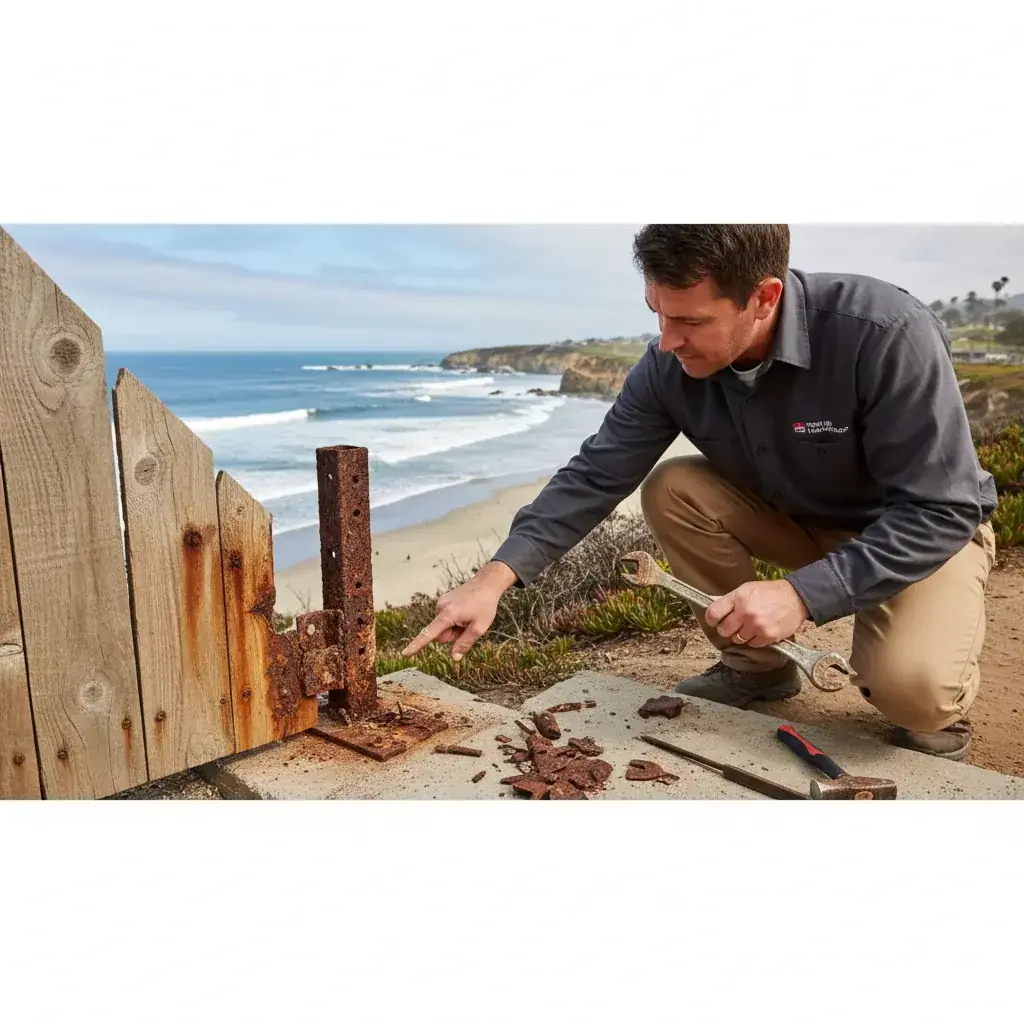
Metal fences rust in San Diego for two main reasons: salt air near the coast and moisture from sprinklers or standing water everywhere else. Chain link starts rusting at the bottom tension wire, the tie wires, and any spot where the galvanized coating got scratched. Wrought iron rusts fastest at welds, at the base of posts where they meet the soil, and anywhere the powder coat has chipped. Most rust is fixable if you catch it early, and we’ll walk through what surface rust, moderate corrosion, and structural failure each actually require.
Why metal fences rust in San Diego
Salt air is the obvious driver if you’re within about two miles of the ocean, places like La Jolla, Del Mar, Coronado, Imperial Beach, and the west side of Encinitas and Carlsbad. Airborne salt settles on metal, holds moisture against the surface longer than plain humidity would, and speeds up oxidation. Standard zinc-plated coatings that hold up fine inland can start showing rust within a couple of years right on the coast.
But coastal exposure isn’t the only cause. Sprinkler overspray hitting the base of a fence day after day does real damage even 20 miles from the water, and standing water after a rain keeps metal wet longer than it should be. El Cajon, Santee, and Spring Valley get plenty of rust calls that have nothing to do with the ocean and everything to do with an irrigation head aimed at the fence line.
Where chain-link fences rust first
Chain link is galvanized wire, meaning it has a zinc coating meant to protect the steel underneath. Once that coating is compromised, rust moves fast. The pattern is predictable.
Bottom tension wire. This wire runs along the ground and sits in the wettest, dirtiest zone of the whole fence. It’s usually the first thing to show orange streaking.
Tie wires. The small wires holding the mesh to the top rail and line posts are thinner gauge than the mesh, so their zinc coating wears through faster.
Tension bands and hardware. The bands, bolts, and fittings at each post are often a lower coating grade than the mesh, so overspray and coastal air hit these first.
Anywhere the coating is scratched. A scrape from a mower, a dragging gate, or an impact from a ladder or vehicle exposes bare steel, and that spot rusts regardless of location.
Where wrought iron and ornamental steel fences rust first
Wrought iron and ornamental steel fences are usually powder-coated or painted steel, and rust shows up differently than on chain link.
Welds. Every weld point is a stress spot in the coating. Heat from welding can thin the coating right at the joint, so welds are almost always the first place rust breaks through on an ornamental fence.
Post bases. Where a post meets the soil, or sits in a footing that holds moisture, is the single most common failure point on wrought iron. Constant ground contact plus poor drainage rots the coating from the bottom up, sometimes years before the rest of the fence shows anything.
Chipped powder coat. Any impact, a rock kicked up by a mower, a gate that swings into the fence, a bike leaned against it, chips the coating and exposes bare metal. Once that starts, rust spreads under the coating around the chip, which is why a small chip today is a bigger repair in two years.
Repair options by how bad the rust is
Not every rust spot needs the same fix. We sort every rust call into three tiers.
Surface rust. Light orange staining with no pitting or thickness loss. Wire-brush or sand the area down to bare metal, apply a rust converter to neutralize what’s left, prime, and repaint with a rust-inhibitive enamel made for exterior metal. This is the cheapest tier and, caught early, stops the problem from spreading.
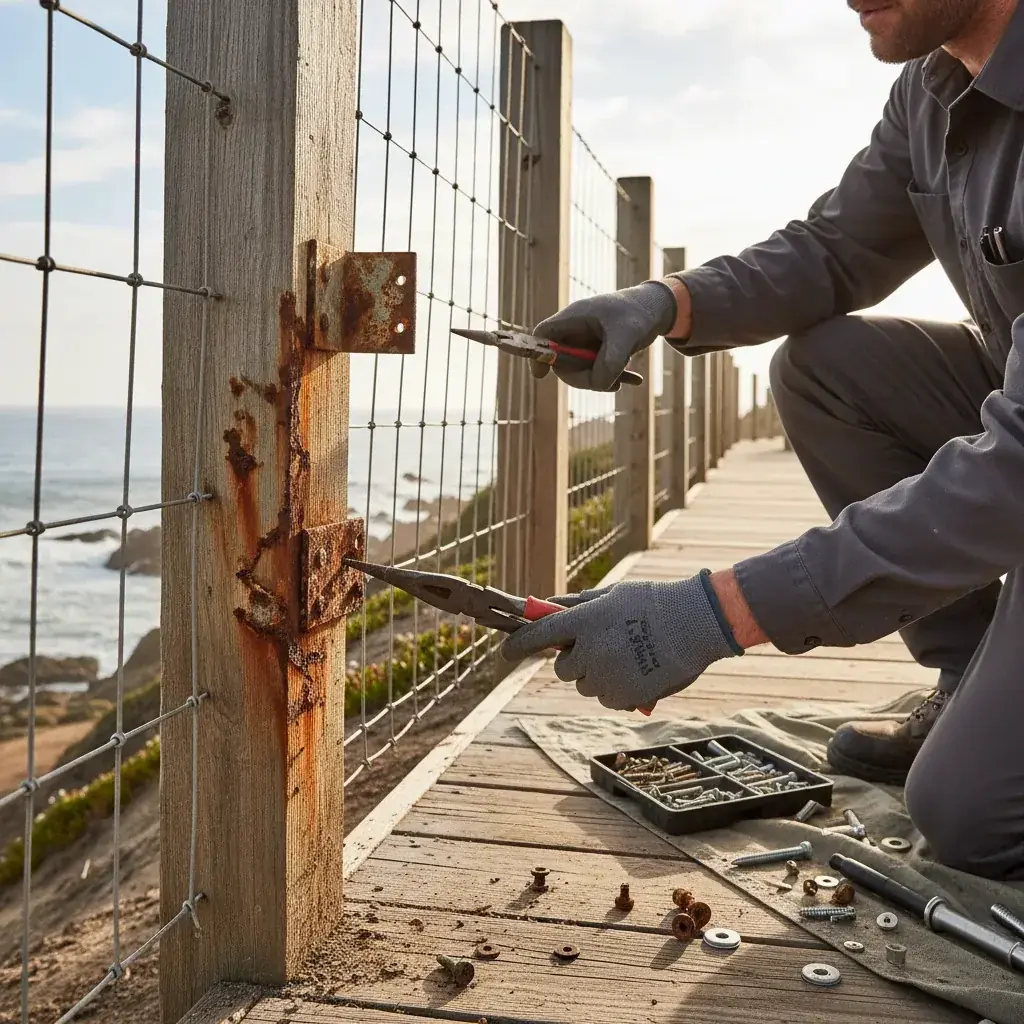
Moderate corrosion. Pitting, flaking, or hardware that’s visibly weakened but the structural steel is still sound. Here we replace the affected hardware, ties, tension bands, hinges, whatever’s compromised, with stainless steel or hot-dip galvanized parts instead of standard zinc-plated. Then we spot-treat the surrounding area the same way as surface rust. Upgrading the hardware grade at this stage is what actually breaks the rust-and-replace cycle.
Severe or structural rust. A bottom rail that’s rusted through, a post base that’s lost structural integrity, or a section where the steel itself has thinned to the point of failure. At this point repair coating won’t hold, and the corroded section or post needs to be cut out and replaced. There’s no shortcut here. A structurally compromised post is a safety issue, not a cosmetic one.
Cost depends on which tier you’re in and how much of the fence is affected. A single-post spot treatment is a small job; replacing a run of rusted-through bottom rail or several post bases is a bigger one. We give a firm number after we’ve looked at the fence in person, since rust that looks minor on the surface sometimes goes deeper once we get a wire brush on it.
How to prevent rust from coming back
The material and hardware grade you choose upfront matters more than any touch-up schedule.
Vinyl-coated or aluminized chain-link wire resists coastal corrosion far better than standard galvanized mesh, and it’s a straightforward upgrade on a new install or section replacement.
Hot-dip galvanized or stainless hardware for ties, tension bands, and fittings anywhere near the coast. The cost difference over standard zinc-plated parts is small next to what it saves in repeat repair calls.
Powder-coated aluminum instead of steel for ornamental fencing within a couple miles of the ocean, since aluminum doesn’t rust the way steel does.
Keep sprinklers off the fence line. Redirecting a sprinkler head that’s been soaking a post base for years is the single easiest fix for inland rust.
Annual touch-up. A quick inspection and touch-up coat once a year, especially before the rainy season, catches surface rust before it becomes a hardware replacement.
For homes closer to the water, our coastal salt-air hardware guide goes deeper on material choices that hold up long-term. If you’re weighing wrought iron for a new install, our wrought iron fence guide covers what to expect from the material here. Either way, our fence repair team can tell you within one visit which tier your rust falls into.
Frequently asked questions
How do I know if my chain-link fence rust is just cosmetic or a bigger problem?
Press on the rusted area with a screwdriver or your thumb. If the metal flexes, flakes away, or feels thin, it’s past cosmetic and into structural territory. Surface rust that’s just discoloration with solid metal underneath is a straightforward touch-up.
Can a rusted wrought iron fence be repaired instead of replaced?
In most cases, yes. Surface and moderate rust respond well to sanding, rust converter, and repainting, or hardware replacement at the affected points. Full replacement is usually only necessary when a post base or structural member has rusted through.
Does living near the coast mean my metal fence will always rust faster?
It does increase the rate of corrosion, but the right materials close most of that gap. Vinyl-coated chain link, stainless or hot-dip galvanized hardware, and powder-coated aluminum ornamental fencing all hold up well within a couple miles of the ocean.
Can sprinklers really cause fence rust even far from the beach?
Yes. Constant moisture from an overspray sprinkler head does the same damage to unprotected steel that salt air does near the coast, just from a different source. It’s one of the most common causes we see in inland neighborhoods.
How often should I touch up rust spots on a metal fence?
An annual inspection, ideally before the rainy season, catches most surface rust while it’s still a quick fix. Waiting longer usually means the difference between a touch-up and a hardware or section replacement.
Is it worth upgrading to stainless hardware on an older chain-link fence instead of replacing the whole fence?
Often, yes. If the mesh and posts are still structurally sound, replacing just the rusted hardware with stainless or hot-dip galvanized parts extends the fence’s life significantly for a lot less than a full replacement.