A pool fence in San Diego is a drowning-prevention layout, then a style. California Health and Safety Code section 115923 lists what an enclosure must do. Section 115922 lists seven drowning-prevention features and requires at least two of them when a building permit is issued for a new or remodeled private single-family pool or spa, with the combinations that do not count. Title 24 is not the source used on this page.
Mesh, glass, and aluminum are three common looks. None of them “passes code” as a material name. The installed gate, height, gaps, and climbable face have to match 115923 if you are using an enclosure, and the local building official still inspects the property.
Fence Pros San Diego is a referral service. It does not set prices, inspect for the city, or install barriers.
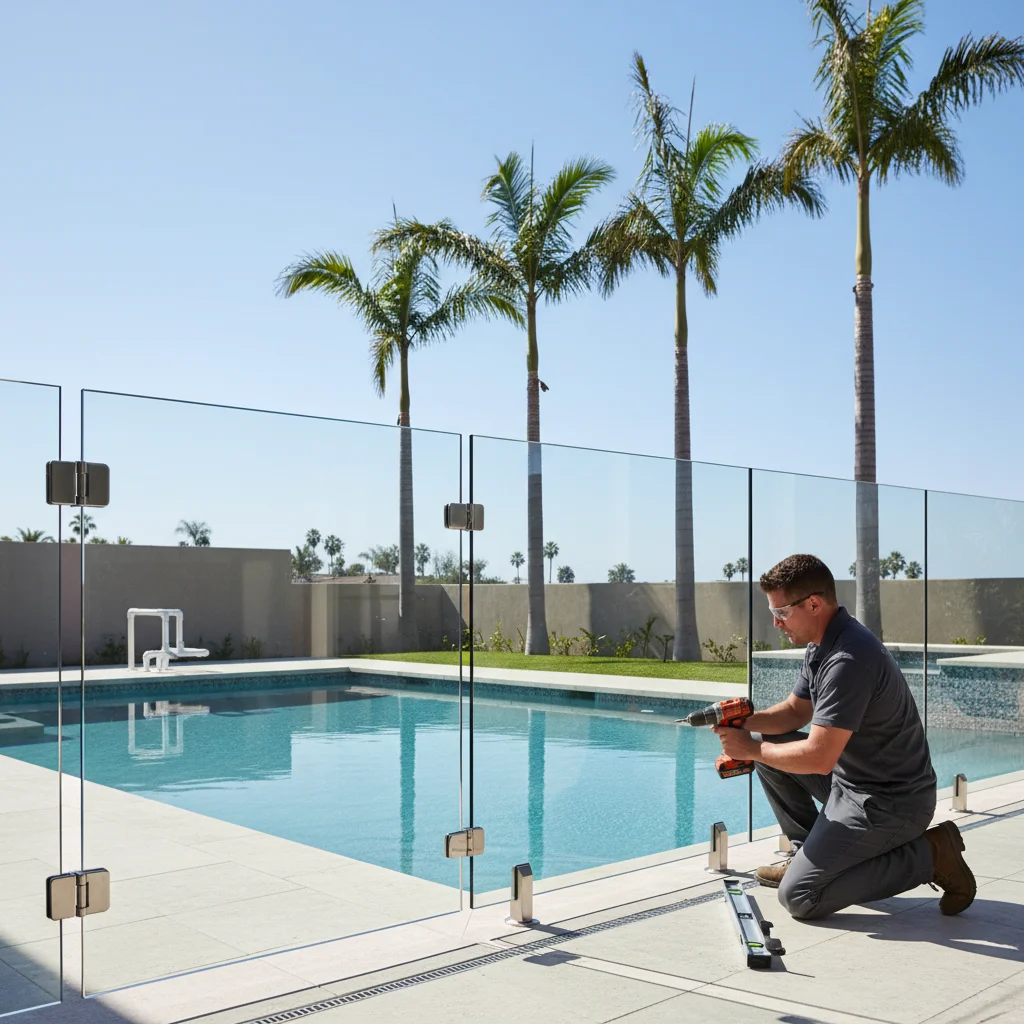
What kind of pool fence do San Diego homes need?
If the barrier is an enclosure under 115923, that statute requires all of the following:
- Access gates open away from the swimming pool, and are self-closing with a self-latching device placed no lower than 60 inches above the ground
- A minimum height of 60 inches
- A maximum vertical clearance from the ground to the bottom of the enclosure of two inches
- Gaps or voids, if any, do not allow passage of a sphere equal to or greater than four inches in diameter
- An outside surface free of protrusions, cavities, or other physical characteristics that would serve as handholds or footholds that could enable a child below the age of five years to climb over
That is the enclosure list. It is not a 45-inch rail chart, not a 48-inch above-ground-wall rule, and not a Title 24 rewrite.
When a building permit is issued for construction or remodeling of a private single-family pool or spa, 115922(a) requires at least two of seven listed features, unless an exception in that article applies. One of those seven is an enclosure that meets 115923 and isolates the pool or spa from the home. Another is removable mesh fencing that meets ASTM International F2286, with a self-closing, self-latching gate that can take a key lockable device. Other listed features include qualifying safety covers, door and window exit alarms, a door self-latch (release no lower than 54 inches above the floor on doors with direct pool access), a listed in-water alarm, and other independently verified means. Subdivision (b) says certain pairs on the same or separate doors, or a cover plus that in-water alarm, do not satisfy the two-feature rule.
House-door hardware at 54 inches and enclosure-gate hardware at 60 inches are different numbers in different sections. Do not mix them.
The local building official inspects the required features before final approval of that permitted pool or spa work (115922(c)). A deck-only project may or may not be that permit. Ask the desk.
For a question list, see California pool fence code. For installation referral, see pool fence.
Mesh, glass, and aluminum as looks
The Swimming Pool Safety Act governs listed features. It does not pick a style.
Removable mesh
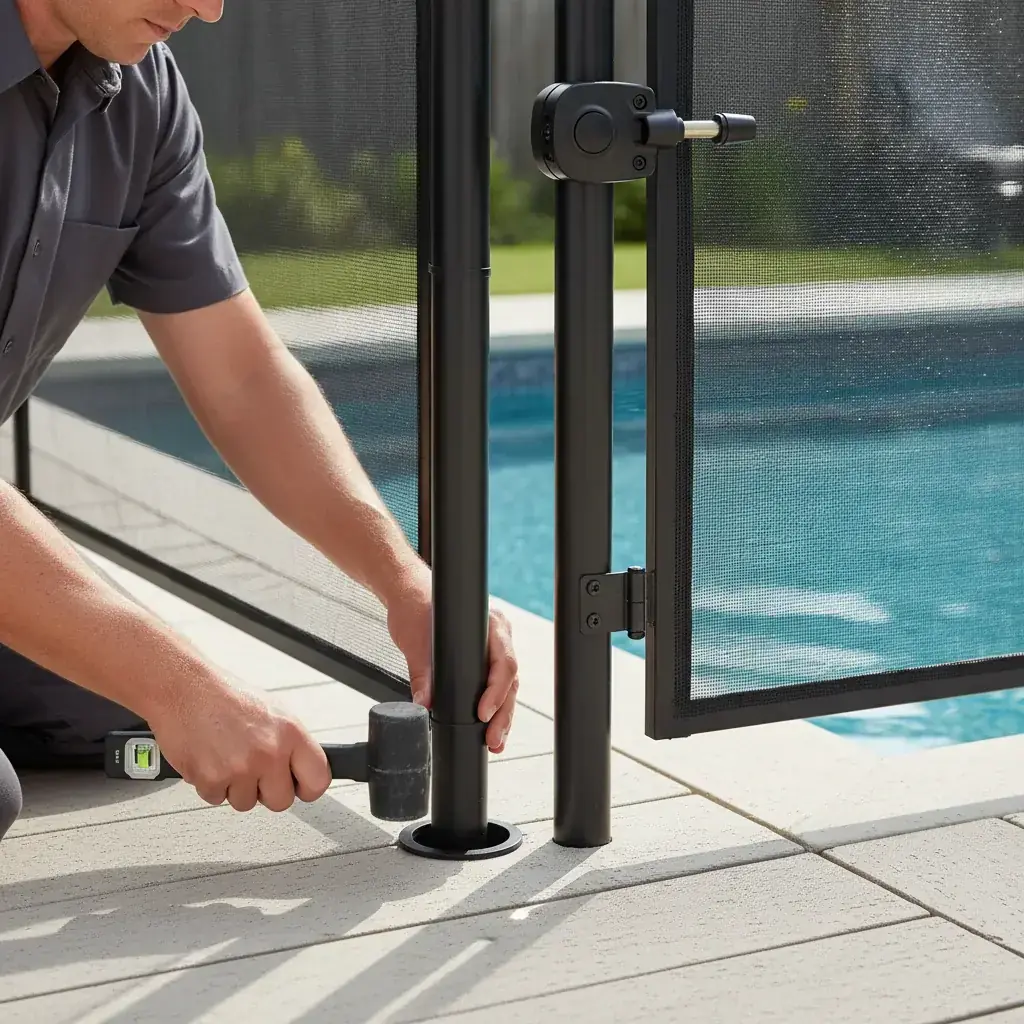
See-through mesh on sleeved posts is a common family layout. 115922 names ASTM F2286 mesh, with the matching gate, as one optional feature. That does not make every mesh kit compliant. Climbing, gaps, and how adults remove and restore sections still have to be in the proposal. More selection questions: removable mesh pool barriers.
Frameless glass
Tempered panels on spigots keep a view. Coastal lots still have to name the metal in the spigots and fasteners. Glass does not exempt 115923 geometry.
Aluminum
Open picket aluminum is a see-through metal look. Picket spacing and the outside climbable face are 115923 questions, not a “wrought iron style passes” claim.
A verified per-foot price for any of these is not in the claims ledger. Compare itemized proposals for the same line, gates, and deck surface.
Gates and hardware
For an enclosure gate, 115923(a) is the sourced rule: opens away from the pool, self-closing, self-latching, latch no lower than 60 inches above the ground. Cheap hinges that sag are a field failure mode. This page does not endorse a brand. Name the hinge and latch in the bid. See pool gate that will not self-close.
Coastal lots
Salt air attacks ferrous hardware. Ask for the coating and the fastener alloy in writing. See coastal fence hardware. AAMA numbers and “316 is mandatory” are not in the HSC files used here. Treat them as product questions for the independent contractor, not as statute.
Permits besides the Pool Safety Act
City of San Diego Table 142-03A is a fence-division building-permit table (under 7 feet vs 7 feet or greater). It is not a pool-barrier permit cookbook. Unincorporated County PDS 070 is the County fence form. Pool barrier review still belongs with the building official for that address. This page does not claim that every pool fence in the county needs a building permit, or that the contractor “should pull it.”
C-13 fencing covers fences, gates, railings, and barriers, and excludes masonry walls. Check the named firm at the CSLB license check.
Frequently asked questions
What is the cheapest pool fence that still meets California enclosure rules?
This page does not publish prices. Mesh is often bid below glass. Cheap and compliant are not the same. Compare 115923 geometry and 115922 features, then the totals.
How much does a pool fence cost per linear foot in San Diego?
No verified band is in the claims ledger. Fence Pros San Diego does not set contractor prices.
Do I need a permit to install a pool fence in San Diego?
Ask the building official for the address. If the work is tied to a pool or spa building permit, 115922(c) puts inspection of the required drowning-prevention features on that official. Fence height permits (City Table 142-03A, County PDS 070) are a separate desk question.
What pool fence material holds up best near the San Diego coast?
Non-ferrous or well-coated metal and glass panels avoid rust on the face. Hardware is still the weak point. Name alloys and coatings in the bid.
How tall does a pool enclosure have to be in California?
HSC 115923(b): a minimum height of 60 inches, plus the gate, gap, ground clearance, and climbable-face rules in that section. Local amendments can add review. Confirm the parcel.
Can I do a DIY pool fence to save money?
You can buy a kit. Final approval of permitted pool or spa work still sits with the local official (115922(c)). Fence Pros San Diego does not inspect DIY work.
When to call us
Call when you want an independent fence professional to lay out mesh, glass, or aluminum against the routes to the water. Call us at (858) 400-4906 and we’ll connect you with a licensed fence contractor.