A wood fence gate in San Diego runs $400 to $1,200 installed for a standard walk-through, and $1,500 to $4,000 or more for a wide or driveway gate. Most wood gate problems are sag, not rot. The fix is almost always a steel frame or diagonal brace, set on posts strong enough to carry the gate’s full weight.
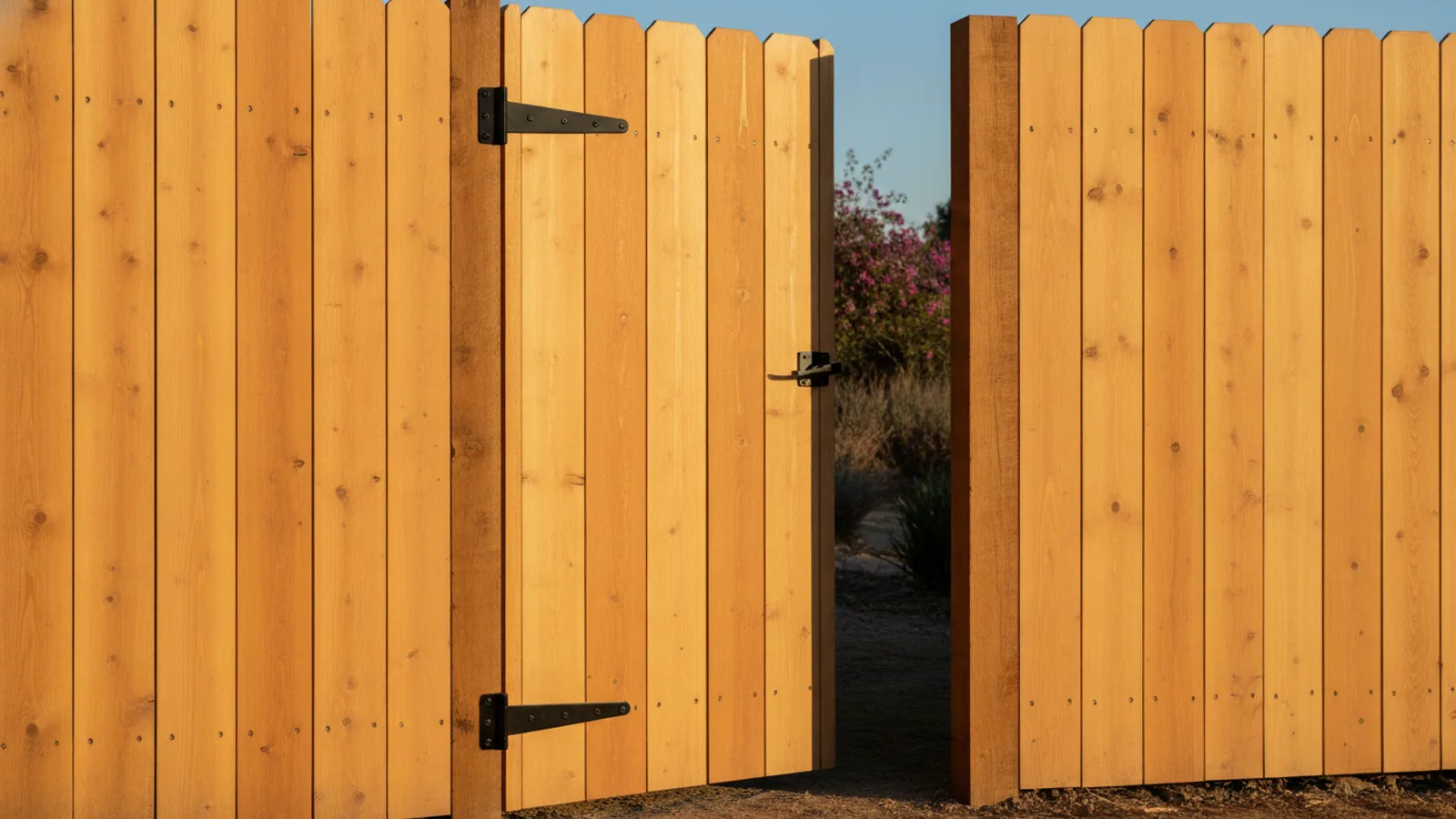
Homeowners searching this term have usually already watched a gate drag across the ground or refuse to latch. That’s not a wood-quality problem in most cases. A wood gate is a cantilevered structure hanging off two posts, and it fails at the hinge side long before the boards themselves rot out. This guide covers what a wood fence gate actually costs installed in San Diego, why so many sag within a few years of a hot, dry climate, and what separates a gate that holds its line from one that needs adjusting every summer.
What a wood fence gate costs in San Diego
Price depends on width, whether it swings alone or with a matching panel, and whether the frame includes internal steel reinforcement. These are typical installed ranges for professional work with cedar or redwood boards.
| Gate type | Typical installed range | What drives the price |
|---|---|---|
| Walk-through gate, cedar or redwood (3-4 ft) | $400-$900 | Board grade, post condition, standard hardware |
| Wide or double walk-through gate (5-8 ft) | $800-$1,500 | Heavier hardware, often needs a steel frame to prevent sag |
| Driveway wood gate, manual swing (10-16 ft) | $1,500-$4,000 | Post size and depth, internal frame, drop rod or cane bolt |
| Automated driveway wood gate | $3,000-$6,500+ | Motor, safety sensors, keypad or remote entry |
| Stainless or powder-coated hardware upgrade | $150-$400 | Retrofit on an existing gate, not a new build |
| Gate repair vs. full replacement | $150-$450 to repair | Posts and frame sound enough to save, or not |
A same-day estimate from a gate installation contractor is the fastest way to know which side of these ranges a specific yard lands on, since post condition and existing fence height change the labor scope more than the gate itself does. When a sagging or sticking gate is the actual problem rather than a new build, our gate repair cost guide breaks down when a $200 hinge fix is enough and when the posts need to come out.
Why wood gates sag in San Diego
A wood gate is dead weight hanging off two hinges, and San Diego’s climate works against it in ways a lot of homeowners don’t expect. A standard 4-foot wood gate weighs 60 to 100 pounds, and a wide double gate or driveway gate can run well past that. Hang that much weight on undersized hinges and a single 4x4 wood post, and the post starts to lean within a season or two, especially in looser coastal soil.
Heat cycles make it worse. Boards expand and contract through San Diego’s dry heat and cooler nights, and repeated cycles work screws loose at the hinge side faster than most people expect for a coastal climate. That’s the same swelling and shrinking that makes a gate stick in summer and swing free in winter, since the wood itself is changing dimension, not just the hardware.
The fix builders use is straightforward. A steel gate frame, or at minimum a diagonal brace running from the bottom hinge corner to the top latch corner, keeps the gate square under its own weight instead of racking into a parallelogram. Posts matter just as much: a 4x6 or steel post set in a poured concrete footing, sized for the specific gate’s width and weight, holds a plumb line for years where an undersized post won’t. Heavy-duty adjustable hinges let a contractor correct minor settling before it turns into a dragging gate. Skip any one of these three and the gate sags regardless of how good the boards are.
Choosing wood and hardware for San Diego’s climate
Cedar and redwood are the standard choices for a gate because both resist rot and insects naturally, without pressure treatment. Redwood holds a stain color longer and resists warping slightly better in direct sun exposure; cedar costs less and is easier to source in wider boards for a solid gate face. Douglas fir shows up mostly in the internal frame rather than the visible boards, since it’s stronger per dollar but takes stain less evenly. For homeowners comparing options at the fence level rather than just the gate, our guide to the best wood for a fence in San Diego covers the same tradeoffs in more depth.
Hardware matters more near the coast than the wood species does. Standard zinc-plated hinges and latches corrode within a couple of years anywhere close to salt air, which describes a lot of San Diego County even a few miles inland. Stainless steel or powder-coated steel hardware is worth the modest upcharge near the coastline in places like Del Mar, where salt exposure is constant and cheap hardware fails fast. Self-closing, adjustable hinges are worth the extra cost on any gate, since they let a contractor take up slack as the gate settles instead of waiting for it to drag.
Staining and sealing keep the wood itself from splitting or graying prematurely. A new wood gate should get sealed within the first few weeks, and re-stained roughly every two to three years depending on sun exposure, matching the cadence for the rest of a wood fence. A gate that faces west and gets full afternoon sun needs it closer to every two years. Fence staining pros in the San Diego network time gate and fence staining together so the color matches across the whole line, rather than staining the fence panels and leaving the gate to weather on its own schedule.
Wood gate vs. vinyl vs. iron: when wood is the right call
Wood is the right choice when the goal is matching an existing wood fence, keeping upfront cost lower than vinyl or iron, or getting a natural look that stains to any color. It’s the wrong choice for a homeowner who wants zero maintenance, since wood needs periodic staining and occasional hardware checks that vinyl and iron don’t.
Vinyl gates cost more upfront than a comparable wood gate but need no staining and resist sagging better out of the box, since most quality vinyl gates already include an internal steel frame as standard rather than an upgrade. Our vinyl fence gate guide covers those costs directly if a side-by-side comparison is the deciding factor. Iron and steel gates cost the most and last the longest with almost no maintenance beyond an occasional touch-up on the powder coat, and they’re the standard choice for driveway entries where security and a heavier, more formal look matter more than upfront price; our custom iron gates guide covers that end of the range.
For a straightforward side or backyard walk-through gate on a property that already has a wood fence, wood is usually the practical call. It matches what’s already there, costs the least to install, and holds up fine for a decade or more when it’s built with a proper frame and set on solid posts.
Frequently asked questions
How long does a wood gate last in San Diego?
A wood gate built with a steel or diagonally braced frame and set on properly sized posts typically lasts 10 to 15 years before the frame or hardware needs real attention. Boards themselves can last even longer with regular staining, but the hinge side and post almost always fail before the wood does, since that’s where the weight and movement concentrate.
Can you add a gate to an existing wood fence?
Yes, and it’s a common retrofit. A contractor removes a section of fence, sets new posts sized for the gate’s width and weight, and builds the gate to match the existing panel style and stain color. The main variable is whether the existing posts nearby are solid enough to anchor the new gate posts against, since a gate needs sturdier support than a standard fence line.
Do I need a permit for a fence gate in San Diego?
Most standard walk-through gates on residential property don’t require a separate permit in San Diego, since they fall under the same height rules as the fence itself. Automated driveway gates and gates over the standard height limit can trigger permit or setback requirements depending on the city and HOA. A gate installation contractor familiar with the local rules will flag this before work starts.
Why does my wood gate stick in summer?
Wood swells with humidity and heat, and a gate that fit cleanly in the cooler months can bind against the post or ground once boards expand in summer. This is normal wood movement, not a sign of failure, though a gate that sticks badly enough to need force usually also has a hinge or post issue underneath the seasonal swelling. Trimming a swollen edge slightly and re-checking hinge tension usually solves it.
Is a steel-frame wood gate worth it?
Yes, on any gate wider than a narrow single walk-through. A steel or aluminum frame hidden inside the wood boards keeps the gate square under its own weight, which is the single biggest factor in whether a wood gate sags within a few years or holds its line for over a decade. The added cost is small compared to rebuilding a sagging gate later.
What’s the difference between repairing and replacing a sagging gate?
A sagging gate is worth repairing when the posts are still plumb and solid, since new hinges, a diagonal brace, or a hinge-side post reinforcement can fix the drag for a few hundred dollars. Replacement makes more sense once a post has rotted at the base or shifted out of plumb, since no amount of hardware adjustment holds a gate square on a post that’s already moving.
When to call us
A wood fence gate is one of the few parts of a fence that takes real engineering, since it’s the only section carrying its full weight on a moving hinge instead of standing still in the ground. Fence Pros San Diego connects homeowners with fence and gate installers across San Diego County, from a single side-yard walk-through gate to a full automated driveway entry. Call (858) 400-4906 for a same-day estimate.