Assess a sagging gate
A dragging gate can involve post movement, loose connections, or a distorted frame. Start by documenting what changed; choose a repair only after the supporting parts are assessed.
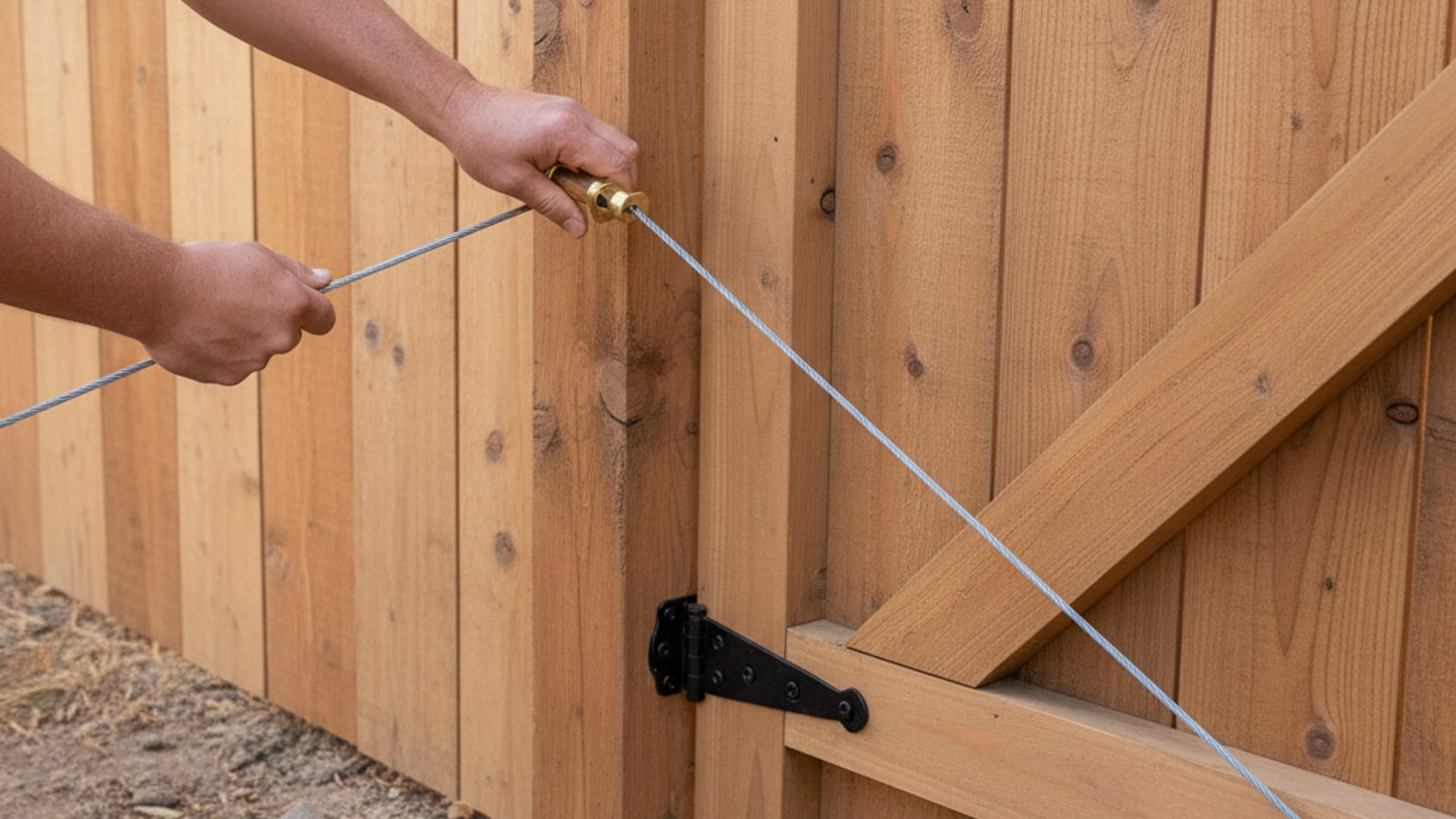
What you'll learn
- What gate movement and latch misalignment to describe
- Why posts and hinges need assessment before adding a repair kit
- Which product and hardware details help identify repair options
- When a heavy, automated, or pool gate needs professional attention
Project checklist
- Keep clear of a heavy or unstable gate and do not force it open or closed.
- Photograph the gate, hinge attachment, latch, frame, and supporting posts from safe positions.
- Note where it drags or fails to latch, and whether the problem appeared after impact or nearby work.
- Identify any existing hardware or operator model without opening powered equipment.
- Ask a contractor to compare adjustment, hardware repair, frame work, and post repair as appropriate.
A general anti-sag kit does not address every cause. Follow the exact hardware instructions for a suitable repair. Use a qualified professional for unstable, heavy, automated, or pool-barrier gates.
Prefer an independent professional for the work
Fence planning and repair across San Diego County. Leave a message and we match you with a local pro.
Keep learning.
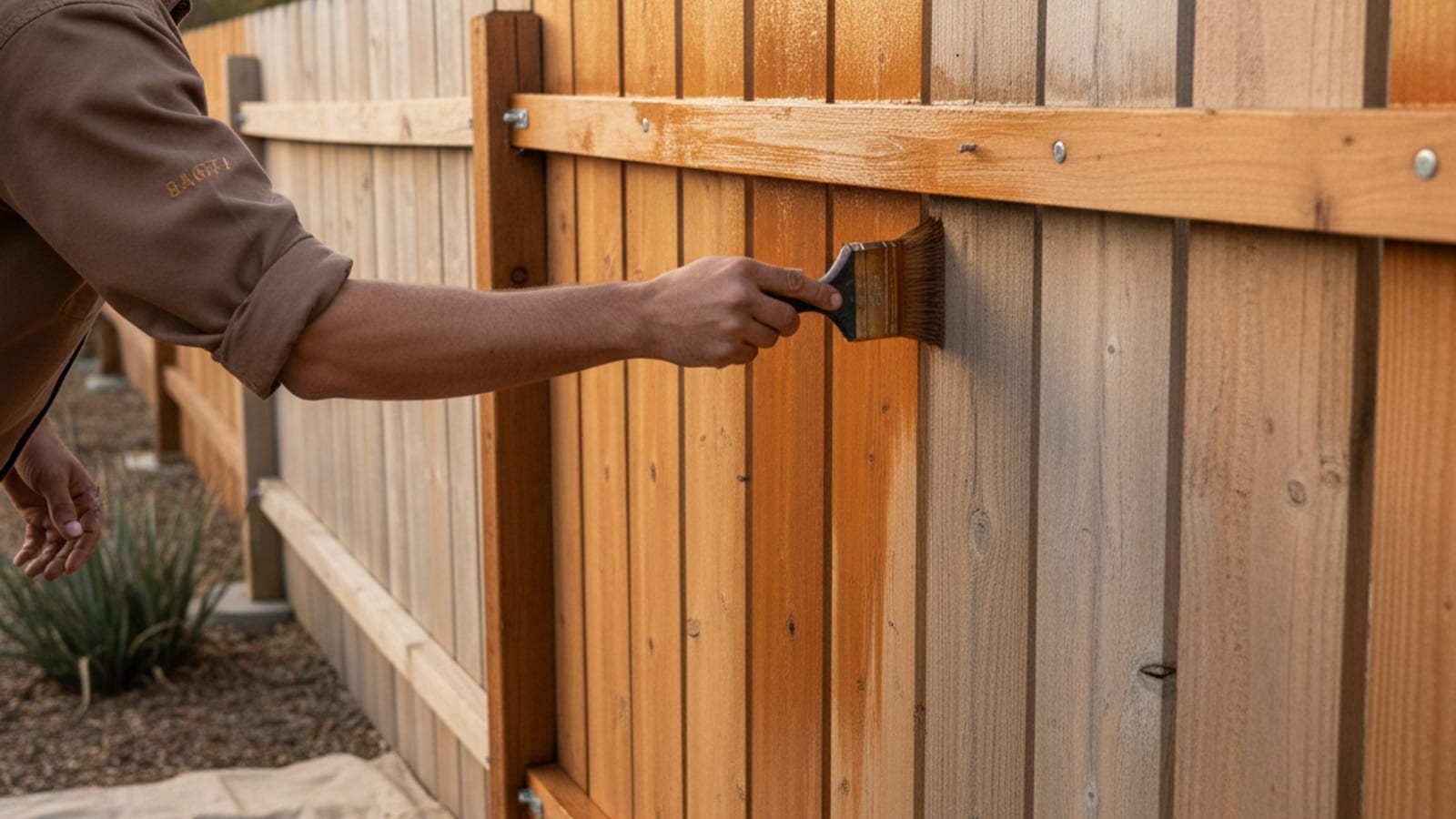
Stain and seal a wood fence
A fence finish needs preparation that matches the wood and existing coating. Use the chosen product’s instructions to plan cleaning, drying, application, and future care.
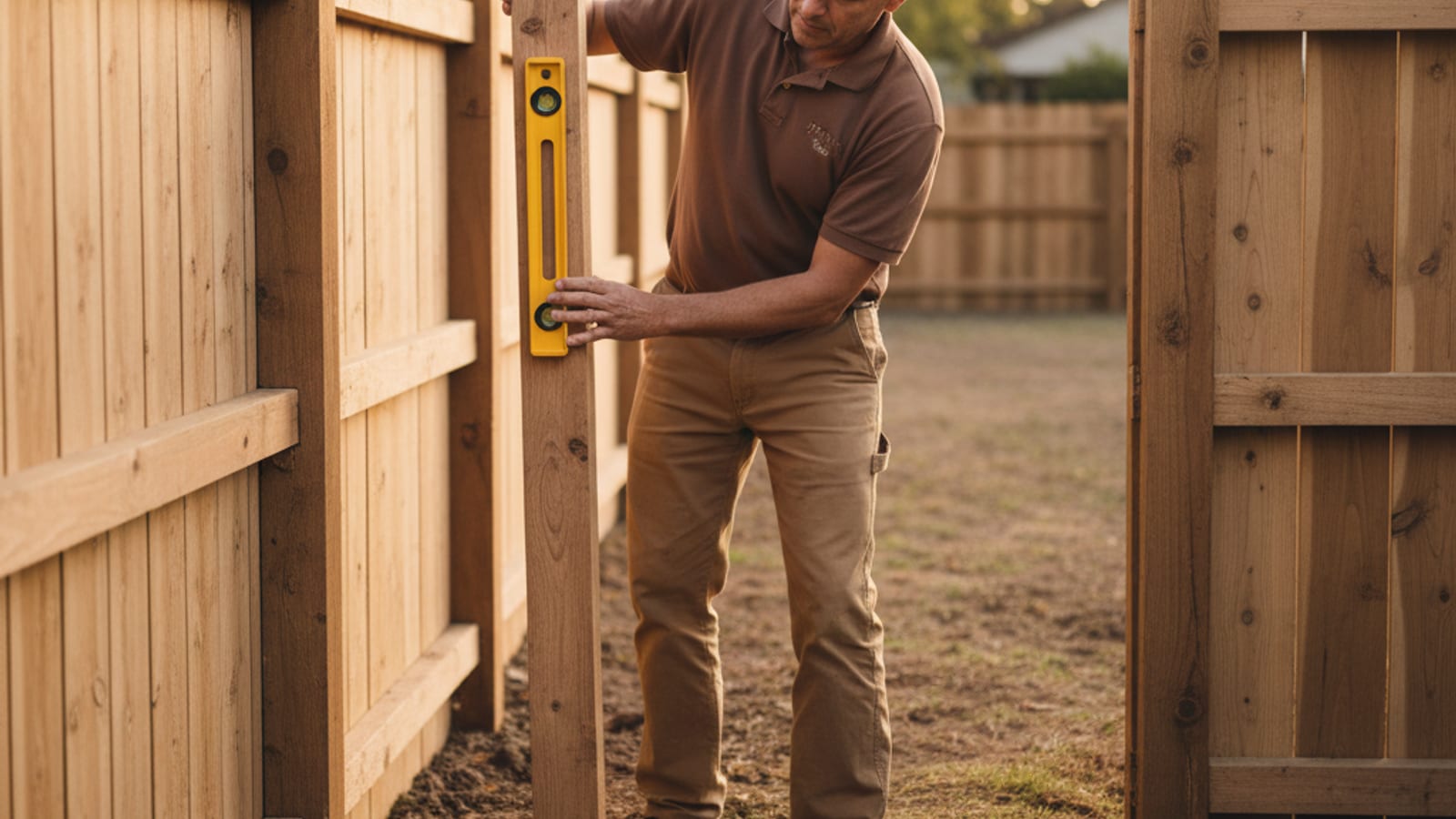
Assess a leaning fence before repair
A leaning section needs a cause identified before it is straightened. Posts, footings, connections, and surrounding ground may all need inspection. Use these observations to explain the problem to a contractor.
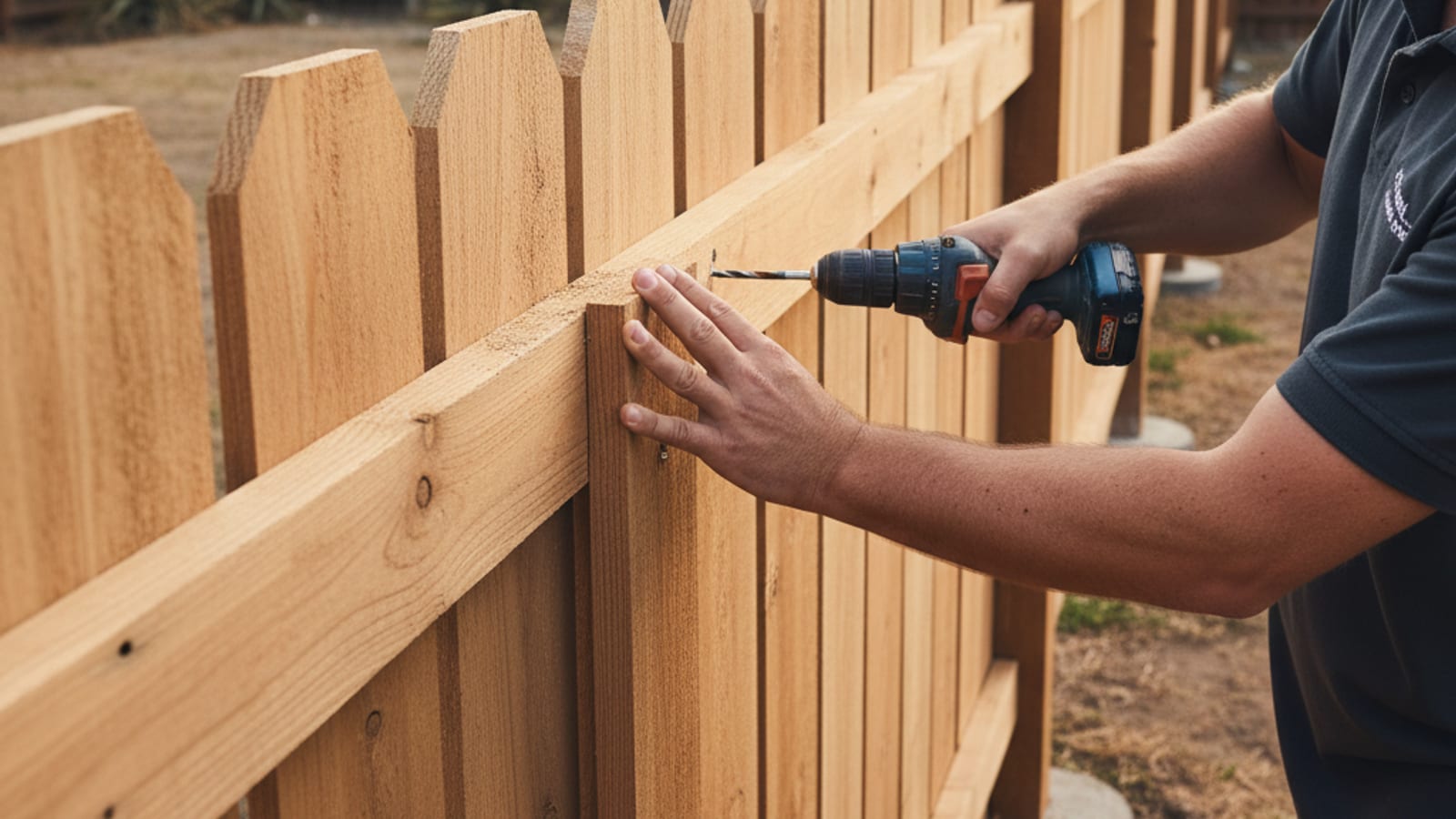
Replace broken fence pickets
A few damaged boards may be repairable when the supporting fence remains sound. Compare the replacement profile, dimensions, finish, and connections before buying materials.