Assess a leaning fence before repair
A leaning section needs a cause identified before it is straightened. Posts, footings, connections, and surrounding ground may all need inspection. Use these observations to explain the problem to a contractor.
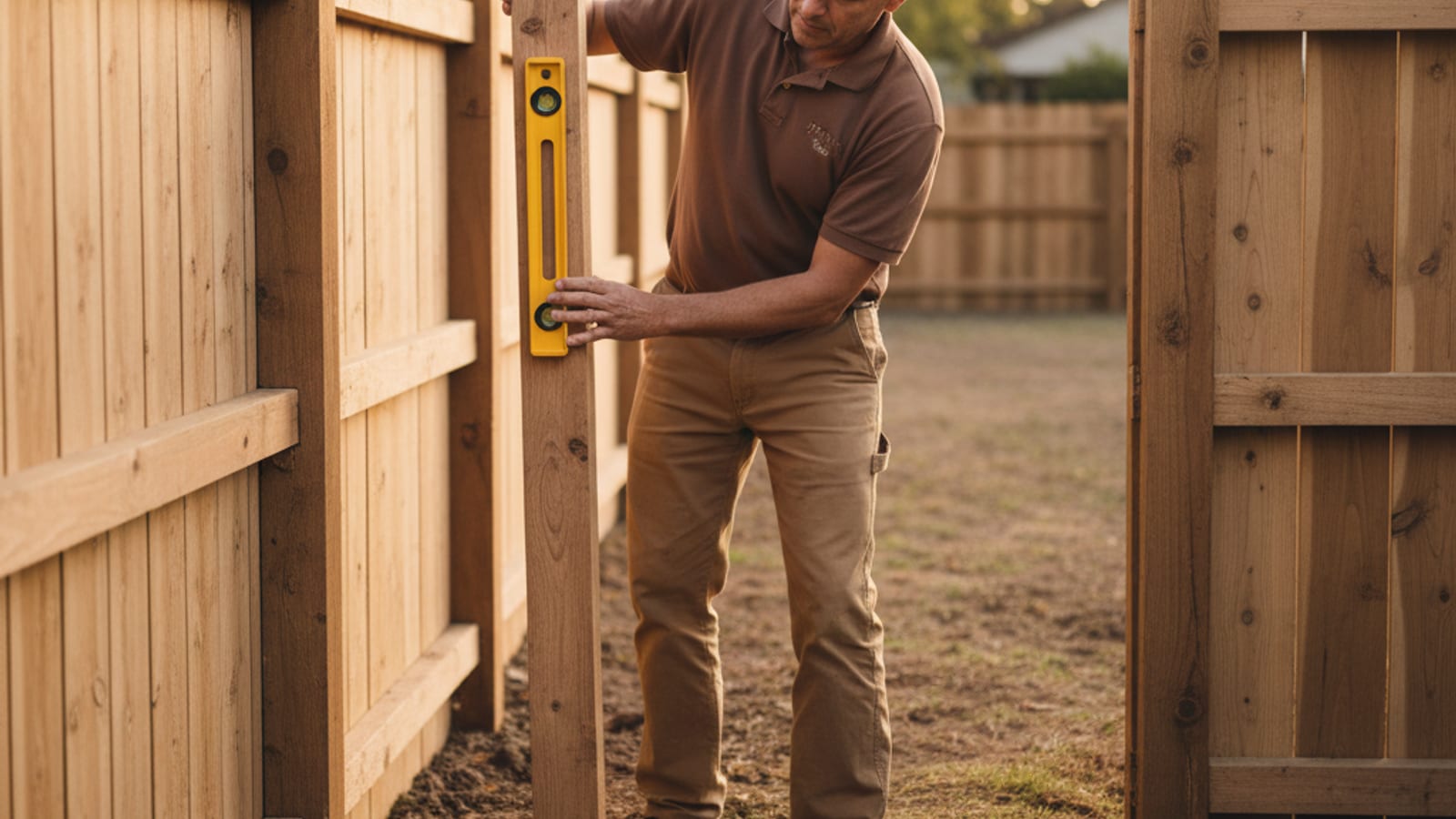
What you'll learn
- What to photograph without pushing an unstable fence
- How to distinguish a single affected post from movement along a run
- Which nearby changes may be relevant to the assessment
- What a repair proposal should say about retained and replaced parts
Project checklist
- Keep people and pets away from unstable sections; do not push or pull them to test their strength.
- From a safe location, photograph the full run, affected posts, and visible footing or rail damage.
- Note whether the leaning started after impact, wind, nearby digging, or changes in drainage.
- Tell the contractor about gates, landscaping, paving, and any uncertain property boundary.
- Ask the contractor to identify the cause and explain the support, repair, or replacement plan in writing.
A brace or repair fitting is not a universal cure. Product suitability depends on the actual damage and remaining structure. Do not start excavation or load an unstable fence to follow a general video.
Prefer an independent professional for the work
Fence planning and repair across San Diego County. Leave a message and we match you with a local pro.
Keep learning.
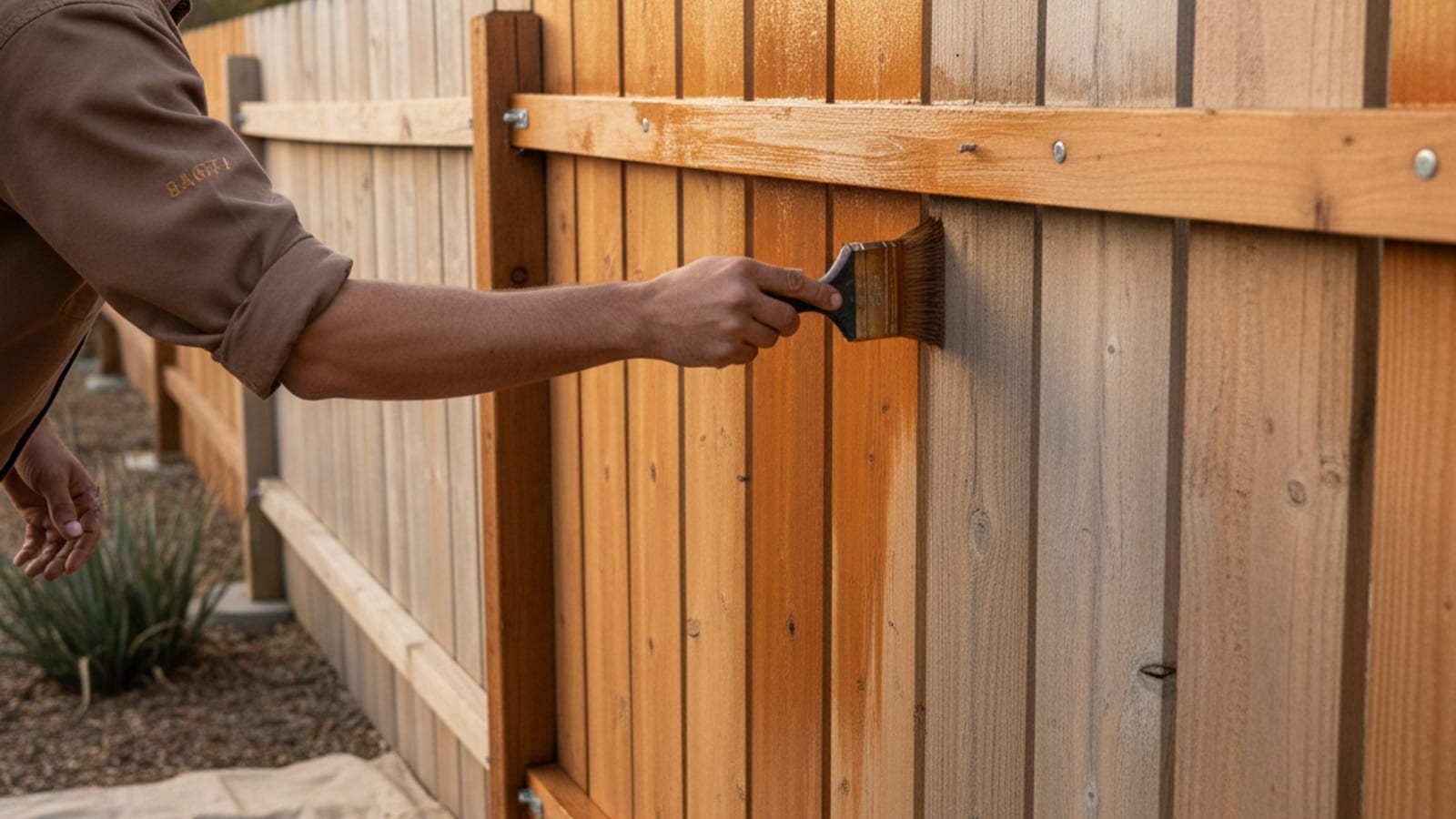
Stain and seal a wood fence
A fence finish needs preparation that matches the wood and existing coating. Use the chosen product’s instructions to plan cleaning, drying, application, and future care.
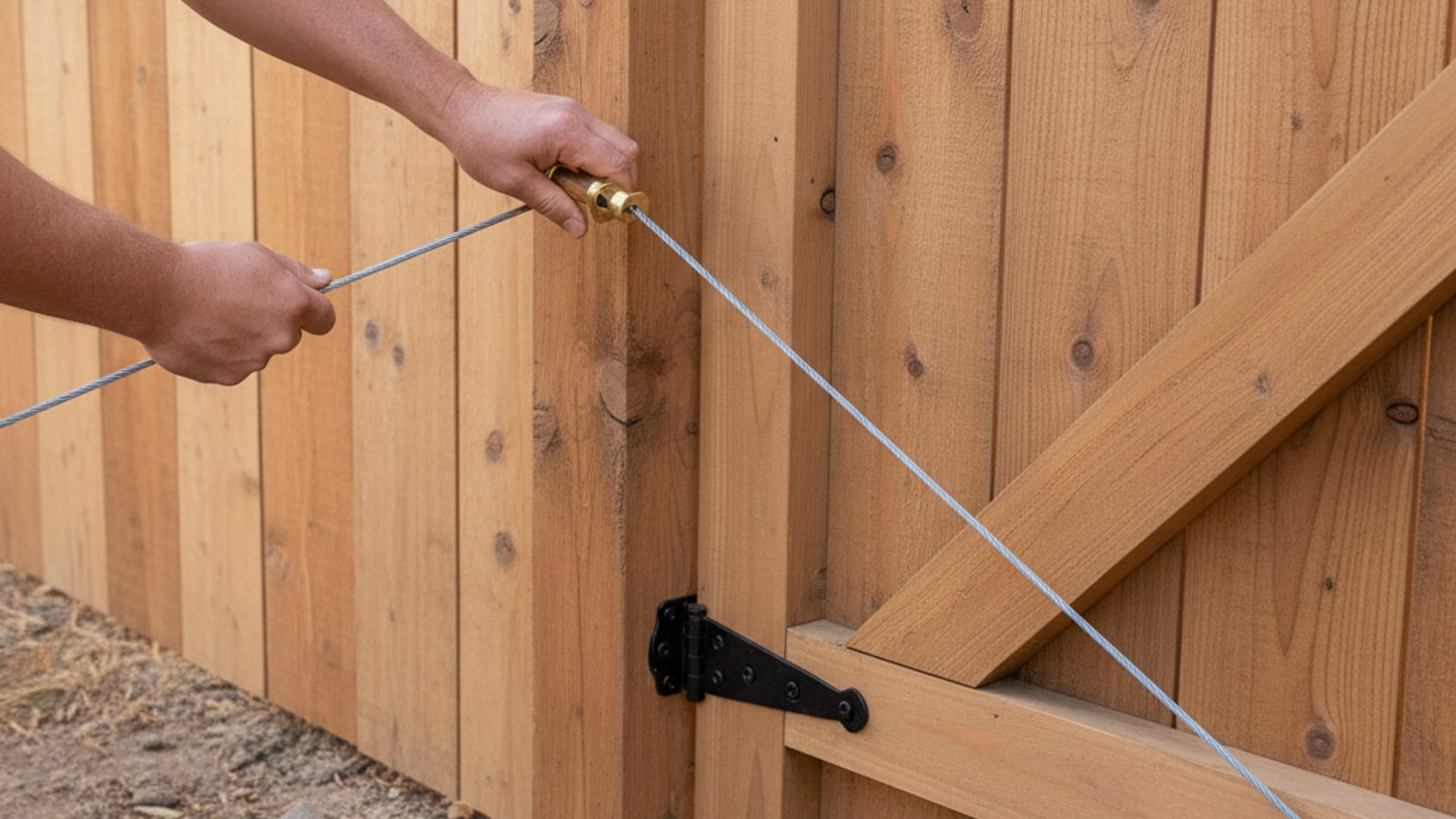
Assess a sagging gate
A dragging gate can involve post movement, loose connections, or a distorted frame. Start by documenting what changed; choose a repair only after the supporting parts are assessed.
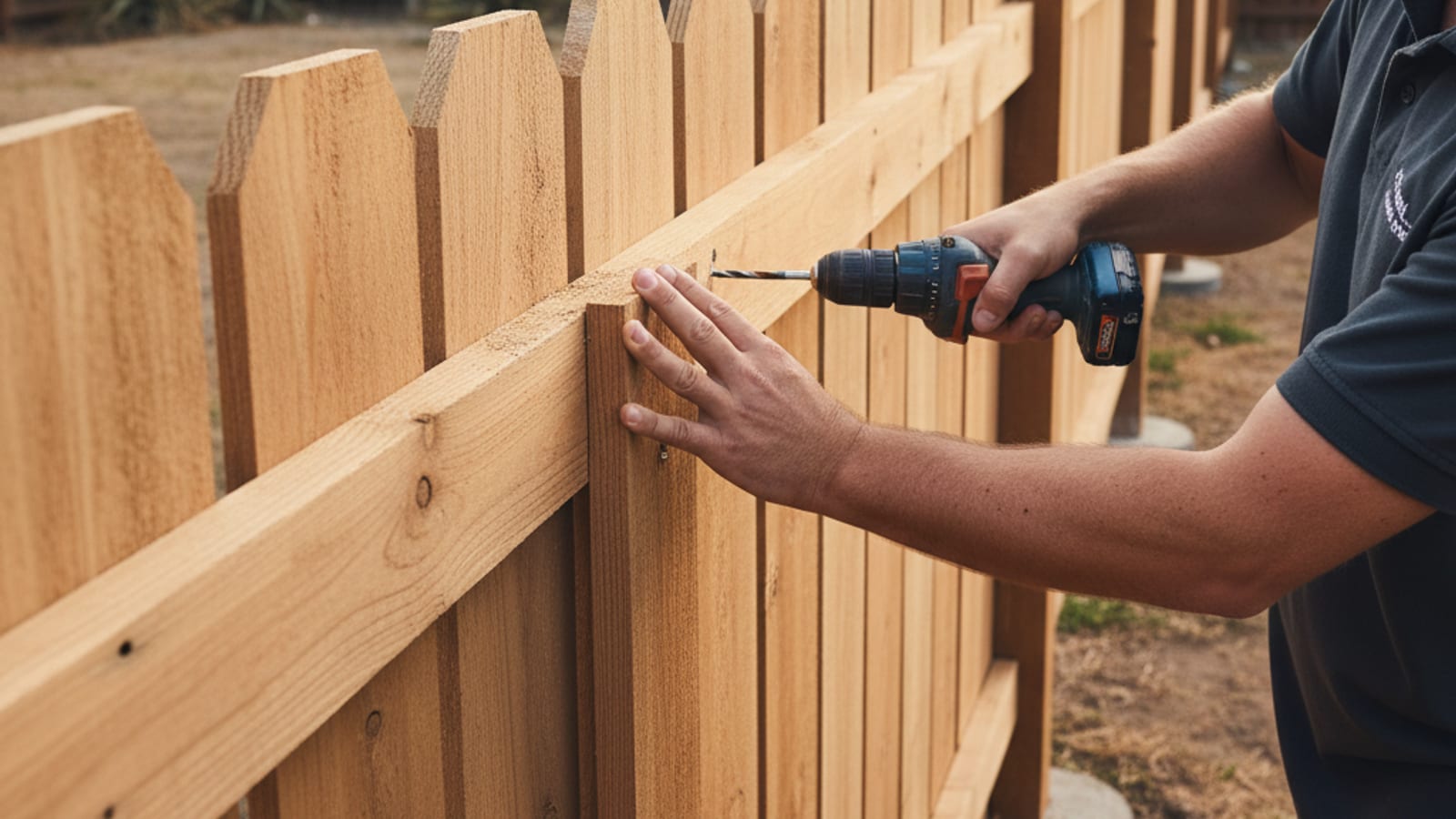
Replace broken fence pickets
A few damaged boards may be repairable when the supporting fence remains sound. Compare the replacement profile, dimensions, finish, and connections before buying materials.