The short version: an above-ground pool still needs a barrier plan, and the deck, the ladder, and the gate matter as much as the fence itself. Before anything gets built, the requirements come from your city’s building department, or from the County of San Diego if your property is unincorporated. An installer works from that answer. They don’t set it.
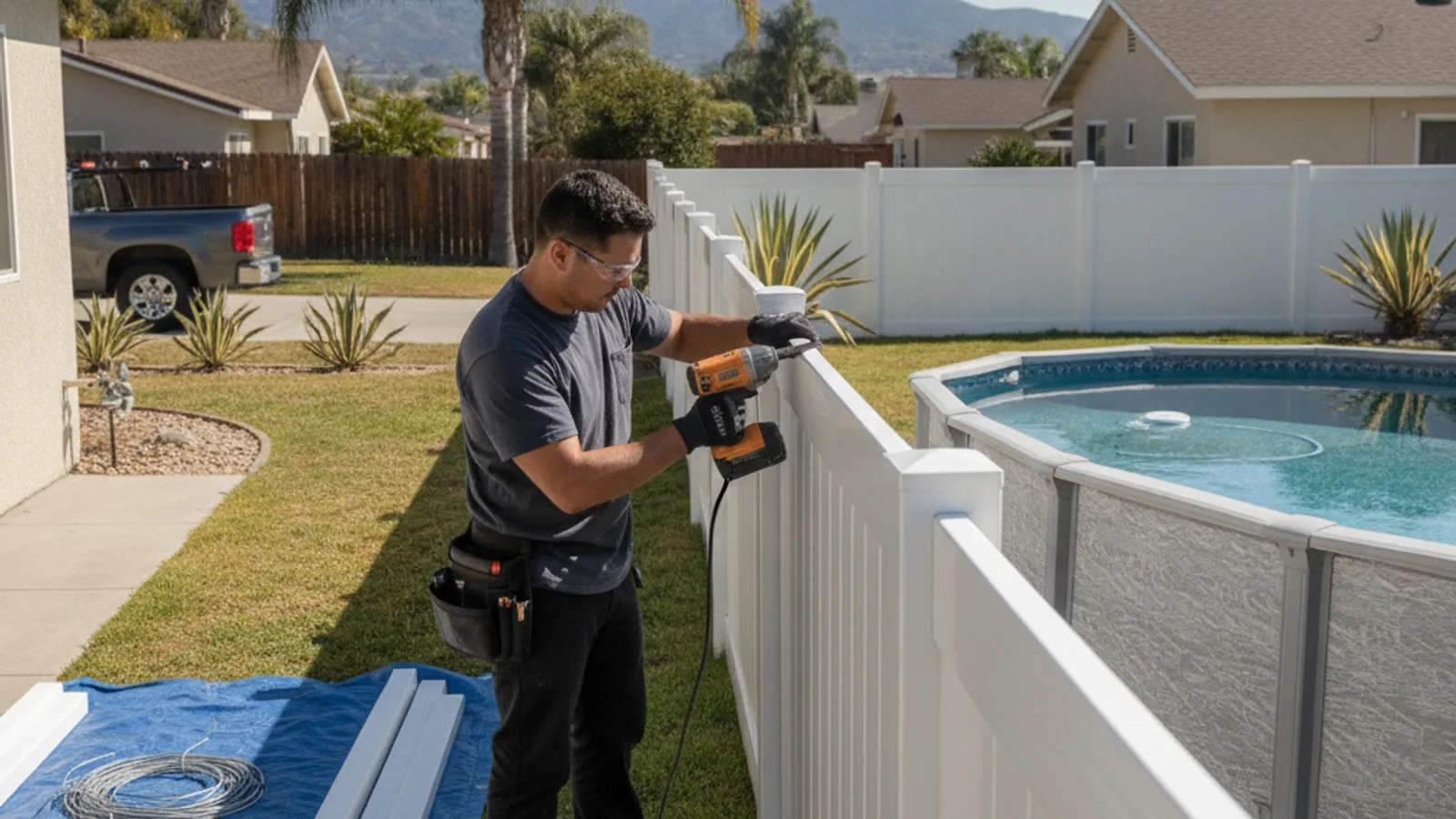
An above-ground pool looks like the easy option next to an in-ground build, and in a lot of ways it is. But the barrier question doesn’t go away just because the pool sits on top of the yard instead of dug into it. California’s building code sets pool enclosure requirements statewide, and they apply to above-ground pools the same way it applies to any other contained body of water deep enough to pose a drowning risk. What changes with an above-ground pool is the shape of the problem: instead of one continuous ground-level fence, you’re usually dealing with a deck, one or more access points at height, and a yard that already has its own perimeter fence doing a different job.
This is a planning guide for that shape of problem. It doesn’t state measurements, because the exact numbers in the code, and how your city or the county applies them, need to come from the building department before a contractor starts. Our overview of California’s pool fence code covers the broader legal picture if you haven’t read it yet.
What makes an above-ground pool fence plan different
A ground-level pool sits inside a barrier that’s built around the water. An above-ground pool often already has something acting as a barrier, whether that’s meant to or not: the pool wall itself, a perimeter yard fence, the guardrail around a deck, or some combination.
The first question a building department will ask is whether the pool’s own wall counts toward the barrier, and if so, under what conditions. Some jurisdictions allow the pool structure to serve as part of the enclosure if access points, like ladders and steps, are controlled separately. Others want an independent fence around the whole thing regardless of the pool wall’s height. This isn’t a call a fence contractor gets to make. It’s a call the plan reviewer makes, and it depends on your specific pool, deck, and lot.
If your property is in unincorporated San Diego County, that plan review runs through San Diego County Planning and Development Services rather than a city building department. If you’re inside city limits, it’s that city’s own department. Either way, the answer needs to be in hand before materials get ordered.
Deck access, ladders, and gates: the real design problem
Most above-ground pool complaints aren’t about the fence panels themselves. They’re about the access points.
A deck attached to an above-ground pool creates a walkway at height, and that walkway needs its own controlled entry, usually a self-closing, self-latching gate at the top of the stairs, not just at the bottom. A ladder that can be removed or locked when the pool isn’t in use is a common way to control access without building a second fence around the deck. A built-in stair with no removable section needs a gate instead, because a child who can climb stairs doesn’t need the ladder question solved for them.
Yard access matters too. If the pool sits inside a fenced backyard already, the department will want to know whether that existing fence, and its gates, meets the barrier standard on its own, or whether the pool needs its own separate enclosure inside the yard. A side yard gate that a toddler could open changes the answer for the whole property, not just the part near the pool.
Removable mesh, permanent panels, or the deck itself
Once the department has weighed in on what needs a barrier and where, the material question is mostly about how permanent you want the setup to be.
Removable mesh fencing is popular around above-ground pools because it comes down easily in the off season and doesn’t compete visually with the pool for space. It works well on a ground-level pool but needs its own posts and footings set correctly around a deck, since the mounting has to hold up to real force from a leaning child or a pet. Our removable mesh pool safety fence guide goes deeper into how that system is installed and maintained.
Permanent panel fencing, whether aluminum, vinyl, or ornamental steel, gives a fixed barrier that doesn’t need to be reinstalled each season, which matters if the pool stays up and full for most of the year. It also tends to match the yard’s existing fence style more closely, which some HOAs and neighbors care about even when the building department doesn’t.
Deck-mounted barriers, built into the guardrail itself, work when the deck is the primary access point and the ground-level perimeter is already handled by an existing yard fence. This is the option that depends most heavily on what the plan reviewer decides counts as adequate, since a deck guardrail built to normal residential height standards isn’t automatically a pool barrier.
The pool fence service page covers material options in more depth, and pairing that with a gate installation that’s specced for self-closing hardware is usually the other half of the job.
What still needs confirming before anything is built
None of the specific numbers, the barrier height, gap tolerances, mesh opening sizes, latch placement, or which way a gate has to swing, are things this page will state, because they need to be confirmed against the current code text and your local building department’s interpretation of it, not repeated from memory or from another site. That’s true for both incorporated cities and for unincorporated County land, and it’s true whether the pool is new or you’re adding a barrier to one that’s already up.
What is useful to know going in: this review happens before installation, not after, and the department’s answer shapes which of the options above actually apply to your yard. A contractor who tells you a number without a source, or skips the building department step entirely, is a red flag regardless of how good their fence work looks.
This applies just as much to an above-ground pool that’s been up for years without a compliant barrier as it does to a brand new install. Selling a home with an unenclosed or improperly enclosed pool can trigger the same review at closing that a new installation would trigger up front, so it’s worth getting the barrier question settled well before a listing goes live, not during escrow when there’s less room to fix it properly.
Retrofitting an existing above-ground pool
A lot of above-ground pools went up without a real barrier plan, especially older installs where the pool predates a property’s current owner. If that describes your situation, the process is the same as planning a new barrier: start with the building department or County PDS determination, then work backward to which materials and access controls actually satisfy it. Retrofitting sometimes costs more in labor than building a barrier alongside a new pool, simply because the deck, ladder, and landscaping are already in place and have to be worked around rather than planned from a blank yard. That’s a real consideration when comparing quotes, and it’s worth asking a contractor directly how they’d sequence the work around your existing setup.
What a fence pro needs to quote the project
Once you know what the building department requires, a fence pro you’re matched with can put together a real quote. Bring the pool’s diameter and height, whether it has an attached deck, where the ladder or stairs sit, and what fence already exists around the yard. Photos of the current setup help. If you’ve already gotten a written determination from the building department or County PDS, bring that too, since it tells the installer exactly what they’re building to.
Frequently asked questions
Does an above-ground pool need its own fence if the yard is already fenced?
It depends on whether the existing yard fence and its gates meet the pool barrier standard on their own. That determination comes from the building department or, for unincorporated County land, from Planning and Development Services, not from a general assumption either way.
Can the pool wall itself count as part of the barrier?
In some cases the wall of an above-ground pool can serve as part of the required barrier if access points like ladders and stairs are separately controlled. Whether that applies to your pool is a plan-review question, not something an installer can decide on-site.
Is removable mesh fencing allowed around an above-ground pool?
Removable mesh is a common choice, but it still has to be installed and mounted in a way that satisfies the current barrier requirements, and the deck attachment matters more with an above-ground pool than a ground-level one.
Who do I contact about pool barrier rules for an unincorporated property near Lakeside or Alpine?
San Diego County Planning and Development Services handles building and pool-barrier review for unincorporated areas. Properties inside a city, like El Cajon or Santee, go through that city’s own building department instead.
When to call us
If you’re planning a new barrier around an above-ground pool, or replacing one that’s failing or no longer meets current expectations, this is work that should involve a licensed contractor from the start, especially around gates and deck attachment. Call (858) 400-4906 with your pool’s dimensions and deck layout ready, and we’ll connect you with a licensed independent local fence contractor.