A dog ear fence uses vertical wood pickets with both top corners clipped. For San Diego homeowners, it offers a simple privacy-fence look without ornate trim or a complicated pattern. The real decisions involve board layout, wood choice, posts, gates, and site conditions.
What is a dog ear wood fence?
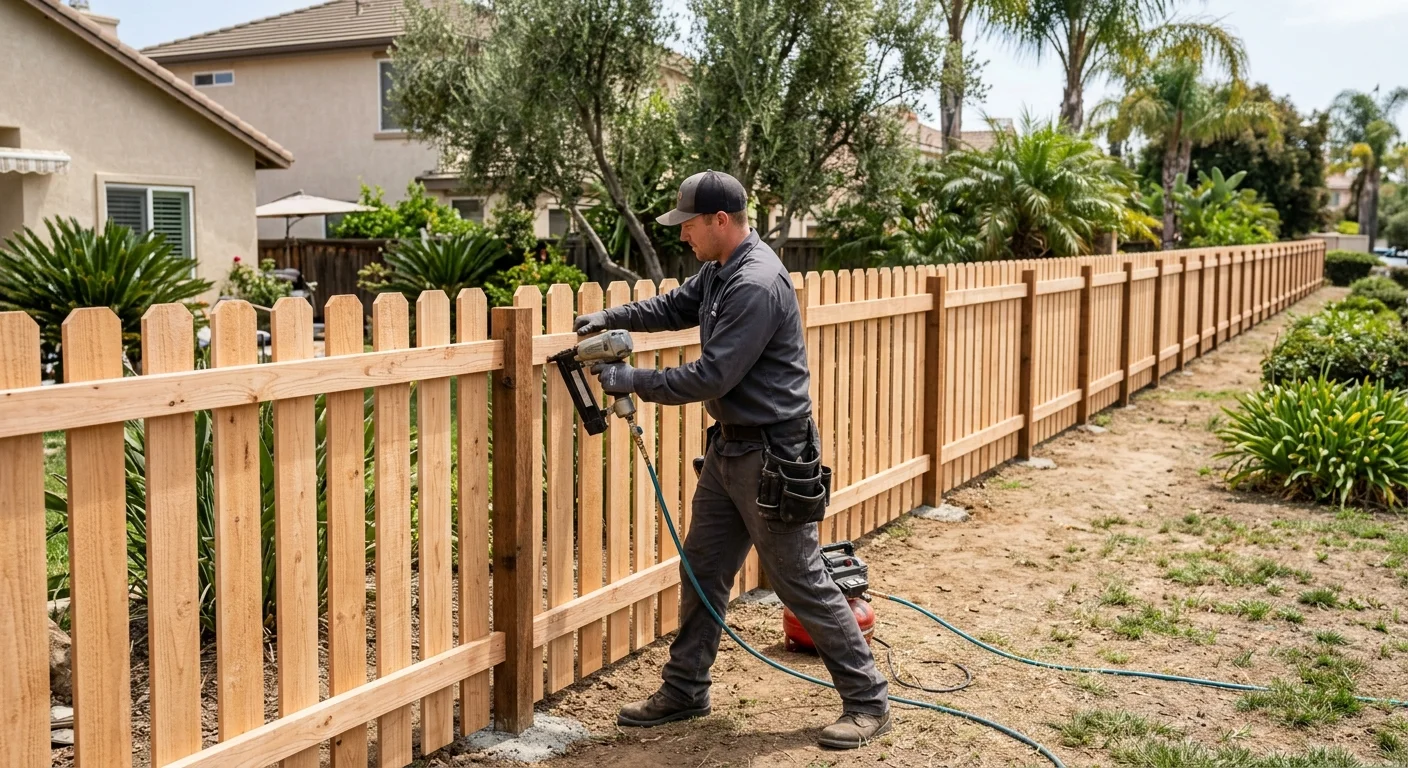
“Dog ear” describes the shape at the top of each picket. Both corners are cut at an angle, leaving a short flat edge in the center. Viewed across the fence line, those repeated cuts create a neat rhythm.
The term doesn’t identify one exact fence assembly. A dog ear wood fence can have closely spaced pickets, visible gaps, or overlapping boards. The boards may sit on horizontal rails supported by wood or metal posts. Gates can repeat the same clipped-corner pattern.
That flexibility matters when comparing wood fence installation proposals. Two contractors can both quote a dog ear fence while specifying different posts, rails, board thicknesses, fasteners, or finishes. Ask each contractor to describe the complete assembly, not just the picket shape.
The desired sight line also needs attention. Standard side-by-side boards can provide substantial screening, but the exact spacing controls what remains visible. Wood can also change after installation, so discuss the planned gaps and expected board movement with the contractor.
Dog ear pickets fit many San Diego settings because their shape is visually restrained. They can sit beside a stucco home in Chula Vista, a bungalow in North Park, or a suburban yard in Clairemont without becoming the main design feature. That’s a design observation, not a promise that one specification suits every property.
Before selecting the style, walk the proposed fence line. Note slopes, corners, gates, irrigation, nearby structures, and changes in grade. Those details affect how the repeating top line will look once installed.
Why it’s one of the most cost-effective privacy fences
Dog ear fencing is often considered by homeowners with cost in mind. Its appeal comes from a straightforward layout and limited decorative detailing. Repeated vertical pickets create the finished appearance without requiring a shaped lattice top or custom ornamental pattern.
That doesn’t prove it will be the lowest-priced fence for every property. No verified comparison in this site’s approved claims ledger establishes dog ear fencing as San Diego’s cheapest privacy option. Material selection, fence length, access, demolition, gates, post choices, and site conditions all belong in the contractor’s quote.
The design can still help control scope. Homeowners can focus the proposal on the parts that matter most:
- The picket material, grade, width, and thickness
- Side-by-side, overlapping, or another approved board layout
- Wood or metal posts
- Rail quantity and placement
- Gate size, framing, and hardware
- Stain, sealer, paint, or an unfinished installation
- Removal and disposal of an existing fence
- Work around slopes, corners, or limited access
Keeping those items consistent makes contractor proposals easier to compare. A lower total can reflect a different specification rather than a better price for the same fence.
Dog ear boards also work within several privacy fence options. A homeowner who wants fewer direct sight lines might discuss overlapping boards. Someone comfortable with small gaps may prefer a simpler side-by-side layout. The contractor should explain how each assembly changes the project scope.
For a wider material comparison, review these affordable fence options in San Diego. Compare the full installed design, not a single advertised material figure. Posts, gates, removal, and finish choices can make two seemingly similar projects quite different.
Cost to install a dog ear fence per foot in San Diego
A verified current per-foot price for dog ear fence installation in San Diego couldn’t be confirmed from the approved claims ledger. Fence Pros San Diego doesn’t set contractor prices, and publishing an unsupported market figure would mislead homeowners. The licensed professional matched with you sets the price for the proposed work.
For an accurate number, request a written quote based on the actual fence line. Ask the contractor to state the measured length, planned height, board layout, wood specification, post material, rail configuration, gate work, finish, and removal scope. The quote should also identify any items left for the homeowner to arrange.
Be cautious when comparing a bare per-foot number with a complete project total. Confirm whether the figure includes posts, rails, pickets, fasteners, gates, old-fence removal, hauling, finishing, and work around grade changes. If an item isn’t written down, ask how it will be handled before accepting the proposal.
San Diego County properties vary sharply by location. A level side yard near central San Diego presents a different scope from a sloped yard in La Mesa. Coastal North County, inland communities, East County, and the South Bay also expose fences to different site conditions. A contractor needs to inspect the specific setting before selecting an assembly and pricing the work.
Fence rules can also vary by jurisdiction and property. Specific City of San Diego fence measurements and permit requirements weren’t fully verified in the approved ledger, so they aren’t stated here. For a property within San Diego city limits, confirm current requirements with the City of San Diego Development Services Department. Elsewhere, check with the city responsible for the address or San Diego County for an unincorporated property. Review any applicable association documents as well.
When comparing contractors, verify the license through the California Contractors State License Board. California’s C-13 classification covers constructing, erecting, altering, or repairing fences, gates, and related structures. It excludes masonry walls.
Material options like cedar and pressure-treated pine
Cedar and pressure-treated pine are common labels homeowners may encounter while discussing a dog ear fence. The species name alone doesn’t provide a complete specification. Ask what product, grade, dimensions, treatment, moisture condition, and finish the contractor intends to use.
Cedar is often selected when the homeowner wants the wood itself to remain visually prominent. Boards can vary in grain and color, so inspect a current sample before approving the order. Ask whether the proposal includes a finish and who is responsible for later maintenance.
Pressure-treated pine is another option worth comparing. Request the treatment label or supplier information for the exact product being proposed. The contractor should also explain the selected fasteners, posts, rails, and finish as one complete system.
The dog ear cut doesn’t determine durability. Longevity figures for cedar, pine, or other wood products couldn’t be verified in the approved claims ledger, so no lifespan estimate is offered here. Exposure, construction details, finish, maintenance, and product quality all deserve discussion with the contractor and material supplier.
Local setting should shape that conversation. Tell the contractor if the fence sits near the coast in Encinitas or Oceanside, farther inland in Escondido, or on an exposed East County property. Don’t assume the same material specification belongs at every address. Ask why each proposed component fits the actual site.
Consider appearance from both sides too. Standard rails may remain visible from one property, while another layout can present a more similar face to each neighbor. If the fence divides adjoining private properties, California Civil Code Section 841 addresses responsibility for boundary maintenance and includes written-notice rules before shared-fence costs are incurred. Discuss the project with the adjoining owner and seek legal advice when responsibility is disputed.
Finally, compare physical samples rather than relying only on material names. Look at the dog ear cut, surface, knots, straightness, thickness, and planned spacing. Confirm those details in writing so the installed specification matches the proposal you selected.
Frequently asked questions
What is a dog ear fence?
A dog ear fence is a wood privacy fence whose pickets have the top two corners cut off at an angle, leaving a rounded-looking top edge. The cut is cosmetic. It changes how the fence line reads from the street and sheds water off the picket top, but it does not by itself determine how long the fence lasts.
Does the dog ear cut make a fence last longer?
No. The cut shapes the top of the picket and nothing else. Exposure, construction details, fasteners, finish, maintenance, and the quality of the product all decide longevity. Ask the contractor to explain the posts, rails, pickets, fasteners, and finish as one system rather than judging the fence by its picket profile.
What should a dog ear fence quote include?
A complete written quote states the measured length, planned height, board layout, wood specification, post material, rail configuration, gate work, finish, and removal scope, and it names anything left for you to arrange. Be careful comparing a bare per-foot number against a full project total, because posts, gates, old-fence removal, hauling, finishing, and work around grade changes often sit outside the per-foot figure.
What license does a fence contractor in California need?
California’s C-13 classification covers constructing, erecting, altering, or repairing fences, gates, and related structures. It does not cover masonry walls. Verify any contractor’s license yourself through the California Contractors State License Board before money changes hands.
Do I need my neighbor’s agreement for a dog ear fence on the property line?
If the fence divides adjoining private properties, California Civil Code section 841 addresses responsibility for boundary maintenance and sets written-notice rules before shared-fence costs are incurred. Talk to the adjoining owner before the work starts, and seek legal advice if responsibility is disputed. Our good neighbor fence guide covers the notice and the styles that read well from both sides.
When to call us
Call when you need a new dog ear fence, a privacy layout, gate work, or help comparing wood specifications. Fence Pros San Diego will match you with an independent, licensed local fence professional, and you’ll contract and pay that professional directly. Call us at (858) 400-4906 and we’ll connect you with a licensed fence contractor.