Jamul is unincorporated, which means there’s no city hall handling permits here, and its driveways run long enough that the gate itself is often the smallest part of the project. A gate on a Jamul ranch or backcountry parcel has to answer to distance, power access, and emergency-access needs in a way a suburban driveway gate never does.
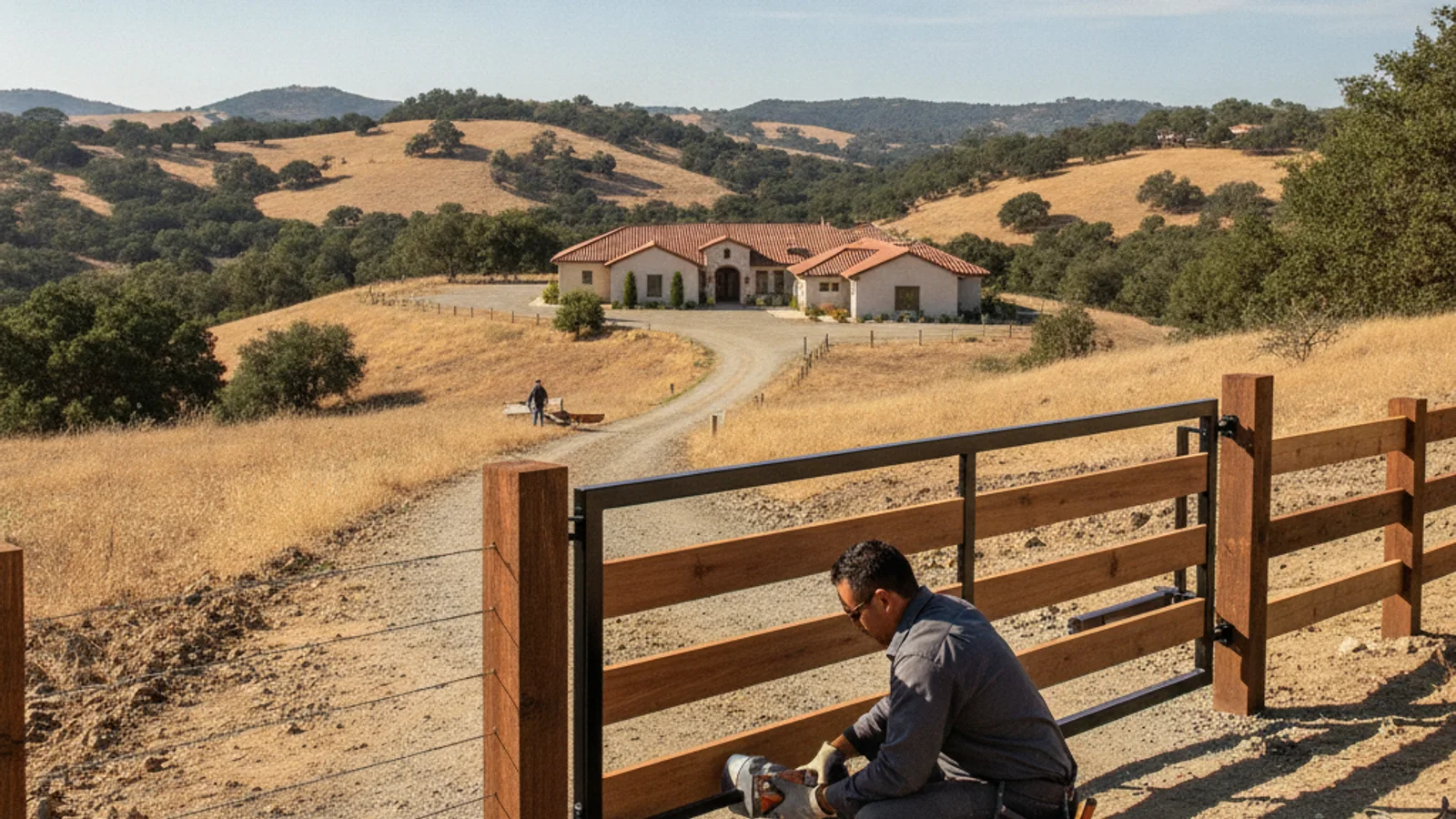
A Jamul driveway gate is a different project than a city one
Because Jamul sits in unincorporated San Diego County, the authority over permits and any applicable rules isn’t a city planning department, it’s the County of San Diego Planning and Development Services. If your project needs a permit, whether for the gate structure, an electrical run, or anything related to defensible space around structures, that’s the office to confirm requirements with before work starts.
Rural Jamul parcels along SR-94 and the surrounding roads often have driveways stretching hundreds of feet from the road to the house, sometimes shared with a neighboring property through an easement. That distance changes almost every practical decision in a gate project, from how power gets to the operator to how the county’s emergency services expect to access the property if something goes wrong.
None of this makes a gate a bad idea out here. Security and controlled access are often exactly why a rural property wants one. It just means the project needs planning that a suburban driveway gate doesn’t.
Distance from the road also changes how the gate’s location relates to the house itself. On a suburban lot, the gate sits close enough to the door that a keypad or intercom feels immediate. On a Jamul parcel where the gate sits a quarter mile or more from the house, the practical question becomes how a visitor communicates with the household at all, which is a different design problem than simply picking a gate style.
Power at the gate: hardwire, solar, or neither
Running a standard electrical circuit to a gate that sits a few hundred feet or more from the house is expensive and sometimes impractical, particularly if the run crosses graded terrain or a section of the property without existing conduit. That’s the situation where a solar-powered gate operator becomes a genuinely practical option rather than a novelty.
A solar setup needs a panel with clear, unshaded sun exposure, which matters on a property with mature trees or terrain that shades part of the entrance, and a battery sized to get the gate through cloudy stretches without draining down. Ask your installer how they size the battery and panel for your property’s specific sun exposure rather than installing a one-size solution.
Power reliability is worth thinking through regardless of which power source you choose. Rural properties see their share of outages, and a gate that can’t be opened by hand during one is a real problem if it’s your only access point. Confirm there’s a manual release or disconnect built into the design, and make sure everyone who lives on the property knows how to use it.
If your property already runs partly off-grid with its own solar array for the house, ask your installer whether the gate operator can tie into that system instead of running as a fully separate standalone unit. That’s not always practical depending on distance and existing wiring, but it’s worth raising before defaulting to a second, unrelated solar setup just for the gate.
Wildlife, wildfire access, and why the gate design matters
Backcountry Jamul properties deal with coyotes, deer, and other wildlife moving through regularly, and a gate is sometimes part of a broader plan to keep animals off the immediate property, not just a security feature for vehicles. If that’s part of your goal, tell your installer, since gate placement and any adjoining fence line need to work together rather than leaving gaps where the gate meets the fence.
Jamul also sits within an area where wildfire risk and evacuation access are real planning considerations, and a locked or gated entrance can complicate access for fire crews or emergency responders if it isn’t designed with that in mind. Ask about a Knox box or similar rapid-access solution that lets emergency services through a locked gate without needing your gate code, and confirm current defensible-space and access requirements with the County of San Diego before finalizing your design, since those requirements can affect where the gate sits relative to structures on the property.
This is one of the clearer cases where a generic gate quote isn’t good enough. An installer who’s worked rural East County properties before should ask about wildfire access and wildlife containment without you having to bring it up first.
What the County wants to see before you install
Because Jamul is unincorporated, don’t assume city-style rules apply, and don’t assume no rules apply either. Contact the County of San Diego Planning and Development Services to confirm whether your specific gate project needs a permit, particularly for any electrical work or if the property falls under defensible-space requirements tied to wildfire risk. If your driveway is a shared easement with a neighboring parcel, confirm there’s no conflict with an existing agreement before installing a gate that could restrict their access.
Bringing documentation of your property’s access easement, if one exists, to the conversation with your installer and with the county saves time later. A gate placed without accounting for a shared easement is a problem that’s much cheaper to avoid than to fix after installation.
What to ask a rural gate installer
Ask whether they’ve worked on rural East County properties with long driveways before, not just suburban installs. Ask how they’d size a solar setup for your property’s specific sun exposure if hardwiring isn’t practical. Ask about emergency-access solutions like a Knox box if your property could be affected by wildfire evacuation access rules. And ask directly whether they’ll help you confirm requirements with the County of San Diego before work begins, rather than leaving that entirely on you.
For general background on how swing and slide gate mechanics work before you get into the rural-specific questions, see our automatic driveway gate guide for San Diego. If you’re also planning perimeter fence work on the same property, our horse property fence guide for San Diego County covers considerations that often overlap with a rural gate project. A gate installation project in Jamul is worth checking against the CSLB’s license lookup at cslb.ca.gov before you sign a contract.
Frequently asked questions
Who do I contact about gate permits in unincorporated Jamul?
Jamul is unincorporated, so permitting authority sits with the County of San Diego Planning and Development Services rather than a city planning department. Confirm requirements with that office before starting any gate project that involves structural changes or electrical work.
Is a solar-powered gate operator a good option for a rural Jamul property?
It can be, particularly when running a standard electrical circuit to the gate location isn’t practical because of distance or terrain. A solar setup needs a panel with reliable sun exposure and a battery sized for your property’s specific conditions, so ask your installer to size it for your site rather than using a generic default.
Does a gate on my Jamul property affect wildfire evacuation access?
It can, if the gate restricts how emergency responders reach the property during an evacuation or a fire response. Ask your installer about emergency-access solutions like a Knox box, and confirm current defensible-space and access requirements with the County of San Diego before finalizing your gate’s design and placement.
What if my Jamul driveway is a shared easement with a neighboring property?
Confirm the terms of the existing easement agreement before installing a gate that could restrict a neighbor’s access. This is worth resolving before installation, since it’s a much simpler conversation to have upfront than after the gate is in place.
When to call us
A Jamul gate project usually involves power planning, wildfire access considerations, and sometimes a shared easement, all of which are easier to sort out with an installer experienced in rural East County properties. Have your driveway’s approximate length and any known easement details ready when you call. Call us at (858) 400-4906 and we’ll connect you with a licensed local gate installer.