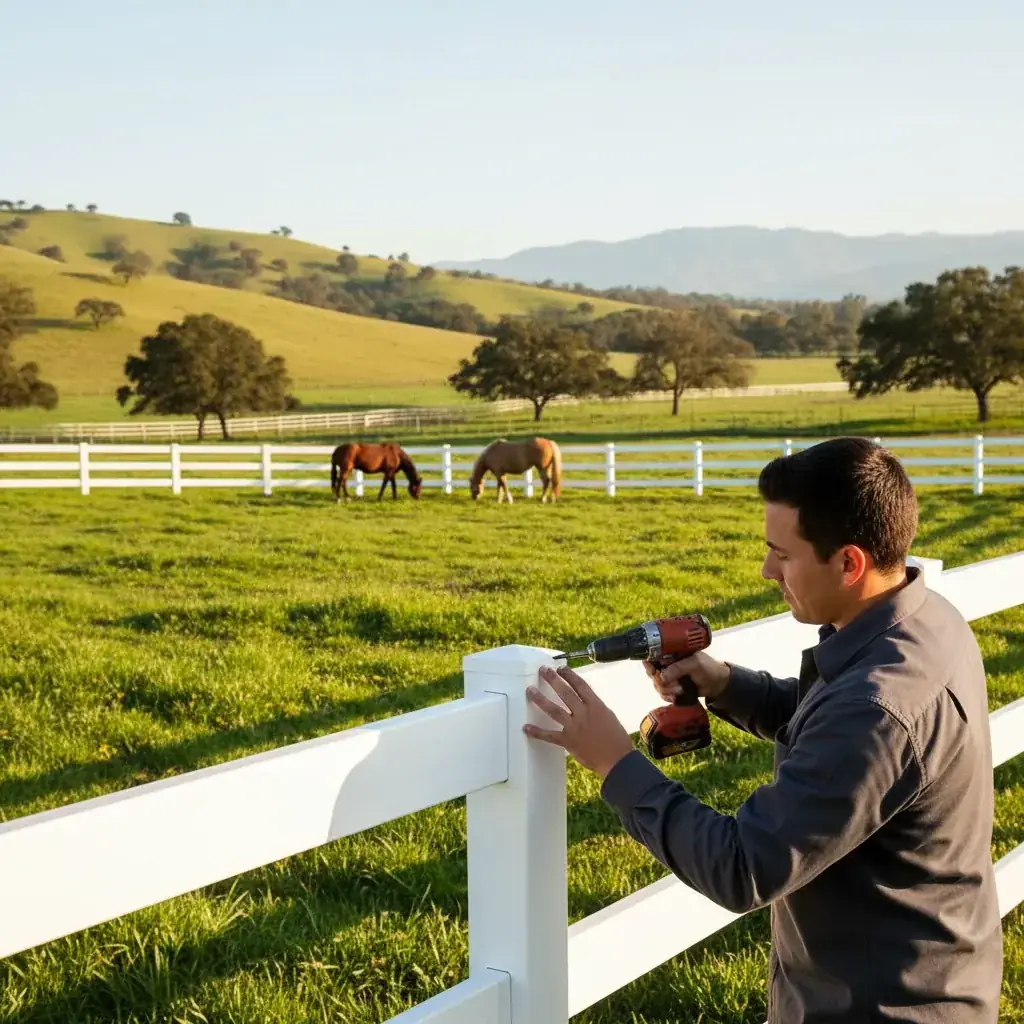
For a horse property fence in San Diego County, no-climb wire mesh (2x4 openings) combined with a visible top rail is the safest all-around choice, running roughly $8 to $14 per linear foot installed depending on terrain and post spacing. Pipe and steel corral fencing costs more, from $18 to $30 per linear foot, but it’s the right call for stallion pens, high-traffic gates, and fire-risk areas like Fallbrook and Julian. Vinyl rail fencing lands in the middle, around $12 to $22 per linear foot, and delivers the clean ranch look with low upkeep. The material you choose determines how safe your horses are, how much maintenance you’ll do each year, and how long the fence holds up in San Diego’s backcountry conditions.
Pipe, vinyl rail, no-climb mesh, and electric: what works for horses
The best horse property fence is visible, strong, and safe. Horses are large, powerful animals that can test a fence by leaning, rubbing, or running into it. Your material choice should prioritize their well-being.
Pipe and Steel Fencing
Often called pipe, corral, or ranch fence, steel is one of the toughest options available.
- Pros: Extremely durable, long-lasting, and highly visible. It’s also fire-resistant, a critical feature for properties in San Diego’s backcountry. It requires virtually no maintenance and can’t be chewed through.
- Cons: It has zero flex, making it unforgiving in a high-speed collision. The initial installation cost is also higher than other options.
- Best for: High-traffic areas, stallion pens, round pens, and property perimeters where strength is the top priority.
Vinyl Rail Fencing
Vinyl offers the classic look of a wood rail fence without the constant upkeep.
- Pros: Low maintenance (no painting or staining), highly visible, and designed to flex or break away on impact, which can prevent serious injury to a horse. It comes in 2, 3, or 4-rail options.
- Cons: A determined chewer or cribber can damage it. Over many years of intense sun, it can become brittle. The initial cost is higher than wood or wire.
- Best for: Pasture perimeters, arenas, and creating an aesthetic, traditional look for your ranch fence in San Diego.
No-Climb Mesh Fencing
This is arguably the safest fence you can install for horses.
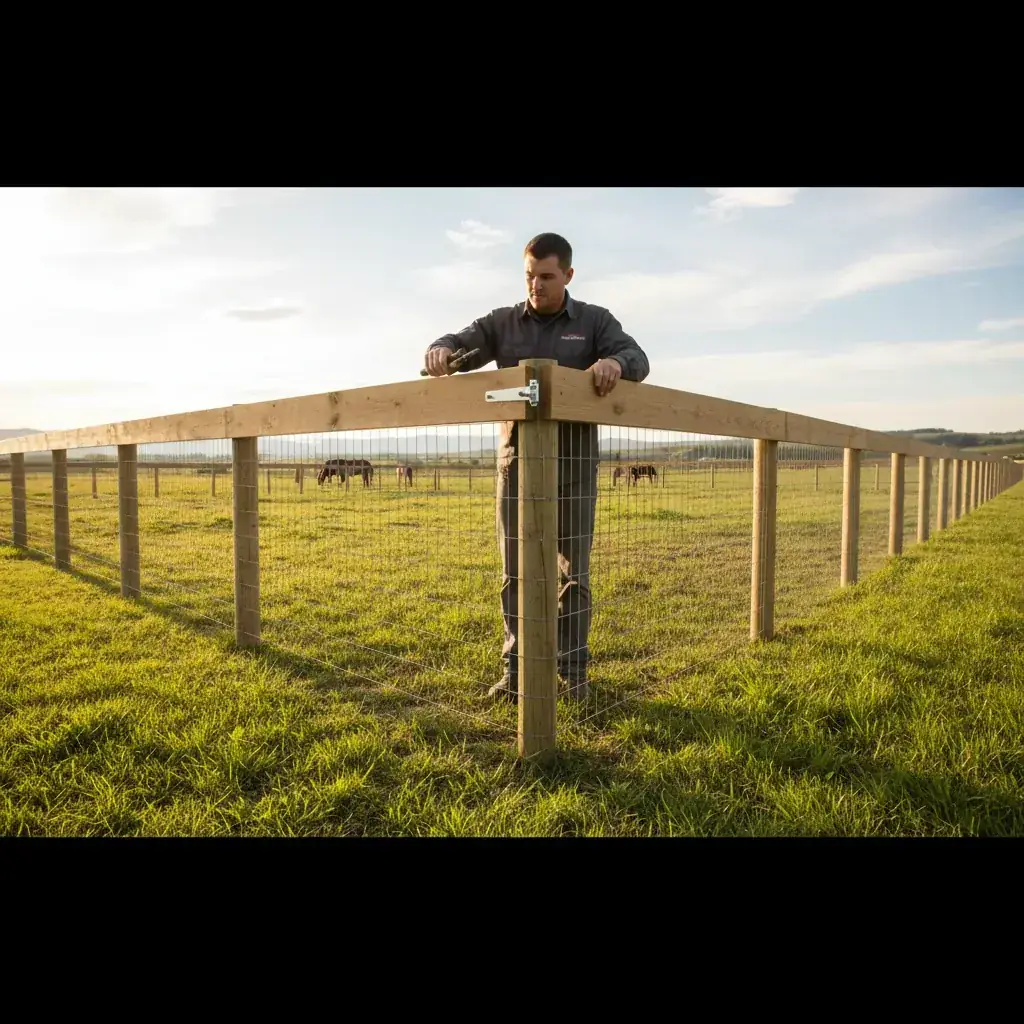
- Pros: The 2”x4” rectangular mesh prevents a horse from getting a hoof stuck, a common cause of catastrophic leg injuries. It’s a great physical barrier that also keeps out predators like coyotes and neighborhood dogs. It can be installed on its own or combined with a top rail of wood or vinyl for better visibility.
- Cons: It’s less visible than a rail fence, so a top “sighter” board is recommended. Proper installation is critical, it must be stretched tight to be effective.
- Best for: Paddocks, foaling pastures, and any area where absolute containment and injury prevention are key. This is the gold standard for “no climb horse fence.” While different from typical security fencing, the expertise needed for proper tensioning is similar to a professional chain link fence installation.
Electric Fencing
Electric fencing works as a psychological barrier, not a physical one.
- Pros: Very cost-effective and relatively easy to install or move. It’s excellent for creating temporary pastures or for adding to the top of an existing fence to stop leaning or chewing.
- Cons: It requires consistent maintenance to check voltage and clear vegetation. It’s not a reliable physical barrier and should not be used as a sole perimeter fence, especially near roads.
- Best for: Interior pasture division, strip grazing, or as a secondary deterrent on another fence type.
Pasture vs paddock vs arena: matching fence to use
A one-size-fits-all approach to horse fencing doesn’t work. The fence’s job changes depending on where it is on your property.
Pasture Fencing
For large grazing areas, the main goals are containment and visibility. Your perimeter fence needs to be solid. A height of 54 to 60 inches is standard for most horse breeds. Many property owners in San Diego County use a combination of fencing: a more visible and aesthetic fence like 3-rail vinyl along the road, and a more utilitarian option like no-climb wire along the back of the property. The goal is to create a safe, secure boundary that your horses can easily see and respect.
Paddock and Turnout Fencing
Paddocks are smaller, high-pressure enclosures where horses spend a lot of time. This is where safety is most critical. Because of the limited space, horses are more likely to interact with the fence, kicking, rolling, or running near it. No-climb mesh is the top choice here because it eliminates the risk of a trapped hoof. Fences should be free of any sharp edges or protrusions. The material needs to be durable enough to withstand constant contact.
Arena Fencing
An arena fence serves to contain the horse and provide a safe boundary for riding. It should be between 4.5 and 5 feet tall. The inside surface must be smooth and safe for both horse and rider. You don’t want a rider’s leg or stirrup to get caught. The bottom rail should be low enough to prevent a horse from sliding a hoof underneath but high enough to not interfere with footing material like sand or decomposed granite.
Rural San Diego layouts: Ramona, Valley Center, Fallbrook, Julian
Fencing a property in the rolling hills of Ramona, the rocky soil of Valley Center, or the oak-studded terrain of Fallbrook and Julian presents unique challenges. This isn’t flat, easy ground.
- Terrain: The hills and decomposed granite soil common in our horse country require professional post-setting. Posts must be set deeper and often encased in concrete to remain stable over time, especially for high-tension wire fences. A fence that follows the contour of the land looks better and is more secure.
- Fire Safety: For property owners in Bonsall, Fallbrook, and Julian, fire risk is a year-round concern. Steel pipe and vinyl fences are non-combustible, making them a much safer choice than traditional wood rail fencing for creating defensible space.
- Property Lines and Setbacks: Before a single post hole is dug, you need to know your exact property lines and local setback requirements. This can prevent costly disputes with neighbors and ensure you’re in compliance with county rules. You can find general information on the San Diego County zoning site, but a survey is always the best source of truth.
- Water Crossings: Many rural properties have seasonal creeks or washes. Fencing across these areas requires special consideration. Sometimes a breakaway “flood gate” section is the best solution to prevent the entire fence from being washed out in a heavy rain.
Gates, corners, and wash racks that hold up over time
The details of your fence system are just as important as the main stretches of fencing. Corners and gates are the most common failure points.
Corners and Bracing
A fence is only as strong as its corners. For wire fences like no-climb, the corners and end assemblies bear all the tension. They must be constructed with larger diameter posts and solid H-bracing to prevent leaning and sagging over time. Without proper bracing, your fence will lose tension and become unsafe.
Gates
A horse property needs gates that are wide, safe, and easy to use.
- Width: A 12-foot gate is a good minimum, but 14 or 16 feet is better if you need to get hay trucks, tractors, or a horse trailer through.
- Safety: Gates should have no gaps larger than a few inches where a head or hoof could get stuck. They should swing freely and have a horse-proof latch that you can easily operate with one hand while leading an animal.
- Durability: Heavy-duty tube gates are a popular, durable choice. For a more cohesive look, you can get gates that match your vinyl or pipe fence. A professional gate installation ensures it’s hung correctly so it won’t sag or bind.
Specialty Areas
Areas like wash racks or cross-tie locations need to be exceptionally sturdy. Solid posts set in concrete are a must to safely secure a 1,200-pound animal. Pipe fencing is often the best material for these high-stress, high-moisture environments.
What it costs to fence an acre or more
Estimating the cost of a farm fence by the acre is misleading. A perfect square acre (208’ x 208’) requires 832 linear feet of fencing. A long, rectangular acre (100’ x 435’) requires 1,070 linear feet. We always price by the linear foot, as it’s the most accurate measure of materials and labor.
Several factors influence the final cost of your project:
- Linear Footage: The total length of the fence is the biggest cost driver.
- Material Choice: In general, costs range from lowest to highest: electric, no-climb wire, wood rail, vinyl rail, and pipe/steel.
- Terrain: Fencing on a steep, rocky hill costs more in labor than fencing on a flat, clear pasture.
- Site Prep: The cost to clear brush or old fencing from the fence line will add to the total.
- Gates and Corners: Every gate and corner assembly adds material and labor costs.
The best way to get an accurate number is with a detailed, on-site estimate. A professional fence installation starts with a walkthrough to measure the property, discuss your specific needs, and account for all the variables that impact the final price.
Frequently asked questions
What is the safest fencing material for horses?
No-climb wire mesh with 2x4-inch openings is the safest horse fence material because it prevents a hoof from getting trapped, which is a common cause of serious leg injuries. For highest-pressure areas like stallion pens and round pens, steel pipe fencing adds the physical strength to handle a direct impact. Many San Diego County owners combine both: no-climb mesh on pasture perimeters and pipe at gates and corners.
How much does horse property fencing cost per linear foot in San Diego County?
Installed costs typically run $8 to $14 per linear foot for no-climb wire mesh, $12 to $22 per linear foot for vinyl rail, and $18 to $30 per linear foot for steel pipe. Terrain is the biggest variable. Rocky, sloped ground common in Ramona and Valley Center adds labor because posts need to go deeper and often require concrete footings. Gates, corners, and H-brace assemblies are priced separately and add to the total.
Do I need a permit to install a horse fence in San Diego County?
Most agricultural fencing on rural-zoned land in unincorporated San Diego County does not require a building permit, but you do need to know your setback requirements and confirmed property lines before breaking ground. Requirements vary by zoning designation, so check with San Diego County Planning and Development Services or review the San Diego County zoning site before you start. A licensed fence contractor can flag any compliance issues during the site walkthrough.
How tall should a horse pasture fence be?
A standard pasture fence height for horses is 54 to 60 inches, or roughly 4.5 to 5 feet. Taller breeds and stallions warrant the full 60 inches. Arena fences should also be 4.5 to 5 feet and must be smooth on the inside so a rider’s leg or stirrup can’t snag on rails or hardware.
How long does a horse property fence last in San Diego’s climate?
Steel pipe fencing is the longest-lived option and can last 30 to 50 years with minimal care. Vinyl rail typically holds up 20 to 30 years in San Diego’s sun, though coastal or backcountry properties with intense UV exposure may see some brittleness after 15 to 20 years. No-climb wire mesh on galvanized posts generally lasts 20 to 30 years if the wire stays properly tensioned and posts stay plumb. All materials outlast untreated wood, which tends to split and rot within 10 to 15 years in the heat and occasional wet seasons of SD County’s backcountry.
Should I use wood rail fencing for my horse property in San Diego?
Wood rail fencing is not the best choice for most San Diego County horse properties. Untreated wood splits, warps, and needs regular painting or staining in the heat. In fire-risk areas like Bonsall, Fallbrook, and Julian, wood is also a combustion hazard compared to non-combustible vinyl or steel. If you want the traditional ranch look, a vinyl fence gives you the same aesthetic with far less upkeep and better fire resistance.
When to call us
Designing and installing a safe, effective horse fence in San Diego’s unique terrain requires specialized knowledge. If you’re planning a new layout, replacing an old fence, or need a secure perimeter that will last for decades, it’s time to bring in an expert. Call us at (858) 925-5546 for a same-day estimate.