In a lot of San Marcos neighborhoods, the fence and gate contractor isn’t the only party who has to sign off on your driveway gate. Master-planned communities here run on active homeowners associations, and skipping that step is the single most common way a San Marcos gate project stalls.
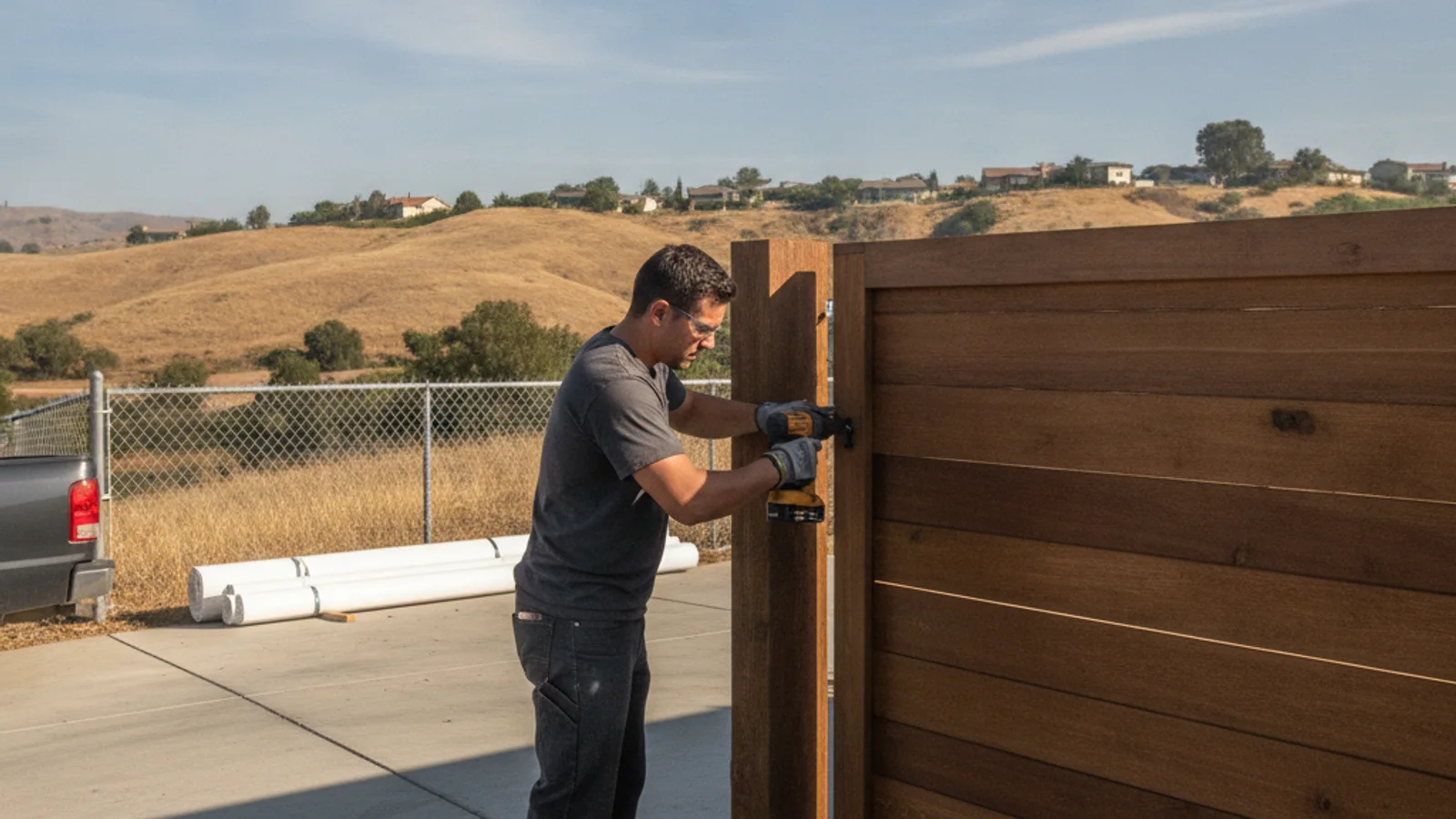
Master-planned San Marcos runs gate decisions through the HOA first
San Marcos grew substantially through planned developments, and neighborhoods like San Elijo Hills and the newer tracts off Twin Oaks Valley Road were built with architectural standards baked into the community from the start. That usually means an HOA with a design review or architectural committee that has a say in exterior changes, and a driveway gate is squarely an exterior change.
Before you get attached to a specific gate style, material, or color, check your HOA’s governing documents or call the management company and ask whether gates require design review. Some communities have a pre-approved list of gate styles that sail through quickly. Others require a full submittal with a site plan, material samples, and sometimes a rendering of how the gate will look against your home’s facade. Finding this out before you order materials saves you from ordering something that gets sent back.
Older, non-HOA pockets of San Marcos do exist, particularly in some of the more established neighborhoods away from the newer developments, and those properties skip this step entirely. If you’re not sure whether your property is inside an HOA, your property’s title documents or a quick call to the county assessor’s office will confirm it.
What the architectural committee usually wants to see
Most committees want to see the same core information regardless of the community: the gate’s height, material, and finish color, its location relative to the street and property lines, and confirmation that it matches or complements the neighborhood’s existing standard. Some ask for a simple sketch. Others want a formal site plan.
If your community has a documented standard, most fence and gate contractors who’ve worked in San Marcos before will already be familiar with it and can prepare the submittal package as part of the project. If you’re the first person on your block to install an automatic gate, or your community doesn’t have a standing precedent, expect the review to take longer and plan your installation timeline accordingly.
Ask your installer directly whether they’ve submitted to your specific HOA before. Familiarity with a particular committee’s expectations can shave real time off the approval process, since they’ll know what tends to get flagged and can head off questions before the committee asks them.
Some communities also restrict gate operation itself, not just appearance, requiring for example that a gate not obstruct the sidewalk or street when open, or that it include a specific emergency-access feature for the community’s private streets if it has any. Ask your management company whether operational rules exist alongside the visual design standards, since those two categories often get reviewed by different parts of the same committee process.
Hillside grading and how it changes swing vs slide
San Marcos has its share of hillside grading, particularly in the newer developments built into the terrain rather than on flat pads. A driveway that slopes from the street up to the garage limits a swing gate’s ability to arc cleanly, since the panel needs a level path to travel through without dragging.
A sliding gate handles grade better, running along the slope on a track or a cantilever arm instead of swinging through the change in elevation. If your community’s design standards specify a particular gate style, confirm with your installer that the required style is actually workable on your driveway’s grade before submitting to the HOA. There’s no point getting a swing gate approved by committee if the site can’t support one.
Some hillside lots end up needing a cantilever design specifically because the grading doesn’t leave a level track path. That’s a normal outcome here, not an unusual one, and it’s worth raising with the HOA during your initial submittal so the committee understands why your gate design might differ slightly from a flatter neighbor’s.
Retaining walls at the property line, common on San Marcos’s graded hillside lots, can also affect where a gate is physically allowed to sit relative to the street. If your submittal includes a site plan, make sure it accurately reflects any retaining wall or grade change near the driveway entrance, since a committee reviewing a plan that doesn’t match the actual site is more likely to request revisions.
Building the approval timeline into your project schedule
HOA architectural review isn’t instant. Timing depends on the community and how often the committee meets, and a submittal that’s missing information may be held for further review. Ask your HOA or management company for its current review schedule, then build that timing into your project plan.
If your project has any time pressure, ask your installer to help you assemble a complete submittal package on the first attempt: accurate measurements, the correct material and color specification, and a site plan showing the gate’s location. A complete package the first time through is the single biggest lever you have over how long approval takes.
Questions to ask before submitting to the committee
Confirm whether your HOA has a pre-approved gate style list before designing anything custom. Ask your installer whether they’ve worked with your specific community’s committee before. Confirm the gate style under consideration is workable on your driveway’s actual grade, not just visually approved. And ask what happens if the committee requests changes, specifically whether your installer will help revise and resubmit or whether that falls back on you.
For general background on swing and slide mechanics before you start the HOA conversation, see our automatic driveway gate guide for San Diego. If your property sits outside an HOA and you want to understand approval requirements more broadly across San Diego County, our HOA fence approval guide covers what committees typically look for. A gate installation project in San Marcos is worth checking against the CSLB’s license lookup at cslb.ca.gov before you sign a contract. City of San Marcos Development Services is the building-permit desk for an address inside the city. This page does not publish a citywide fence height or HOA rule. Confirm the parcel with that office, separate from any HOA packet.
Frequently asked questions
Does my San Marcos HOA need to approve a driveway gate?
Most master-planned San Marcos communities require architectural review for exterior changes, and a driveway gate qualifies. Check your HOA’s governing documents or call the management company before ordering materials to confirm your community’s specific process.
How long does HOA approval take for a gate in San Marcos?
No verified standard timeline was found. Timing depends on the community and its review process. Ask your HOA or management company for the current schedule before planning installation.
Can I install a swing gate if my San Marcos driveway is on a slope?
It depends on the grade. A sloped driveway often limits a swing gate’s clearance, and a sliding or cantilever gate usually handles the elevation change better. Confirm workability on your specific grade before submitting a design to your HOA for approval.
What if my San Marcos property isn’t in an HOA?
Some older, established San Marcos neighborhoods sit outside the newer master-planned communities and don’t have HOA design review. Check your property’s title documents or contact the county assessor’s office if you’re unsure whether your property is part of an association.
When to call us
A San Marcos gate project usually needs two things lined up before installation: a design that’s workable on your driveway’s actual grade, and HOA approval if your community requires it. Have your community name and any known design standards ready when you call. Fence Pros San Diego is a referral service. We do not employ crews and we do not certify insurance. Verify C-13 yourself at cslb.ca.gov. Call us at (858) 400-4906 and we’ll connect you with an independent fence contractor.