A front entry gate is a small structure that does a lot of work. It frames the first impression of the house, controls who walks up to the door, and has to survive salt air, sun, or Santa Ana wind depending on where in the county it sits.
Most homeowners land on this project after noticing their existing gate has warped, or after a remodel changes the look of the front of the house. Either way, the decision comes down to three things: pedestrian or driveway, which material fits the architecture, and what the local rules allow before you commit to a design.
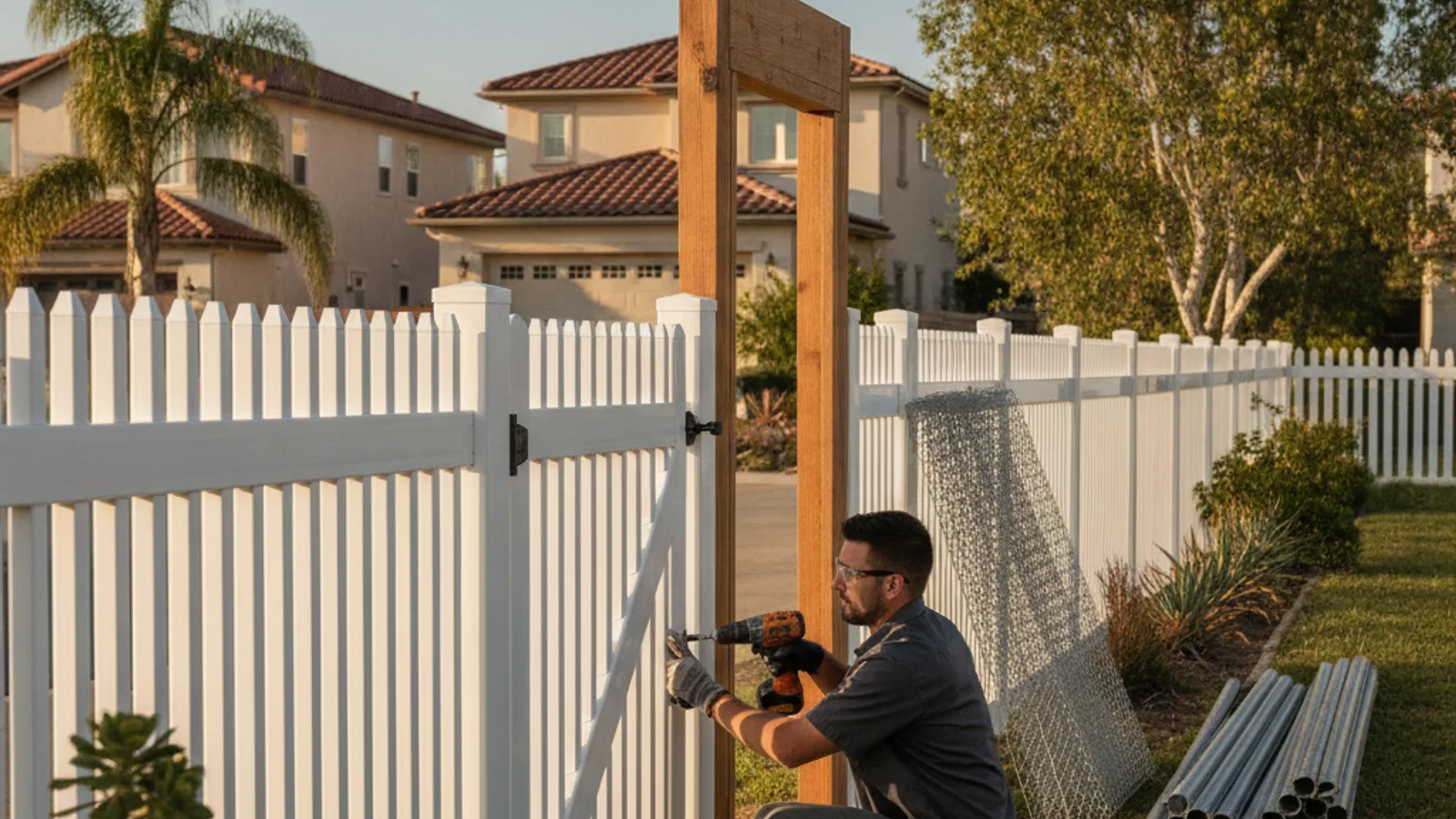
Pedestrian gate or driveway gate: they solve different problems
An entry gate almost always means the walk-up gate at the front path, courtyard, or side yard, not the vehicle gate at the driveway. That distinction matters because the two get designed differently.
A pedestrian entry gate is sized for foot traffic: wide enough for one or two people and whatever they’re carrying, hinged to swing clear of the walkway, and usually paired with a latch or keypad rather than a full automation system. It’s a design object first and a security measure second, though a solid gate with a good lock does add a layer of protection at the front of the property.
A driveway gate is a different project entirely: wider, heavier, often automated, and governed by clearance and grade rather than style. If your goal is stopping cars or securing the whole frontage, gate installation for a driveway gate is the right conversation to have, and it’s worth reading up separately before you start pricing anything.
Some properties do both: a driveway gate for vehicles and a separate, narrower pedestrian gate set into the wall or fence line beside it, so guests and deliveries don’t have to open the big gate. That two-gate layout is common on courtyard-style homes across the county, from Rancho Santa Fe estates to smaller in-town lots in North Park, and it usually gets designed alongside the surrounding fence installation rather than as an afterthought.
Matching the gate to San Diego’s architecture
The gate should read as part of the house, not an add-on. A few patterns show up again and again across the county.
Spanish and Mission Revival homes favor an arched opening set into a stucco wall, with a solid wood gate, often planked and banded with iron straps, or an iron gate with scrollwork that lets light and air through while still giving privacy at eye level. This look is common in older neighborhoods like Kensington, Mission Hills, and parts of La Jolla’s village, where the housing stock itself is Spanish Revival era. If you’re building or restoring this style, our Spanish-style fences guide covers the wall and column detailing that usually surrounds a gate like this.
Craftsman and bungalow homes, common in North Park, South Park, and Normal Heights, tend toward a simpler wood gate with clean horizontal lines, sometimes with a low picket or lattice top rather than a solid panel. The goal here is charm, not fortification.
Modern and contemporary builds, more common in newer coastal construction and hillside lots, lean toward horizontal-slat wood or powder-coated aluminum with minimal hardware showing. Flat black or bronze finishes read as intentional rather than utilitarian.
Wrought iron works across almost every style when it’s detailed to match, from ornamental scrollwork on a Spanish courtyard to simple vertical bars on a modern facade. Iron’s strength is that a fabricator can custom-cut a pattern to match an existing fence or gate elsewhere on the property. Our wrought iron fence guide goes deeper on pattern options and maintenance.
What the material does to your maintenance schedule
Style drives the first decision, but material drives what you’re signing up for afterward.
Wood entry gates need the most attention: staining or sealing on a schedule, hardware checks, and eventual repair as the frame ages. In exchange, wood is the material that reads best against stucco and gives the widest range of design options, from solid panels to lattice.
Wrought iron and steel hold their shape better than wood and don’t warp, but any bare metal near the coast will rust without the right coating. A powder-coated finish and stainless or hot-dip galvanized hardware are the standard spec within a mile or so of the water, where salt-laden marine air is thick enough to matter.
Aluminum skips the rust problem entirely and is common on modern gates, but it flexes more than steel or iron on a large panel, so a wide aluminum gate needs a heavier frame section than the same design in steel.
Whatever material you land on, ask the fabricator what hardware they’re specifying and whether it’s rated for coastal exposure if your property is anywhere near the ocean. That one question heads off a lot of early hinge and latch corrosion on a coastal property.
What to confirm before you finalize a design
A few things are worth settling before you commit to a specific gate design, not after the fabricator has already built it.
Height and setback rules. San Diego and the county’s other cities each set their own limits on fence and gate height in front yards, and those limits can differ by zone and by whether the property sits on a corner lot with visibility requirements. Those specifics are not something to guess at: confirm the current height limit for your address with your city’s planning or development services department before finalizing a tall or solid design. Our San Diego fence permits guide covers how that approval process generally works.
HOA review, if it applies. Many newer developments and some older tract neighborhoods have architectural committees that review exterior changes, including a new entry gate. If your property is in an HOA, that approval step typically needs to happen before fabrication starts, not after.
Who’s licensed to build it. In California, the C-13 fencing contractor classification specifically covers the construction, alteration, and repair of gates, so a fencing contractor holding that license is qualified for this scope. You can confirm any contractor’s license status directly with the California Contractors State License Board before signing anything.
Frequently asked questions
What’s the difference between an entry gate and a driveway gate?
An entry gate is a pedestrian gate sized for foot traffic at a walkway, porch, or courtyard entrance. A driveway gate is wider, heavier, and built for vehicles, often with automation. Many courtyard-style homes use both: a driveway gate for cars and a separate narrower pedestrian gate beside it.
What material holds up best for a courtyard gate near the coast?
Aluminum and properly coated wrought iron both resist coastal corrosion better than bare steel, provided the hardware is stainless or hot-dip galvanized. Wood holds up fine too, but it needs a maintenance schedule that bare metal doesn’t.
Do I need a permit for a front entry gate?
It depends on the height, the material, and your city’s specific rules, which vary by zone. Confirm the current requirement with your city’s planning or building department before finalizing a design, especially for a tall or solid gate at the front property line.
Can a fence contractor build an entry gate, or do I need a specialist?
A licensed fencing contractor holding a C-13 classification is qualified to build gates as part of that license’s scope. For an automated or highly ornamental design, some contractors bring in a metal fabricator or gate automation specialist as part of the project.
When to call us
An entry gate that has to clear zoning setbacks, match an existing wall, and hold up to your specific microclimate is not a project to design alone. Call us at (858) 400-4906 and we’ll connect you with a licensed fence contractor.