A fence repair proposal should identify each damaged part and the work proposed for it. For fence repair in Vista, it should also document access, grade, unanswered property questions, and any replacement alternative.
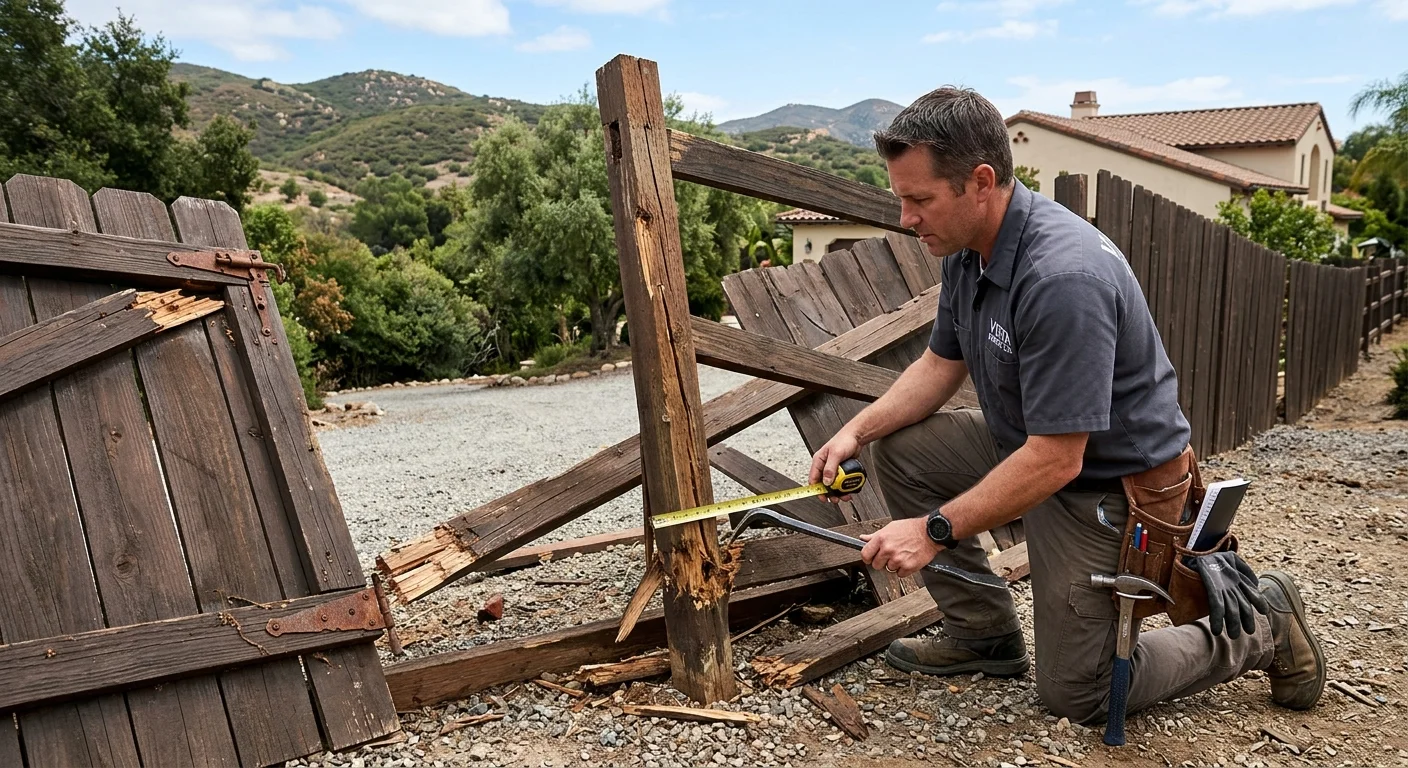
What to photograph before requesting repair proposals
Good photos help a contractor understand the problem before the site review. They also give you a record for comparing proposals later.
Start with wide photos of the entire fence run. Take them from both ends when access permits. Include corners, gates, changes in height, and places where the ground slopes. These views show how one damaged section connects with everything around it.
Next, photograph each visible problem closely. Useful subjects include:
- Posts that lean, twist, split, rust, or move
- Rails that sag, separate, or pull away from posts
- Loose, broken, missing, or deteriorated boards
- Vinyl sections that separate at their connections
- Chain-link fabric that sags or pulls from its fittings
- Hinges, latches, rollers, and gate frames that bind
- Gaps beneath the fence or changes along the ground
- Connections between fencing and masonry
Include a familiar object or measuring tape when scale matters. Record the measurement separately too. A photograph can distort distance and shouldn’t serve as boundary evidence.
For gate repair in Vista, take one photo with the gate closed. Add another with it partly open. Show the latch side, hinge side, bottom clearance, and supporting posts. Note whether the problem changes during the gate’s movement.
Label the images by location, such as “driveway gate” or “rear left corner.” Don’t diagnose the cause yourself. Describe what you can see and feel without dismantling anything.
Send the same photo set to each contractor. That gives every pro the same starting information. Our fence repair and restoration service can connect you with an independent licensed contractor for an on-site review.
How access and grade around State Route 78 shape the site review
State Route 78 is a useful Vista reference, but it doesn’t describe a property’s working conditions. The exact address, entrance, fence location, and ground profile belong in the proposal review.
Explain how the contractor can reach the damaged area. Note whether access runs through a driveway, side yard, garage, or occupied interior space. Mention locked gates, stairs, narrow passages, low branches, irrigation equipment, and other visible obstacles. Share entry instructions privately rather than placing gate codes in general project notes.
Material handling also deserves attention. Ask where removed sections may be staged before disposal. Identify surfaces that need protection during access. If a neighbor controls the easiest route, don’t assume that route will be available. Permission and access should be settled before the proposal relies on them.
Grade means the rise or fall along the fence line. Photograph the run from its highest and lowest visible points. Show abrupt changes, stepped panels, gaps, retaining features, and posts located near an edge. A contractor can then inspect how the damaged section meets the ground.
The proposal should describe any access assumption affecting the scope. For example, it can state that work is priced using a particular entrance or staging area. If that condition changes, the contractor can explain how the scope changes.
Don’t infer fence rules from proximity to State Route 78. The approved claims ledger doesn’t confirm Vista-specific height, setback, visibility, or permit requirements. Those questions need confirmation through the current official authority for the exact address.
For broader contractor-selection issues, read our Vista fence company guide. Keep this repair proposal focused on the damaged fence and its site conditions.
What pros inspect on posts, rails, panels, and gates
A useful inspection separates symptoms from proposed work. “Fence leans” describes a symptom. It doesn’t identify which posts, rails, connections, or ground conditions require attention.
The contractor should inspect the fence as connected parts:
- Posts and footings: The proposal should identify posts that move, lean, split, rust, or show damage near ground level. It should state which posts remain, which get repaired, and which get replaced.
- Rails and framing: Each loose, bowed, broken, or disconnected rail should be located. The scope should explain whether the repair reconnects a rail, replaces it, or changes nearby framing.
- Panels and infill: The contractor should count or locate affected panels, pickets, boards, fabric sections, or other infill. Material, profile, finish, and expected appearance should be written down.
- Gates and hardware: The review should cover the frame, supporting posts, hinges, latch, rollers, track, and other included hardware. The proposal should say whether adjustment, hardware replacement, frame work, or post work is planned.
For wood fence repair in Vista, ask the contractor to probe beyond the first broken board. The written scope should show whether adjacent rails and posts were inspected. It should also identify existing material that will remain. Avoid proposals built around unsupported material-lifespan claims.
A gate problem may involve several connected pieces. A replacement latch won’t address a moving post unless post work appears in the scope. Likewise, a repaired post doesn’t automatically mean the gate frame or hinges are included.
California’s C-13 fencing classification covers constructing, altering, and repairing fences and gates. It excludes masonry walls. If the fence connects with a masonry wall, the proposal should distinguish the fence work from any masonry work.
The proposal should identify the independent contractor responsible for the project. Verify that contractor through the CSLB license-check tool before signing.
When repair and replacement deserve separate scopes
Repair and replacement answer different questions. Combining them under one vague description makes proposals hard to compare.
A repair scope should identify what stays in place. It should list the posts, rails, panels, boards, and hardware being repaired or replaced. It should also cover removal, debris handling, finish work, gate adjustments, and any exclusions. Location matters more than phrases like “repair damaged fence.”
A replacement scope should define clear beginning and ending points. It should describe the proposed fence material, layout, gate work, transitions, and handling of existing sections. Any height or placement that depends on approval should remain marked as pending confirmation.
Ask for separate options when the contractor believes both approaches are reasonable. Each option should have its own work description and contractor-set price. That keeps a limited repair from quietly turning into partial replacement during comparison.
The alternatives should also explain what happens at transition points. New framing may meet older posts, panels, or gates. Ask which connections are included and how the contractor plans to handle visible differences. Don’t assume an exact appearance match unless the proposal identifies the selected material and finish.
For a wood fence, the decision often depends on how much sound material can remain. Our guide to wood fence repair versus replacement provides a deeper comparison. The Vista proposal still needs an address-specific inspection.
A good proposal can include a repair base scope with a clearly labeled replacement alternative. It shouldn’t hide optional work inside general wording. If the contractor discovers concealed damage after authorized work begins, the agreement should explain how proposed scope changes will be documented and approved.
Which questions need confirmation for the exact Vista address
Several property questions can’t be answered responsibly from a city name alone. The proposal should list unresolved items instead of treating them as settled facts.
Start with the reviewing authority. The approved claims ledger doesn’t establish a Vista-specific fence height, setback, visibility, or permit rule. Check the City of Vista’s current official planning or building information for the exact address. If another authority controls the parcel, get the answer from that authority instead. Keep written confirmation with the proposal.
Confirm these points before authorizing work:
- Does the planned repair require a permit or another approval?
- Are the proposed height, location, and materials allowed?
- Is any part of the fence within a setback or visibility area?
- Does an association or recorded property document limit the design?
- Is the damaged fence on the property line or entirely on one parcel?
- Will post work affect buried services or nearby improvements?
- Does the scope include masonry, a pool barrier, or an automated gate?
- Who handles each required confirmation, application, or inspection?
A contractor’s repair proposal isn’t a property survey. If the fence location is disputed or unclear, ask the appropriate property professional to establish the boundary before rebuilding along it.
Shared fences need another conversation. California Civil Code section 841 presumes adjoining landowners share equal responsibility for reasonable construction, maintenance, or necessary replacement costs unless they agree otherwise in writing. It also requires 30 days’ advance written notice before incurring shared-fence costs. That notice must describe the problem, proposed solution, estimated costs, cost-sharing approach, and timeline.
The law’s presumption can be challenged, and individual circumstances matter. Keep neighbor communications separate from the contractor’s promises. The proposal should show the work under consideration, while the owners resolve consent and cost sharing.
Pending questions aren’t a defect when they’re clearly labeled. Each one should name the person responsible for answering it and what must happen before that part proceeds.
When to call us
Have a licensed fence pro review repairs involving failed posts, multiple damaged sections, masonry connections, or a gate that won’t stay aligned. Fence Pros San Diego is a referral service that matches customers with licensed, independent local fence contractors. Call us at (858) 400-4906 and we’ll connect you with a licensed fence contractor.