Fence staining in Encinitas isn’t the same conversation as in Oceanside. Bluff-adjacent parcels in Old Encinitas, Leucadia, and Cardiff-by-the-Sea sit close enough to the ocean that the marine layer isn’t just a moisture problem, it’s a scheduling problem. If a property is governed by an HOA, the owner should confirm any stain-color review before work begins.
The result is a city where technical staining questions matter, and property-specific paperwork may matter too.
The marine layer’s real effect: cure time, not just moisture
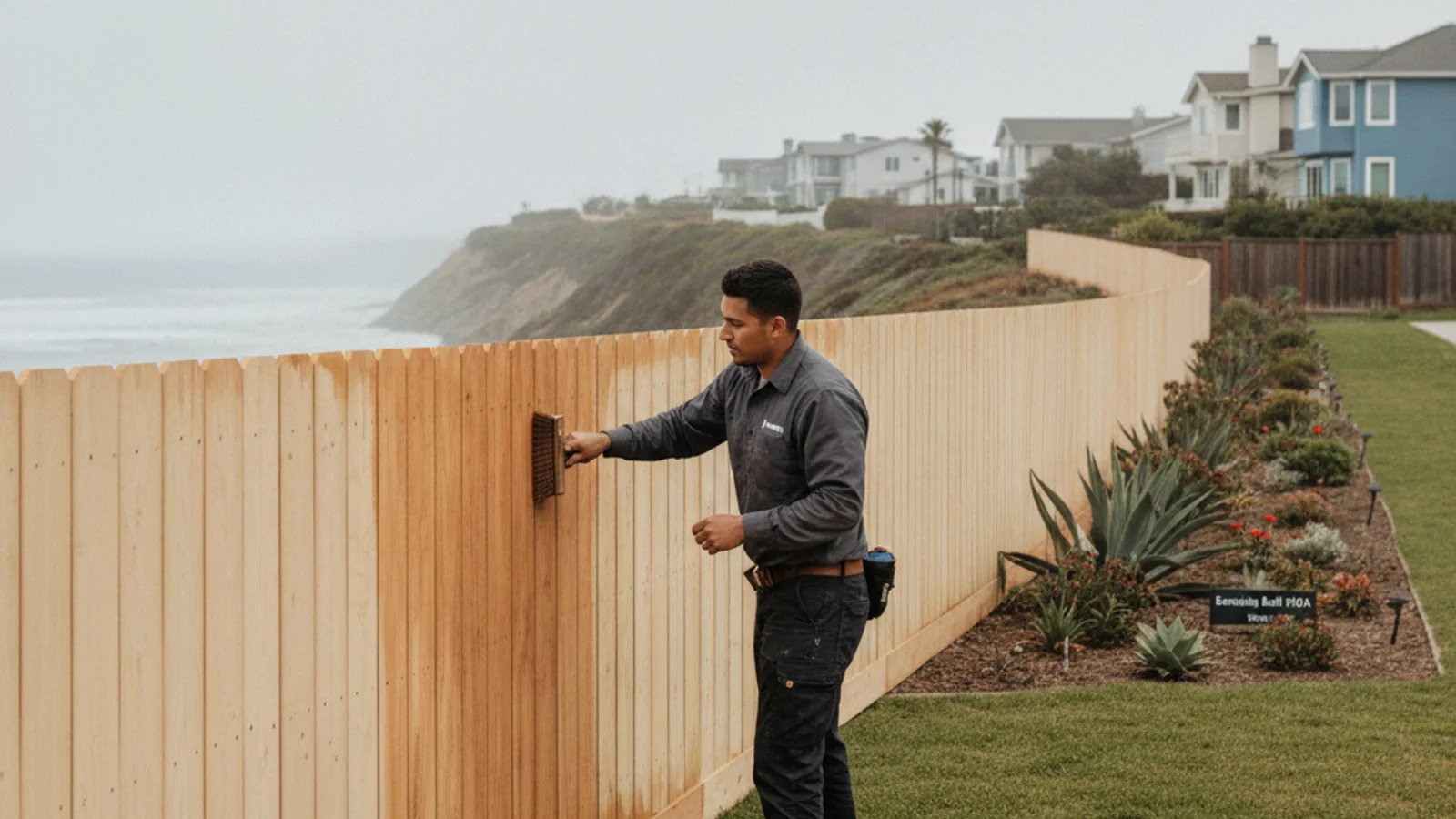
Encinitas’s coastal bluff parcels, especially in Old Encinitas and along the western edge of Leucadia, sit inside a marine layer that can hang on well into the afternoon on many days, even in summer. That matters for staining in a way that’s easy to miss: it’s not only about the wood absorbing moisture, it’s about how long a fresh coat of stain takes to cure once it’s applied.
Most oil- and water-based stains have a manufacturer-specified window for dry time and full cure, and that window assumes reasonably normal humidity and temperature. A heavy, lingering marine layer extends both. Stain applied in the morning on a marine-layer day may still be tacky well past the point it would be dry inland, which raises the risk of dust, pollen, or a light mist settling into the finish before it’s set.
The practical fix is timing, not a different product. Ask the independent contractor to plan application around that day’s marine layer burn-off rather than a fixed morning start, and to watch the forecast for multi-day marine layer stretches rather than starting a job in the middle of one.
Salt exposure on bluff parcels versus inland Encinitas
West-side Encinitas near the ocean deals with the most aggressive salt exposure in the city. East-side Encinitas, including Olivenhain and New Encinitas, sits farther inland. Salt residue is usually a smaller issue there, but inland sun on exposed runs still fades stain. Hardware grade is still a bid line, not a citywide “standard is fine” stamp.
That split matters for a staining project because the wood itself, not just the metal hardware, takes salt deposition differently depending on which side of the divide it’s on. A west-side fence accumulates a fine salt residue between stain cycles that has to be washed off thoroughly before restaining, or the new coat won’t bond evenly. Skipping that step is a common reason a restain on a bluff-adjacent fence looks blotchy within the first year.
Fences on the east side generally don’t need that extra wash step, but they do see more direct inland sun on exposed runs, which is a fading problem rather than a residue problem.
Check property-specific color and product rules
The approved claims ledger doesn’t confirm which Encinitas properties are governed by HOAs or what any association requires.
If your property is governed by an HOA, check whether restaining, and specifically the color or finish you’re planning to use, needs a submittal before you start. Confirm the current requirements through your association’s governing documents or management company before scheduling the work.
Don’t assume a stain refresh in the same color is automatically exempt from review. Our Encinitas fence company guide covers other points to consider if you’re also planning a fence replacement alongside the stain question.
How bluff exposure narrows the product choice
Not every stain product on the shelf is a good fit for a fence sitting inside Encinitas’s marine layer and salt exposure. A few manufacturer-stated properties are worth asking about specifically rather than picking by color alone.
Some manufacturers rate their stains for direct coastal or marine exposure and specify a shorter recoat interval for that environment; that’s the manufacturer’s claim, and it’s worth reading rather than assuming a general-purpose exterior stain performs the same on a bluff parcel as it would farther inland. Oil-based and water-based formulations also behave differently in a slow-drying, humid environment: some water-based products are formulated to tolerate a wider humidity range during application than others, and that’s a fair question to put directly to whichever contractor or supplier you’re working with.
None of this is a reason to avoid staining a bluff-adjacent fence. It’s a reason to ask a contractor who works this specific stretch of coastline what they use and why, rather than treating every stain can as interchangeable.
What to plan for depending on where your fence sits
| Your Encinitas location | Main consideration |
|---|---|
| Old Encinitas, Leucadia, Cardiff (west side) | Marine-layer scheduling for cure time, plus a salt-residue wash before restaining |
| New Encinitas, Olivenhain (east side, inland) | Sun fading on exposed runs; still ask for the hardware grade on the bid |
| A property governed by an HOA | Ask the association whether it requires a color or product submittal before starting |
| Any bluff-adjacent parcel | Ask the contractor how they schedule around multi-day marine layer stretches |
A fence staining referral can connect you with an independent contractor. Ask that person how they schedule around marine layer, what they wash for salt, and which product they are using. If you’re still deciding between colors, our best fence stain colors guide is a useful next stop, and our staining schedule guide covers how coastal exposure shifts the conversation between refinishes.
What needs to happen before the stain can start
On an Encinitas fence, prep is where a coastal staining job is usually won or lost. A fresh coating can’t correct a dirty, glossy, or damp surface. Before opening the stain, the contractor you’re matched with should inspect every run. That includes shaded boards, gate edges, post bases, and areas beside irrigation.
Bluff-side and west-facing fences should be checked for salt film and mildew. If either is present, the proposal should name the cleaning method. It should also explain how nearby plants and paving will be protected. Washing isn’t complete just because the boards look cleaner. The surface still needs an even, residue-free condition suited to the chosen product.
New lumber needs a different check. A smooth surface can carry mill glaze from processing. That can interfere with how evenly stain enters the wood. The contractor should follow the stain maker’s preparation instructions. Those directions may call for cleaning, abrasion, or another stated method. Ask which step applies to the actual boards on your fence.
Dryness also needs a clear answer before coating begins. Encinitas marine layer conditions can make a calendar-based guess unreliable. The proposal should state how the contractor will confirm readiness. That might mean following the product label and using its required test. A board that feels dry isn’t automatically ready under every manufacturer’s directions.
This local check matters because San Diego County isn’t one climate. East County heat and decomposed granite call for different site protection than coastal salt air. Santa Ana wind events can also change debris and overspray concerns. Expansive clay near the coast and central city can leave lower boards dirty after irrigation or runoff. In Encinitas, prep should reflect the fence in front of you, not a generic checklist.
What belongs in a written staining proposal
A written proposal should remove ambiguity before anyone buys materials. Start with the exact manufacturer and product line, not simply “brown stain.” It should name the selected color and opacity. That might be transparent, semi-transparent, or solid under the maker’s terms. The proposal should also state the planned number of coats. If the product label changes that plan, the contractor should explain why in writing.
Prep deserves its own line item. The document should say whether washing is included and what it targets. It should identify the cleaning or abrasion method for salt film, mildew, or mill glaze. It should also say how they’ll check dryness before application. “Prep as needed” leaves too much room for different expectations.
Scope should be equally specific. Confirm whether the proposal covers one face or both faces of each fence run. Gates, posts, caps, trim, and exposed board edges should be listed separately. Shared fences need a clear boundary between included and excluded surfaces. Your neighbor’s side shouldn’t be treated as approved access without confirmation.
Protection and cleanup belong in the same document. Ask how plants, stucco, windows, pavers, concrete, and outdoor fixtures will be masked. The plan should address windblown spray and debris during Santa Ana conditions. It should also state who moves lightweight items and who replaces them. Cleanup should cover masking materials, stain containers, wash residue, and visible drips.
Finally, match the proposal to the property’s setting. Encinitas salt air and marine layer concerns aren’t the same as East County heat, decomposed granite, or central-city expansive clay. Fence Pros San Diego is a referral service. You’ll contract with and pay the matched independent contractor directly, so that contractor’s written proposal controls the work.
Frequently asked questions
Why does the marine layer matter for staining beyond just moisture?
It extends how long a fresh coat of stain takes to dry and fully cure. On heavy marine-layer days, stain applied in the morning can stay tacky longer than it would inland, increasing the risk of dust or debris settling into the finish before it sets.
Does my Encinitas HOA need to approve a fence stain color?
The approved claims ledger doesn’t confirm any Encinitas HOA’s stain-review rules. If your property is governed by an HOA, check its current governing documents or ask its management company before starting.
Is west-side Encinitas really that different from east-side for a stain job?
Yes. West-side, bluff-adjacent fences deal with heavier salt residue that needs washing off before restaining, and marine-layer cure-time scheduling. East-side, inland fences deal more with direct sun fading and don’t need the same salt-wash step.
How often should a bluff-adjacent Encinitas fence be restained compared to an inland one?
The general pattern across San Diego’s coastal cities is that salt-air exposure shortens the interval between restains compared to inland properties. Our staining frequency guide covers the reasoning in more detail.
When to call us
A restaining job on a bluff-adjacent or HOA-governed Encinitas property has more moving pieces than the stain itself. Call us at (858) 400-4906 and we’ll connect you with a licensed fence contractor.