Oceanside isn’t one climate. A fence a few blocks from the harbor lives in salt air and marine-layer moisture most of the year. A fence in South Oceanside or the Mission area, a couple of miles inland, deals with more direct sun and less humidity. Both wear out a stain job, but for different reasons, and the fix isn’t the same for both.
Oceanside also has an unusual mix of housing eras in play at the same time: older wood fence lines going back decades in the central neighborhoods, and newer fence installed on tract homes in South Oceanside and Ocean Hills. Older wood behaves differently under stain than fresher lumber, which matters more here than in most North County cities.
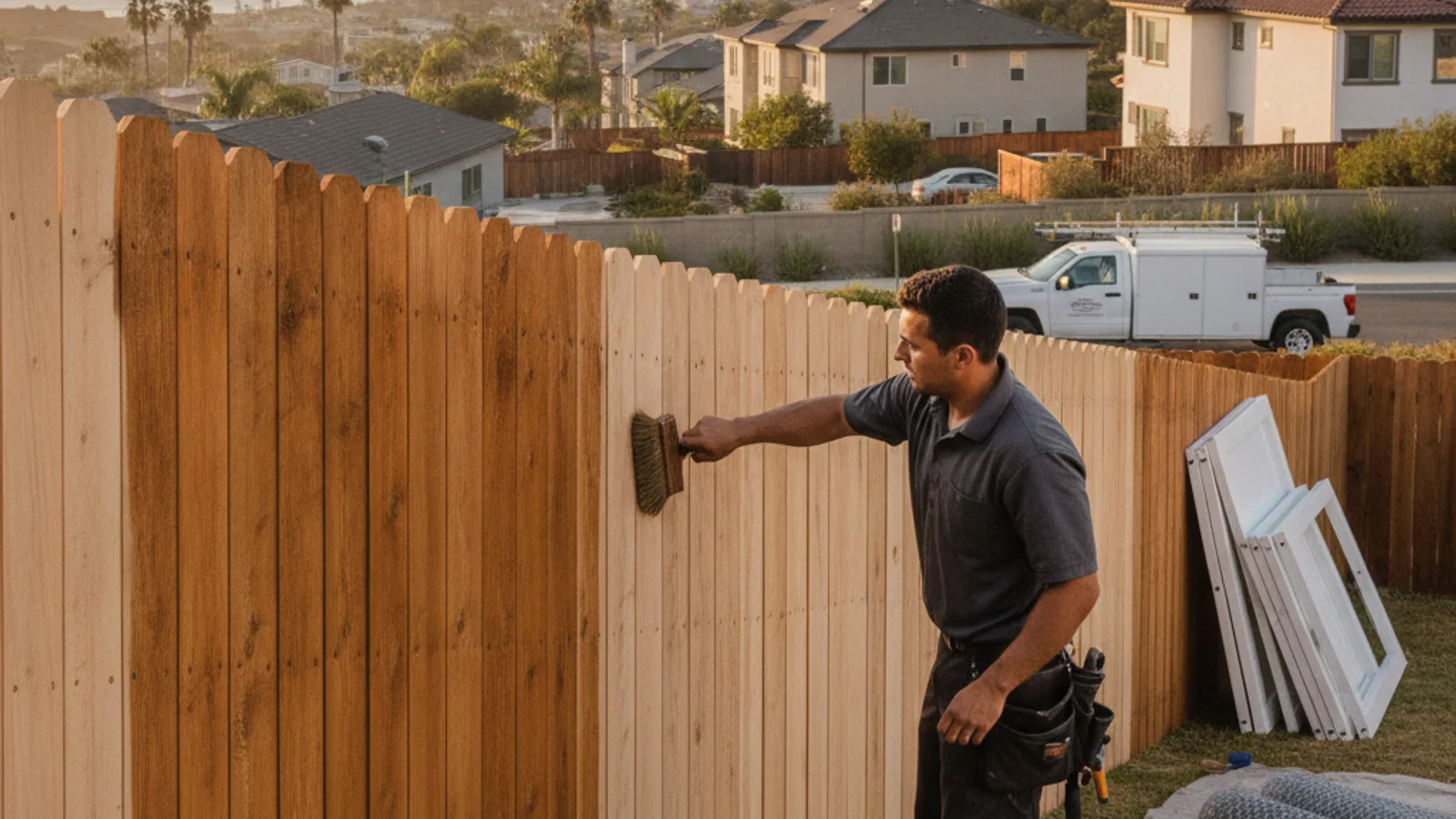
The harbor-area and beachfront fence problem
Fences within roughly a mile of the Oceanside harbor and pier sit inside a marine layer that rolls in most mornings and doesn’t fully burn off some days, even in summer. That moisture cycle, wet at night, dry by afternoon, is harder on a stain finish than steady sun alone, because the wood is constantly swelling and contracting as it absorbs and releases moisture.
The practical effect is that a stain film in this zone tends to show wear as graying and dulling before it shows cracking. Salt deposition on the wood surface also interferes with how evenly a fresh coat of stain penetrates, so a fence in this zone often needs a more thorough clean before restaining than a fence further inland would, and it usually needs that refresh on a shorter interval than our general staining frequency guide lays out for the county as a whole.
Hardware on these fences deserves the same attention as the wood. Nails, hinges, and gate hardware that are plain zinc-plated corrode fast enough here that a restaining project is a reasonable time to swap them for stainless or hot-dip galvanized versions, rather than staining around hardware that’s already showing rust bleed into the wood.
South Oceanside and the inland tracts: a sun problem, not a salt problem
Move a couple of miles inland to South Oceanside, Ocean Hills, or the Mission area near Mission San Luis Rey, and the marine layer thins out. These neighborhoods get more direct, unfiltered sun on west- and south-facing fence runs, and that’s the primary driver of stain breakdown here.
UV exposure bleaches pigment out of a stain film and dries out the wood surface underneath it, which shows up first as color fading on the sun-facing side of a fence while the shaded side still looks close to fresh. If you’ve ever noticed one side of your fence looking noticeably more worn than the other, sun exposure, not age, is usually the reason.
For inland Oceanside fences, a stain with stronger UV-blocking pigment load tends to hold color longer on the exposed faces than a very light or clear finish. Manufacturers publish UV performance data for their own products, and that’s worth asking about directly rather than assuming one stain performs the same everywhere.
Central Oceanside’s older fence lines need a different prep approach
A lot of central Oceanside’s wood fence, in neighborhoods like Loma Alta and Fire Mountain, has been in the ground for decades. Older wood that’s been through multiple stain or paint cycles behaves differently than a newer fence going through its first refinish.
Layered old finishes, sometimes paint under stain, or several stain colors over the years, need to be stripped or at minimum thoroughly sanded before new stain will penetrate evenly. Skipping that step is a common way a restain looks patchy: the new coat sits on top of old, failing finish instead of soaking into bare or lightly weathered wood.
If the wood itself has gone soft, checked deeply, or shows rot at the base of pickets or posts, that’s a repair-first situation. Staining over compromised wood buys you a season of better looks and not much else.
Rental turnover changes the maintenance math
Oceanside has a large stock of rental housing serving Camp Pendleton families on multi-year cycles, and that changes how some owners approach fence staining compared to a long-term owner-occupied home.
A property manager coordinating a restain between tenants is usually working around a tighter schedule than a homeowner would set for themselves, and often wants the work documented for the property file. If that’s your situation, say so upfront. A contractor can plan around a move-out date and provide the kind of written scope and product documentation a management company needs on record, rather than treating it as a standard homeowner job.
The other practical point for rental fences: a stain job that has to survive higher-than-average gate and yard use between tenants may need a more durable finish than the lightest product on the shelf. Ask the contractor to name that product in the written scope.
What to ask a contractor about your specific property
Because Oceanside spans such a wide range of exposure, the right questions shift depending on where your fence sits.
| Your fence’s location | What to ask about |
|---|---|
| Within about a mile of the harbor or beach | Salt-air prep, hardware upgrade, and whether the stain product is rated for marine exposure |
| South Oceanside or Ocean Hills (inland, sun-heavy) | UV-resistant pigment load and how the west-facing run will be treated differently, if at all |
| Central Oceanside older fence lines | Whether stripping or heavy sanding is included, and what the existing wood condition looks like underneath old finish |
| Military-family rental property | Written scope for the property file and a finish that holds up to tenant turnover cycles |
Whatever the answers, get the prep steps and the specific product in writing before work starts. Fence staining can connect you with an independent contractor. If you’re deciding whether staining or painting is the better call, our staining vs painting guide is worth reading first. If you’re weighing a full fence replacement instead of a refinish, our Oceanside fence company guide covers that side of the decision.
Frequently asked questions
Does my Oceanside fence need special hardware because of salt air?
If the fence sits near the harbor or coastline, treat hardware as its own line. Plain zinc-plated nails and hinges often show corrosion first in that air. A restaining project is a reasonable time to ask for stainless or hot-dip galvanized replacements instead of staining around rust. See coastal fence hardware.
Why does one side of my fence look more faded than the other?
Unequal sun exposure. The west- or south-facing side of a fence in sun-heavy inland Oceanside takes more direct UV than a shaded or north-facing side, and that shows up as pigment fading before anything else changes.
My fence has old paint under the stain. What does that mean for restaining?
Layered finishes need to be stripped or heavily sanded before new stain will penetrate evenly. Staining directly over old, failing finish is a common way a fresh coat looks patchy.
How is staining a fence in South Oceanside different from staining one near the harbor?
Harbor-area fences deal primarily with salt deposition and marine-layer moisture cycling. South Oceanside and inland fences deal primarily with direct UV exposure. Both wear down a stain finish, but the prep and product choice that address each one aren’t identical.
When to call us
A fence that’s graying, fading unevenly, or showing old finish bleeding through new stain is worth a professional look before you buy another can of product. Call us at (858) 400-4906 and we’ll connect you with a licensed fence contractor.