“Galvanized” describes a zinc coating process, and the process a fence used matters more than the word on the invoice.
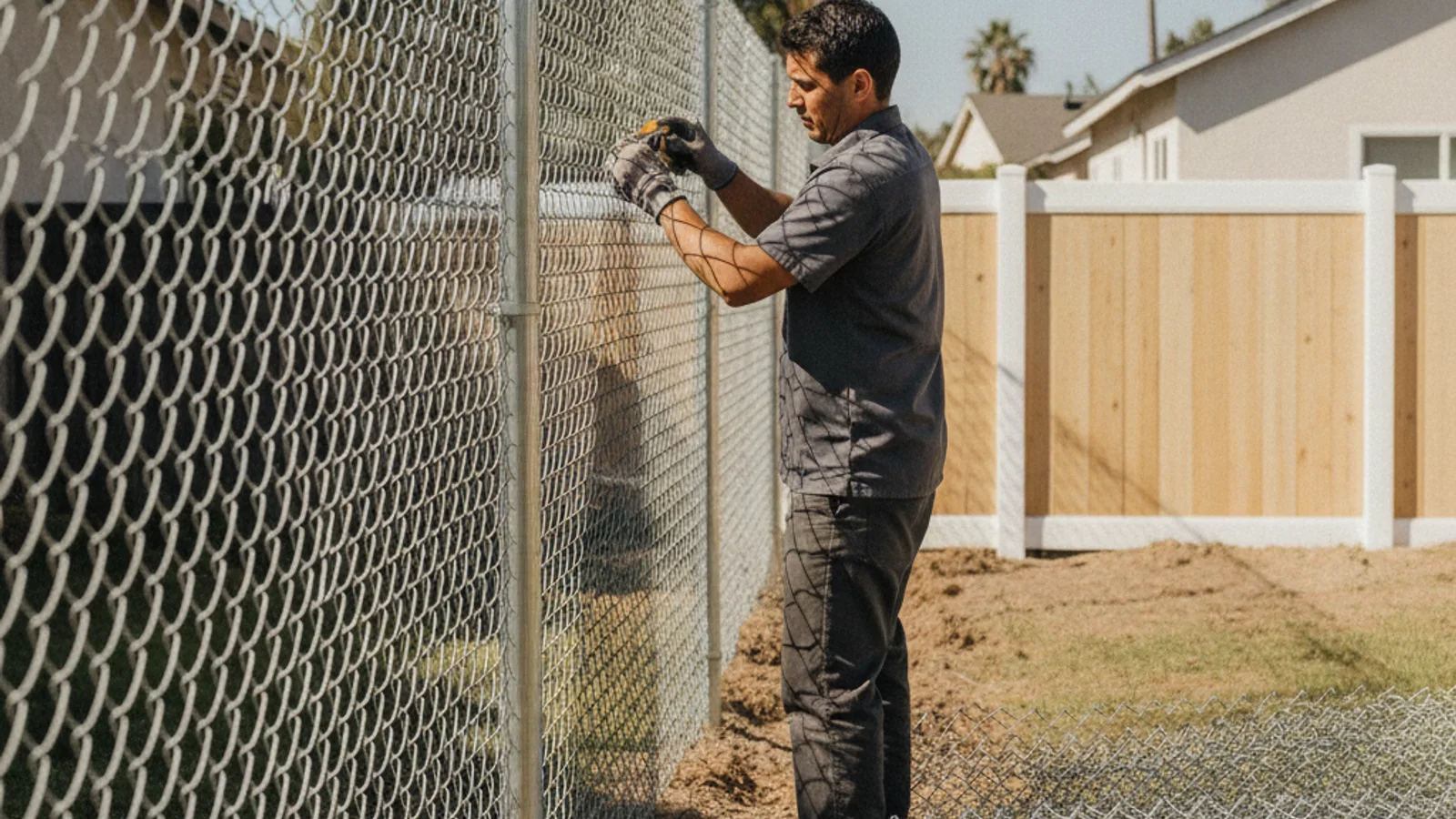
Two chain link fences can both be labeled galvanized while using different coating methods, different zinc thicknesses, and different steel gauges. That is why the same word can describe a fence that still looks sound years later and one that shows rust at cut edges much sooner. If you’re also weighing chain link against wood or comparing installation cost questions, this post is about the finish, since that’s the detail most quotes gloss over.
Hot-dip vs. electro-galvanized
Hot-dip galvanizing submerges the finished steel wire in molten zinc, which creates a thicker, more durable coating that bonds well and covers the wire more completely, including cut ends and joints. It’s the more common method for chain link fabric intended for outdoor, long-term use.
Electro-galvanizing uses an electrical current to bond a thinner layer of zinc onto the wire, typically before it’s woven into fabric. It produces a smoother, brighter finish and costs less to produce, but the thinner coating gives less protection against corrosion over time, particularly at cut edges and joints where the coating is more likely to be thin or interrupted.
The practical difference shows up years down the line, not on installation day. Both finishes look similar when new. Ask which process a quoted fence uses, since “galvanized” alone doesn’t tell you that.
Gauge and framework matter as much as the coating
The wire gauge, meaning its thickness, and the framework of posts and rails behind the fabric affect durability just as much as the zinc coating itself. A heavier gauge wire with a thinner coating can outlast a lighter gauge wire with a thicker one, depending on the application and the mechanical stress the fence sees.
Residential fences typically use a lighter gauge than commercial or security applications, where a fence has to withstand more impact, more frequent contact, or higher wind loads. A commercial chain link installation for a business property or a large perimeter run is a different spec conversation than a backyard fence. An independent contractor pricing the job should be asking about the use case before quoting gauge and post spacing.
Why coastal salt exposure changes the specification
San Diego’s coastline runs from La Jolla and Pacific Beach down through Coronado and Imperial Beach, and salt-laden air in those zones accelerates corrosion on any exposed metal, chain link included. A galvanized fence installed a half mile inland from Mission Bay ages differently than one installed in a coastal area with regular onshore wind and marine layer moisture.
This is where the coating method and thickness actually earn their cost difference. A hot-dip galvanized fence with a heavier zinc layer generally resists coastal corrosion better than an electro-galvanized fence with a lighter coating, and in some coastal applications, a vinyl-coated fence, which adds a polymer layer over the galvanized steel, offers an additional barrier against salt air that a bare galvanized finish doesn’t have. If a property sits close to the coast, it’s worth discussing corrosion resistance directly with the fence pro rather than assuming any galvanized product performs the same regardless of location.
Galvanized vs. vinyl-coated: where each wins
Galvanized chain link is generally the more economical option and gives a clean, utilitarian look that works for security perimeters, agricultural fencing, and large commercial or industrial runs where appearance is secondary to function. It’s also simpler to repair, since a damaged section can be spliced without matching a color coating.
Vinyl-coated fabric, covered in our black chain link guide, adds a colored polymer layer over the galvanized steel underneath. That layer gives an added barrier against the elements and a more finished, less industrial look, but it costs more and can be harder to repair invisibly, since a spliced section may not match the coating color exactly after sun exposure. Galvanized tends to win when the priority is straightforward durability and lower material cost. Vinyl-coated tends to win when appearance and an additional weather barrier matter more than upfront cost.
When galvanized is the practical choice
Galvanized chain link makes the most sense on large perimeter runs, rural or agricultural properties, and commercial sites where the fence needs to do a job rather than blend into a curated backyard look. It’s also a sound choice for temporary or semi-permanent enclosures, dog runs, and side-yard or utility-area fencing where cost efficiency matters more than color matching.
For a residential backyard where appearance and a finished look matter more, wood or vinyl-coated chain link are more common choices. For straightforward security and property-line enclosure at scale, galvanized remains a standard spec. An independent contractor can match the coating process and gauge to the site, including proximity to the coast, rather than defaulting to the cheapest fabric on the invoice.
Posts, fittings, and the parts that fail first
The chain link fabric itself usually isn’t the first thing to show wear on a galvanized fence. Fittings, the smaller metal pieces like tension bands, brace bands, and rail clamps, are often lighter gauge and can corrode faster than the fabric and framework they hold together, particularly in coastal air. A fence built with galvanized fabric on ungalvanized or poorly coated fittings is only as corrosion-resistant as its weakest component.
Line posts, terminal posts, and top rails should carry a coating that matches the fabric’s durability, not a lighter spec chosen to cut cost on parts that are harder to inspect after installation. Asking a contractor what fittings are included, and whether they’re galvanized to the same standard as the fabric, is a fair question on any quote for a large chain link fence run.
What to ask a contractor quoting galvanized chain link
Since “galvanized” alone doesn’t specify the process, the fabric weight, or the fitting quality, it’s worth asking a contractor a few direct questions before comparing prices. Ask whether the fabric is hot-dip or electro-galvanized, what gauge is quoted for the intended use, whether the fittings and posts carry a matching coating, and how the fence is anchored given the property’s distance from the coast. A contractor who can answer all four specifically is generally quoting a fence built for the site, not a generic number.
Frequently asked questions
Is hot-dip galvanized chain link more expensive than electro-galvanized?
It’s typically priced somewhat higher due to the more involved coating process, though the exact difference depends on gauge, fabric height, and the supplier quoting the job.
Can galvanized chain link be painted or coated later?
Yes, in many cases a galvanized fence can be painted after proper surface preparation, though the coating and prep steps matter for how well paint adheres to a zinc surface.
Does galvanized chain link rust eventually?
All steel is vulnerable to corrosion once the protective coating is compromised, whether by a cut, a scratch, or long-term wear. A heavier, well-applied galvanized coating delays that compared to a thin or damaged one. No verified year table is in the approved claims ledger.
When to call us
Matching the right coating process and gauge to a property’s location and use is a spec decision worth getting right before installation, not after. Call us at (858) 400-4906 and we’ll connect you with a licensed fence contractor.