A new fence in Solana Beach starts with the property, not a catalog. When comparing results for “fence company Solana Beach CA,” focus on site conditions, proposal details, and the named contractor’s license. Fence Pros San Diego is a referral service. It can connect you with an independent fence professional. You contract and pay that professional directly.
How lots west and east of Interstate 5 change planning questions
Interstate 5 gives Solana Beach homeowners a useful planning reference. It doesn’t create one set of fence rules west of the freeway and another east of it. It does help organize the questions a contractor should ask during the site review.
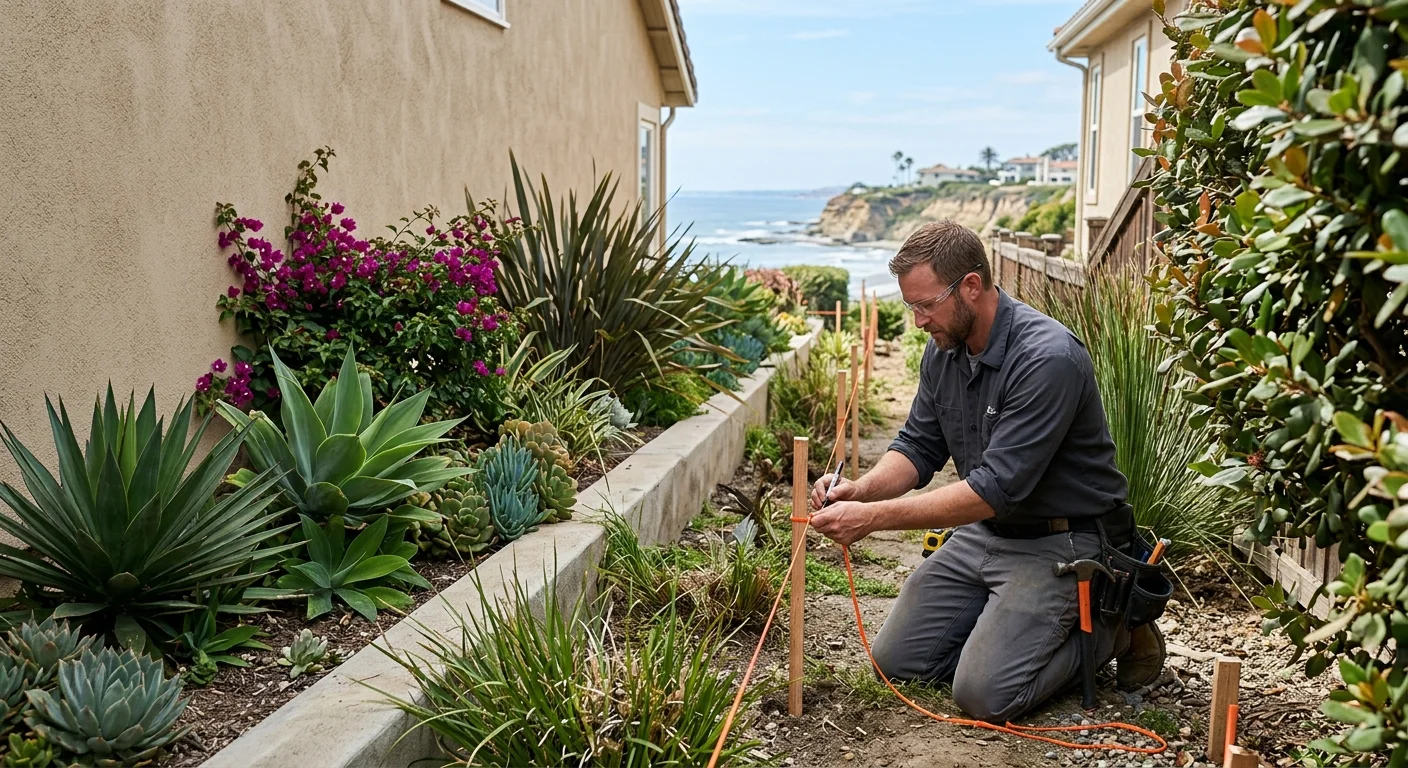
For a property west of Interstate 5, document the exposure you can actually see. Look for salt residue, corroded fasteners, peeling coatings, or weathered gate hardware. Don’t assume every western property has the same conditions. Buildings, landscaping, wall placement, and the fence’s direction can change exposure within one lot.
East of Interstate 5, don’t assume the site is protected or level. Walk the entire proposed line. Note grade changes, drainage paths, planting areas, retaining features, and narrow passages. A short section beside the house may need different planning than an open backyard boundary.
The freeway itself shouldn’t become a shortcut for choosing materials. Use the property’s observed conditions instead. Our guide to coastal fence hardware and salt-air planning explains which product details belong in that discussion.
Ask each contractor to describe the same fence line in writing. The description should identify corners, gates, transitions, and excluded areas. It should also state whether the proposal covers removal of an existing fence. This makes competing bids easier to compare.
A qualified proposal should respond to your specific lot. A generic material recommendation isn’t enough. The contractor should explain how the proposed system relates to the access, grade, exposure, and intended use found at your Solana Beach property.
What exposure, access, and grade details belong in the site review
Start by walking the proposed line from end to end. Mark each turn, gate location, surface change, and tight working area. Photos help, but they shouldn’t replace an on-site review.
Access deserves its own discussion. Show the contractor how materials could reach the fence line from the street. Identify narrow side yards, steps, planted areas, finished patios, and gates that limit passage. Ask what equipment or materials must cross those areas. The proposal should explain any access assumptions that affect the planned work.
Next, review the grade. Note where the ground rises, falls, or changes abruptly. Ask whether panels would step with the grade or follow it another way. Request a drawing when the answer isn’t clear. It should show how the fence meets the ground and how sections transition.
Exposure also belongs in the written record. Point out existing corrosion, persistent moisture, irrigation spray, or direct weather exposure that you’ve observed. Ask the contractor to identify the fasteners, connectors, hinges, latches, coatings, and post system included in the proposal. Product names and specifications are more useful than broad labels such as “outdoor grade.”
Confirm the intended boundary before approving the layout. An old fence isn’t proof of a legal property line. If the boundary is uncertain, ask the appropriate property professional to establish it before construction begins.
A shared boundary adds another step. California Civil Code Section 841 presumes adjoining landowners share equal benefit and reasonable fence costs unless they agree otherwise in writing. It also requires written notice before shared-fence costs are incurred. The notice must be provided 30 days in advance and include the problem, proposed solution, estimated costs, cost-sharing approach, and proposed timeline.
How to compare wood, vinyl, and metal proposals
Material names alone don’t create comparable proposals. “Wood fence,” “vinyl fence,” and “metal fence” leave important choices undefined. Ask each contractor to identify the complete system being offered.
For wood, request the species, grade, board profile, post material, rail arrangement, fasteners, and gate framing. The proposal should say whether finishing is included or excluded. It should also explain how cut surfaces, ground transitions, and exposed hardware will be handled. Don’t accept an unsupported lifespan claim as a substitute for those details.
For vinyl, request the manufacturer, product line, color, panel dimensions, post system, gate frame, and any specified reinforcement. Ask how the layout handles grade changes and nonstandard openings. A vinyl fence installation proposal should separate manufacturer documents from contractor promises. Fence Pros San Diego doesn’t issue product or workmanship warranties. The homeowner contracts with the independent contractor directly.
A metal proposal should identify the metal type and fence style. It should also name the coating, connectors, posts, gate hardware, and treatment for field cuts or welded areas. If decorative sections, chain link, or fabricated gates appear in the design, make sure each item is clearly described.
Compare appearance with practical use. Decide where you need privacy, visibility, pet containment, pedestrian access, or a driveway opening. Then give every bidder the same priorities. Our guide to fence types in San Diego can help you organize those choices before the site visit.
Finally, compare exclusions. Removal, hauling, painting, staining, landscaping work, masonry, electrical work, permit handling, and boundary verification shouldn’t be assumed. Ask whether each item is included, excluded, or assigned to someone else. A shorter proposal may simply leave more questions unanswered.
Who should confirm current permit and design requirements
Current Solana Beach fence measurements and approval rules couldn’t be confirmed from the approved claims available for this page. That includes local height limits, setbacks, permit triggers, design-review requirements, and right-of-way restrictions. Don’t rely on an article, an old permit, or a neighboring fence as final authority.
Contact the City of Solana Beach before approving the design. Give city staff the property address, proposed fence location, planned height, material, gate locations, and nearby street conditions. Ask which current rules and reviews apply to that exact parcel and scope.
If the property has private architectural restrictions, contact the association or other responsible party separately. City acceptance and private approval are different questions. Ask for current written requirements rather than relying on a verbal summary.
The contractor’s proposal should identify who handles permit research, applications, plan revisions, and inspections if they’re required. It should also state what happens when city direction changes the proposed layout or material. No permit or approval outcome should be promised before the responsible authority reviews the project.
Masonry also needs careful scoping. California’s C-13 fencing classification covers many fence types, gates, railings, posts, and barriers, but it excludes masonry walls. If your design combines fencing with a new or altered masonry wall, ask how each portion will be assigned to a properly qualified contractor.
Keep the final city response with the signed scope. If a requirement remains unclear, pause that part of the project and return to the City of Solana Beach. “Not confirmed” is safer than building from an unsupported assumption.
What to compare before choosing a fence contractor
Compare contractors using one written project brief. Include the fence line, approximate layout, preferred materials, gate needs, access limits, observed exposure, and any city direction you received. Give that same brief to every contractor.
Start with the license. Verify the individual business you plan to hire. Use the official CSLB license check and confirm that the listing matches the contractor and proposed work. Fence Pros San Diego does not insure that business or set its prices.
Then compare the scope line by line. Look for these details:
- Fence length and layout used for the proposal
- Material manufacturer, product line, species, grade, or metal type
- Posts, rails, panels, fasteners, coatings, and hardware
- Gate sizes, frames, hinges, latches, and opening direction
- Treatment of corners, slopes, transitions, and ground gaps
- Removal, hauling, surface repair, and landscaping exclusions
- Responsibility for city questions, applications, and inspections
- Payment stages and change-order procedures
- Manufacturer documents and contractor warranty terms, if offered
Don’t treat the lowest total as the only comparison. One proposal may include removal, gates, or finish work that another excludes. Ask contractors to revise unclear descriptions before you choose.
Communication also matters. The contractor should be able to explain the design in plain language. Ask who will be named in the contract, who receives payment, and who is responsible for changes. With Fence Pros San Diego, you contract with and pay the independent fence professional directly.
For a full replacement or new boundary layout, review our fence installation and new-build service before requesting a match. It outlines the information that helps contractors understand the project. Clear inputs lead to clearer comparisons and fewer unresolved assumptions.
When to call us
Call when your Solana Beach project needs a licensed fence pro to review access, grade, materials, gates, or a new boundary layout. Call us at (858) 400-4906 and we’ll connect you with a licensed fence contractor.