If the fence itself is structurally fine and the only problem is that you can see straight through it, a screen is usually a faster answer than a full rebuild.
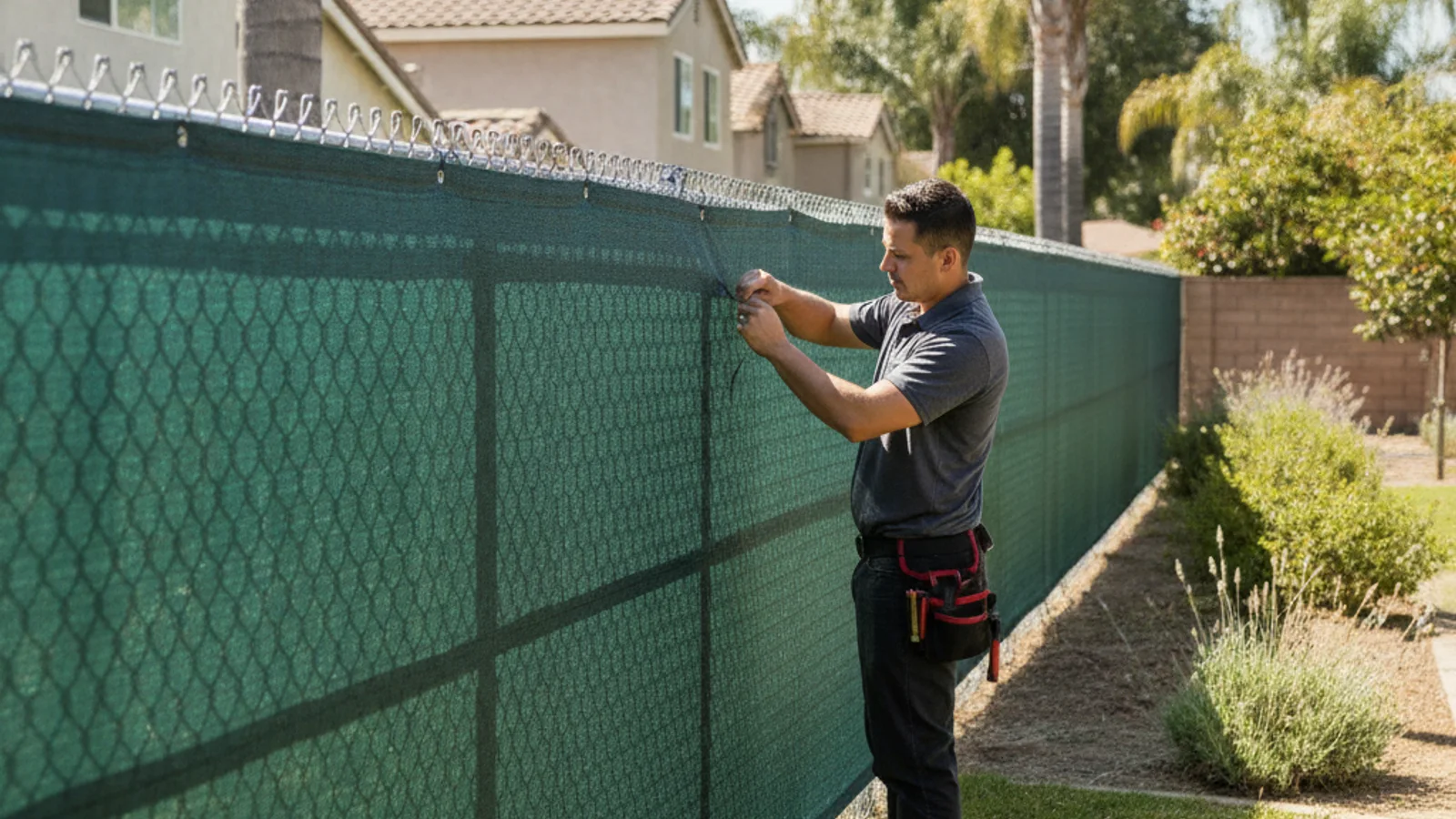
That’s the most common reason homeowners look at adding a screen: a chain link fence that does its job on security or budget but offers zero privacy, or an older wrought iron or split-rail fence that a new owner wants to close off without tearing out. The right screen material depends on how solid you want the finished look, how exposed the run is to wind, and whether your yard falls under an HOA that has rules about what can be attached to a fence.
When a screen makes more sense than a new fence
A screen is worth considering when the existing fence is sound and its problem is visibility, not structure. Reattaching a privacy solution to posts and rails that are already correctly set and anchored is a much smaller project than removing that fence and installing a new privacy-fence line in its place.
It’s a different call when the underlying fence has real problems: leaning posts, rusted-through chain link fabric, or rot in wood rails. Adding a screen to a fence that isn’t sound adds weight and wind surface to a structure that’s already compromised. A licensed fence contractor can say on site whether the existing fence can carry a screen or whether a new privacy fence is the cleaner scope.
Types of fence screens
Reed and bamboo rolls are the most common retrofit option for chain link. They come in rolled sections woven from natural or synthetic reed material, threaded or zip-tied through the chain link fabric, and they give a natural, textured look at a lower cost than most alternatives, though they weather and need periodic replacement over time.
Slats are a different approach: individual vinyl or aluminum pieces inserted directly into the diamond pattern of the chain link itself, rather than layered over the surface. They tend to hold up to sun exposure longer than woven reed and come in a range of colors, but they change the appearance of the fence more visibly, since the fabric itself becomes the privacy layer.
Faux ivy and other foliage panels clip onto the fence and are mostly a cosmetic choice rather than a true privacy layer, since gaps between leaves still let sightlines through at close range. Wood lattice panels are the most substantial option: framed panels that attach directly to fence posts or an existing rail, giving a more finished, semi-solid look, closer to what a privacy fence ideas project might use as a design element rather than a pure screening fix. If you’re weighing screens against permanent privacy slats built into chain link from the start, the two solve a similar problem with different levels of permanence.
Hardware, mounting, and getting it to survive wind
How a screen is attached matters as much as which material you pick. Reed and bamboo rolls that are only zip-tied at the top edge tend to billow and tear loose in wind, since nothing is holding the bottom or middle of the panel against the fence. A properly installed roll is tied at multiple points across the height and width of each panel, not just the corners.
Lattice panels need to be fastened to something structural, either the fence posts themselves or added support framing, rather than just resting against the existing rail. A panel that’s only screwed into thin pickets or fabric with no structural backing behind it is a wind hazard waiting for the next Santa Ana event.
Wind load on a suddenly-solid fence
This is the detail most homeowners don’t think about until it’s a problem. An open chain link fence lets wind pass through it. The moment you cover that fence with a solid or near-solid screen, it starts acting like a sail, and the posts and footings that were adequate for an open fence may not be adequate for a solid one.
This matters most on exposed runs: canyon rims, ridgelines, and inland valleys that see stronger gusts during Santa Ana conditions than many coastal lots. The contractor assessing a screen should look at post depth and spacing, not only screen width. In some cases posts need reinforcement before the screen goes up.
A screen can also change how a desk classifies the fence as open or solid. City of San Diego section 142.0310 uses different height rules for solid versus open faces, including a 35 percent open-to-light test (75 percent in the Coastal Overlay Zone). Covering chain link can turn an open fence into a solid one for that section. Table 142-03A still splits the fence-division building permit at 7 feet. Unincorporated County uses PDS 070. Other cities: ask that desk. Confirm before you order rolls.
HOA and neighbor considerations
Many HOAs have specific rules about what can be attached to a fence, particularly a fence that’s shared with a neighboring property or visible from the street. Some restrict screen colors, materials, or height, and some require approval before installation even when the fence itself was already approved.
It’s worth checking your HOA’s architectural guidelines, if one applies to your property, before ordering material. If the fence sits on a shared property line, it’s also worth a conversation with the neighbor, since a screen changes the look of the fence from both sides even though only one household may be paying for it.
Matching the screen to the fence it’s covering
Not every screen material suits every underlying fence. Chain link is the easiest surface to retrofit, since reed rolls, slats, and mesh panels are all designed to thread through or clip onto the diamond pattern of the fabric. Wrought iron and split-rail fences take screening less naturally, since there’s no continuous surface to attach material to, which usually means adding a lattice or panel system fastened directly to the posts rather than to the fence itself.
Older fences also deserve a structural look before anything gets attached. A fence pro should check that posts are set solidly and that rails aren’t already flexing under their own weight before adding screen material on top. Skipping that step is how a screen ends up loosening a fence that was otherwise stable.
What adding a screen typically involves
A screen installation is usually a shorter project than a fence rebuild, but labor still varies with length, material, and whether posts need work first. Ask the contractor to walk the run, confirm the fence is sound, and write the material, mounting points, and any reinforcement. Fence Pros San Diego does not set that price.
It’s worth asking how the screen is secured along its full height, not just at the top rail. That detail decides whether the first real wind event leaves it attached.
Frequently asked questions
Will a privacy screen work on a wood picket fence, not just chain link?
Lattice panels and some slat systems can attach to wood fence framing. There is no fabric to thread through, so the contractor should name the backing. California’s C-13 class covers fences and gates and excludes masonry walls if the backing is a masonry stem.
How long do reed and bamboo screens typically last outdoors?
Lifespan varies by material quality, sun exposure, and installation, and there’s no single verified figure that applies across products. Ask the installer about the specific product they’re quoting.
Can I install a screen myself on an existing chain link fence?
A basic reed roll on a low, sheltered fence is a manageable DIY project for some homeowners. Taller runs, wind-exposed locations, or any reinforcement work are better handled by a licensed fence pro.
When to call us
If the existing fence needs reinforcement before a screen goes up, or you’re not sure whether the fence itself is sound enough to carry one, that assessment is worth a licensed pro’s visit. Call us at (858) 400-4906 and we’ll connect you with a licensed fence contractor.