The useful privacy fence idea for a San Diego yard is the one that blocks the actual sightline, stands in that soil and weather, and stays legal for the parcel. Horizontal slats, board-on-board, lattice toppers, and plant layers solve different problems. A six-foot solid run is not automatically enough on a hillside, and it is not automatically legal in a front yard.
Fence Pros San Diego is a referral service. We match homeowners with licensed independent fence professionals. We do not install fences, set prices, or pull permits.
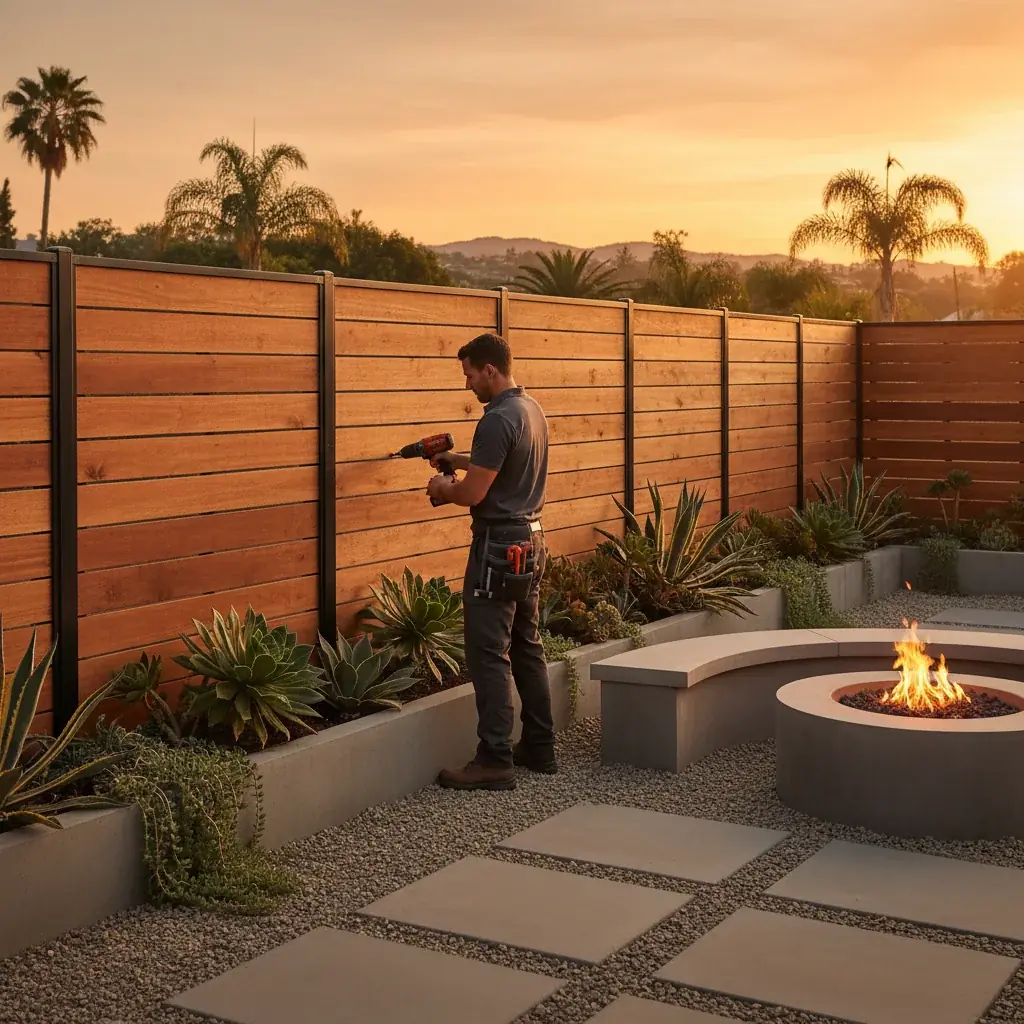
Why a standard six-foot privacy fence can fail the actual view
San Diego lots are often not flat-lot problems. In Kensington, Mount Helix, and Tierrasanta, one patio can sit several feet above the next. A fence that meets a common backyard height can still leave an upstairs deck in view.
Infill in North Park, City Heights, and parts of Chula Vista has also closed side yards. A second-story deck or an ADU terrace looks over a fence that was plenty when both houses were one story.
Coastal wind in Pacific Beach, Ocean Beach, and La Jolla pushes through wide gaps. Board-on-board and tight horizontal slats screen more than widely spaced pickets. That is a geometry point, not a claim that one style is the county favorite.
Going taller is a zoning and permit question, not a default. See the height section below. Often the better move is a denser pattern, a mixed frame, or plants that block the upper sightline without changing the legal fence height.
Horizontal slat, board-on-board, and lattice-top
The right pattern depends on the house, any HOA packet, wind, and how much of the neighbor you actually need to hide.
Horizontal slat
Horizontal slats read as a contemporary face on many bungalow and newer infill lots. Cedar and redwood are common wood choices. Tight gaps hide more. Wider gaps move air, which can matter if an association or fire authority wants more visibility. Spacing, board width, and gap options are covered in horizontal fence design.
Board-on-board
Board-on-board overlaps vertical boards on opposite sides of the rail. From straight on it reads solid. From an angle you can still see through. The overlap also gives some tolerance if rails move. You will see this pattern on many East County lots. It is a construction method, not a popularity ranking.
Lattice or open topper
An open topper on a solid base can add screening plants something to climb and can reduce the visual mass of a tall solid face. It is not a permit shortcut. In the City of San Diego, section 142.0310 treats open versus solid faces differently, and Table 142-03A uses 7 feet for that division’s building-permit split. Do not add a foot of lattice to dodge a desk. Ask Development Services how it measures the finished height and openness.
Mixing wood, vinyl, and a steel frame
A single material can be enough. Mixed assemblies are useful when the posts and the boards have different jobs.
Steel posts with wood boards separate structure from the visible face. Wood posts can rot or move in wet clay. Steel posts still need a specified coating and footing. The proposal should name both.
Vinyl panels with aluminum framing are a lower-finish-labor pairing. Ask for the product line, UV package, and how cut edges are treated. Dark colors on a long south or west run in inland heat are a manufacturer question, not a countywide ban from this site.
A concrete mow strip or a moisture-resistant bottom course can keep wood off constant irrigation. San Diego yards are watered year-round. That wetting at grade is a common failure point for the lowest boards. California’s C-13 fencing classification excludes masonry walls. If the bottom is a masonry stem or the privacy line sits on a retaining wall, the proposal must name who holds that scope.
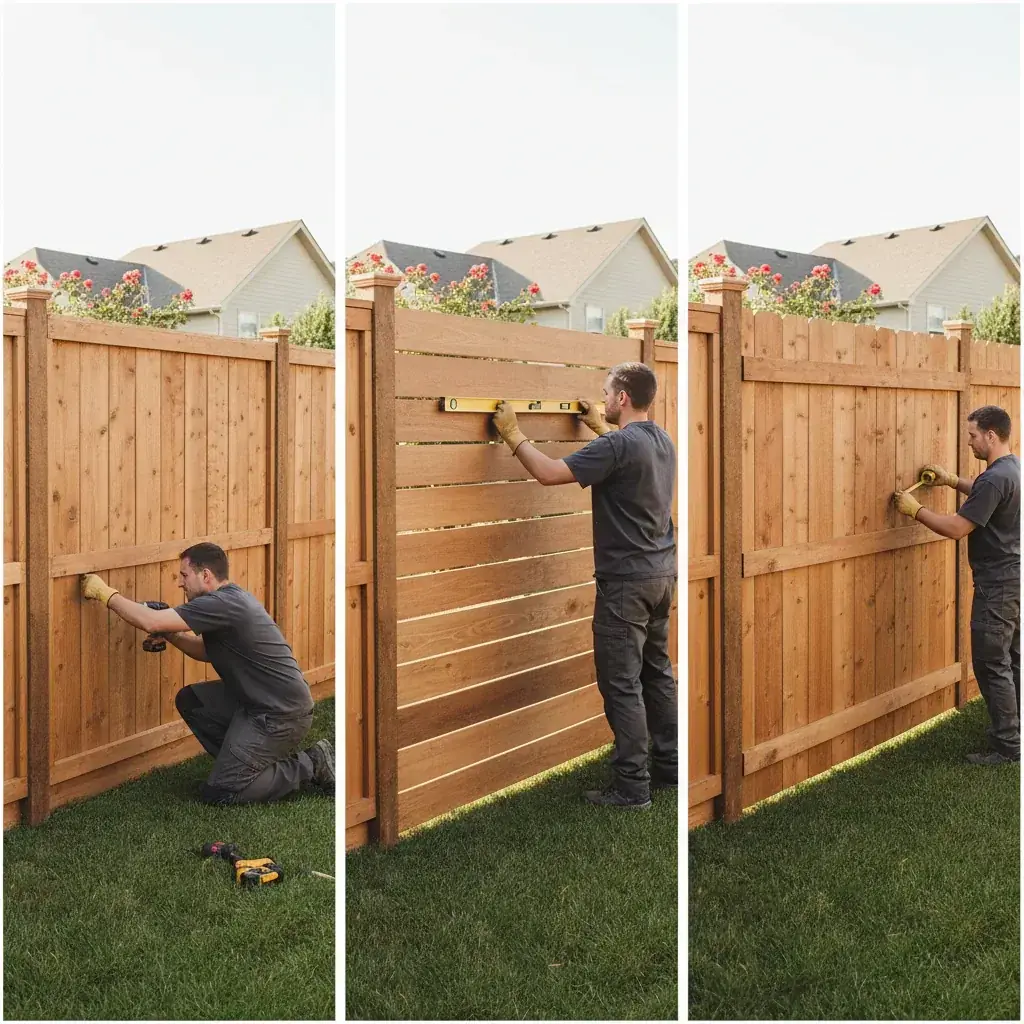
Plant layers for coastal and inland yards
A fence handles the immediate eye-level screen. Plants can block a second-story view later. Plants alone rarely give an immediate boundary or a lockable gate.
Coastal lots (Pacific Beach, Encinitas, Coronado): salt limits plant and hardware choices. Bougainvillea is a common fence-line vine here. Ivy on wood traps moisture. Ask the installer how any vine attaches so it does not hold water against the boards. Specify coating or alloy on hinges and latches. Do not treat ipe, thermally modified wood, or cedar as a ranked lifespan list. Compare named products and finish plans.
Inland lots (Rancho Bernardo, Santee, Alpine): heat, UV, and clay movement matter more than salt. Drought-tolerant shrubs planted inside the line can thicken the screen at an angle. Expansive clay in parts of Santee and El Cajon is a footing question. Record irrigation spray, not a citywide soil slogan.
HOA plant and color rules are a second track. Get the packet in writing.
Height, permits, and neighbor issues
San Diego County is not one fence code. Identify the desk for the address first.
City of San Diego. Table 142-03A: a fence under 7 feet needs no permit from that division; 7 feet or greater uses Building Permit / Process One. Section 142.0310 still limits height and openness by yard. Visibility areas: 3 feet. Solid fence on the front or street-side property line: generally 3 feet, with setback and arterial exceptions in the section. Required side and rear yards can go taller, with the portion above 6 feet open, up to 9 feet, subject to coastal overlay openness. Confirm the current text and how height is measured (the section cites 113.0270(b)).
Unincorporated County. PDS 070: a building permit is required except fences and freestanding masonry walls not exceeding 6 feet that also meet zoning. Zoning summary on that bulletin: 42 inches in the front or exterior side yard; 72 inches in the rear or interior side yard. Wood-post notes on the form are recommendations only.
Other cities. Carlsbad, Encinitas, Chula Vista, El Cajon, and the rest have their own counters. Do not copy City or County numbers onto those lots. Use fence permits by city to find the named desk, then confirm the parcel.
A retaining wall with a fence on top is measured as a combined condition. City Table 142-03A uses 3 feet for that division’s retaining-wall building-permit split. Do not assume a 2-foot wall plus a 6-foot fence is legal. See retaining wall and fence.
HOA rules in Rancho Bernardo, Scripps Ranch, Otay Ranch, and similar tracts can cap height or material below what the city allows. HOA fence approval.
A neighbor cannot stop a legal fence solely because it changes their view, unless a recorded view easement or other restriction applies. California Civil Code section 841 still requires 30 days’ written notice before you incur shared-fence costs, with the problem, proposed solution, estimated costs, cost-sharing approach, and timeline in that notice.
Frequently asked questions
What privacy fence style should I start with?
Start with the sightline you need to block, then pick a pattern that matches the house and any association rules. Horizontal slats, board-on-board, and an open topper are tools, not a ranked fashion list.
How much does a privacy fence cost per linear foot in San Diego?
Fence Pros San Diego does not publish installed price bands. Compare written proposals that measure the same line and name boards, posts, gates, removal, and finish.
Do I need a permit for a privacy fence in San Diego?
In the City, Table 142-03A splits the fence-division building permit at 7 feet, and 142.0310 still controls yard height. Unincorporated County uses PDS 070’s 6-foot exception plus zoning heights. Other cities: ask that city. A pool enclosure follows Health and Safety Code sections 115922 and 115923, not those fence-division tables.
What material works on a coastal San Diego privacy line?
Ask for a named product and a fastener schedule rated for salt. Compare wood species only with manufacturer finish notes. Vinyl UV packages vary. There is no verified countywide “best wood” lifespan in this job’s claims ledger.
How tall can a privacy fence be?
City 142.0310 and County PDS 070 / Zoning Ordinance section 6708 answer that by yard, not by a single six-foot slogan. HOA caps can be lower. Confirm the parcel.
Can plants replace a privacy fence?
They can thicken a screen over time. They do not replace an immediate barrier, a gate, or a pool enclosure. Match plants to coastal salt versus inland heat.
When to call us
Hillside sightlines, mixed steel-and-wood assemblies, a line on a retaining wall, and any pool barrier all need a licensed professional’s site plan. Masonry walls are outside C-13. Call (858) 400-4906 and we will connect you with an independent fence contractor. You contract with that professional directly. See privacy fence installation.