A garden, pet area, or rural enclosure may need protection without a solid barrier. Welded wire fencing can fit that brief, but the mesh, posts, finish, and installation scope all matter. No verified San Diego per-foot rate was available for this guide, so compare written quotes for your exact property.
What is welded wire fencing (and how it’s different from chain link)?
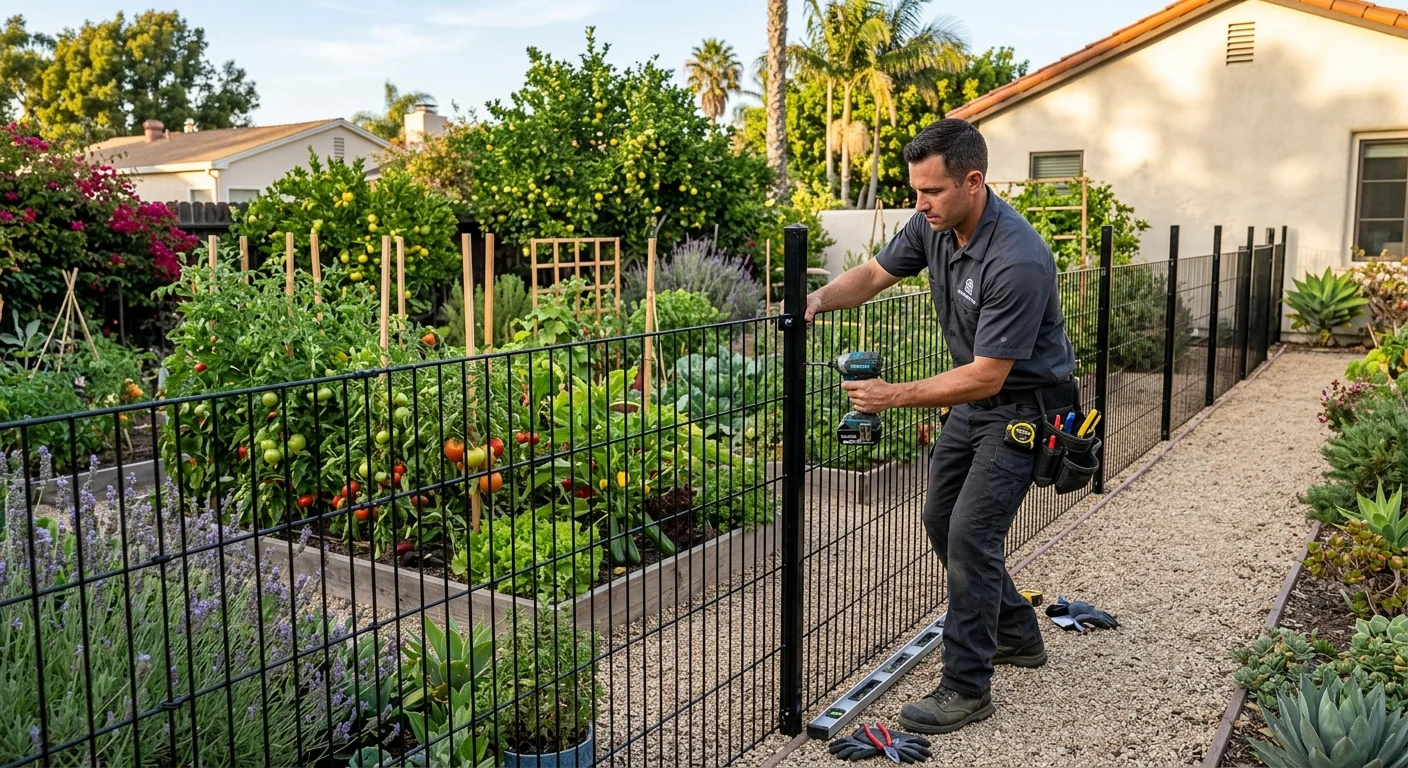
Welded wire fencing uses straight horizontal and vertical wires arranged as a grid. The wires are joined where they cross. Chain link uses interwoven wire that creates a diamond pattern. That construction difference gives each fence a distinct look and handling method.
A welded grid keeps each opening aligned with the surrounding openings. Installers normally attach the grid to wood or metal posts. Some designs add wood frames around sections. Others leave the grid exposed for a simpler wire mesh fence. The finished appearance depends heavily on the posts, top treatment, fasteners, and tension.
Chain link is a separate fence system with its own fabric, fittings, rails, and terminal posts. It may make sense where that complete system matches the project. Welded wire often attracts homeowners who want straight grid lines or framed panels. It can also suit larger enclosures where visibility matters.
Neither name describes every product sold under it. Wire diameter, opening dimensions, coating, panel format, and edge treatment can differ. Ask each bidder to identify the exact product in writing. A photo or the phrase “heavy-duty wire” isn’t enough for a fair comparison.
Welded wire also isn’t a privacy fence by itself. Its open grid leaves the area visible. Plantings or a separate screen would change the project scope. If privacy is the main goal, compare other materials before choosing wire solely for its appearance.
For a permanent boundary, start with the entire fence installation plan, not just the wire. Post placement, gates, corners, grade changes, and connections to existing structures can determine whether the selected system fits.
Best uses: from garden protection to livestock containment
A wire garden fence can define planting beds while keeping the garden visible. It may surround vegetables, young plants, compost areas, or a separate growing zone. Before selecting mesh, identify what must stay outside and what must remain inside. That answer should guide the opening size and finished height.
Pet enclosures need a similarly specific plan. Record the animal’s size, behavior, and contact with the fence. Show the installer any digging areas, grade gaps, gates, or nearby objects that affect the layout. Don’t treat a product photo as proof that a particular mesh will contain a particular animal.
Decorative framed panels are another common direction. A wood frame can make the wire grid part of the design instead of hiding it. This approach may complement a backyard garden, side-yard divider, or open boundary. Browse these San Diego garden fence ideas before settling on the frame and gate details.
Larger parcels require a different conversation. Corrals, runs, and animal enclosures can involve gates, corners, changing grades, and connections between fence types. California’s C-13 fencing classification covers fences, corrals, and runs, while excluding masonry walls. A contractor can explain which parts of a mixed project fall within that scope.
Our San Diego farm fence guide offers more planning context for rural properties. Bring the contractor a marked boundary, gate locations, intended use, and any existing fence that must remain. Properties near Ramona, Escondido, or Fallbrook still need individual site review. A countywide label doesn’t replace a parcel-specific plan.
Welded wire may also divide working areas, protect selected landscaping, or support an open visual boundary. The right use comes from matching the product to the job. It shouldn’t come from choosing a generic roll first and designing around it later.
Cost to install welded wire fencing per foot
A verified San Diego market rate per linear foot couldn’t be confirmed from the approved claims ledger. Fence Pros San Diego doesn’t set contractor prices, and we won’t publish a guessed range. The independent contractor sets the quote after reviewing the project.
Ask for a written scope that separates the wire product, posts, rails or frames, fasteners, gates, removal, and site preparation. The document should identify the proposed fence length and height. It should also state the mesh, gauge or wire diameter, finish, post material, and gate hardware.
This detail matters because two per-foot figures may describe different fences. One proposal might include framed sections and gates. Another might cover only wire attached to basic posts. Comparing the final totals without comparing the scope can hide those differences.
Access and layout belong in the conversation too. Show bidders narrow side yards, existing walls, planted areas, slopes, corners, and material staging limits. Ask how each condition appears in the quote. If an old fence needs removal, make sure that work is either included or plainly excluded.
For a City of San Diego property, confirm current permit and placement questions with the City’s Development Services Department. For Chula Vista, El Cajon, Encinitas, or another jurisdiction, check with the authority serving that parcel. This guide couldn’t confirm one countywide rule or fee for welded wire fencing.
California’s limited licensing exemption under Business and Professions Code Section 7048 applies only when its stated price and project conditions are met. It doesn’t apply simply because a fence looks small. Don’t divide a larger project to fit the exemption. For contractor work, use the CSLB license check before signing.
When comparing bids, ask how long each price remains valid and how changes receive approval. Those answers should come from the contractor’s written terms. Fence Pros San Diego doesn’t collect payment, set fees, or provide a workmanship warranty. You contract with and pay the matched professional directly.
Choosing the right gauge and mesh size for your needs
Gauge identifies wire thickness through a numbering system. Mesh size describes the dimensions of the grid openings. They answer different questions, so don’t approve a welded wire fence installation from one label alone.
Ask for the manufacturer’s product sheet or packaging details. Record the stated gauge, actual wire diameter if provided, mesh dimensions, coating, and panel or roll format. The approved claims ledger doesn’t contain a verified gauge-to-diameter chart. Product documentation is the right place to confirm those measurements.
Start with the opening rather than a vague strength label. Tell the contractor what the fence must contain, exclude, or separate. A garden boundary, dog area, decorative panel, and livestock enclosure don’t share one automatic mesh choice. The installer should connect the proposed opening to the stated use.
Next, review the full assembly. Wire selection can’t answer questions about posts, attachment points, gates, corners, or ground clearance. Ask the bidder to show how the mesh terminates at each edge. Gate openings and transitions to existing fences also deserve their own details.
Finish and appearance should be written down as well. Product listings may show bare-looking metal, metallic coatings, or dark finishes. Don’t rely on a small online photo to identify what’s included. Request the exact product name, color, coating description, and matching fastener details from the bidder.
San Diego County projects still need site-specific choices. A garden in Chula Vista, boundary in Encinitas, and enclosure near Ramona shouldn’t receive an unseen recommendation based only on the city name. Have the contractor inspect exposure, soil, grade, drainage path, access, and adjoining materials before final selection.
Finally, compare samples when appearance matters. View the grid from the patio, street, and main windows. Check whether the frame, posts, and gate match the surrounding property. A technically suitable wire can still be the wrong visual choice for a prominent front or side yard.
When to call us
Call when the project needs permanent posts, gates, property-line planning, or a contractor’s product recommendation. Fence Pros San Diego is a referral service. You contract with the independent professional directly. Verify the license at the CSLB license tool. Call us at (858) 400-4906 and we’ll connect you with a licensed fence contractor.