A new wood fence is ready for staining when its boards and surfaces meet the chosen product’s application instructions. There isn’t one waiting period that fits every fence. A fence pro should inspect the wood, the installation, and the site before recommending the first coat.
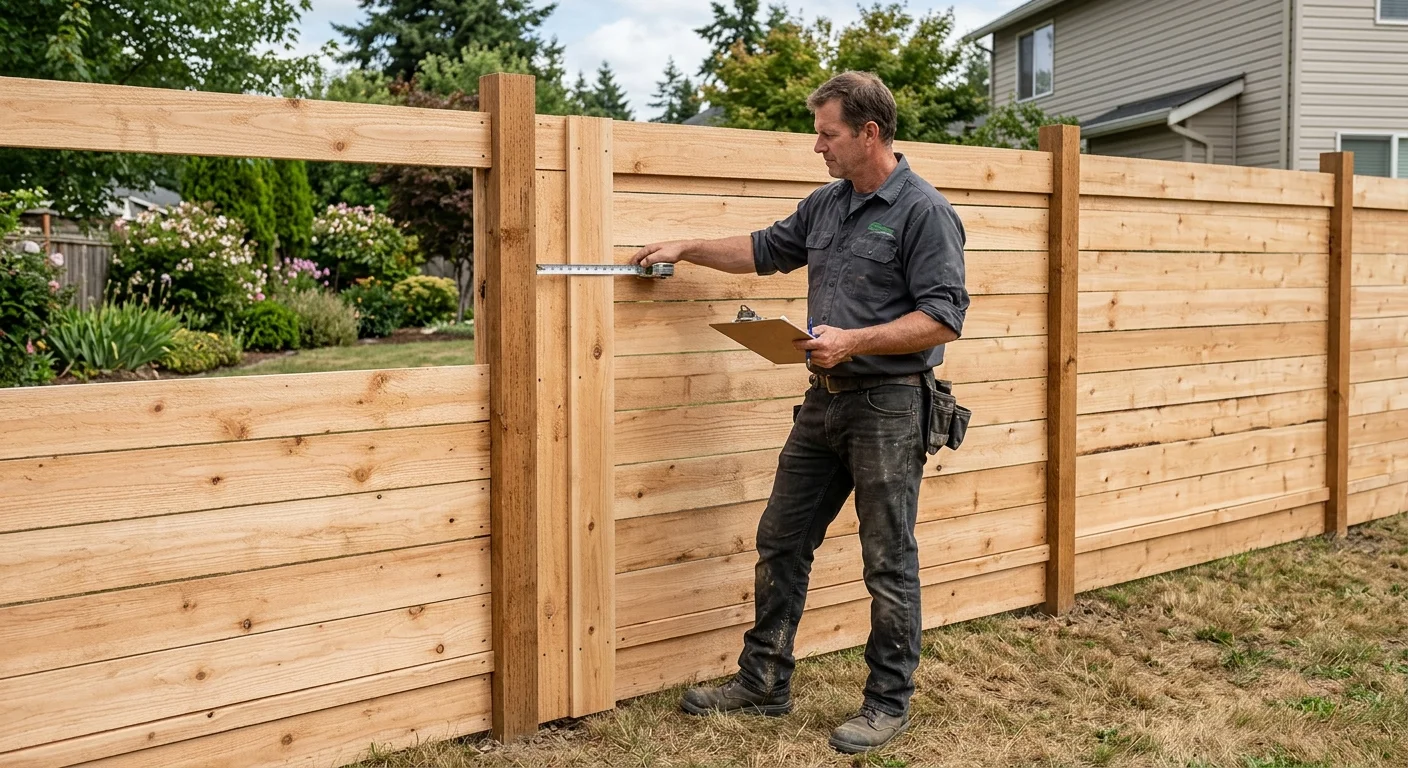
What surface conditions a fence pro checks first
The installation date is only one part of new fence stain timing. The condition of the exposed wood matters more than a date on the calendar. A contractor should inspect each section instead of judging the entire fence from one board.
The first review should cover the faces, edges, ends, posts, rails, and gates. The pro can look for visible dampness, uneven color, dirt, sawdust, pencil marks, adhesive, and construction debris. They should also note boards that feel different from the surrounding lumber. A moisture meter may be used when the contractor or coating instructions call for one.
Fresh installation can leave other details that need attention. Fastener marks may need cleaning. Rough areas could need sanding. Cut ends may require different preparation from broad board faces. Gate framing and tight board overlaps can also create areas that are harder to coat evenly.
Ask the contractor to explain what they found. “The fence needs more time” isn’t a complete assessment. The proposal should identify the surfaces that aren’t ready and explain what condition needs to change.
The selected stain also matters. Product labels can set their own surface and application requirements. A fence that’s acceptable for one finish shouldn’t automatically be treated as ready for every finish. The contractor should name the proposed product and confirm that the fence meets its directions before work begins.
Our fence staining and sealing service connects San Diego County property owners with independent contractors who can assess those details onsite.
Which lumber condition questions matter before staining
Start by identifying the lumber used for the fence. Ask whether the boards, posts, and rails are the same material. A mixed-material fence may need more than one preparation approach.
If the lumber was pressure-treated, ask for any available supplier or manufacturer guidance. Don’t rely on a general waiting rule from another project. Storage, delivery, cutting, and conditions at the property can all affect what the contractor sees during the inspection.
Surface appearance deserves a closer look. Ask whether any boards have a coating, treatment residue, stamps, or marks that could affect the planned finish. Find out whether the contractor expects cleaning or sanding before stain application. Those steps should be written into the scope instead of being left for the day work begins.
Movement also matters. A new fence can show checking, raised grain, loose knots, or changing gaps as the boards settle into place. The contractor should identify any areas that need correction before applying the finish. Stain shouldn’t become a way to hide a loose board, damaged edge, or installation concern.
The questions can stay simple:
- What lumber is installed?
- Are all visible sections ready for the same product?
- Do any boards need cleaning, sanding, or repair?
- What product instructions guide the readiness decision?
- Who will reassess the fence if conditions aren’t suitable?
If you’re still choosing materials, our wood fence installation page explains how we connect homeowners with licensed, independent local fence professionals. The staining plan should be discussed alongside the fence design, not treated as an unrelated decision after installation.
How exposure and irrigation affect the site assessment
The property address doesn’t settle whether a fence is ready. Neither does a broad phrase such as “San Diego weather.” The contractor needs to inspect the actual surfaces and the conditions around them.
Walk the full fence line together. One section may receive direct exposure while another sits behind a hedge or building. A narrow side yard in central San Diego can present a different assessment from an open boundary elsewhere in the county. The same applies across coastal North County, inland communities, East County, and the South Bay. The inspection should stay tied to what’s visible at that property.
Irrigation deserves special attention. Show the contractor every sprinkler, drip line, hose connection, and planting bed near the wood. Run the system if that helps reveal where water lands. Look for spray reaching boards, posts, rails, gates, or the ground beside the fence.
The contractor should document whether irrigation needs adjustment before preparation or staining. The proposal should also say who handles that change. Don’t assume the staining contractor will move a sprinkler or alter landscaping unless the scope says so.
Drainage and surrounding surfaces belong in the walkthrough as well. Point out areas where water collects, soil touches wood, vegetation presses against boards, or nearby walls restrict access. These observations don’t create a universal waiting period. They help the contractor decide whether the fence can be prepared and coated as proposed.
Take dated photos during the assessment. Photograph both sides of the fence when access is available. Those images give you and the contractor a shared record of the conditions discussed.
What preparation and finish details belong in the proposal
A staining proposal should describe the work, not just name a finish color. It should identify the fence sections included, their current condition, and the preparation planned for them.
Look for clear language about cleaning, sanding, masking, and protecting nearby surfaces. The scope should address hardware, gates, posts, rails, board ends, and tight spaces. It should also identify anything excluded. Landscaping, walls, paving, windows, and neighboring property may sit close to the work area.
Ask how the contractor will handle damaged or unsuitable boards discovered before staining. Repair and staining are separate tasks unless the proposal joins them. If a board needs replacement, the parties should agree on how that affects the remaining work before the finish is applied.
The finish details should be equally specific. The proposal should name the manufacturer, product line, color or tone, and application method. It should explain which surfaces receive the finish and whether both fence sides are included. If sample approval is part of the process, the proposal should say where the sample goes and who approves it.
Don’t accept unsupported promises about product life, drying time, or warranty coverage. Those terms couldn’t be confirmed for a specific project without the chosen product documents and contractor agreement. Read the current manufacturer instructions, then ask the contractor to put any project-specific commitments in writing.
Cleanup and overspray control also belong in the scope. Ask how nearby concrete, stucco, metal, plants, and vehicles will be protected. Confirm who moves obstacles and restores access afterward.
For the longer maintenance picture, read our San Diego wood fence maintenance guide. It helps separate the first-stain decision from later inspection and upkeep.
How to compare staining proposals without timing promises
Compare the reasoning behind each proposal before comparing proposed dates. A reliable scope should explain why the fence is considered ready, what preparation it needs, and which product requirements apply.
Avoid choosing a contractor because one promises the shortest wait. A calendar promise doesn’t replace a surface assessment. If conditions aren’t suitable on the planned work date, the proposal should explain how the contractor will reassess them. It should also describe how any schedule change will be handled without inventing a fixed readiness date in advance.
Place competing proposals side by side. Check whether each one covers:
- The same fence sections and sides
- The observed condition of the lumber
- Cleaning, sanding, masking, and repairs
- The named finish and application method
- Gates, hardware, posts, rails, and board ends
- Protection for landscaping and nearby surfaces
- The process if the fence isn’t ready
Differences in scope can explain why proposals don’t look alike. One may include preparation that another leaves unstated. Ask each contractor to clarify omissions in writing before you decide.
You’ll contract with and pay the independent professional directly. Fence Pros San Diego doesn’t set prices or provide warranties. Verify a contractor through the California Contractors State License Board license check.
After the first finish is applied, future staining decisions become maintenance questions. Our guide to how often to stain a fence in San Diego explains what to inspect without relying on a fixed calendar promise.
When to call us
Call when a newly installed fence needs an onsite condition assessment, preparation plan, or first-stain proposal from a licensed fence contractor. Fence Pros San Diego is a referral service serving San Diego County. Call us at (858) 400-4906 and we’ll connect you with a licensed fence contractor.