A commercial fence repair assessment works better when the damage is documented before the site visit. A clear map, current photos, and accurate access notes help the contractor review connected problems instead of one visible symptom.
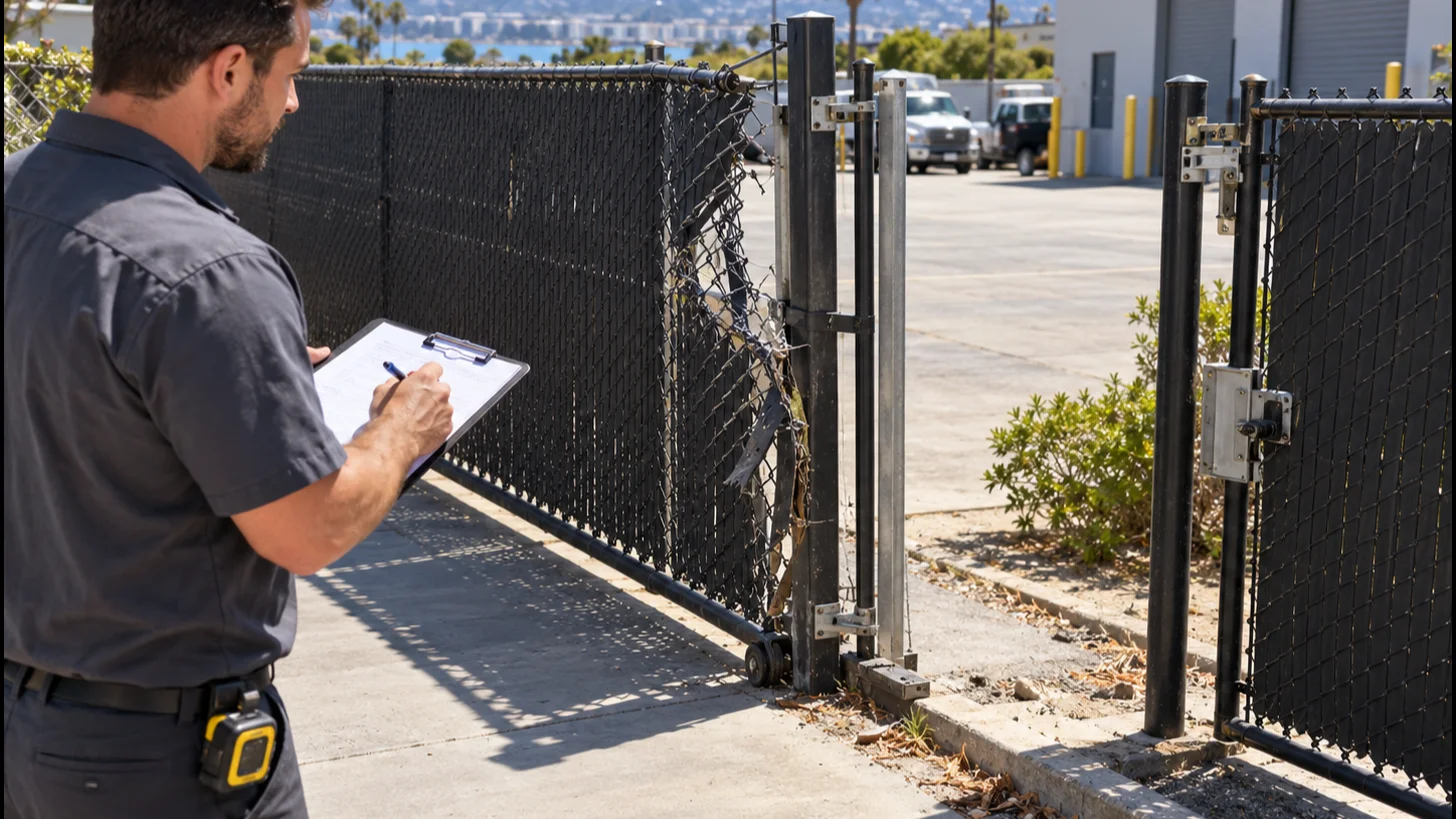
How to map damaged sections, gates, and access points
Start with a simple site plan. It doesn’t need architectural detail. Mark each fence run, corner, gate, opening, and property entrance. Give every damaged area a short label, such as “north run A” or “loading gate B.”
Take wide photos showing each section in context. Then add close photos of bent rails, leaning posts, loose panels, open seams, damaged hardware, or surface changes near the fence. Photograph both sides when access allows. Don’t move components or test powered equipment unless the property’s procedures allow it.
Record the approximate limits of each affected section. Note whether damage appears isolated or continues beyond the first visible panel. A contractor can take formal measurements during the assessment. Your map mainly keeps observations tied to the correct location.
Include every vehicle and pedestrian gate, even if it seems unaffected. Record what you observed without diagnosing it. Useful notes include:
- The gate doesn’t meet the latch.
- A leaf drags against the pavement.
- The opening looks narrower than before.
- A hinge or bracket appears displaced.
- The gate stops during its normal movement.
- A manual gate feels different from its usual operation.
For powered gates, note what happened during ordinary authorized use. Don’t remove covers or attempt electrical repairs. A licensed contractor can determine which components belong in the repair scope.
Add the date beside each photo and note who recorded it. If conditions change before the assessment, keep both sets. That timeline can help distinguish the original damage from later movement or impact.
What vehicle, pedestrian, and service access changes in the review
Commercial gate and fence repair affects more than the fence line. The contractor needs to understand how people, vehicles, deliveries, and service providers normally move through the property.
List each opening and its regular use. Separate customer entrances from loading access, employee parking, waste collection, utility access, and emergency routes. Don’t assume each opening can serve as a temporary substitute for another. Ask the people responsible for property operations to confirm what can change during repair work.
For vehicle gates, document the types of traffic that use the opening. Photos should show the approach, pavement, curbs, nearby posts, and the gate’s full path. Mark any area where parked vehicles, stored materials, or delivery activity could limit inspection access.
Pedestrian gates need their own notes. Record visible latch, hinge, frame, and threshold conditions. If tenants or visitors have reported a problem, capture the exact observation and location. Avoid translating a complaint into a technical diagnosis.
Service access often creates the hardest scheduling questions. Waste enclosures, loading areas, utility spaces, and shared drive aisles may have narrow operating windows set by the property. Those windows aren’t fence rules. They’re site-specific constraints that the property manager should give the contractor.
If the repair involves controlled entry, prepare a basic operating description. Identify keypads, readers, intercoms, vehicle detectors, manual releases, and other visible controls. Don’t share active credentials in a general bid packet. Arrange controlled access directly with the contractor reviewing the site.
Properties planning broader access changes may also benefit from the guide to steel gates for commercial properties. For a repair assessment, however, keep existing failures separate from future upgrades.
Why posts, panels, controls, and nearby surfaces need one scope
The most obvious damage may not define the full project. A bent panel can connect to a shifted post. A gate alignment problem can involve the frame, hinges, supporting posts, controls, or the surface beneath its path. The contractor should assess those connected elements together.
Document the fence from the ground upward. Include visible footings, post bases, rails, panels, mesh, fasteners, caps, and attachments. For gates, include the supporting structure and every component you can observe without opening equipment.
Nearby surfaces matter because they show the working area. Photograph pavement, concrete edges, curbs, drains, walls, landscaping, and stored materials near the damaged section. Don’t claim that a crack or surface change caused the fence problem. Simply show its position and let the contractor evaluate the relationship.
Your scope notes should distinguish three categories:
- Confirmed visible damage
- Reported operating problems
- Areas requiring contractor evaluation
That distinction prevents guesses from becoming bid assumptions. It also gives contractors a consistent starting point when they prepare proposals.
If automated equipment is present, identify which company or property representative controls access to it. The fence contractor may need information from another vendor before defining the full scope. Don’t assume fence work includes every connected access-control component. Ask each contractor to state what’s included, excluded, or dependent on another trade.
California’s C-13 fencing contractor classification covers constructing, erecting, altering, and repairing fences, gates, railings, barriers, and other listed structures. It excludes masonry walls. Property managers can verify a contractor’s current record through the CSLB license check.
Our commercial fencing service connects San Diego County customers with independent fence professionals. For work focused on damaged components, see fence repair and restoration.
When phased repair and replacement deserve separate proposals
One proposal can hide an important decision. A property may need an immediate repair in one section while another fence run deserves replacement planning. Ask for separate proposals when the work has different goals, access constraints, or approval paths.
A repair proposal should identify the sections and components being addressed. It should also state what remains in place. A replacement proposal should define its limits independently. Don’t rely on phrases such as “repair as needed” when several fence runs or gates are involved.
Ask contractors to separate optional work from the base scope. That might include a second fence run, another gate, different materials, or related site work. Clear separation helps owners compare the same work without treating every proposal as interchangeable.
There’s no approved universal percentage that decides when a commercial fence should be replaced. The familiar rules of thumb found online haven’t been confirmed for this site. A licensed contractor should assess the actual posts, panels, gates, connections, and site conditions.
Phasing deserves its own discussion when the property must keep certain entrances operating. Give the contractor your access limits, then ask how each proposed phase changes the work area. The contractor should define the sequence in writing. Property management should confirm whether that sequence fits tenant, delivery, and service needs.
Keep current repair needs apart from broader planning. Our guide to commercial fencing for San Diego business properties addresses property-wide planning. The business security fence guide covers a different decision. Neither should replace a focused damage assessment.
Pricing, timing, and warranty terms must come from the contractor’s written proposal. Fence Pros San Diego doesn’t set prices or provide warranties. The customer contracts with and pays the independent professional directly.
Which property requirements need official confirmation
Commercial fence repair San Diego projects can cross several layers of property control. Before approving a scope, identify the authority or document that governs each question. Don’t assume the same answer applies across San Diego County.
Start with jurisdiction. A City of San Diego property and an unincorporated County property don’t use the same source documents. Other incorporated cities may have their own processes. Ask the relevant planning or building authority whether the proposed work needs review and which current rules apply to the parcel.
Within the City of San Diego, the July 2026 Municipal Code table lists fences below seven feet as requiring no permit under that division. Fences seven feet or higher are listed for a Building Permit through Process One. That permit distinction doesn’t establish compliance with every design rule or approval. Coastal and other property-specific provisions may still matter.
For unincorporated San Diego County, the publicly posted PDS070 document lists a permit exemption for fences and walls no higher than six feet when zoning compliant. Confirm that document’s current applicability with County Planning & Development Services before relying on it.
If the site is in a mapped fire area, confirm current fence requirements with the authority having jurisdiction. City of San Diego Zone 0 guidance and unincorporated County guidance have different scopes. Don’t apply either one countywide.
Also check the lease, owner standards, recorded agreements, and any property association documents. Ask the responsible parties whether lenders, insurers, tenants, or access vendors require review. Their contract terms aren’t municipal rules, but they may affect approval.
A shared boundary needs added care. California Civil Code section 841 includes notice and cost-sharing provisions for covered adjoining landowners. Its application depends on the properties and circumstances. Get legal guidance when ownership, responsibility, or notice is disputed.
Bring confirmed answers back to the contractor. That keeps official requirements, property decisions, and technical recommendations in their proper lanes.
When to call us
Call when damaged posts, panels, gates, or connected controls need assessment by a licensed fence professional. Call us at (858) 400-4906 and we’ll connect you with a licensed fence contractor.