Choosing an automatic gate opener starts with the gate already in place. Its condition, movement, power access, and controls shape the proposal more than a product label does.
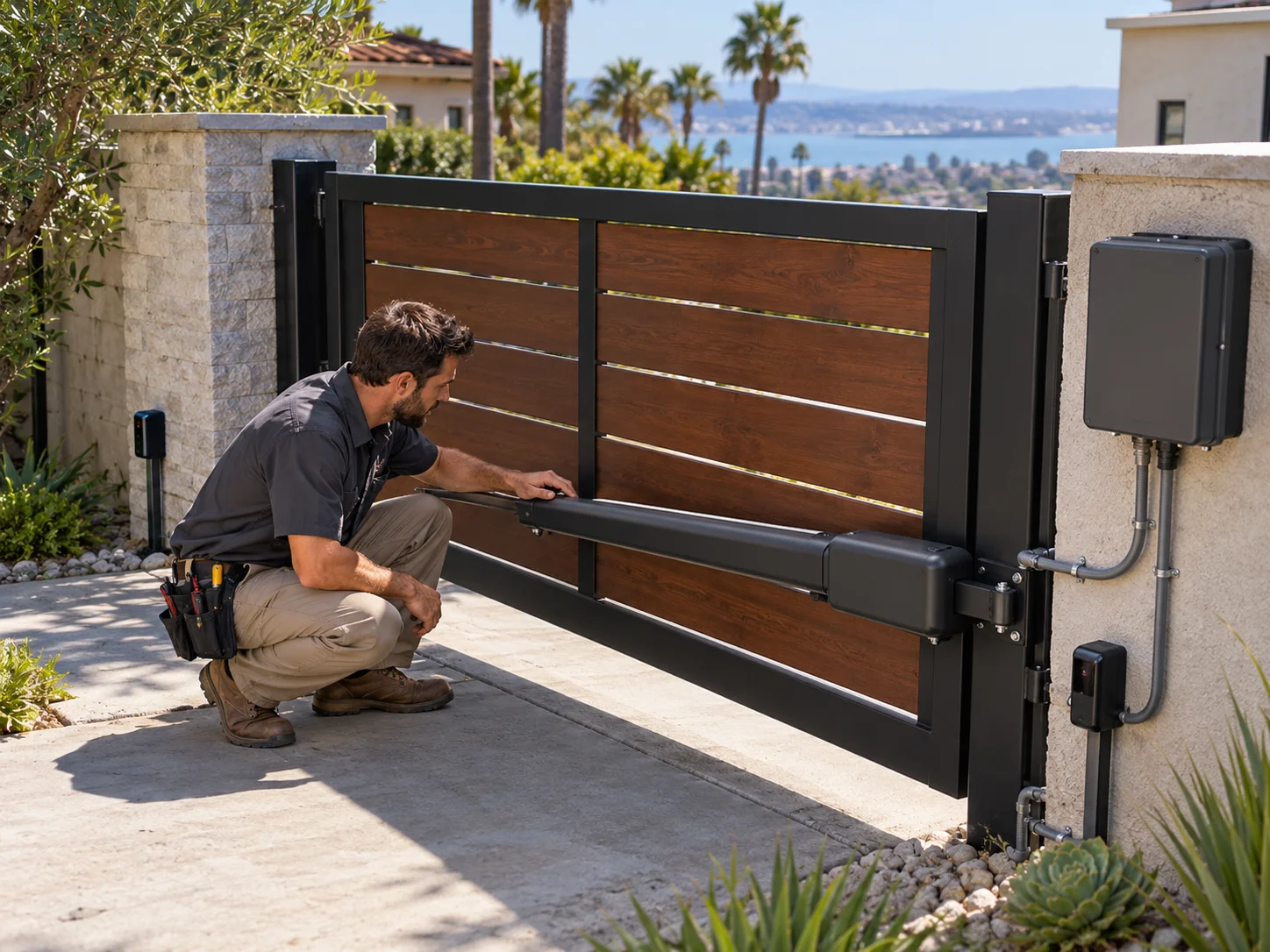
How an opener on an existing gate differs from a new automated gate
Adding an opener doesn’t turn every existing gate into a sound automated system. The contractor first needs to assess the gate as a moving structure. That includes its posts, hinges or rollers, frame, latch area, travel path, and mounting points.
Ask the contractor to separate two decisions. The first is whether the existing gate can remain. The second is which automatic gate opener fits that gate and site. A proposal that jumps directly to an operator model leaves the larger question unanswered.
Watch the gate move before discussing controls. A swing gate should travel through its full arc without dragging or shifting. A sliding gate should follow its path without binding. Visible movement in a post, frame, or supporting hardware deserves attention before an electric gate opener is selected.
A new automated gate is a broader project. The contractor can plan the gate, support structure, operator placement, power, and access controls together. Our guide to an automatic driveway gate in San Diego covers that wider decision. This page focuses on opener proposals, especially when the gate already exists.
The written scope should say whether the contractor will retain, adjust, reinforce, repair, or replace the gate. It should also identify exclusions. That distinction helps prevent a proposal for an opener from being mistaken for a complete gate installation and automation project.
Permitting and design requirements can depend on the property’s jurisdiction and project scope. A City of San Diego address and an unincorporated County property don’t share one universal approval path. No opener-specific setback or safety rule could be confirmed from the approved sources for this page. Ask the contractor which authority covers the address, then confirm current requirements directly with that authority.
What power, mounting, photo eyes, and controls belong in writing
A useful proposal describes the complete opener system. It shouldn’t list only an operator and one total. Ask for the power source, mounting approach, detection devices, controls, access method, and responsibility for related electrical work.
The power section should identify where power begins and how it reaches the operator. If the proposal includes batteries or solar equipment, it should name those components and explain their role. Don’t assume that a product described as solar-ready includes every needed part.
Mounting details matter because the operator must connect to something. For a swing gate, ask where the operator and brackets will attach. For a sliding gate, ask where the operator base and drive components will sit. The proposal should identify any post, frame, concrete, or hardware work included in that price.
Photo eyes and other detection devices shouldn’t appear as vague “safety equipment.” Ask for their proposed locations, quantities, wiring method, and included protective hardware. The contractor should also explain how vegetation, parked vehicles, walls, or gate travel affect placement. If the contractor cites a required configuration, ask for the current rule and the authority governing your address.
Controls deserve their own line items. List every included remote, keypad, push button, vehicle detector, intercom connection, or app-based control. The proposal should state which devices are new and which existing devices will remain. It should also explain who will program them.
Ask how the gate can be operated during a power interruption. The answer belongs in writing, along with any included release hardware or backup equipment. For a separate discussion of outage planning, read our guide to driveway gates during a power outage.
When swing and sliding operators need different site checks
Swing and sliding gates move differently, so contractors shouldn’t inspect them with the same checklist. The proposal should reflect the gate’s actual movement and the space around it.
A swing gate needs a clear arc. The contractor should examine the hinges, posts, gate leaves, closed position, open position, and mounting geometry. Sloped paving, nearby walls, landscaping, and parked vehicles can affect the usable arc. Double swing gates also require the contractor to address both leaves and their controls.
The operator’s mounting position should appear on the proposal or a simple site sketch. That makes it easier to compare bids that place equipment differently. It also reveals whether any fence, post, paving, or landscaping changes are included.
A sliding gate needs a clear travel path beside the opening. The contractor should inspect the rollers or other support hardware, guide points, frame, operator location, and the full path used by the gate. Ask whether the proposal includes changes to those components or assumes they’re already suitable.
The area beside a sliding gate can be constrained on compact city lots. Inland and unincorporated properties may present different driveway layouts, slopes, and power distances. Those observations still need to come from an on-site assessment. A countywide assumption isn’t a substitute for measuring the property.
If you’re comparing repairs instead of a first installation, keep the gate type clear. Our guides cover swing gate opener repair or replacement and sliding gate opener repair or replacement separately. Each helps frame questions without treating two different systems as interchangeable.
When repair of the opener and replacement of the gate deserve separate quotes
An opener problem and a gate problem can appear together. That doesn’t mean they should be bundled into one unexplained recommendation.
Ask the contractor to identify what was inspected. The operator, power supply, controls, detection devices, mounting hardware, gate frame, support posts, hinges, rollers, and travel path are separate parts of the assessment. A clear proposal states which part is causing the reported problem and which additional conditions were found.
If the gate binds, drags, shifts, or won’t hold its intended position, request a separate scope for the gate work. If the gate moves properly but the operator or controls don’t, request an opener-specific scope. Separate prices aren’t approved for publication here, and Fence Pros San Diego doesn’t set contractor prices. The goal is simply to separate the work so you can compare it.
Replacement may involve three different choices: replacing only the opener, repairing the gate before installing another opener, or replacing both gate and automation equipment. Ask each contractor to state which option is proposed. The explanation should connect that recommendation to conditions visible at your property.
Don’t approve broad “gate repair” language without knowing what stays. The proposal should name retained and replaced components. It should also disclose whether electrical, concrete, access-control, painting, or finish work sits outside the scope.
Basic observations can help you describe the symptoms accurately. They shouldn’t become instructions to dismantle powered equipment. Our automatic gate troubleshooting guide helps organize what you noticed before a contractor visits. Stop operating the gate if its movement appears unpredictable, then discuss the condition with a qualified professional.
What to compare before choosing a gate contractor
Compare proposals by scope, not by the shortest description or lowest total. Put each quote beside the others and mark what it says about the gate, opener, power, mounting, detection devices, controls, and related work.
Start with the contractor’s assessment. Does it say the existing gate is suitable for automation? Does it identify repairs or reinforcement? Does it describe the gate’s movement and the proposed operator location? A product name alone doesn’t answer those questions.
Next, compare inclusions and exclusions. Look for electrical work, concrete, brackets, wiring, photo eyes, controls, programming, removal of old equipment, and cleanup. Ask about anything left blank. Don’t infer that one contractor included an item because another contractor did.
The contractor should identify any manufacturer warranty terms rather than making a general promise. Fence Pros San Diego doesn’t give warranties or set warranty coverage. Ask who handles product registration, what documents you’ll receive, and whom you contact about manufacturer coverage.
Confirm the contractor’s identity before signing. California’s C-13 fencing classification includes gates within its stated scope, while excluding masonry walls. You can use the CSLB license check to review the contractor’s current record. Ask about any other licensed trade involved in the proposed scope.
Finally, compare communication. The proposal should match the site discussion and identify open decisions. Changes should be written before work begins. Keep the final proposal, product documents, control information, and contractor details together.
Fence Pros San Diego is a referral service. We match property owners with licensed, independent fence professionals serving San Diego County. The homeowner contracts with and pays the selected contractor directly.
When to call us
Call when an automatic gate opener proposal needs an on-site gate assessment, mounting plan, or separate repair scope from a licensed fence pro. Call us at (858) 400-4906 and we’ll connect you with a licensed fence contractor.