Start with observations you can make without releasing springs, motors, or the gate’s stored force. A remote that does nothing, a gate that stops mid-travel, and a grinding opener are different problems. They do not share one repair.
Fence Pros San Diego is a referral service. It does not repair gates, dispatch crews, or warrant operators. An independent licensed professional inspects, prices, and schedules with you.
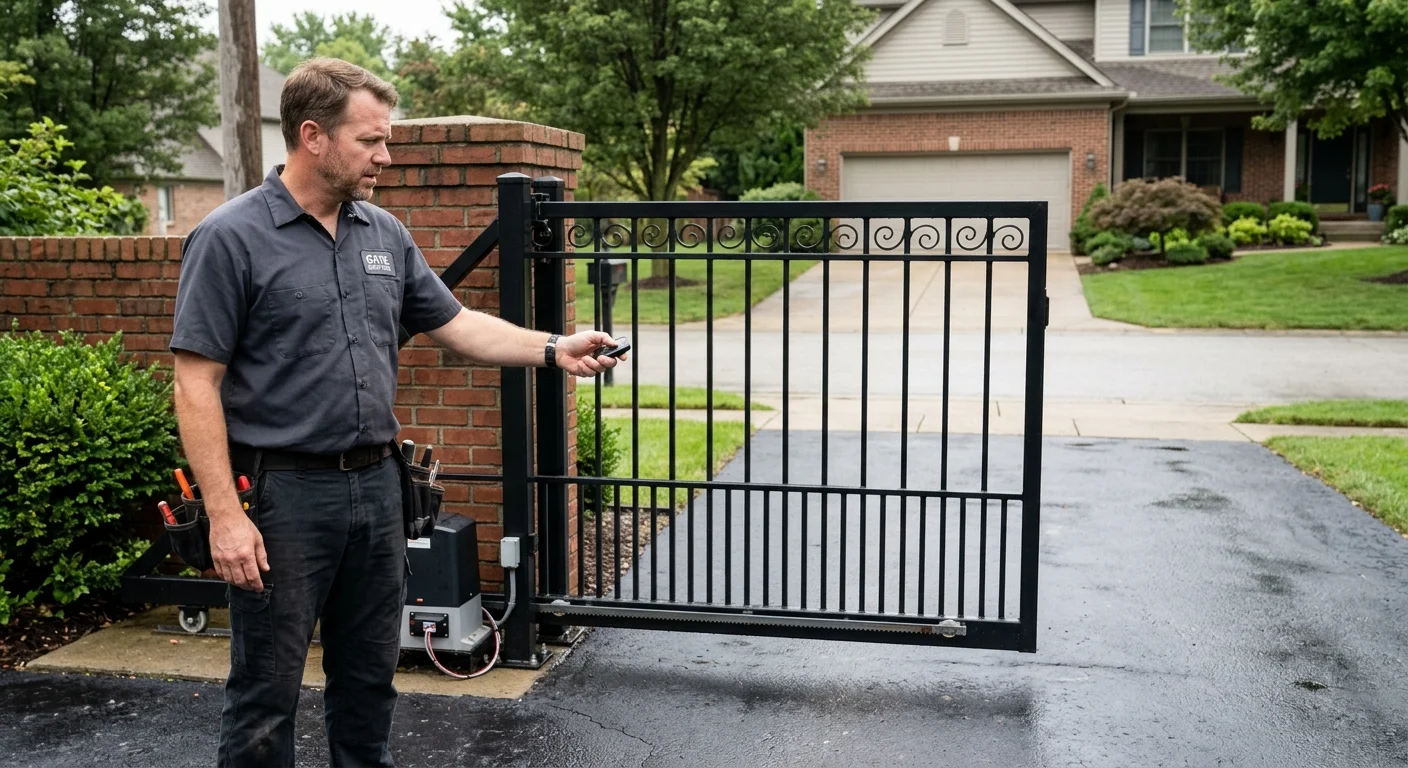
What you can check from the driveway
Photograph the gate fully open, fully closed if it will move, and stuck in between. Note whether a keypad, wall button, or extra remote still works. One dead transmitter is not the same as a dead operator.
If you have a spare remote, try it. Replace only the remote batteries you can reach without opening the motor housing. Do not reprogram a board from a blog walkthrough.
If the house lost power, look at the breaker you already know feeds the gate. Do not hunt unlabeled circuits inside an opener. Unplugging a motor to “reset” it is not a safe default. Leave that to the contractor if the unit is hard-wired or you cannot see a dedicated disconnect.
Safety sensors, often called photo eyes, sit near the opening. From a safe distance, look for leaves, webs, mud, or a sensor twisted off its pad. Wipe only the lens faces you can reach without standing in the gate path. Do not hold the beam interrupted and force the gate closed.
If the gate is on a slope in East County, or in salt air in Imperial Beach, Coronado, or La Jolla, write that on the photo set. It is site context. It is not a diagnosis.
When the gate stops halfway or crawls
Clear rocks, toys, and branches from the swing arc or the slide track. Do not kick rollers or pry a bound leaf.
A slide gate that binds on a bent track, packed dirt, or a misaligned roller needs a contractor. A swing gate that sags into the driveway is a hinge-post or frame problem, not a remote problem. See fence gate won’t latch if the leaf moves but will not catch.
Limit switches tell the operator where to stop. Do not guess at board buttons. Ask the contractor to confirm the make and model against the current installer manual.
A motor that smells hot, clicks, or trips a breaker is an electrical job. Stored spring force on some operators can injure you if you pull a release you have not been shown. If the manual release is not obvious from the maker’s current sheet, wait.
Coastal hardware can grind from corrosion. Inland hardware can grind from dust and irrigation. Neither pattern tells you the part name. The proposal should name the failed component.
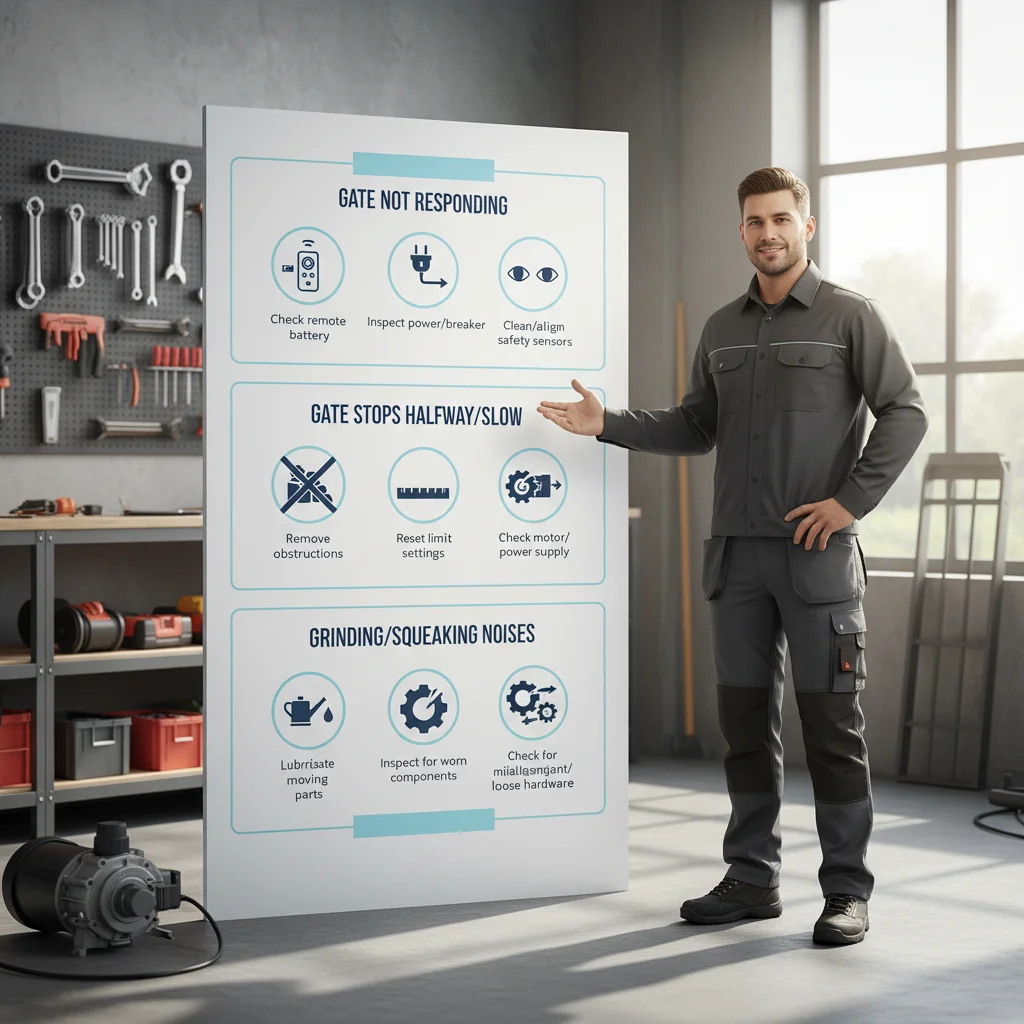
Noise, grinding, and when to stop
Squeaks at hinges or rollers can be dry hardware. They can also be metal cutting metal. Do not spray an unnamed grease into a gearbox. Ask the contractor which lubricant, if any, the current product sheet allows.
Grinding at the operator often means gears, a chain, or a rack that needs inspection with the power isolated. That is not a weekend DIY.
Loose bolts at posts and mounts are worth pointing out in photos. Do not overtighten into vinyl or cracked welds.
If an existing operator misbehaves after a storm or a vehicle strike, treat it as emergency fence and gate installation scope, not a sensor wipe.
Permits, pool gates, and license notes
A like-for-like hardware swap is not automatically permit-free. New operators, new electrical, or a taller opening can change review. Confirm with the city or County desk for the address. City of San Diego Table 142-03A uses 7 feet for that division’s building-permit split. Unincorporated parcels use County PDS 070 for qualifying fences not over 6 feet that also meet zoning. An automatic gate can still need electrical or other review.
If the gate is part of a pool enclosure, California Health and Safety Code section 115923 requires the gate to open away from the pool and to be self-closing and self-latching, with the latching device at least 60 inches. Do not treat a spring hinge as proof of that standard.
California C-13 covers fences and gates and excludes masonry walls. Check the bidder at the CSLB license tool. Business and Professions Code section 7048’s under-$1,000 exemption does not cover a typical operator replacement.
Fence Pros San Diego does not quote repair dollars. No verified San Diego opener-repair band sits in the approved claims ledger.
Frequently asked questions
Why does my automatic gate open but not close?
A blocked or twisted photo-eye is a common first look. It is not the only cause. Send photos of both sensors, then have the contractor isolate power before opening the unit.
How much does automatic gate repair cost in San Diego?
Fence Pros San Diego does not publish a repair menu. Compare written scopes that name the operator, sensors, posts, and whether the leaf itself is damaged.
How long does an automatic gate opener last?
No verified countywide lifespan sits in the approved claims ledger. Ask for the current maker term in writing and keep the invoice.
Can I troubleshoot the opener myself?
Remote batteries and visible lens cleaning are the usual homeowner limit. Springs, motors, boards, and unknown releases belong with a licensed contractor.
When to call us
Call when the gate is stuck, grinding, or tied to a pool barrier. Call us at (858) 400-4906 and we’ll match you with a licensed independent fence contractor.