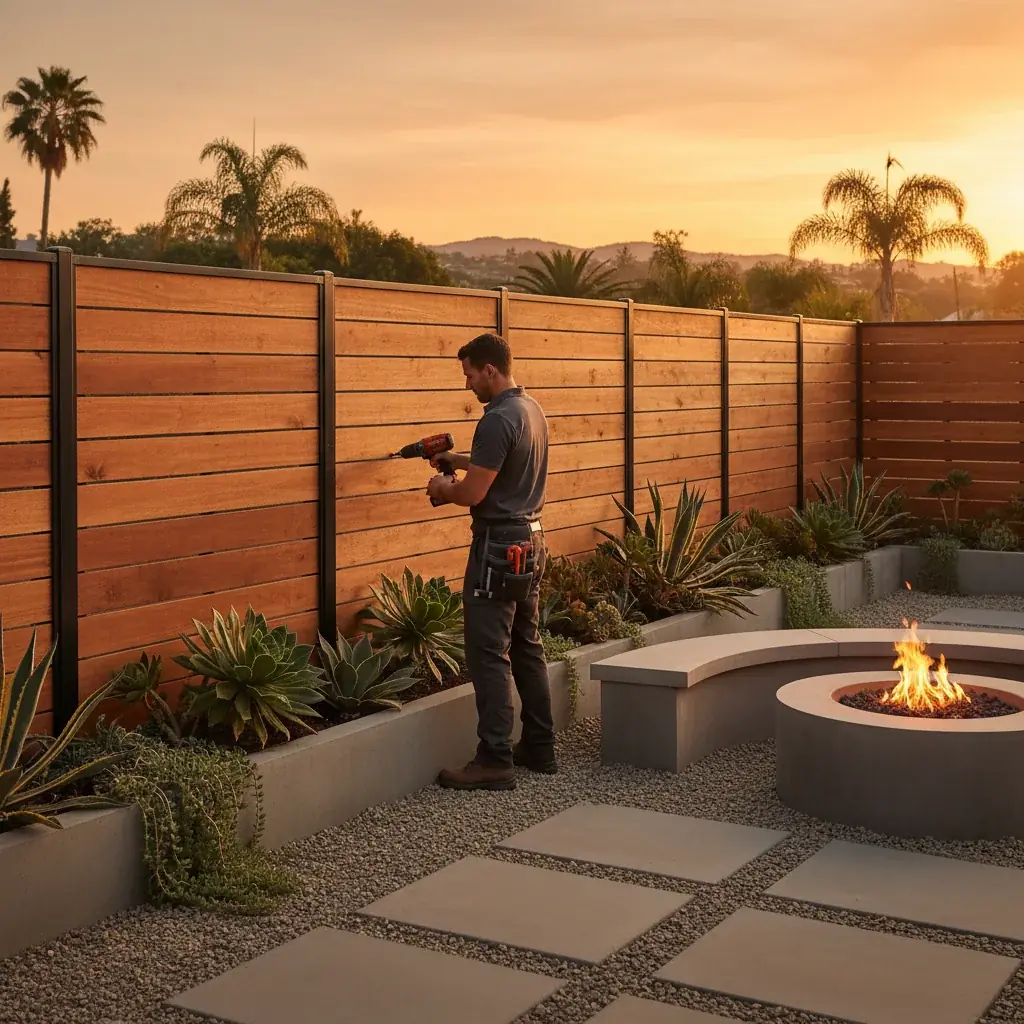
The best privacy fence for San Diego weather is not one SKU. Near the coast, salt air attacks wood hardware, so vinyl or wood with stainless or hot-dip hardware is the usual split. Inland in El Cajon or Escondido, UV, termites, and wind load matter more, so cedar, composite, or woodgrain vinyl all stay in the running. Fence Pros San Diego is a referral service. We do not publish installed per-foot rates or lifespan warranties.
National “vinyl always wins” pages skip the zone. Use the map below, then compare bids on posts, fasteners, and grade.
Pick by your San Diego zone
A fence three miles from the water is not the same job as one in Poway. Match the material to the threat, then pick a look.
| Zone | Main threat | Privacy materials that fit | What usually fails first |
|---|---|---|---|
| Coastal (La Jolla, Encinitas, Coronado, Pacific Beach) | Salt air, fog, corrosion | Vinyl, or cedar with stainless or hot-dip hardware | Zinc-plated screws, untreated pine |
| Coastal canyon / fog belt | Constant moisture, slow drying | Vinyl, composite | Wood sitting in soil on wood posts |
| Inland valley (El Cajon, Santee, Lakeside) | Intense UV, dry heat, termites | Cedar, composite, woodgrain vinyl | Cheap dog-ear pine, thin dark vinyl |
| North County inland (Escondido, Poway, San Marcos) | Heat plus Santa Ana wind | Cedar with steel posts, composite | Tall solid panels on shallow posts |
| Backcountry / fire zone (Alpine, Ramona, Jamul) | Wildfire, embers | Non-combustible material near the house, then wood farther out if the fire authority allows it | Solid wood attached to the house in a high-hazard zone |
The usual mistake is buying the Pinterest photo and ignoring the zip code. Cedar in Pacific Beach on builder-grade galvanized screws rust-stains fast. The same cedar inland can outlast those screws by years if the posts and fasteners are specified. Hardware detail lives in coastal fence salt-air hardware.
Cost without a fake county rate
We are not printing a 2026 installed table. Pine, cedar, vinyl, composite, and steel-framed infill land in different quote classes. Vinyl usually costs more to install than cedar and then skips stain weekends. Pine is cheaper on day one and fails faster inland. Ask every bid for the same height, the same linear footage, named grade, footing depth, gates, and tear-out.
For how to read those line items, use the privacy fence cost and wood vs vinyl guides, and the best vinyl fence shopping map.
The coastal salt-air problem
Within a few miles of the water, salt pulls moisture onto metal. A wood privacy fence often fails at the fastener before the board is done.
If you want wood near the coast, the spec is specific: stainless or hot-dip galvanized fasteners, powder-coated or galvanized steel posts in concrete, and a gap between the bottom rail and soil. Box-store zinc screws rust and streak cedar.
Vinyl sidesteps panel-face corrosion because the panel itself is not steel. Inserts and hinges still need a coastal spec. That is why vinyl is the coastal default, not because marketing says it “looks new forever.”
Wind, fire, and the rules that change your answer
Santa Ana winds load a solid privacy fence like a sail. Post depth and panel openness matter more than brand. A fully solid 6-foot run on a shallow hole leans. Shadowbox or louvered faces let some air through. Read Santa Ana wind fence preparedness before you lock a solid inland design. Ask the contractor for footing depth in writing. County PDS 070’s wood-post notes are recommendations, not a substitute for the city’s inspection checklist.
Fire is a separate conversation. Wildland-urban interface rules can require non-combustible or fire-retardant fencing close to the house. County PDS 070 states that any portion of a fence within 5 feet of a building in those areas shall be non-combustible material or approved exterior fire-retardant wood, or material that meets the same fire-resistive standards for exterior walls per County Building Code Section 707A. Your authority having jurisdiction has the final word. Do not treat a blog as a CAL FIRE letter.
Permits are not the same as zoning height. In the City of San Diego, Municipal Code Table 142-03A requires a building permit for a fence 7 feet or taller; a shorter fence can still violate front-yard or sight-triangle height. Unincorporated County PDS 070 requires a permit except for fences and freestanding masonry walls not exceeding 6 feet that meet zoning. HOAs can be stricter at any height. See San Diego fence permit by city.
How a referral quote should work
When you call without a material in mind, the independent contractor you are matched with should walk the yard, note zone and wind, read HOA rules if they apply, and put two real options on paper: for example vinyl versus cedar-with-marine-hardware on the coast, or cedar versus composite inland. Fence Pros San Diego does not walk the lot, does not write the bid, and does not “vet” the crew beyond the referral. You contract and pay the contractor. Verify the CSLB license at cslb.ca.gov before you sign.
We cover San Diego County as a matching area, not as a licensed installer. For product pages, see privacy fence installation and wood fence. Call (858) 400-4906 to get matched.
Frequently asked questions
What is the best privacy fence material for San Diego?
It depends on your zone. Near the coast, Class-A vinyl or cedar with corrosion-rated hardware. Inland, treated western red cedar or composite against UV and termites. There is no county-wide winner.
How much does a privacy fence cost in San Diego?
There is no published per-foot rate on this site. Material, height, gates, footings, access, and tear-out drive the bid. Compare line items, not a national average.
Is vinyl or wood better for a coastal San Diego home?
Vinyl, in most cases, because the panel has no face metal to rust. If you want wood, use stainless or hot-dip hardware, steel posts, and keep boards off the soil.
Do I need a permit for a privacy fence in San Diego?
City of San Diego: building permit at 7 feet and up per Table 142-03A, plus separate front-yard and visibility height limits. County unincorporated: permit except qualifying fences not over 6 feet. Pool enclosures and retaining-wall combos are extra. Always check the city and the HOA.
What privacy fence holds up best in Santa Ana winds?
Installation beats brand. Deep, concrete-set posts and a design that does not present a solid sail. Shadowbox or louvered faces reduce load. Ask for depth in the bid.
How long does a privacy fence last in San Diego?
We do not print year guarantees. Pine, cedar, vinyl, and composite age differently, and coastal salt shortens any wood hardware that is not corrosion-rated. Ask what maintenance the product actually needs.