Commercial fencing in San Diego typically costs $25 to $80 per linear foot installed, depending on material, height, and gate requirements. Chain link covers large perimeters at the lower end of that range, while ornamental steel for a corporate entrance sits at the higher end. The best material for your property comes down to three things: how much security you need, what the fence faces (public street vs. back lot), and what San Diego County’s zoning says about height limits in your zone. Get those three right and you’ll have a fence that passes permit review and actually does its job.
Security, perimeter, and screening: matching fence to business need
Before choosing a material, it’s essential to define the primary job of your fence. While a single fence can do many things, its main purpose will guide your decisions on height, style, and features. Commercial fencing generally serves one of three core functions.
Security: This is about active deterrence and preventing unauthorized entry. A security fence is designed to be difficult to climb, cut, or bypass. These are common for businesses with high-value assets on site, like auto lots, equipment storage yards, and data centers. Key features include significant height (often 8 feet or more), anti-climb designs, and sturdy materials that can withstand force.
Perimeter Definition: For some properties, the goal isn’t to create a fortress but to clearly mark property lines and direct the flow of people and vehicles. This is a common need for schools, parks, and multi-family housing complexes. The fence establishes a clear boundary, reduces casual trespassing, and helps manage liability by delineating public and private space. While still a deterrent, the focus is less on high-security features and more on durability and a clean aesthetic.
Screening and Privacy: This function is about creating a visual barrier. Businesses often use screening fences to hide dumpsters, utility areas, or sensitive equipment from public view. For multi-family properties, a privacy fence can create secluded patios or common areas for residents. Materials like vinyl with tongue-and-groove panels or chain link with privacy slats are effective solutions when blocking the line of sight is the main goal.
Understanding your primary need, security, perimeter, or screening, is the first step in selecting the right commercial fence in San Diego for your property.
Chain link, ornamental steel, and anti-climb: when to use each
Once you’ve defined the job, you can select a material that best fits the function and your budget. In San Diego, three types of commercial fencing dominate the landscape, each with distinct advantages.
Chain link: the workhorse
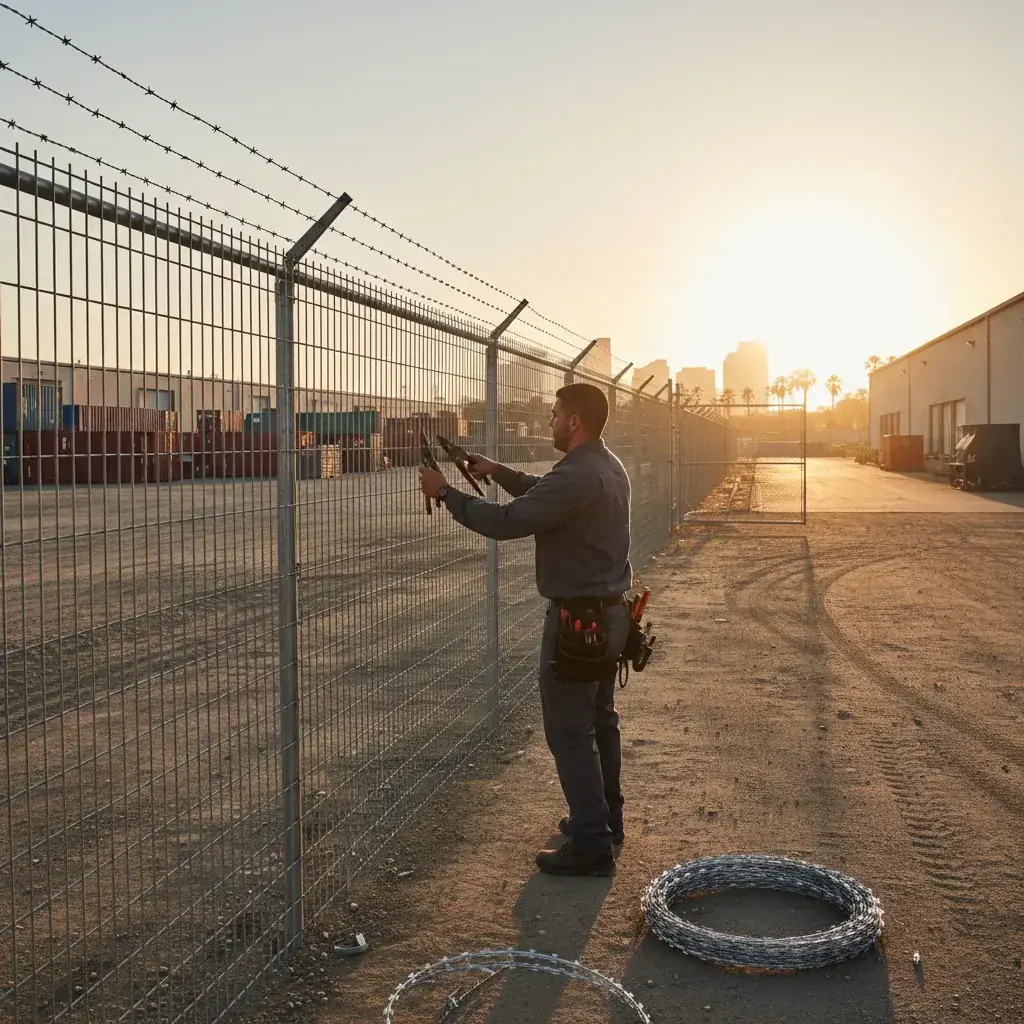
Chain link is the most common and cost-effective solution for securing large commercial perimeters. Its versatility is its greatest strength. It can be installed at various heights, from a simple 4-foot perimeter marker to a 10-foot security barrier. You can also customize the gauge (thickness) of the wire and choose between galvanized or vinyl-coated finishes for added durability against our coastal air.
- Best for: Large industrial lots, construction sites, storage yards, and secondary perimeters where function and cost are the primary drivers.
- Considerations: It offers no visual privacy on its own, though privacy slats can be added. For higher security needs, it can be topped with barbed or razor wire. Our team specializes in durable chain link fence installations that are built to last.
Ornamental steel: the professional
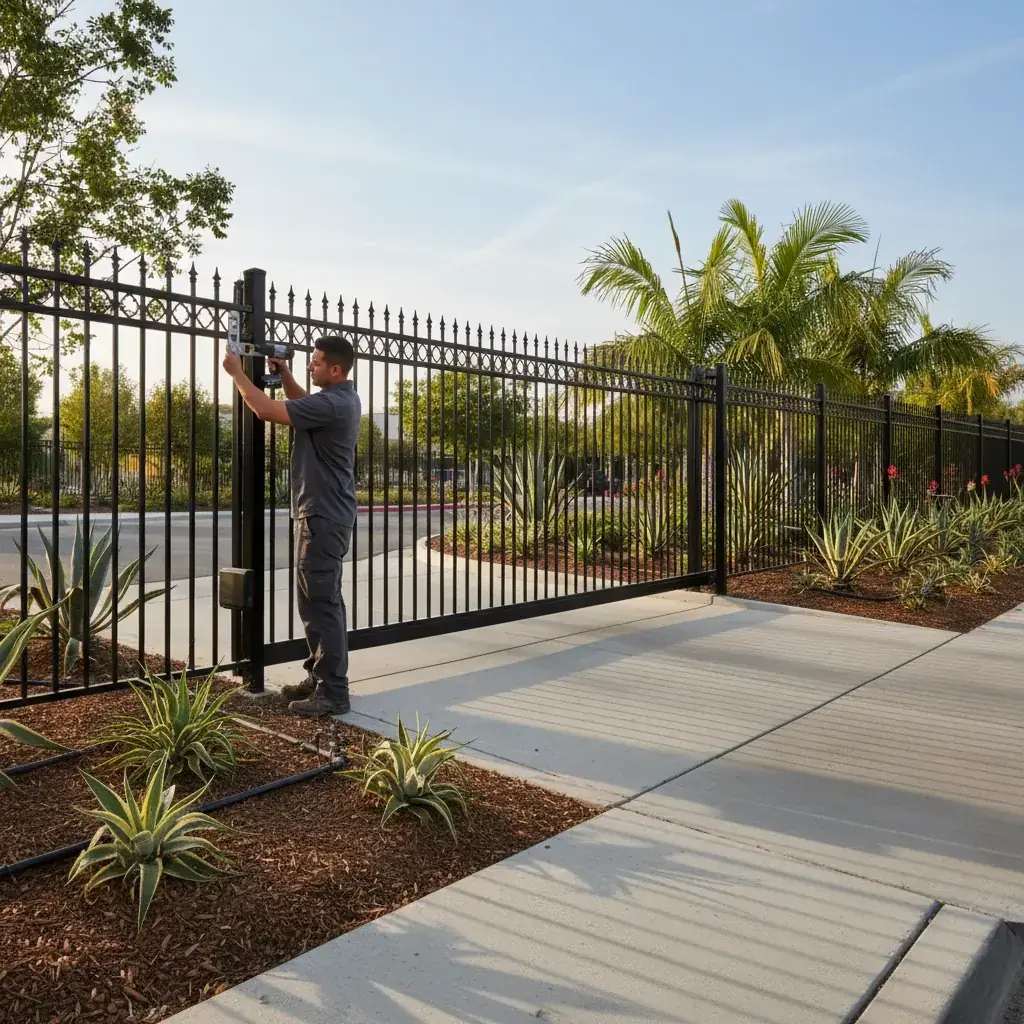
When appearance is as important as security, ornamental steel (often called wrought iron) is the premier choice. It offers a formidable physical barrier with a clean, professional aesthetic that enhances a property’s curb appeal. Steel is incredibly strong and can be configured with pressed spear tops or other anti-climb designs. It’s the standard for properties that need to project an image of security and success.
- Best for: Corporate campuses, upscale apartment complexes, private schools, and any business where the front-facing fence is part of the brand image.
- Considerations: It’s a premium product with a higher price point. It doesn’t provide privacy unless solid panels are integrated into the design.
Anti-climb & high-security mesh: the fortress
For assets that absolutely cannot be compromised, a high-security fence is necessary. Anti-climb welded mesh is the modern standard. Its design features very small openings that prevent a person from getting a hand or foothold, making it nearly impossible to scale. The welded intersections also make it extremely difficult to cut with standard tools. This type of security fence is the ultimate in physical deterrence.
- Best for: Data centers, utility substations, impound lots, and facilities with sensitive or high-value inventory.
- Considerations: This is a specialized, high-cost solution with a purely industrial look. It is almost always paired with other security measures like surveillance and access control.
Access gates, keypads, and integration with existing security
A fence is only as secure as its weakest point, which is often the gate. A well-planned access control system is crucial for any commercial property. It ensures that authorized personnel can move efficiently while keeping intruders out. The system should be tailored to your operational needs, from simple manual gates to fully automated entry points.
Modern gate installation and automation offer a wide range of options:
- Gate Types: The most common are sliding gates, which are ideal for properties with limited space or sloped driveways, and swing gates, which are a reliable choice for wide entrances. For simple traffic management, barrier arms can control vehicle flow without providing full security.
- Access Control: How you open the gate is key. Simple keypads are cost-effective for a small number of users. Card readers or key fobs provide better tracking and make it easy to revoke access for former employees. For properties with visitors, an intercom or video entry system allows you to verify identity before granting access.
- Integration: The real power comes from integrating your gate system with your property’s overall security plan. An automated gate can be connected to CCTV cameras that record every entry and exit. It can be tied into your alarm system to trigger alerts during unauthorized access attempts. This creates a cohesive security network where all components work together.
Choosing the right combination of gate hardware and access technology is critical. It should be reliable, secure, and easy for your team to use day-to-day.
Permits and code for commercial fencing in San Diego County
Navigating the local regulations for a commercial fence san diego project is more complex than for a residential one. The rules are stricter, and the consequences of non-compliance can be significant, including fines and orders to remove the fence. Both the City of San Diego and the surrounding county have specific codes that govern fence height, location, and materials.
Here are a few key factors you must consider:
- Height Restrictions: In most commercial zones, a permit is required for fences over six or seven feet tall. The maximum allowable height depends on your property’s zoning and whether the fence is in the front, side, or rear yard.
- Setbacks: Your fence cannot be built directly on the property line in many cases. There are required setbacks from sidewalks, public rights-of-way, and adjacent properties that must be respected.
- Visibility Triangles: At street corners and driveway entrances, you cannot build a fence that obstructs the view of traffic. This is a critical safety rule designed to prevent accidents. The specific dimensions of this “visibility triangle” are defined in local ordinances.
- Material and Design: Some commercial or mixed-use zones have specific aesthetic requirements that may limit your choice of materials or colors to maintain a cohesive look in the neighborhood.
Because the rules can be complex and vary by jurisdiction, it’s wise to consult the official sources. The San Diego County Planning & Development Services website is a good starting point for properties in unincorporated areas. For any significant project, working with an experienced fencing contractor who understands the local permitting process is the surest way to ensure your project is built to code and approved without delay.
Maintenance contracts and what they should cover
A commercial fence and especially an automated gate system are significant investments that require regular maintenance to perform reliably. Exposure to San Diego’s sun and marine air, combined with daily wear and tear, can lead to corrosion, mechanical failure, and security vulnerabilities if left unchecked. A proactive maintenance contract is the best way to protect your investment and ensure your perimeter is always secure.
A comprehensive maintenance plan should cover several key areas:
- Structural Inspection: Regularly checking the entire fence line for signs of damage, leaning posts, loose fittings, or corrosion. Catching a small rust spot on a steel fence early can prevent a major repair down the road.
- Gate Operator Service: This is the most critical component. The contract should include lubrication of all moving parts (chains, gears, hinges), inspection of electrical connections, and testing of all safety features like photo-eye sensors and auto-reverse mechanisms.
- Access Control Check: Testing keypads, card readers, and intercoms to ensure they are functioning correctly. This also includes checking battery backups to make sure the system works during a power outage.
- Hardware and Adjustments: Tightening bolts, adjusting gate alignment, and ensuring latches and locks are secure. Ground settling can cause gates to sag over time, requiring periodic realignment.
- Priority Emergency Service: If your main gate fails, your business operations can grind to a halt. A good contract should guarantee a priority response time for emergency repairs, getting you back up and running quickly.
A maintenance plan isn’t a cost; it’s insurance against unexpected downtime and expensive emergency repairs. It provides peace of mind that your property’s first line of defense is always in optimal condition.
Frequently asked questions
How much does commercial fencing cost per foot in San Diego?
Commercial fence installation in San Diego runs roughly $25 to $80 per linear foot, fully installed. Chain link at standard heights lands in the $25 to $40 range. Ornamental steel and anti-climb security mesh run $50 to $80 or more depending on height and gate complexity. Large projects often come in at better per-foot rates because mobilization costs spread across more linear footage.
Do I need a permit for a commercial fence in San Diego?
Yes, in nearly all cases. San Diego County and most city jurisdictions require a permit for commercial fences over six feet tall, and sometimes shorter fences in front setback areas. The permit process checks your zoning, setback compliance, and visibility triangle clearances at driveways and corners. Working with a contractor who pulls permits on your behalf is the fastest way to avoid fines or a removal order.
What is the best fence material for a San Diego commercial property near the coast?
Galvanized or vinyl-coated chain link and powder-coated ornamental steel both hold up well in coastal San Diego’s salt air, provided they’re finished correctly. Bare or low-grade steel corrodes quickly within a few miles of the ocean. If your property is in a coastal zone, ask your contractor about hot-dip galvanizing for chain link and a marine-grade powder coat for steel. Vinyl-coated chain link is another solid coastal choice and adds a cleaner look.
How long does a commercial fence last in San Diego?
A properly installed chain link fence lasts 15 to 20 years with minimal maintenance. Ornamental steel can last 30 or more years when the coating is maintained and rust spots are caught early. Gate operators and access control hardware typically need servicing every one to two years to stay reliable. San Diego’s UV exposure and marine air accelerate wear, so annual inspections are worth the cost.
Can I add an automated gate to an existing commercial fence?
Yes, most existing fence lines can accommodate an automated sliding or swing gate without a full replacement. The main requirements are a solid gate post, adequate clearance for the gate travel path, and a power source near the operator. If your current fence is in good shape structurally, a gate installation upgrade is usually far more cost-effective than starting over.
What commercial fence height is standard for San Diego business properties?
Most commercial properties use 6-foot fencing for general perimeter and liability purposes. Security-focused properties, including storage yards, impound lots, and data centers, typically go to 8 or 10 feet. Anything over six feet generally requires a permit in San Diego, so height planning should happen alongside permit research, not after. Your contractor can tell you the maximum allowable height for your specific zone before you commit to a design.
When to call us
Choosing the right business perimeter fence requires balancing security needs, budget, and complex local codes. If you’re managing a commercial property in San Diego County, let us handle the complexity for you. We design, permit, and install commercial fencing solutions that protect your assets and your peace of mind.
Call us at (858) 925-5546 for a same-day estimate.