A no-dig fence anchors posts with a driven steel spike or a plate bolted to existing hardscape, not a poured concrete footing. That can be a fit for a short, low, decorative run on flat, firm soil. It is a weak fit for a tall privacy sail, a hillside, a working gate, or ground that stops a spike (decomposed granite, caliche, loose fill, or moving clay).
Fence Pros San Diego is a referral service. It does not sell kits, set prices, or install posts.
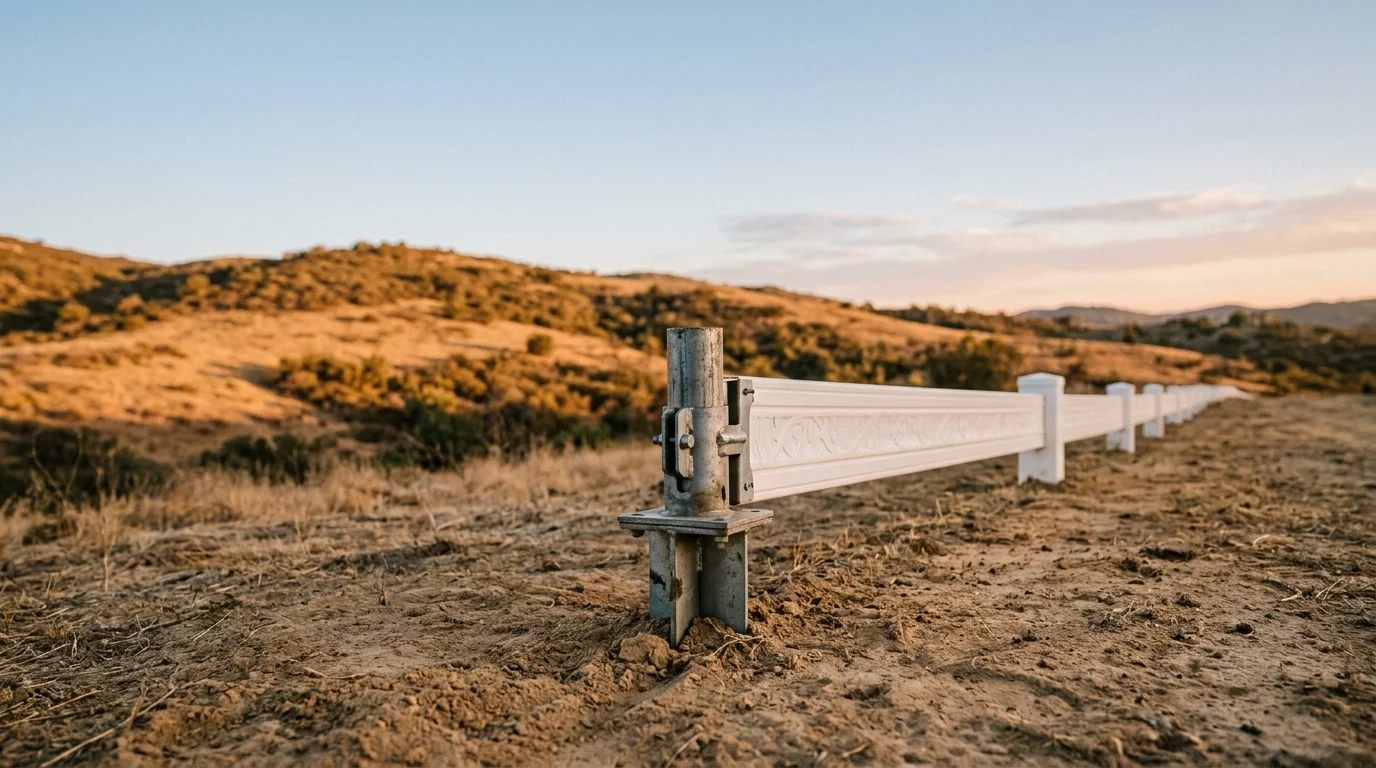
No-dig vs surface-mount vs a poured footing
Compare the anchor, not a blog cost column.
Driven spike (no-dig kit). A sleeve is hammered or twisted into soil. The post drops in and is pinned. Holding power is friction in the soil around the spike. That friction changes when the soil is rocky, wet-then-dry, or recently filled.
Surface-mount. A base plate bolts to an existing slab, patio, or pavers. The fence is only as stable as that surface and those fasteners. A pool deck or patio can be the right host. Disturbed pavers and a crumbling slab are not.
Poured footing. The post sits in a dug hole with concrete around it. Unincorporated County PDS 070 (rev. 01/01/2023) lists wood-post footing notes as recommendations only (including posts set in 12-inch-diameter concrete extending at least 24 inches into undisturbed ground or compacted fill, over gravel). Those notes are not a statewide code recipe, and they are not a City of San Diego standard copied onto every parcel.
A verified installed price per foot is not in the approved claims ledger. Do not treat a kit’s materials number as the cost of a finished San Diego fence.
What a no-dig fence is
The point of the kit is skipping excavation, mixing, and cure time. That is also the limit. A spike or a plate does not create the same buried mass as a poured footing. Ask the proposal which posts, if any, still get concrete. Many independent installers still pour gate posts even when the rest of a light run uses another method.
Wind on a tall solid panel
A tall solid privacy panel catches wind like a sail. The load shows up as twist at the base. A shallow spike sits in a small soil volume. Repeated Santa Ana events and ordinary canyon winds work that soil. This page does not publish a gust speed or a “safe” kit height. Manufacturer ratings still have to be read against the actual lot, not against a Midwest garden brochure.
If the job is a 6-foot privacy screen, start from privacy fence and Santa Ana wind fence preparedness, then ask the independent contractor how they propose to set posts.
Rocky, clay, and fill soil
San Diego soil is not one material.
Decomposed granite and caliche, common inland and in East County, can stop or bend a driven sleeve. If a hand-dug hole in Santee or El Cajon hits a crust that feels like rock, a spike is the wrong tool.
Expansive clay in parts of Chula Vista and the South Bay swells and shrinks. A shallow spike moves with that zone. A deeper poured footing is meant to sit below some of that movement. That is a site judgment, not a published depth from this page.
Sandy coastal soil can take a spike more easily, and still fail if the ground is loose fill from recent grading. Native, settled soil and last month’s import are different hosts.
Gates
A gate is a reversing load. Each swing racks the hinge post. A spike that looks calm on a static panel can walk under daily use. Ask the proposal to isolate gate-post method from line-post method. See gate installation.
Slopes
A slope changes driving angle, soil depth, and erosion at the base. Disturbed fill at the top of a grade is a poor spike host. Exposed sleeve over time means less grip. Stepped and racked panel design still needs posts that stay put. See fencing on a sloped San Diego yard.
HOA, resale, and permits
An HOA can reject a system it reads as temporary. That is an association document question, not a ranking this page can invent. Buyer expectations are also not a verified resale study here.
Anchoring method does not create a permit shortcut. City of San Diego Table 142-03A uses 7 feet for a fence-division building permit. Unincorporated County PDS 070 excepts qualifying fences not over 6 feet that meet zoning. Height, setback, and location on the lot still control. See fence permits in San Diego. Confirm the parcel.
Frequently asked questions
Are no-dig fences cheaper than regular fences?
Not as a published fact on this site. A kit can cost less in materials than a poured-post job, and still lose that gap when spikes fail or soil has to be prepped. Compare written scopes. Use the fence cost calculator only with rates the contractor actually quoted.
Can you install a no-dig fence yourself in San Diego?
Kits are sold as DIY. Caliche, fill, clay, slope, and gates are why many homeowners still want a site walk. See DIY fence vs hiring a pro. Fence Pros San Diego does not install either method.
Do no-dig fence posts come loose over time?
Loosening is a known failure mode for friction anchors: wind cycles, moisture cycles, and settling. How soon is a site question. This page does not publish a year.
What’s the tallest no-dig fence that’s safe in San Diego?
No verified height rating for San Diego wind is in the claims ledger. Read the manufacturer’s limit, then have an independent contractor judge the lot. Do not treat 4 feet or 6 feet from a blog as a safety rating.
Do you need a permit for a no-dig fence in San Diego?
Same height and location rules as any other fence. No-dig is not an exemption. City Table 142-03A and County PDS 070 are the sourced permit notes for those two desks. Other cities differ.
Which is better for San Diego, no-dig or concrete-set posts?
For most privacy height, gates, slopes, and rocky or moving soils, a poured or otherwise engineered footing is the serious option. No-dig can still be the right tool for a short garden border or a temporary run on flat, firm ground. The independent contractor should say which posts get which method.
When to call us
Call when you want an independent fence professional to compare a spike kit, a surface mount, and poured posts on your soil and gates. Call us at (858) 400-4906 and we’ll connect you with a licensed fence contractor.