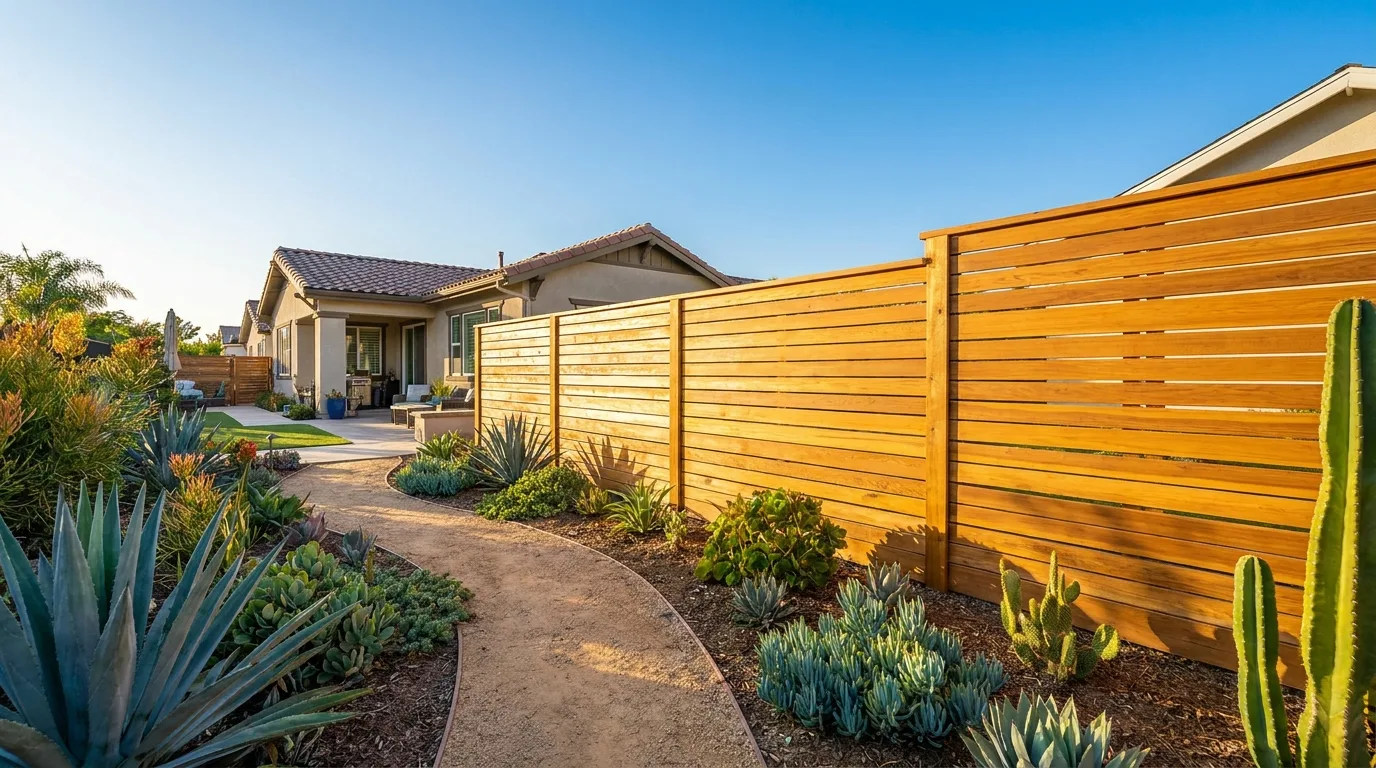
A fence is usually not a dollar-for-dollar investment. There is no verified San Diego resale study we can cite that assigns a 50-70 percent cost recovery, a $6,000 fence, or a $3,500-$12,000 “value project” band. What is true on the ground: buyers here pay for usable outdoor space. A clean, permitted fence that defines the yard, adds privacy, and keeps a pool enclosure legal removes objections before an offer. A leaning gray fence creates them.
TL;DR
- Do not budget a fence as a guaranteed ROI line. Budget it as curb appeal, privacy, and (for pools) a legal requirement.
- Vinyl and well-kept wood tend to read as finished. Chain link often reads as a placeholder. That is buyer perception, not an appraisal formula.
- A missing or non-compliant pool fence can stall a sale. That is the one fence type that protects value directly.
- A failing fence can hurt more than no fence, because it is a visible repair.
- HOA and permit problems surface in escrow. Fix the paperwork path before you list.
Fence Pros San Diego is a referral service. We do not appraise homes and we do not publish 2026 recovery percentages.
How much value does a fence add to a San Diego home?
There is no fixed dollar figure we can stand behind. National remodeling roundups that quote a recovery percentage are not a dated local data set we can cite here, so they are not restated as fact.
The useful San Diego mechanism is still clear. Outdoor living is part of what people buy. A private, fenced yard photographs as a finished room. The fence is not the asset. The yard it makes usable is. A listing with a sagging line invites a repair credit. A listing with a straight, matching line does not.
If you need a number for your property, that number is a contractor bid plus your agent’s read of the comparable sales, not a blog multiplier.
Which fences add the most value at resale?
Material and condition matter more than the fact that a fence exists.
| Fence type | How buyers often read it | Caveat |
|---|---|---|
| Vinyl (PVC) | Finished, low upkeep | Only if the line is straight and the color matches the block |
| Quality wood (cedar or redwood) | Warm, indoor-outdoor | Only if stain and posts are actually kept |
| Aluminum / ornamental | Expected around some pools and front yards | Wrong house, it looks like costume jewelry |
| Composite | Modern, smaller buyer pool | Unknown material can confuse a first showing |
| Block wall | Permanent hardscape | Can overbuild a small house |
| Chain link | Functional placeholder | Fine on a large lot; often a deduction on a tract home |
These are pattern notes, not guarantees. A tight chain link fence on acreage can be the honest fence. An overbuilt wall on a starter home can be money a buyer will not pay back. For material trade-offs, see vinyl versus wood.
Does a new fence help a home sell faster?
A finished backyard photographs better and gives buyers one less project to price into the offer. In a competitive showing, deferred maintenance is a talking point. A weathered fence is visible in the first listing photo. Repair or replace before listing if the line is the obvious flaw. Speed of sale is the usual win, not a documented extra $X on the HUD-1.
Does a privacy fence add value in San Diego?
A privacy fence helps when it turns an exposed yard into space you can actually use. San Diego backyards get used year-round. Privacy from a neighbor, a street, or a busy road is something buyers notice. Height, both-sides finish, and whether the fence fits the block matter more than the word “privacy.” See best privacy fence in San Diego.
Does a pool fence affect home value?
A pool enclosure is not an upgrade in the same sense as a new cedar cap. For a covered new or remodeled private single-family pool, California Health and Safety Code sections 115922 and 115923 address qualifying safety features and enclosure details. A missing or non-compliant barrier can surface in inspection. That protects the value already in the pool. It does not mint a new ROI percentage. Use the pool fence service page and the California pool fence code guide for the statute conversation.
Can a bad fence lower your home value?
Yes, as a practical listing problem. A leaning, rotting, or mismatched fence reads as skipped maintenance. In some listings it is worse than no fence, because it is a punch-list item. Wood fence repair versus replacement is the decision page when the line is tired but not a teardown.
Should you install a fence before selling?
If there is no fence and the yard clearly needs one, or the existing fence is failing, do the work before photos. If the fence is sound, clean, re-stain, or repair instead of replacing. The goal is a finished yard, not the most expensive system on the street. Fence financing is a separate product conversation with the contractor or a lender, not a Fence Pros rate.
What does a value-adding fence cost in San Diego?
There is no verified project band we can publish. Do not use a countywide $3,500-$12,000 range as a budget. Get measured bids. Match the block: a custom ornamental gate in a simple wood neighborhood is often money you will not see again. For how to read a bid without fake 2026 per-foot cards, use the San Diego fence cost guide and vinyl fence cost.
How to get a fence that actually helps a sale
The fences that help listings share traits: they follow the permit and HOA path, they match the house and the block, they use a material buyers read as finished, and the posts are set so the line stays straight. Fence Pros San Diego connects you with independent local fence contractors. You contract and pay them. They quote after they measure. We do not promise a free visit, a recovery percentage, or “no obligation” language as a product. Confirm HOA fence approval before you build. Verify C-13 at cslb.ca.gov.
Frequently asked questions
Does a fence increase home value in San Diego?
It can help a home show as finished and sell with fewer objections. It rarely returns every dollar as a line item, and we do not have a local study that pins a recovery percent. Treat privacy, photos, and pool compliance as the reasons to build.
What type of fence adds the most resale value?
The one that matches the neighborhood and is in good condition. Vinyl and kept wood often read as upgrades. Chain link often does not, except where it fits the lot.
Can an old or damaged fence lower my home value?
It can lower offers and slow a listing because it is visible deferred maintenance. Repair or replace before you photograph.
Is it worth installing a fence before selling my house?
If the yard needs a fence or the current one is failing, yes, as a showing decision. If the fence is sound, spend on cleaning and stain instead.
Does a pool fence affect the sale of a San Diego home?
It can stall a sale if the barrier is missing or non-compliant. A code-path enclosure protects the pool as an asset. Confirm the current statutes and the city desk, not a blog shortcut.
How much should I spend on a fence to add value?
Match comparable homes on your block. There is no published Fence Pros budget cap. Overbuilding relative to the street is the usual way to waste money.
Call (858) 400-4906 when you want a referral for a listing-driven repair or replacement. The independent professional sets the price and the schedule.