A shifted panel or dragging gate can make pool fence repair feel urgent. The harder decision is whether the damaged section can be repaired or whether replacement deserves a separate proposal.
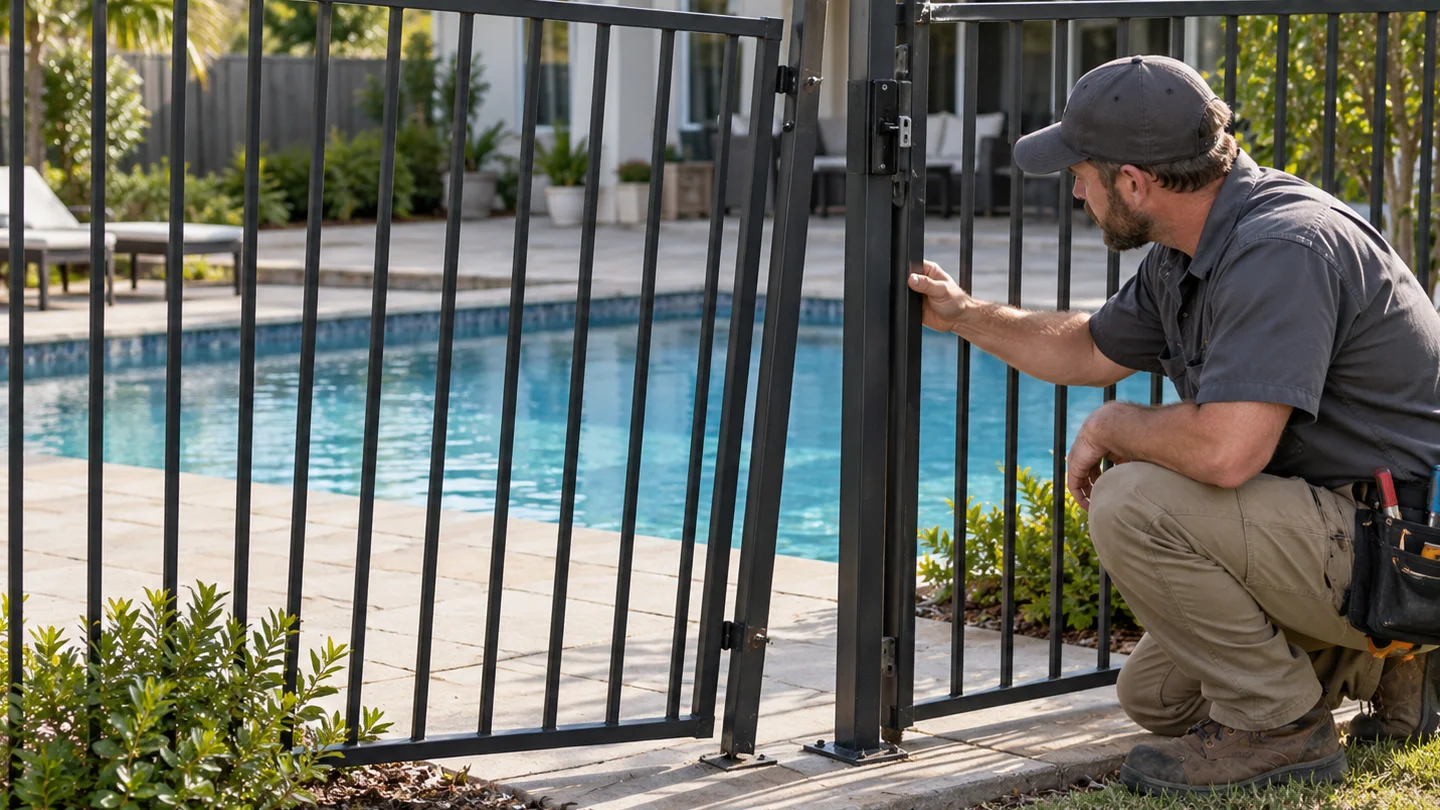
Don’t judge the whole barrier from one bent rail. Document the damage, limit access, and let a licensed fence contractor assess the complete enclosure.
What visible damage should be documented first
Start with photographs from outside the enclosed pool area. Take one wide photo showing the damaged section within the full fence line. Then capture closer views of panels, posts, fasteners, footings, hinges, latches, and nearby surfaces.
Note what changed and when you noticed it. A leaning post, cracked panel, loose rail, open gap, or dragging gate gives the contractor a starting point. Include any known event, such as a vehicle impact, falling object, deck project, or soil work. Don’t speculate about hidden damage.
Record how the gate behaves without trying to adjust it. Does it remain open, rub against the frame, miss the latch, or move differently than before? Our guide to a pool gate that won’t self-close explains what to observe before requesting an assessment.
Photograph the ground around each affected post. Include concrete, pavers, decking, drainage features, roots, and visible cracks. Also show where the barrier meets a wall, building, or another fence type.
Don’t label the barrier compliant or noncompliant from photographs alone. An intact-looking section may still need measurements or an operational review. Visible damage also doesn’t prove that full replacement is necessary.
Keep children and visitors away from the affected area while its condition remains uncertain. Don’t rely on temporary ties, furniture, planters, or stored materials as a substitute for a professional assessment. A licensed contractor can determine what work is appropriate after seeing the site.
Why panels, posts, gates, and nearby access need one review
A pool barrier works as a connected enclosure. That makes the damaged panel only one part of the assessment. The contractor should also review its supporting posts, adjoining sections, gate operation, hardware, attachment points, and routes leading toward the pool.
A panel can appear to be the main problem while a shifted post changes its alignment. Gate trouble can also involve the frame, hinge side, latch side, footing, or nearby surface. The goal isn’t to diagnose those relationships yourself. It’s to give the contractor enough access to examine them together.
Ask for the review to follow the barrier in both directions from the visible damage. Include every gate serving the enclosed area. If a gate doesn’t close or latch as intended, mention that before the visit. Don’t repeatedly test damaged hardware or force the gate into position.
Nearby access matters too. Show doors, walkways, steps, retaining features, deck edges, and places where different barrier materials connect. The contractor needs the actual layout, not only a close photo of a broken component.
San Diego County includes several permitting jurisdictions. A property in Chula Vista, Oceanside, or the City of San Diego may have a different reviewing authority than an unincorporated property near Ramona or Fallbrook. The contractor should identify the authority for the project address before treating one local rule as countywide.
A pool fence and safety barrier contractor can assess the enclosure as a system. For damage beyond the pool area, the broader fence repair service page explains how local pros approach repair needs.
When repair and replacement deserve separate proposals
Request separate repair and replacement proposals when the scope isn’t obvious. That gives you two defined options instead of a vague recommendation to patch or rebuild.
The repair proposal should identify the components being retained and those being changed. Ask whether the scope covers the damaged panel, affected posts, gate alignment, hinges, latch, fasteners, footings, and connections to adjoining sections. It should also state what won’t be addressed.
The replacement proposal should define its boundaries. Is it limited to one section, one complete side, the gate assembly, or the full enclosure? Ask how the proposed section will connect with everything that remains.
Material choice belongs in this discussion. Don’t assume the cheapest material is suitable for the existing layout or current requirements. There’s no verified San Diego market figure in the approved claims ledger for average pool fence cost or the cheapest compliant material. Contractors set their own prices, so compare written scopes and confirm exactly what each total includes.
California’s C-13 Fencing Contractor classification covers constructing, altering, and repairing fences, railings, barriers, posts, and gates. It excludes masonry walls. You can check a contractor through the CSLB license lookup.
California has a limited licensing exemption for qualifying work below an aggregate contract price of $1,000. Conditions and exclusions apply, including permit-related limits. Don’t assume that exemption makes any handyman suitable for pool barrier work. Confirm the proposed scope, permit status, and contractor requirements with CSLB and the local authority.
Which current barrier rules need official confirmation
California Health and Safety Code Section 115923 includes enclosure specifications for covered swimming pools. These include a minimum 60-inch enclosure height, no more than 2 inches of ground clearance, and no opening that allows a sphere 4 inches or larger to pass.
That section also addresses gate operation. Covered gates must open away from the pool, be self-closing, and have a self-latching device placed at least 60 inches above the ground. The exterior surface must lack features that could give a child a way to climb over the enclosure.
Those figures shouldn’t be treated as a universal verdict for every San Diego County pool. Pool type, property type, project history, remodeling, exceptions, and local requirements can affect the review. Our California pool fence code guide gives more context, but the authority for the address should confirm the current rules.
Ask whether the proposed pool fence repair changes the enclosure’s height, openings, gate swing, latch location, or connections. Also ask whether a permit or inspection applies. Don’t let a contractor rely only on the dimensions of the damaged section before confirming the governing requirements.
Within the City of San Diego, contact the city department responsible for development review. For an unincorporated address, confirm current requirements with the County of San Diego. Other incorporated cities may handle their own permits and inspections.
If the property is being purchased or sold, consider a broader pool fence inspection before a home purchase. A repair proposal answers a construction question. It doesn’t replace an official determination from the authority having jurisdiction.
What a pool fence pro needs before assessing the project
Send the property address first. It helps the contractor identify the relevant city or determine whether the property lies in unincorporated San Diego County. A neighborhood name alone may not establish jurisdiction.
Provide wide and close photographs of the damaged pool fence. Include every affected panel, both sides of each nearby post, the full gate opening, hinge and latch hardware, the ground, and connections to other structures. Add a short video if movement or gate operation is part of the problem.
Share any records you already have. Useful documents may include previous permits, inspection paperwork, plans, surveys, product information, contractor invoices, and remodeling records. Don’t claim that missing paperwork means the barrier was never approved. Ask the relevant authority what records are available.
Tell the contractor about recent changes near the enclosure. Examples include new decking, paving, landscaping, drainage work, or another fence project. Also identify access constraints such as narrow side yards, stairs, slopes, locked common areas, or occupied rental units.
Before the assessment, ask the contractor to address these points:
- Which components appear damaged or displaced?
- What needs measurement or further inspection?
- Can repair and replacement be priced as separate scopes?
- Which existing components would remain under each option?
- Does the contractor expect permit or inspection questions?
- Which authority should confirm the current barrier rules?
- How will the pool area be managed during the project?
Fence Pros San Diego is a referral service. We connect property owners with licensed, independent local fence contractors. The homeowner contracts with and pays the selected contractor directly.
When to call us
Call when a damaged pool fence involves shifted posts, broken panels, uncertain gate operation, or a repair-versus-replacement decision. This work deserves review by a licensed fence pro who can inspect the entire barrier and confirm which local authority governs the address.
Call us at (858) 400-4906 and we’ll connect you with a licensed fence contractor.