A fallen fence blocking your driveway can leave your car trapped. It can also put unstable posts, panels, and gate hardware in your path. Keep your distance first, then gather the details a fence professional needs.
How to keep people and vehicles away from the damaged section
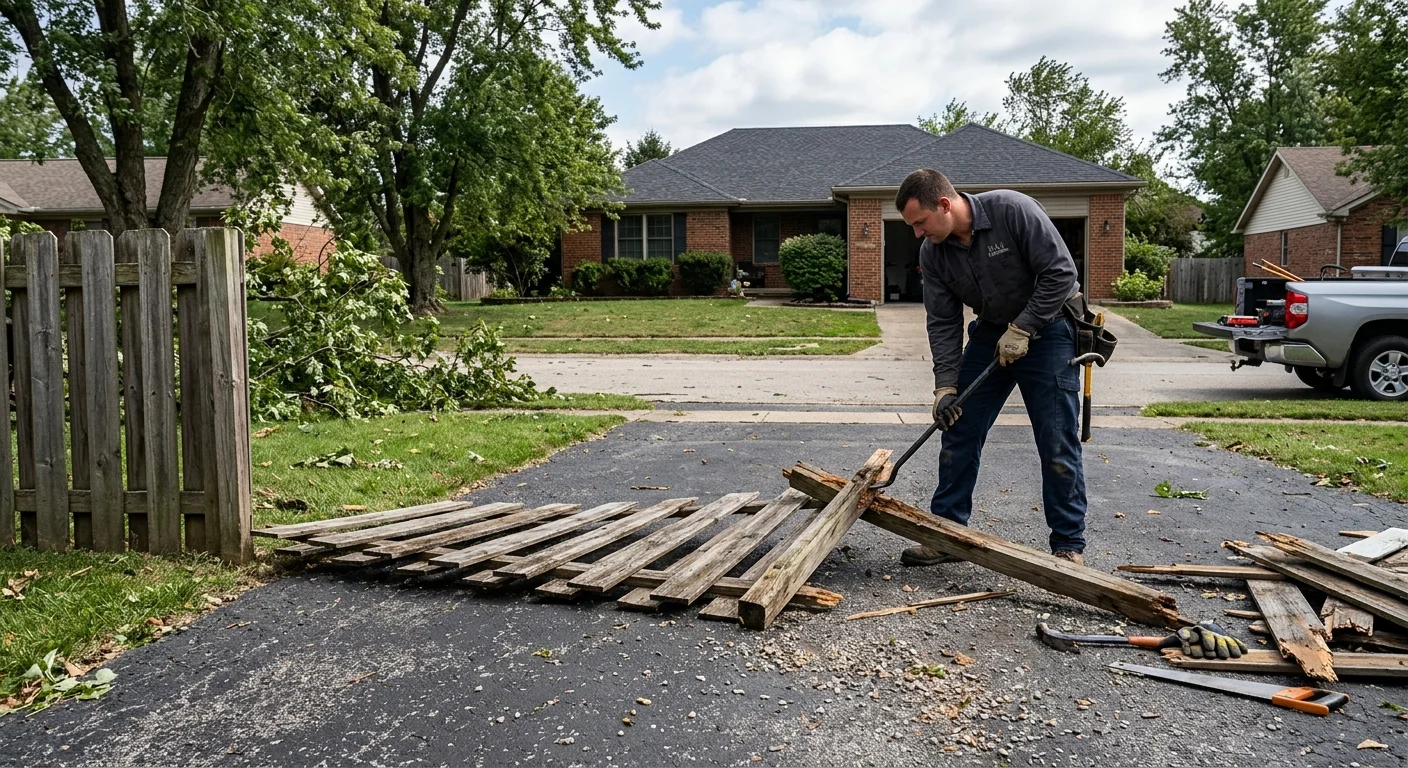
Treat the fallen section as unstable. Don’t lift it, climb over it, or drive across it. A panel that looks settled may still be attached to a leaning post or gate.
Keep children and pets inside or behind another secure barrier. Ask visitors and delivery drivers to use another entrance when one is available. If your vehicle is outside the blocked driveway, park it away from the damaged area.
Don’t try to squeeze a car through a narrow opening. The fence may have exposed fasteners, bent rails, or loose hardware. A swinging gate can also move without warning when its post has shifted.
Place a visible marker outside the damaged area if you can do so safely. Use something stable that stays entirely on your property. Don’t stretch rope across a walkway or place objects in the street. Those steps can create another obstruction.
A fallen section near a sidewalk needs extra care. Keep yourself on the property and out of traffic. Don’t stand in a travel lane to inspect the outside face.
Stay away if the fence touches or sits near a utility line. Don’t move the panel or approach the line. Contact the appropriate utility or emergency authority for direction.
For damage that has closed the only usable entrance, review the options for storm damage and emergency fence repair. A licensed contractor can assess the structure and determine how access should be restored.
How to document damage without entering an unsafe area
Start from a doorway, yard, sidewalk, or other stable position. Use your phone’s zoom instead of stepping beneath a leaning panel. Don’t cross loose boards, broken posts, or scattered hardware for a closer picture.
Take one wide photo that shows the entire driveway. Include the fallen section, nearby gate, and both ends of the damaged fence. This helps show how much access remains.
Next, photograph the damage from another safe angle. Useful views may include the yard side and the driveway side. Skip any angle that requires entering traffic, standing downhill from debris, or moving the fence.
Capture the point where each affected post meets the ground. Don’t clear soil or pull material away for the photo. Photograph the condition as you found it. Do the same for visible hinges, latches, brackets, and rails.
Save any earlier photo that shows the fence before it fell. A recent real estate photo or ordinary yard picture may help establish the previous layout. Don’t alter the images beyond basic cropping.
Note when you first saw the damage. Record whether the gate was open or closed and whether a vehicle was present. Stick to what you personally observed.
San Diego County properties range from compact urban lots to larger inland parcels. The safest camera position will differ by site. Whether you’re in National City, El Cajon, Encinitas, or elsewhere in the county, distance matters more than getting a perfect close-up.
Our San Diego storm-damage guide provides more context for reviewing a fence after wind or severe weather.
What photos and measurements help a fence pro assess the problem
A fence professional needs context before focusing on small details. Begin with a straight-on photo of the full damaged run. Then take a wider photo showing the driveway, gate opening, and nearby property features.
Photograph both ends of the fallen section. Show where it connects with standing fence panels, a wall, or a gate post. Include the top and bottom rails when they’re visible from a safe place.
Close photos can help when taken without approaching the unstable area. Focus on visible breaks, separated joints, loose hinges, and bent brackets. A clear image of the post base may show where the movement occurred.
Count the affected panels and visible posts from a distance. Write down the fence material, such as wood, vinyl, metal, or chain link. Note whether the blocked section includes a pedestrian gate or driveway gate.
Only measure areas you can reach without entering the damaged zone. A safe measurement might include the clear driveway width from an unaffected location. Don’t place a tape beneath a panel or beside a leaning post.
If direct measurement isn’t safe, provide an approximate scale through photos. A garage opening, intact panel, or parked vehicle can give the contractor visual context. Label estimates as estimates.
Send the original photos rather than screenshots when possible. Keep them in sequence, starting with the widest view. Add short labels such as “driveway side,” “broken post,” or “gate connection.”
The contractor will still need to inspect and measure the site. Photos help explain the access problem, but they don’t replace an on-site assessment.
Temporary steps that don’t create a second hazard
The safest temporary step may be leaving the fence untouched. Keep the area closed and use another entrance until a licensed professional can assess it.
Don’t prop a fallen panel against a vehicle, wall, tree, or another fence section. Don’t attach a tarp, sheet, or privacy screen to damaged material. Avoid adding weight or new connection points to an unstable section.
Don’t cut rails, remove hinges, or pull fasteners just to clear space. One connection may be holding another part of the fence in place. The same caution applies to gate motors, tracks, cables, and attached controls.
If you use cones or another visual marker, place them from the safe side. Keep them on private property and outside normal walking paths. Don’t create a barrier across a public sidewalk or roadway.
Use an unaffected door or gate when one is available. Tell household members which route to use. Keep the damaged driveway closed until the condition has been assessed.
A broken fence may also leave a yard open. Keep pets indoors or within a separate secure enclosure. Don’t attach temporary pet fencing to the damaged section.
If a neighbor shares the boundary, send a factual message with photos. Don’t agree to a permanent scope before the damage has been assessed. Keep written notes about discussions and proposed work.
California Civil Code Section 841 addresses responsibility for fences dividing adjoining private properties. It includes a presumption of equal responsibility for reasonable costs unless the owners agree otherwise in writing. It also describes advance written notice before shared-fence costs are incurred. Review the current statute and get advice for your specific situation before relying on it.
When repair and full replacement each make sense
Repair may make sense when the damage is limited to a defined section. Examples include an isolated rail, panel, hinge, or post connection. The surrounding fence must still be assessed before that choice is made.
A contractor may also consider whether matching material is available. A repair that restores access still needs to connect properly with the standing fence. Gate alignment and post condition can affect the proposed scope.
Full replacement may be considered when damage extends across several connected sections. It may also enter the discussion when multiple posts have shifted or the remaining structure can’t support a sound repair. These are site-specific decisions, not conclusions to draw from one photo.
Ask the contractor to separate immediate access needs from permanent work. The first decision concerns the blocked driveway. The second concerns the long-term fence layout, materials, and gate operation.
Don’t accept a repair-or-replace recommendation without understanding what was inspected. Ask which posts, rails, panels, and connections are affected. Ask what can remain and why.
For a shared boundary fence, confirm the property line and ownership before changing the layout. The verified California rule covers adjoining landowners, but a written agreement can change the usual cost-sharing presumption. Don’t assume the neighbor automatically owes a particular amount.
Permit and fence rules can vary by location. Current City of San Diego fence measurements and permit details weren’t fully confirmed in the approved research for this page. Properties outside the city may follow a different local authority. Ask the contractor which city or county office controls the address, then confirm current requirements with that office.
Fence Pros San Diego doesn’t perform repairs or set contractor prices. We connect homeowners with licensed, independent local professionals. You contract with and pay the professional directly. You can also check a contractor through the CSLB license lookup.
Our fence repair and restoration service can connect you with a professional who can compare the practical repair and replacement options.
When to call us
Call when a broken fence blocks access, involves a gate, or leaves connected sections unstable. This work needs a licensed fence pro to inspect the damage and recommend the appropriate scope. Call us at (858) 400-4906 and we’ll connect you with a licensed fence contractor.