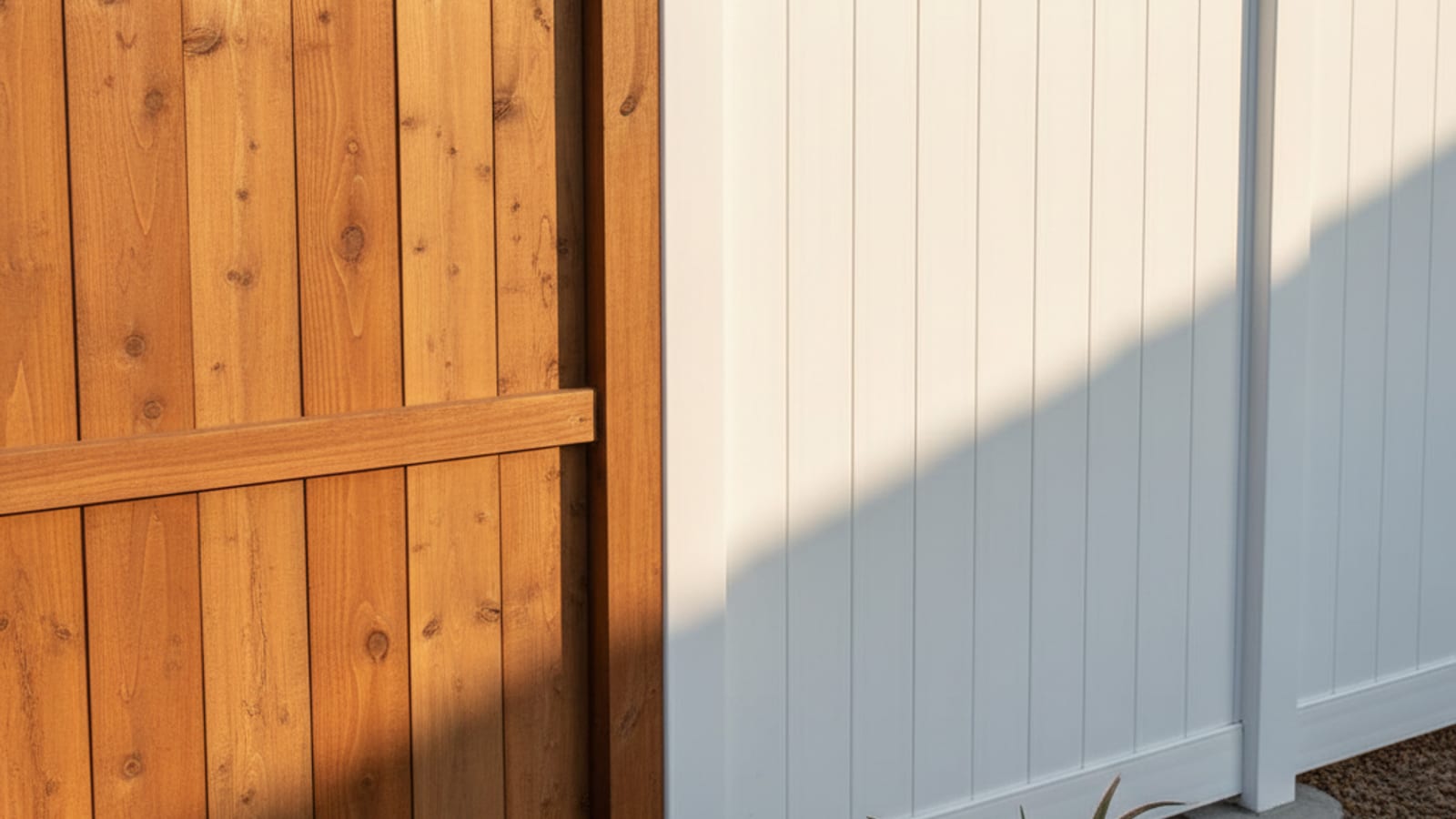
Horizontal fence design runs boards side to side instead of up and down. The look is architectural. The install is tighter, usually needs more posts, and punishes cheap lumber. Fence Pros San Diego is a referral service. We do not publish per-foot horizontal rates, 150-foot package totals, or a 15-year life chart.
Traditional privacy fences hang vertical pickets on rails. Horizontal flips that. Errors show as a wave down the whole run. That is where professional fence installation earns the extra labor, not a slogan about 2026 trends.
What a horizontal fence is
Variations:
- Classic plank: 1x6 or 1x8 butted, with a small expansion gap
- Shadowbox: boards alternate faces, more light
- Slat: narrower boards, intentional gaps
- Mixed-width: 1x4 / 1x6 / 1x8 for rhythm
- Shiplap: rabbeted edges so movement does not open a sight line
Height still has to match zoning and any HOA. City of San Diego Table 142-03A uses 7 feet as the building-permit trigger under that division, which is not the same as a 6-foot backyard rumor.
Why it usually bids higher than vertical (without a rate card)
- More posts. Vertical pickets can span farther because each picket is short. Horizontal boards sag if posts are too far apart. Ask the quote for on-center spacing and post size (4x4 vs 6x6 on taller, heavier runs).
- Better lumber. Flat-sawn pine cups in inland sun. Cedar or redwood, preferably vertical grain, is the usual ask.
- Leveling. Horizontal must be level or stair-stepped in clean risers. A slight rake that a vertical fence hides will read as sloppy.
Vinyl horizontal is a custom panel problem, not a stock section. Composite exists as a no-stain option. Neither is an excuse to invent a package total.
Material picks that work
Western red cedar: the local wood fence default. Ask grade and whether boards will be stained.
Heart redwood: more money, similar install rules.
Pressure-treated pine: cheaper, cups and warps in horizontal runs east of I-5. Short shaded coastal runs only if you accept movement.
Vinyl or composite horizontal: special-order. Confirm color, expansion, and fastener spec.
What not to use
- Standard pine 1x6 as a “savings” that rebuilds in a few seasons
- Douglas fir as face boards (splits)
- Cedar plywood sheets as fence scale
- Reclaimed boards with nail holes that rust-bleed
Post spacing and common install mistakes
Ask for closer posts than a typical vertical privacy run, and for mid-height blocking on tall faces so boards do not wave. Taller, heavier assemblies may need 6x6 posts. Those are quote lines, not a building-code table on this page.
Mistakes that show up on San Diego jobs:
- Boards not acclimated. Install from the truck and they shrink into gaps.
- Gaps too tight. Leave room for heat. Butted tight, they bow.
- Wrong fasteners. Horizontal boards put shear on nails. Stainless or hot-dip ring-shank or screws, not electroplated smooth-shank.
- Exposed end grain. Butt boards to a post so the post covers the end.
- Following a slope with tilted boards. Stair-step instead.
HOA considerations
Many CC&Rs name height, material, and stain color, not board direction. An “approved example” photo of vertical pickets can still be used to reject horizontal. Submit drawings before you fall in love with the look. Named tracts differ: some master-planned communities have approved horizontal; older vertical-only tracts have not. That is a packet check, not a Fence Pros approval list. We do not claim we “work in” specific HOAs as a credential.
When horizontal is the right answer
- Modern, mid-century, Craftsman, or contemporary elevations
- A short, highly visible run where the detail is the point
- Mostly flat grade, or a budget for stair-steps
- Budget that can pay for the extra posts and better boards, not a cheaper species to “make horizontal fit”
Skip it on a long back line with no street view, a steep canyon without stair-step money, a vertical-only HOA, or a house that wants Spanish Revival pickets.
What a horizontal fence quote should include
- Post size and on-center spacing
- Board size, species, grade
- Fastener spec
- Gap spec
- Stain: product and timing (oil penetrating finish is a common spec, not a Fence Pros include)
- HOA submittal, if any, as the owner’s or contractor’s task
- A punch-list visit after movement, if offered, as the contractor’s term
Start window is the contractor’s estimate, not a two-to-three-day promise from this site.
Frequently asked questions
How much does a horizontal fence cost in San Diego?
More than a comparable vertical privacy fence on the same line, mainly because of posts and lumber grade. We do not publish per-foot or 150-foot totals.
What wood is best for a horizontal fence in San Diego?
Cedar or redwood for face boards. Pine in horizontal orientation is the usual regret inland.
Do I need a permit for a horizontal fence in San Diego?
Same height and location rules as any fence. City Table 142-03A at 7 feet for a building permit under that division. HOA is separate.
How long does a horizontal cedar fence last in San Diego?
Finish and sun exposure decide it. Horizontal faces take more UV than vertical pickets. We do not publish 15-to-18-year warranties.
Is horizontal fencing harder to install than vertical?
Yes. Closer posts, level boards or clean stairs, visible gaps. Mistakes read across the whole run.
Can I put a horizontal fence on a sloped yard?
Yes, as stair-steps, with more posts. Walk the slope before you commit.
If you want a site walk, call (858) 400-4906. We connect you with an independent contractor. Estimates come from that contractor in writing.