A pressure treated pine fence can fit an inland San Diego property when the proposal matches the lumber and supporting parts to the actual site. The deciding document should cover grade, irrigation, posts, fasteners, finish, gates, access, and substitutions. A material name by itself isn’t enough.
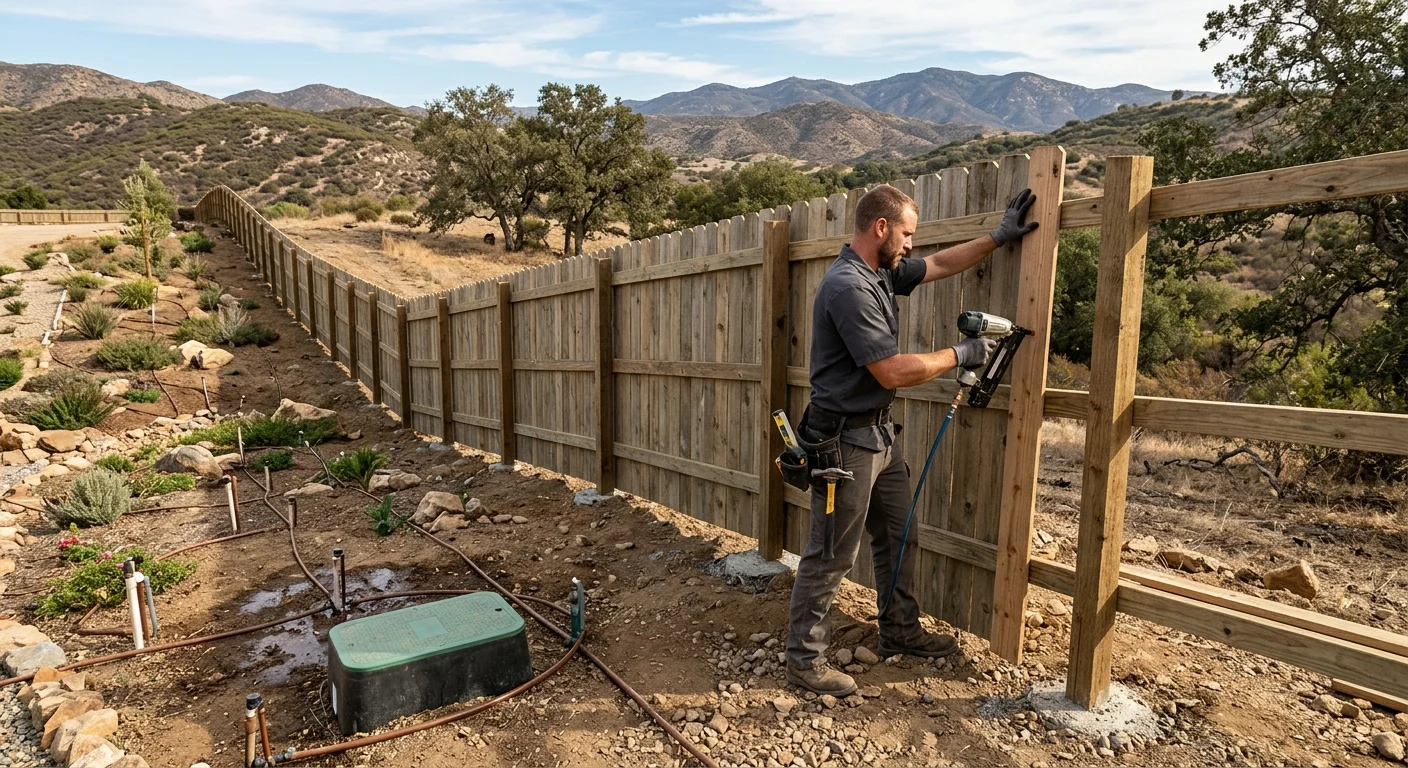
How exposure, irrigation, and grade shape the material discussion
Start with the fence line, not a sample board. A contractor needs to see where the fence will stand and what touches that area. Walk the entire route together before comparing materials.
Note where sprinklers spray, where runoff crosses the line, and where soil collects near existing posts. Identify planters, hose bibs, drains, downspouts, and low areas. These observations don’t predict how long a fence will last. They show which site details belong in the proposal.
Grade matters because the fence must follow or cross the land. Ask whether the boards will step, follow the slope, or use another layout. Have the contractor identify changes in panel height and ground clearance. A sketch can prevent different interpretations later.
Exposure also needs plain language. Mark sections facing open yards, narrow side passages, walls, vegetation, and shaded corners. An Escondido property and an El Cajon property shouldn’t receive identical assumptions without an inspection. The same applies in Poway, Santee, Lakeside, and other inland communities.
Ask the contractor to record these conditions:
- The full fence length and proposed alignment
- Visible grade changes along each section
- Irrigation heads and their spray direction
- Drainage paths and recurring wet areas
- Trees, roots, planters, walls, and utility features
- Gate locations and nearby paving
- Access limits for removing and bringing in materials
This information gives the material conversation a real foundation. It also helps separate a site-specific proposal from a generic price sheet. Our wood fence installation service connects property owners with independent local pros who can inspect these conditions.
Which lumber, post, fastener, and finish details belong in writing
“Pressure-treated pine” doesn’t describe the entire fence. Your proposal should identify each major component and the exact product or specification being offered. If a detail remains undecided, the document should say who selects it and when.
For lumber, request the species or product name shown by the supplier. Ask for board dimensions, board profile, grade, and intended placement. The proposal should distinguish posts, rails, pickets, trim, kick boards, and gate framing. Don’t assume every wooden component will match.
Treatment performance and expected service life couldn’t be confirmed from the site’s approved primary-source ledger. Those claims should come from the product manufacturer or supplier. Ask the contractor to attach the relevant product information. The written scope should also explain how field cuts, drilled areas, and substitutions will follow those instructions.
Posts deserve their own line. The proposal should name the post material, dimensions, spacing plan, and footing approach. If metal posts are offered behind wooden boards, compare that version separately. Don’t accept a proposal that changes the post system without showing the change.
Fasteners and connectors matter too. Request the fastener material, size, and intended location. Gate hinges, latches, brackets, and post caps should be identified separately. Ask whether visible and concealed fasteners differ.
Finish terms must be equally clear. A proposal should say whether the contractor includes a finish, leaves the wood unfinished, or treats finishing as a separate scope. If a product is included, request its name, color process, application area, and manufacturer instructions. Don’t accept an unwritten promise about appearance or maintenance.
Finally, add a substitution clause. It should require your approval before the contractor changes lumber, posts, fasteners, hardware, or finish products. That keeps your pine fence proposal tied to what you actually compared.
How to compare pine, cedar, and redwood proposals
Compare complete fence systems, not three lumber names. A pine proposal with one post system can’t be fairly compared with a cedar or redwood proposal using different posts, gates, hardware, or demolition terms.
Place the proposals side by side. Then normalize each scope using the same checklist:
- Fence length, height, layout, and board orientation
- Lumber specified for posts, rails, boards, and trim
- Post material, spacing, and footing description
- Fastener, bracket, hinge, and latch details
- Gate count, opening width, framing, and hardware
- Demolition, hauling, and site cleanup
- Finish products and included surfaces
- Treatment of slopes, corners, and transitions
- Access assumptions and protected areas
- Exclusions, allowances, and substitution rules
Ask each contractor to mark omissions rather than leaving blank spaces. A blank line can mean “not included,” “not selected,” or “assumed.” Those meanings create very different contracts.
Don’t rely on unsupported lifespan or treatment claims. The approved claims ledger contains no verified service-life figures for pine, cedar, or redwood. It also doesn’t establish a universal performance ranking among them. Request manufacturer documentation for any product-specific claim included in a proposal.
Appearance also needs a shared reference. Review physical samples or named products when available. Record the selected board profile and intended finish instead of depending on words like “premium” or “natural.”
Our San Diego wood selection guide offers a broader way to organize the decision. Homeowners narrowing two other wood options can also read the cedar and redwood comparison.
Price should be reviewed only after the scopes match. Fence Pros San Diego doesn’t set contractor prices. The homeowner contracts with and pays the independent professional directly. A lower total doesn’t explain which materials or tasks were removed.
When repair and new installation deserve separate scopes
An existing fence can contain several different conditions. Some sections may remain, while others need removal. Posts, rails, boards, gates, and footings shouldn’t be grouped under one vague repair line.
Ask the contractor to label each section as retained, repaired, removed, or newly installed. Photographs with matching section names can help. The proposal should state where new pressure-treated pine meets existing wood and how that transition will look.
Repair and installation should become separate scopes when they involve different materials, post systems, alignments, or finish work. Separate scopes also help when one section depends on information uncovered during removal. The contractor can describe that decision point without pretending to know what hidden conditions will reveal.
For repairs, request a component list. It should identify which posts, rails, boards, gates, and hardware are included. Ask how nearby components will be evaluated once damaged material is removed. Any additional work should require written approval.
For new construction, request a complete layout. Mark corners, ends, gates, height changes, and connections to existing structures. A new fence installation proposal should also identify demolition and disposal terms when an old fence occupies the route.
Don’t let a repair allowance quietly become permission to rebuild an undefined area. Likewise, don’t pay for complete removal when the written plan retains part of the fence. Clear section labels protect both parties.
If the fence sits on a shared boundary, discuss the plan with the adjoining owner before costs are incurred. California Civil Code section 841 establishes a presumption concerning shared responsibility and requires advance written notice before shared-fence costs are incurred. The notice must describe the problem, proposed solution, estimated costs, cost-sharing approach, and proposed timeline.
What an independent fence pro needs before quoting the work
A contractor can prepare a more specific proposal when you provide a clear site record. Start with the property address and photographs of the complete fence line. Include corners, gates, slopes, irrigation, paving, vegetation, and connections to other structures.
Mark the requested fence route on a survey or site plan if you have one. Don’t present an uncertain line as a confirmed boundary. If its location is unclear, resolve that question before approving construction. Changes made after a contract is signed can affect the scope.
Prepare a short project brief covering:
- The sections being repaired, removed, or added
- The requested height and privacy pattern
- The preferred pine product or supplier documentation
- Gate locations, opening direction, and intended use
- Areas that must remain accessible
- Irrigation or drainage features near the route
- Finish preferences and excluded work
- Any association documents or property restrictions you possess
Permit and fence rules vary by jurisdiction. For a City of San Diego parcel, Table 142-03A uses 7 feet for that division’s building-permit split, and section 142.0310 still controls yard height and openness. For unincorporated County land, PDS 070 excepts qualifying fences and walls not over 6 feet that also meet zoning (42-inch front or exterior side, 72-inch rear or interior side on that bulletin). Other cities: ask that city’s building desk. Do not copy those numbers onto a Carlsbad or El Cajon lot. The proposal should say who checks and who files. See permits by city.
Confirm the contractor’s identity before signing. California’s C-13 classification covers constructing, erecting, altering, and repairing fences, gates, and related barriers, but excludes masonry walls. You can use the CSLB license check to review the contractor’s current record.
Give every bidder the same project brief. Then request written answers to the same questions. This makes differences visible and reduces assumptions. Fence Pros San Diego matches customers with licensed, independent local fence professionals. We don’t perform the work, set the price, or provide the contractor’s warranty.
When to call us
Call when a pressure-treated pine privacy fence needs new posts, gates, extensive removal, or a complete installation scope. A licensed fence contractor can inspect the property and document the proposed system. Call us at (858) 400-4906 and we’ll connect you with a licensed fence contractor.