A redwood fence installation proposal should identify the exact fence line, materials, construction details, gates, finish, access, and cleanup. If those items aren’t written down, two proposals may describe very different projects.
How the proposed fence line and access plan should be documented
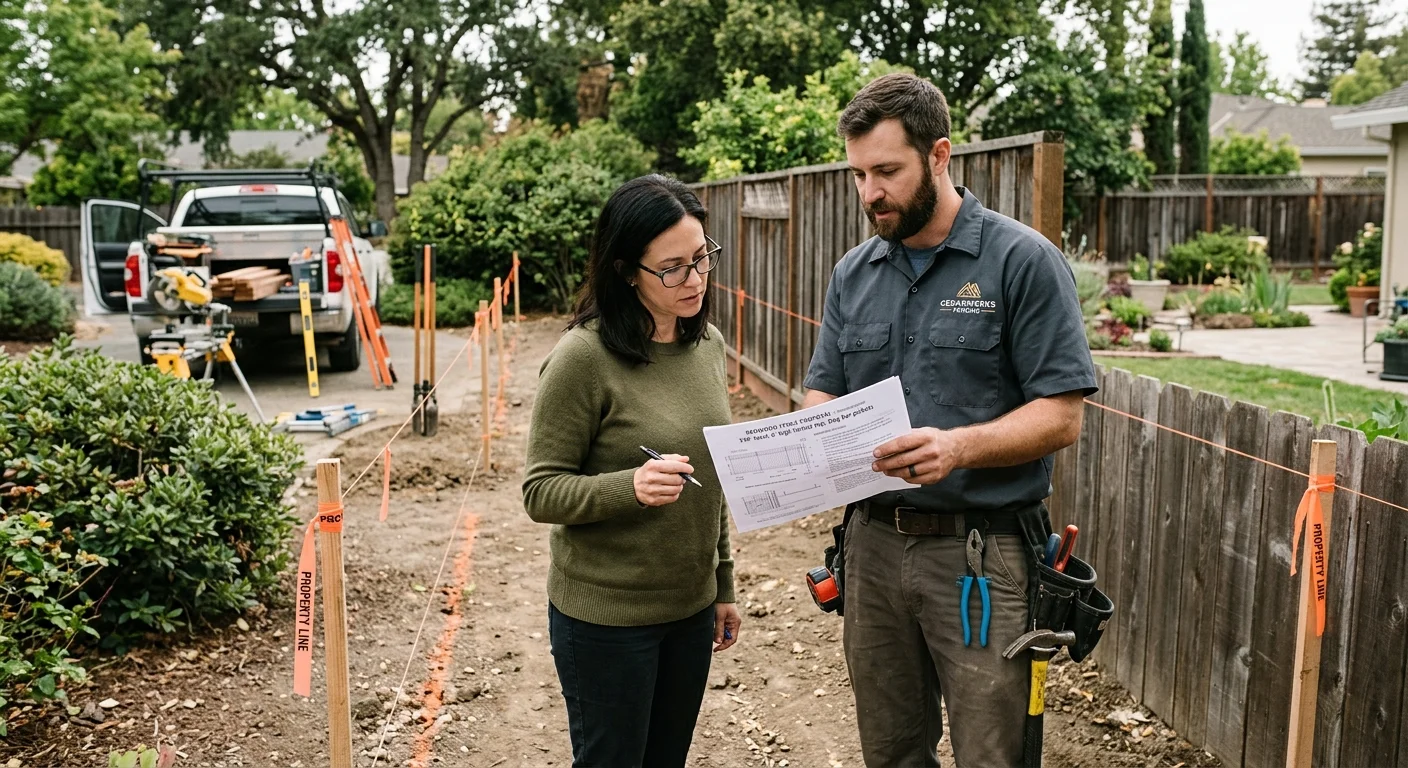
Start with a drawing, marked photo, or site plan. It should show where the proposed fence begins, turns, and ends. Each gate location should also appear on that document.
The proposal should state whether the fence follows an existing structure or a confirmed property line. Those aren’t automatically the same thing. If the boundary remains uncertain, pause the project and ask a qualified surveyor to identify it. A redwood fence contractor shouldn’t be expected to settle a boundary dispute through guesswork.
Record the approximate length of each section in the proposal. Note corners, elevation changes, existing gates, and connections to walls or other fences. If one section will step while another follows the ground, put that choice in writing.
Access deserves the same attention. “Standard access” doesn’t explain how materials reach the yard. A North Park alley, a narrow Chula Vista side yard, and a sloped La Mesa property can require different plans. The proposal should identify the entry point and any known restrictions.
Ask the contractor to document:
- The proposed material staging area
- The route between that area and the fence line
- Gates, stairs, or narrow passages along the route
- Landscaping or structures that must remain undisturbed
- How removed fencing will leave the property
- Areas the homeowner must clear before work begins
Photos can help both parties discuss the same locations. They should show the fence line, access route, and nearby features. For a broader look at project planning, see our fence installation and new builds guide.
Which redwood grade, dimensions, posts, and fasteners belong in writing
“Redwood fence” isn’t a complete material description. The proposal should name the redwood product and grade offered by the contractor. If the supplier uses a particular product description, that wording should appear in the proposal.
Require the proposed board dimensions in writing. Include thickness, width, length, orientation, and edge profile. The scope should also identify whether boards will overlap, meet edge to edge, or use another layout. For a redwood privacy fence installation, ask how gaps and transitions will be handled.
Posts need their own description. The proposal should identify the post material, dimensions, spacing plan, and visible treatment. It should also explain how corners, ends, gates, and grade changes affect post placement. If wood boards will be attached to metal posts, the connection method belongs in the scope.
Rails and framing should be equally specific. Ask for the material, dimensions, quantity per section, and attachment method. Decorative caps, top boards, kick boards, or trim pieces shouldn’t be left to assumption.
Fasteners are easy to overlook during proposal review. The document should identify their material or product specification and intended location. It should distinguish fasteners for boards, rails, posts, brackets, and gates. Ask whether exposed hardware will match across visible sections.
The scope should also explain material substitutions. A contractor may discover that a listed item isn’t available when materials are ordered. The proposal should say whether substitutions require your written approval.
These details make competing offers easier to compare. They also give the final contract a clearer baseline. Our wood fence installation page explains how we connect homeowners with independent local contractors.
If you’re still choosing the material, read cedar versus redwood fencing and our guide to the best wood for a San Diego fence. Those comparisons address material selection. This proposal review begins after redwood is already the planned choice.
How gates, finish, and debris removal should appear in the scope
Every gate should appear as a separate line item or clearly described component. Record its location, opening width, height, frame material, and board pattern. The proposal should also state the swing direction and which side receives the hinges.
Hardware descriptions should cover hinges, latches, handles, stops, and drop rods when proposed. If a gate needs a lock, keypad, closer, or other accessory, identify the exact product or agreed specification. “Gate included” leaves too many decisions unresolved.
Ask how the gate will meet adjacent fence sections. Posts, trim, and board alignment should be addressed. Double gates need a written description for both leaves and their meeting point. If the opening serves a driveway, confirm the planned clear opening against the vehicles that use it.
Finish is another separate scope decision. The proposal should say whether the redwood will remain unfinished or receive a named product. When finish is included, record the color, surfaces covered, preparation steps, application method, and number of coats proposed. The contractor should also identify any manufacturer instructions that affect the work plan.
Don’t assume cleanup includes removal. The proposal should distinguish jobsite cleanup from hauling material away. Ask it to identify which existing fence sections, posts, footings, gates, and loose materials will be removed.
The debris section should also cover soil or concrete produced during the work. If the homeowner plans to keep redwood boards or hardware, list those items. State where saved material will be placed.
Finally, document restoration limits. The scope should say how disturbed soil, gravel, mulch, or similar surface material will be left. Landscaping replacement shouldn’t be implied when it isn’t included. Clear wording keeps the contractor’s responsibility tied to the agreed project.
What to compare when two redwood proposals differ
Compare scope before comparing totals. Place the proposals side by side and match each section. A shorter document may leave decisions open rather than offering the same work more simply.
Begin with the planned fence itself. Confirm that both proposals cover the same line, section lengths, height, board arrangement, and gate openings. Then compare the named redwood grade, board dimensions, posts, rails, fasteners, and trim.
Next, review the work surrounding the fence. One scope may include removing existing posts and footings. Another may only mention taking down panels. Access preparation, material staging, hauling, finish, and surface restoration can also differ.
Use a written comparison with these headings:
- Fence line and section layout
- Redwood product and grade
- Board and rail dimensions
- Post material and placement plan
- Fasteners and connection hardware
- Gate construction and hardware
- Finish product and application scope
- Existing fence removal
- Debris hauling and retained materials
- Access restrictions and homeowner tasks
- Exclusions, allowances, and substitutions
Read exclusions carefully. Ask the contractor to explain unclear wording and revise the document when needed. Verbal answers should be added to the written proposal before it becomes the contract.
Check who issued each proposal. Fence Pros San Diego is a referral service, not the installing company. You contract with and pay the independent professional directly. Use the official CSLB license check to review the contractor’s license record.
Ask how revisions and added work will be documented. The proposal should identify the approval process for a changed fence line, added gate, different material, or hidden site condition. A signed change should describe the new work before it becomes part of the project.
The strongest comparison isn’t the shortest document or lowest total. It’s the proposal that most clearly defines what you’re agreeing to receive.
Which property and approval questions need outside confirmation
A fence proposal doesn’t establish property ownership or government approval. Some questions must be answered by the homeowner, reviewing jurisdiction, HOA, or another qualified professional.
For a City of San Diego property, start with Development Services. Table 142-03A uses 7 feet for that division’s building-permit split. Section 142.0310 still controls yard height and openness. For unincorporated land, County PDS 070 excepts qualifying fences not over 6 feet that also meet zoning. For Encinitas, El Cajon, Chula Vista, or another incorporated city, ask that city which department reviews the work. Do not carry a City or County number into another city’s lot.
California’s C-13 fencing classification covers fences and gates and excludes masonry walls. A redwood fence on a masonry stem or retaining wall needs the masonry license named on the bid.
The proposal should identify approvals as pending when they haven’t been obtained. It shouldn’t present an unconfirmed height, setback, or permit decision as settled. Ask who will prepare documents, submit applications, respond to corrections, and schedule required inspections if those tasks apply.
HOA approval is separate from government review. Give the association the proposed style, height, color, finish, and fence-line drawing. Keep its written response with the contractor’s proposal.
Shared boundary work requires another conversation. California Civil Code Section 841 presumes adjoining landowners share equal responsibility for reasonable construction, maintenance, or necessary replacement costs unless they agree otherwise in writing. Before incurring shared-fence costs, a landowner must give affected adjoining landowners 30 days’ advance written notice. The notice must describe the problem, proposed solution, estimated costs, proposed cost sharing, and timeline.
The law’s presumption can be challenged, and private agreements can change the arrangement. A contractor’s proposal isn’t legal advice or a neighbor agreement. Get qualified guidance when ownership, cost sharing, or consent remains disputed.
Also confirm the location of private utilities, irrigation, drainage, and other concealed site features. Ask the contractor how those conditions will be addressed in the written scope.
When to call us
Call when your redwood fence installation needs a licensed fence professional to review the site and prepare a project-specific proposal. Call us at (858) 400-4906 and we’ll connect you with a licensed fence contractor.