A leaning fence isn’t just an eyesore; it’s a structural problem that compromises your property’s security and curb appeal. Often, the culprit lies beneath the surface: a failing fence post footing. In San Diego, our unique climate and soil conditions can put extra stress on these crucial concrete anchors.

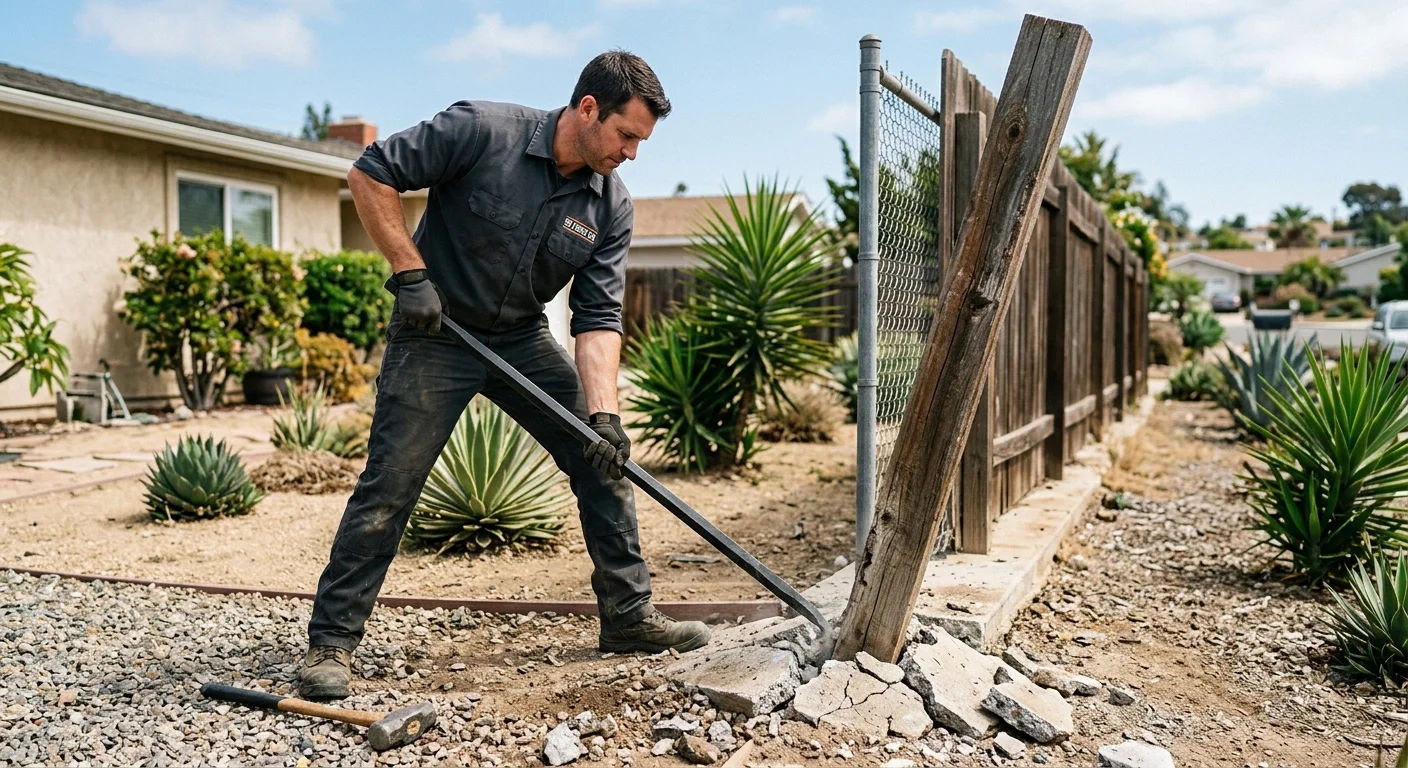
A fence professional using a digging bar to break up old concrete around a leaning fence post in a San Diego yard.

At Fence Pros San Diego, we understand the specific challenges homeowners face here. Diagnosing and repairing fence post footings is a common part of our work, and we’re here to explain why these issues occur and how we address them with lasting solutions.

Why concrete footings crack or fail in local soil

Fence post footings are designed to provide a stable, long-lasting anchor for your fence posts. They typically consist of a wooden or metal post set into a hole filled with concrete. However, several factors, especially those specific to the San Diego region, can cause these footings to fail over time:

San Diego’s varied soil types and moisture changes

Our local soil conditions play a significant role. San Diego County features a mix of expansive clay soils, sandy loams, and even rocky terrain. Expansive clay soils are particularly problematic because they swell when wet and shrink when dry. This constant expansion and contraction puts immense pressure on concrete footings, leading to cracks, shifts, and eventually failure. Even sandy soils, while not expansive, can lose integrity around a footing if water washes away fine particles over time.

Poor drainage and water accumulation

Consistent moisture around the base of a fence post footing accelerates its deterioration. If your yard has poor drainage, rainwater can pool around the base of the posts, saturating the soil and exposing the concrete to prolonged dampness. This can lead to:

  • Freeze-thaw cycles (rare here, but possible): While less common in San Diego, occasional colder temperatures combined with moisture can cause water within concrete cracks to freeze and expand, widening those cracks.
  • Erosion: Water runoff can erode the soil directly supporting the footing, causing it to lose its firm base and tilt.
  • Chemical reactions: Some ground chemicals, exacerbated by consistent moisture, can slowly break down concrete over decades.

Improper installation techniques

Not all fence installations are created equal. Sometimes, a footing might fail due to mistakes made during the initial installation. This includes:

  • Insufficient depth: Footings that aren’t dug deep enough for San Diego’s soil conditions won’t have enough resistance against lateral forces (like wind or leaning).
  • Inadequate concrete mix: Using a concrete mix that isn’t strong enough or doesn’t have the right water-to-cement ratio can lead to a weaker footing from the start.
  • Improper curing: If concrete isn’t allowed to cure properly, it won’t reach its maximum strength, making it vulnerable to early failure.
  • Lack of rebar: While not always necessary for residential fences, in certain applications or soil types, a rebar cage provides extra internal strength against cracking.

Understanding these underlying causes helps us accurately diagnose the problem and provide a targeted, lasting solution for your fence.

How we fix a leaning fence by resetting the post footing

When your fence starts to lean, it’s often a clear sign that the footing has shifted or failed. Our goal is to restore the post’s stability and plumb by resetting its foundation. The process is precise and methodical, ensuring the repair holds up against San Diego’s specific environmental challenges.

Step 1: comprehensive assessment and preparation

First, we carefully assess the leaning post and its surrounding area. We determine if the issue is primarily a shifted footing, a rotted post, or a combination. We check for signs of soil erosion, standing water, and the overall condition of the fence line. Once we understand the problem, we prepare the site, clearing away any landscaping or obstructions around the affected post. This allows our team to work efficiently and safely.

Step 2: careful excavation and post stabilization

Next, we meticulously excavate around the existing concrete footing. Our team uses specialized digging tools to break up the old concrete and remove it, taking care not to damage adjacent fence sections or underground utilities. Once the old footing is clear, we carefully work to plumb the leaning post. This involves using levels and bracing the post securely in its correct vertical position. This critical step ensures the fence stands straight and tall once the new footing is poured. If other posts are also leaning, we may recommend addressing those at the same time to prevent future issues. You can read more about how we tackle these issues on our dedicated page for fixing a leaning fence.

Step 3: pouring a new, strong concrete footing

With the post perfectly plumbed and braced, we prepare the hole for a new concrete footing. We ensure the hole is deep enough – typically 24-30 inches for most residential fences in San Diego, depending on soil type and fence height – to provide maximum stability. We then mix and pour high-strength, fast-setting concrete, carefully filling the hole around the post. We crown the top of the concrete slightly, creating a dome shape that sheds water away from the post, preventing future moisture accumulation and improving drainage. Proper concrete mix and technique are vital for a durable repair that stands the test of time.

Step 4: curing and final checks

After the concrete is poured, it needs time to cure and achieve its full strength. We advise on the necessary curing period, during which the post must remain braced. Once the concrete is fully cured, we remove the bracing, backfill the excavated area with soil, and perform a final check to ensure the post is perfectly plumb and stable. This meticulous approach guarantees your fence post is securely anchored, restoring the integrity and appearance of your fence line. For any kind of fence post repair, precision is key.

The process for replacing a rotted post in an existing concrete base

Sometimes, a leaning fence isn’t due to a failed concrete footing, but rather a rotted wooden post within a perfectly good footing. This is a common issue in San Diego, especially with older wood fences, where moisture and pests can compromise the post at ground level.

Diagnosing post rot versus footing failure

It’s crucial to correctly diagnose the problem. If a post is rotted, you might see visible decay, soft spots, or even crumbling wood near the ground. The post might wobble independently of the concrete footing. If the footing itself is cracked, displaced, or loose in the ground, that indicates a footing failure. Our experts can quickly identify whether it’s the post or the footing that needs attention. Often, a post will rot from the bottom up while the concrete footing stays intact.

Removing the old, rotted post

If we determine the post is rotted but the concrete footing is sound, we’ll proceed with a post replacement. The first step involves carefully removing the damaged post. We’ll typically cut the post off flush with the top of the concrete footing. Then, using specialized tools, we’ll work to extract the remaining rotted wood from inside the concrete base. This can involve drilling, chiseling, or using a reciprocating saw to cut the embedded wood into smaller pieces for easier removal. The goal is to clear the existing concrete base without damaging it, creating a clean void for the new post.

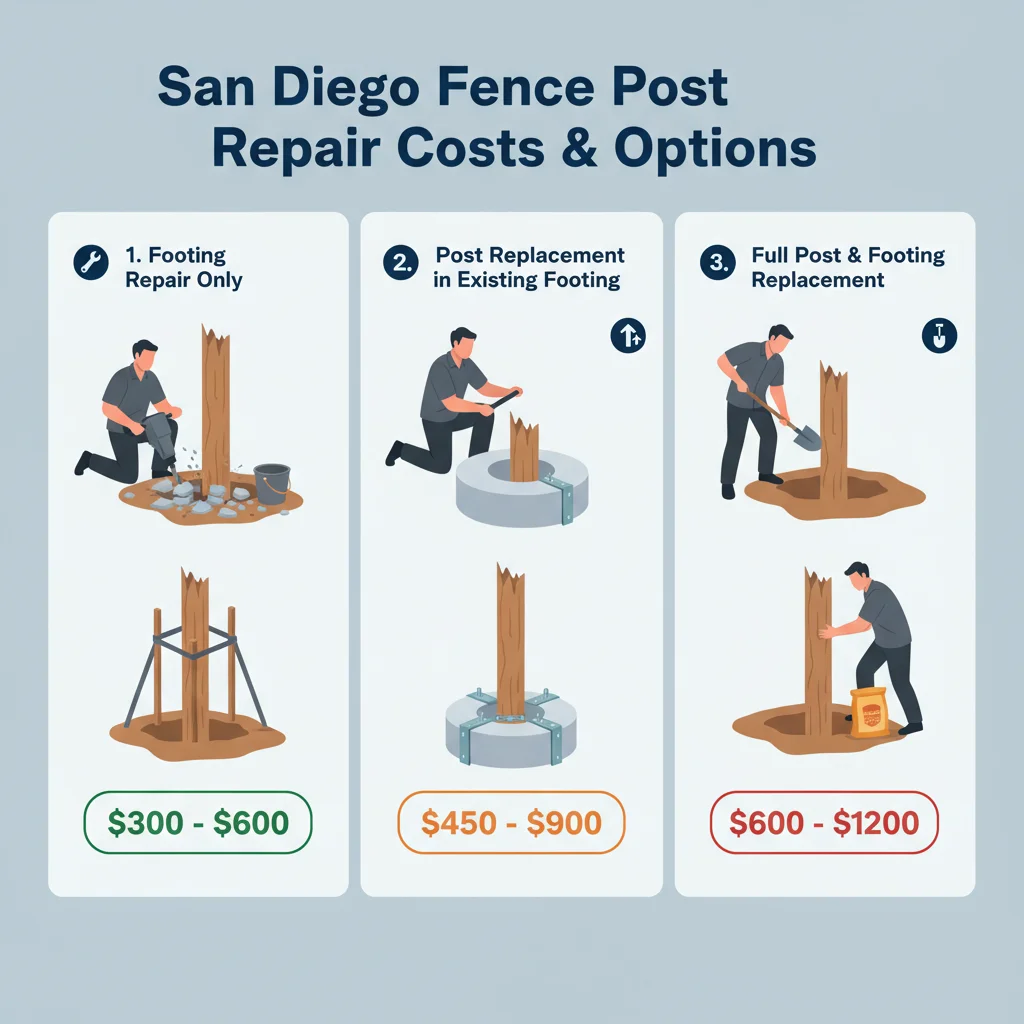
Infographic comparing costs and factors for repairing a fence post footing versus replacing a fence post in San Diego.

Preparing and installing the new post

Once the old wood is entirely removed, we clean out any debris from the existing concrete cavity. We then prepare the new fence post. For wood posts, we often treat the bottom end with a rot-resistant sealant or a specialized post-saver sleeve to extend its lifespan in the damp ground environment. We carefully set the new post into the clean, existing concrete base, ensuring it’s perfectly plumb using levels and temporary bracing. We then fill any gaps around the new post within the footing with fresh, fast-setting concrete or a specialized structural epoxy designed for this purpose. This secures the new post firmly in place.

Ensuring longevity and structural integrity

After the new material has cured, we remove the braces and conduct a final inspection. This method preserves the existing, stable concrete footing while replacing only the compromised wooden post. It’s a cost-effective and efficient solution for addressing ground-level rot, significantly extending the life of your fence without the need for a full re-dig and new footing pour. This specialized approach falls under our comprehensive fence repair services.

Cost to repair a fence post footing vs. a full post replacement

Understanding the potential costs involved is always a key consideration for homeowners. The expense of fixing a fence post issue can vary significantly depending on the nature and extent of the damage. Here’s a breakdown of the typical scenarios in San Diego:

Repairing a fence post footing

If the post itself is still in good condition, but the concrete footing has cracked, shifted, or loosened, repairing the footing is often the most economical choice. This process involves excavating the old, failed concrete, plumbing and bracing the existing post, and then pouring new, high-strength concrete to create a stable foundation.

  • Cost factors: The primary costs here are labor for excavation and concrete work, plus the materials (concrete, gravel).
  • Typical cost range: This is generally the least expensive option compared to a full replacement, as it avoids the cost of a new post and the more extensive work of removing an entire old post and footing system. Prices vary based on complexity, but you’re usually looking at a lower investment.

Replacing a rotted post in an existing concrete base

When the wooden post has rotted at ground level but the existing concrete footing remains structurally sound, we can often replace just the post. This involves carefully removing the old, rotted wood from the concrete and then setting a new post into the existing footing, securing it with new concrete or a specialized compound.

  • Cost factors: Labor for extracting the old post, the cost of the new post (wood, vinyl, etc.), and materials for securing it.
  • Typical cost range: This option falls in the mid-range. It’s more involved than a simple footing repair because of the precision required to remove the old post without damaging the existing footing, but it’s less costly than a full post and footing replacement.

Full fence post and footing replacement

This is the most extensive and typically the most expensive option. It’s necessary when both the post is severely damaged (rotted, split, broken) and the concrete footing has completely failed, cracked beyond repair, or is improperly installed. This involves removing the entire old post and its concrete footing, digging a new hole, and installing a brand-new post with a new concrete footing.

  • Cost factors: Significant labor for complete demolition and excavation, disposal of old materials, the cost of a new post, and materials for a new, deeper footing.
  • Typical cost range: This will be the highest cost option, reflecting the comprehensive nature of the work. Factors like the type of fence (wood, vinyl, chain link), terrain, and accessibility also influence the final price.

For an accurate estimate for your specific situation, a professional on-site assessment is always recommended. We can help you understand the extent of the damage and provide the most cost-effective solution. You can also check the Contractors State License Board website at cslb.ca.gov to verify any contractor’s license before you hire them.

When to call us

Dealing with a leaning fence or rotted posts can feel daunting, but it’s a repair best left to experienced professionals. We have the right tools, knowledge of San Diego’s specific soil challenges, and the expertise to ensure your fence is stable and secure for years to come. Don’t let a small lean turn into a major fence failure. Call us at (858) 925-5546 for a same-day estimate.