Most leaning fences in San Diego come down to one of four causes: post rot at the soil line, expansive clay pushing the footing sideways, tree root intrusion, or wind load from climbing plants on a shallow-set post. The right fix depends on which of those you have. Fence Pros San Diego is a referral service. We do not publish per-post repair rates, same-day promises, or post-life warranties.
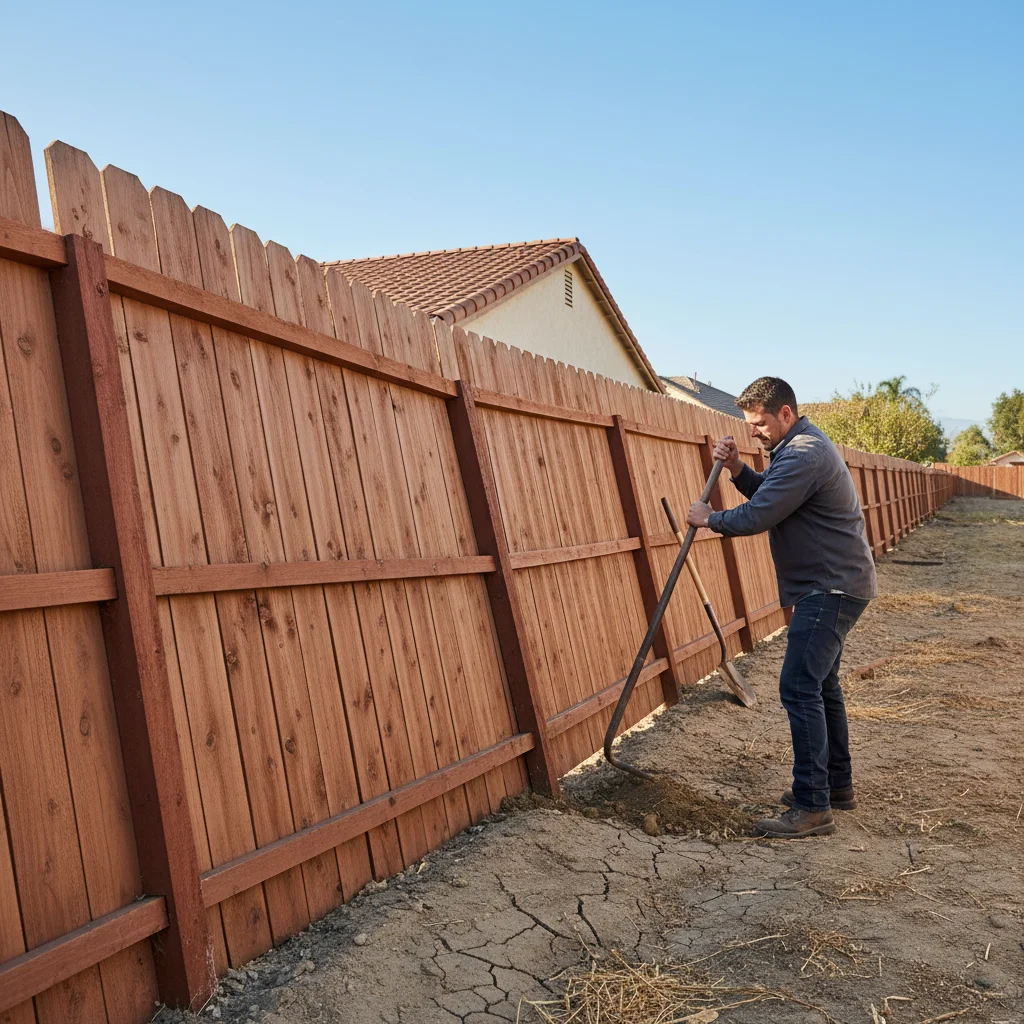
The four common causes of a leaning fence here
The climate is mild. The soil and the plants are not gentle on posts.
Post rot at the base. Wood posts sit in soil that cycles dry and damp, drought then a wet winter. Rot shows up at the soil line. The top of the post can look fine.
Expansive clay soil movement. Large parts of the county, including neighborhoods in East County, Chula Vista, and Santee, sit on clay that shrinks dry and swells wet. A thin or cracked concrete collar lets the post walk.
Tree root pressure. Roots under a footing crack concrete and lift or tilt one or two posts while the rest of the run stays straight.
Wind load from overgrown vegetation. Bougainvillea, jasmine, and other climbers add sail area. Posts in sandy coastal soil or shallow holes lose plumb.
That diagnosis tells you whether you need a reset, a new footing, root work, or a panel replacement.
Soil movement, root pressure, and post rot, how to tell which you have
You can sort most leans with three checks before you call.
The lean angle test
Stand back. A small lean (about a hand-width at the top of a 6-foot fence) can still be early. A hard lean usually means the post has lost contact with the footing or the soil.
The post wiggle test
Push at shoulder height, then pull. A post in sound concrete should barely move. If it rocks, the footing has cracked or the post has rotted out of it. Dig a couple of inches at the base and probe the wood. Soft, fibrous, dark material means rot in the structural section.
The soil moisture check
Bone-dry, cracked soil near the base suggests the collar shifted in a dry spell. Soil that stays wet long after rain is a drainage problem you should fix before you reset, or the next lean is already scheduled.
Wiggle plus solid wood: footing or soil. Wiggle plus soft wood: new post. Solid post, lean on one bay only: look for a root.
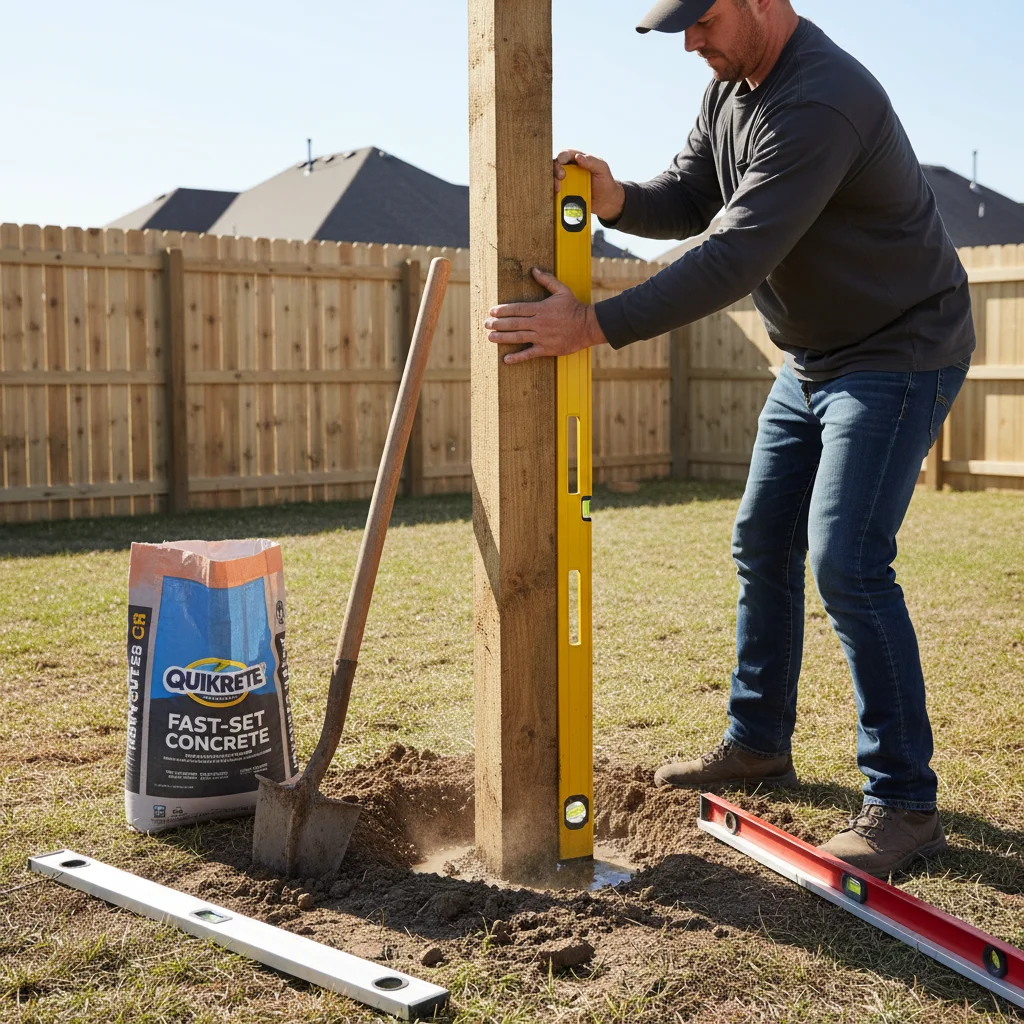
Quick stabilization vs full post replacement
Not every lean is a new post.
Reset in new concrete when the post is sound but the hole failed. Expose the base, pull loose soil and broken concrete, plumb the post, pour a real footing. Coastal sand often wants a wider collar and drainage, not a dab of patch. Fast-set mixes exist; structural depth still matters. County PDS 070’s wood-post notes recommend a 12-inch-diameter concrete footing at least 24 inches into undisturbed ground or compacted fill, over 3 inches of gravel, with the wood post through the concrete to the gravel. Those are County recommendations, not a City permit spec and not a timer on the bag.
Sister or steel repair when rot is limited to the very bottom and the rest of the post is sound. A steel repair bracket or a treated sister bolted on can stop the lean without a full pull. It is the wrong repair when more than the bottom section is gone.
Full post replacement when the wiggle test finds soft rot through the structural wood, a snap at grade, or roots that have wrecked the footing. Pull the old post and concrete, deal with roots, drill to a depth the contractor will write down, reset.
Fence post repair is the service page. The independent contractor you are matched with should pick the method that fits the wood, not the method that is fastest to invoice.
When to repair the post and when to replace the panel too
A new post does not square rotten rails.
If the lean was slow, boards may still be usable once the post is plumb and fasteners are replaced. Fence repair can include that when panel damage is minor.
Replace the panel too when:
- Rail rot has spread at the post. A new post on failing rails is a short delay.
- Many boards are cracked, cupped, or split. Piecemeal picket swaps have a limit.
- The lean tore fastener holes. Enlarged holes do not hold a re-nail.
Deeper split: fence post repair vs replacement.
What a fair repair quote looks like
A useful bid names: number of posts, reset vs replace, footing size, whether panels come off, root work, and haul-off. We will not print a San Diego per-post dollar band.
Red flags: no post depth in writing, or a patch compound sold as a structural footing. Check the contractor’s CSLB license at cslb.ca.gov before work starts.
Like-for-like post replacement on a residential fence often stays under the City’s 7-foot building-permit trigger and the County’s 6-foot exception, but changing height or location can change that. City Table 142-03A and County PDS 070 are the documents. County zoning information: County PDS.
Frequently asked questions
How much does leaning fence repair cost in San Diego?
It depends on reset versus full replacement, access, roots, and how many posts. Ask for those lines in writing. This page does not publish a rate.
What causes a fence to lean in San Diego specifically?
Post rot at the soil line from wet-dry cycling, expansive clay pushing footings, tree roots cracking collars, and extra sail from climbers on shallow or sandy posts.
Can a leaning fence be fixed without replacing the post?
Yes, if the wood is sound and the hole failed, or if rot is only at the very base and a sister or steel repair is appropriate. Soft structural wood means a new post.
How do I know if my fence post needs replacing or just resetting?
Wiggle test plus a probe at grade. Rock and solid wood: footing. Rock and soft, dark fiber: replacement. Fence post repair covers both.
Do I need a permit to fix a leaning fence in San Diego?
Like-for-like post work on a legal-height residential fence often does not trip a new building permit. Changing height, moving the line, or adding fence can. Confirm with the city or County desk.
How long should a wood fence post last in San Diego?
We do not print a year warranty. Treated posts in real concrete last longer than dry-set posts in farm soil. Coastal salt and expansive clay shorten the cheap version.
When to call us
A post that moves under a shoulder shove will not plumb itself. If the top has a clear lean, or the post gives when you push it, have a contractor look. Call (858) 400-4906 and we will match you with a pro. You hire that contractor.