Stockade is a construction style. Contractors use the word differently. What you get depends on picket spacing, grade, and species, not the name on the quote.
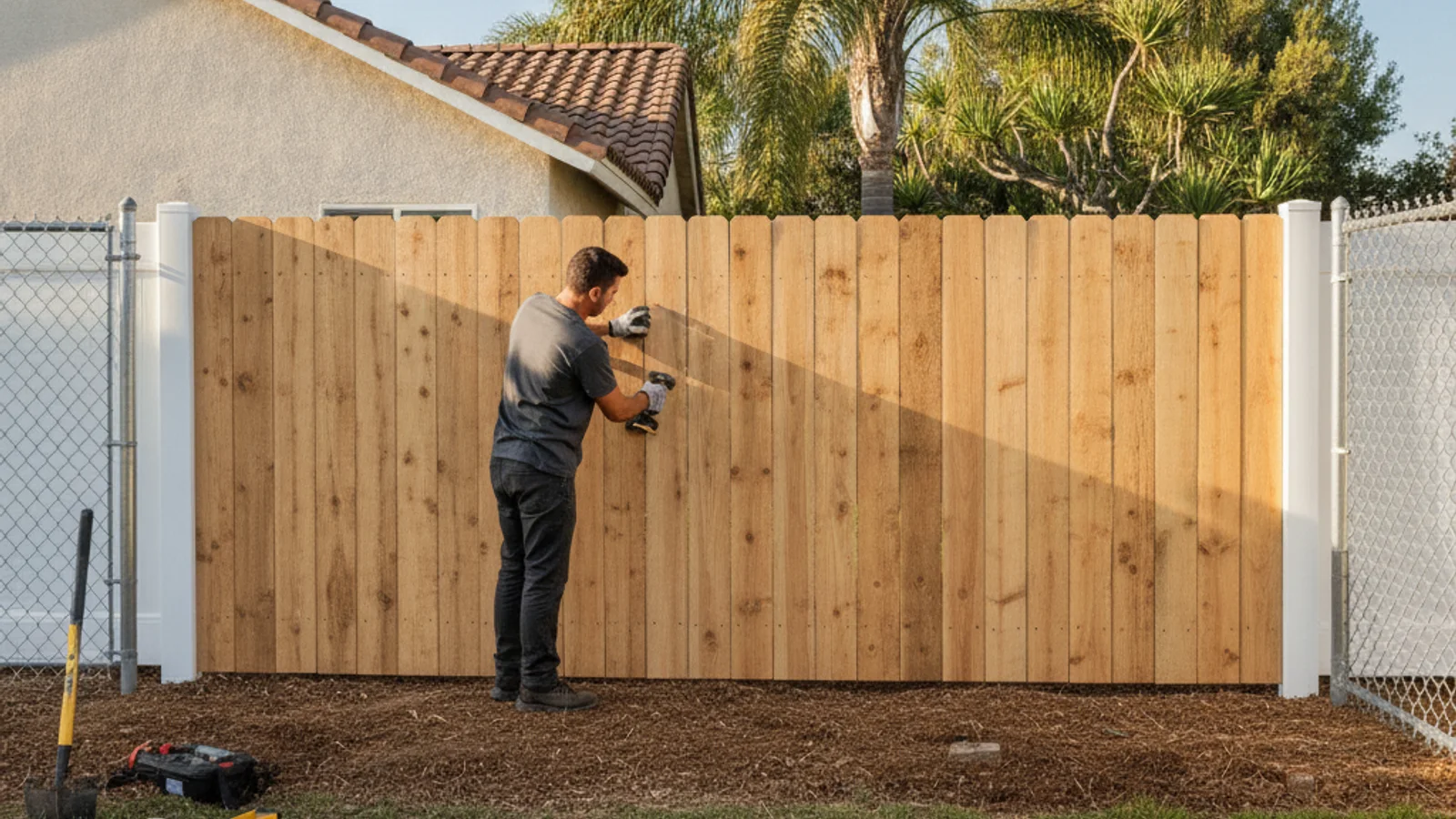
The name comes from old defensive log fencing. The modern version is flat-topped vertical pickets set edge to edge with little or no gap. It sits next to dog-ear and board-on-board. Privacy, wind, and whether an existing fence is worth repairing are the real comparisons.
Fence Pros San Diego is a referral service. It does not set prices or send crews.
How stockade construction differs from nearby wood styles
A stockade fence uses flat-topped pickets set tight against each other, usually with little or no gap, fastened to horizontal rails between posts. Dog-ear uses the same rail-and-post idea with angled corners on each picket. Board-on-board layers two rows so shrinkage gaps stay covered. Stockade is a single layer. That usually means less lumber than board-on-board. It also means less forgiveness when boards dry and a hairline opens.
What picket condition and spacing reveal about privacy
Privacy is the gap, not the label. A new edge-to-edge stockade can be nearly closed. The same fence years later may show slits after shrinkage. Walk the line in low sun. Even gaps across the run are often wood movement. Battens over seams can close them if posts and rails are still sound. Gaps in one section more often mean warped or damaged boards.
How wood species, grade, and finish shape the proposal
Stockade pickets use the same species conversation as other wood fences: cedar or redwood for decay resistance relative to untreated pine, or pressure-treated pine as a different budget line. Grade matters. Knot-heavy boards warp more. Finish is separate. Unfinished wood will gray. Stain holds color longer and needs reapplication. A quote that only says “stockade, cedar” is incomplete. Ask for grade and whether finish is included.
When repair may make more sense than full replacement
If posts are plumb and the problem is a run of warped or gapped pickets, a repair that replaces those boards may restore privacy. Full replacement is the conversation when posts have failed at the base, the line leans, or gaps and damage run most of the fence. Ask the independent contractor to inspect posts, rails, and pickets and to write retain / repair / replace by section. Fence Pros San Diego does not make that call on a photo.
If the fence divides two private lots, Civil Code 841 presumes equal reasonable cost unless you agree otherwise in writing. Give 30 days’ prior written notice before you incur shared-fence costs. Include the presumption, the problem, the proposed solution, estimated costs, the proposed split, and the timeline.
Height changes are a permit question. City Table 142-03A uses 7 feet for that division’s building-permit split. Unincorporated PDS 070 excepts qualifying fences not over 6 feet that also meet zoning.
A single checklist for comparing stockade proposals
Ask each bidder:
- Species and grade
- Picket spacing (edge-to-edge, or a named gap)
- Finish included or not
- Post size, spacing, and setting method
- How the layout handles wind on a solid face
- Removal and disposal of the existing fence
These details belong in writing. They should not hide inside a single total.
Choosing a layout for a sloped stockade run
A hillside stockade can step or follow the grade.
Stepped sections keep each rail level. The line drops at posts. The gap under the downhill end of a section grows. Graduated picket bottoms or extra screening may be needed near grade.
Racked construction tilts the rails with the slope. Pickets stay vertical. The bottom gap is usually more even. A sharp grade change may not rack cleanly. Ask for an elevation sketch before materials are ordered.
Water should not pond behind a tight board line. Leaves collect at low pickets. Decomposed granite in East County is not the same as clay closer to the coast. Ask how runoff crosses the line.
A solid stockade is a sail in Santa Ana winds. Do not pick step vs rack from looks alone. Ask how posts and gates sit on the grade. Coastal lots add salt to the hardware and finish talk.
Planning finish access along a shared property line
One face may be easy from your yard. The other may face a neighbor’s patio or side yard. Do not assume the contractor can enter that lot. Agree on access, pets, plants, and cleanup in writing before the proposal is final.
Boards can be coated before assembly when the far face will not be reachable later. After installation, both sides need working room if you stain in place. Spraying needs a containment plan.
Finish products differ: clear sealer, penetrating stain, solid coating. Ask which faces get product and how you will maintain them without entering the neighbor’s lot. Follow the product label for prep and weather. Coastal marine layer and inland East County heat are different application windows. The contractor should follow the label, not a generic calendar.
If both faces will be seen, confirm color with the neighbor. If they refuse access, write that limit into the scope.
Frequently asked questions
Is stockade the same thing as a privacy fence?
Stockade is one way to get a private face. Board-on-board and shadowbox are other constructions. “Privacy fence” is the goal. Stockade is a method.
How is stockade different from dog-ear fencing?
The picket top. Stockade is flat. Dog-ear has clipped corners. Rails and posts are otherwise similar.
Can gaps in an older stockade fence be fixed without full replacement?
Often, if posts and rails are sound. Battens or selected board replacement can close gaps. Widespread post failure is a different job.
When to call us
Call when you want a licensed C-13 to compare stockade repair vs replacement, including post condition and shared-line notice. Photos help. They do not replace a site visit.
Call us at (858) 400-4906 and we’ll connect you with a licensed fence contractor.