Treat the colony before you rebuild the wood. Subterranean termites are common in San Diego County. Fence posts in moist soil are an easy path. A C-13 can replace posts and panels. A pest-control company treats the insects. Fence Pros San Diego does neither. It refers you to independent fence professionals. It does not set repair prices or a “25 percent” replacement rule.
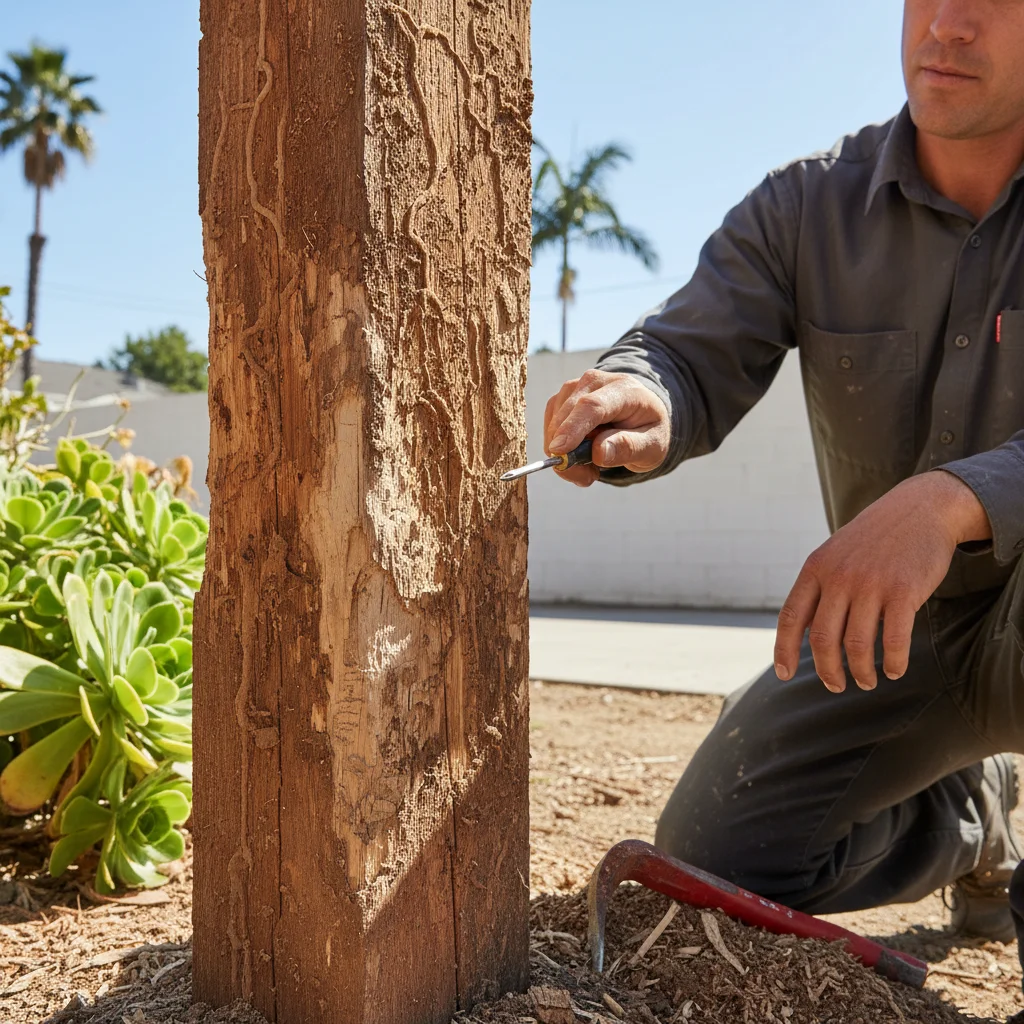
How to spot termite damage on fence posts and panels
Look for:
- Mud tubes. Pencil-thick tunnels of soil and wood bits from grade up the post. Subterranean termites use them as cover.
- Hollow sound. A screwdriver handle on solid wood thuds. Hollowed wood sounds empty.
- Galleries. If a board is already broken, look for channels with the grain, often with mud inside.
- Blistered or dark skin. A thin outer layer can hide an eaten core.
- Soft base. Probe the soil line. Spongy or crumbling wood is post failure, whether termite, rot, or both.
- Wings after rain. A swarm near the fence is a colony sign. It is not a fence spec.
Have a licensed pest company treat the source. Pest Pros San Diego is one local pest-control path. The fence contractor should not be your only call.
When a simple post or panel replacement is enough
Repair is the conversation when damage is limited and the rest of the line can still hold rails.
- One or two posts at a wet low spot, with neighboring posts solid
- A handful of pickets, with posts and rails still sound
- Pest control confirms activity was limited, and the remaining wood still takes fasteners
Ask for a labeled plan: which posts come out, whether footings come out, and how panels reattach. Fence post repair and fence repair are the referral pages. The independent contractor writes the scope. This brand does not.
Signs the whole run is the better comparison
Replacement is worth pricing when:
- Many posts along the same run are hollow, soft, or leaning
- Consecutive structural posts have failed
- The line sags because rails and posts both gave up
- Wood crumbles on a screwdriver in many places, so repairs would not hold fasteners
- You were already near a rebuild for other reasons (rot, wind failures) and termites are the last straw
There is no verified 25-to-30-percent or 15-year cutoff in the claims ledger. Count failed posts. Photograph them. Compare a section repair bid to a full wood fence bid for the same line.
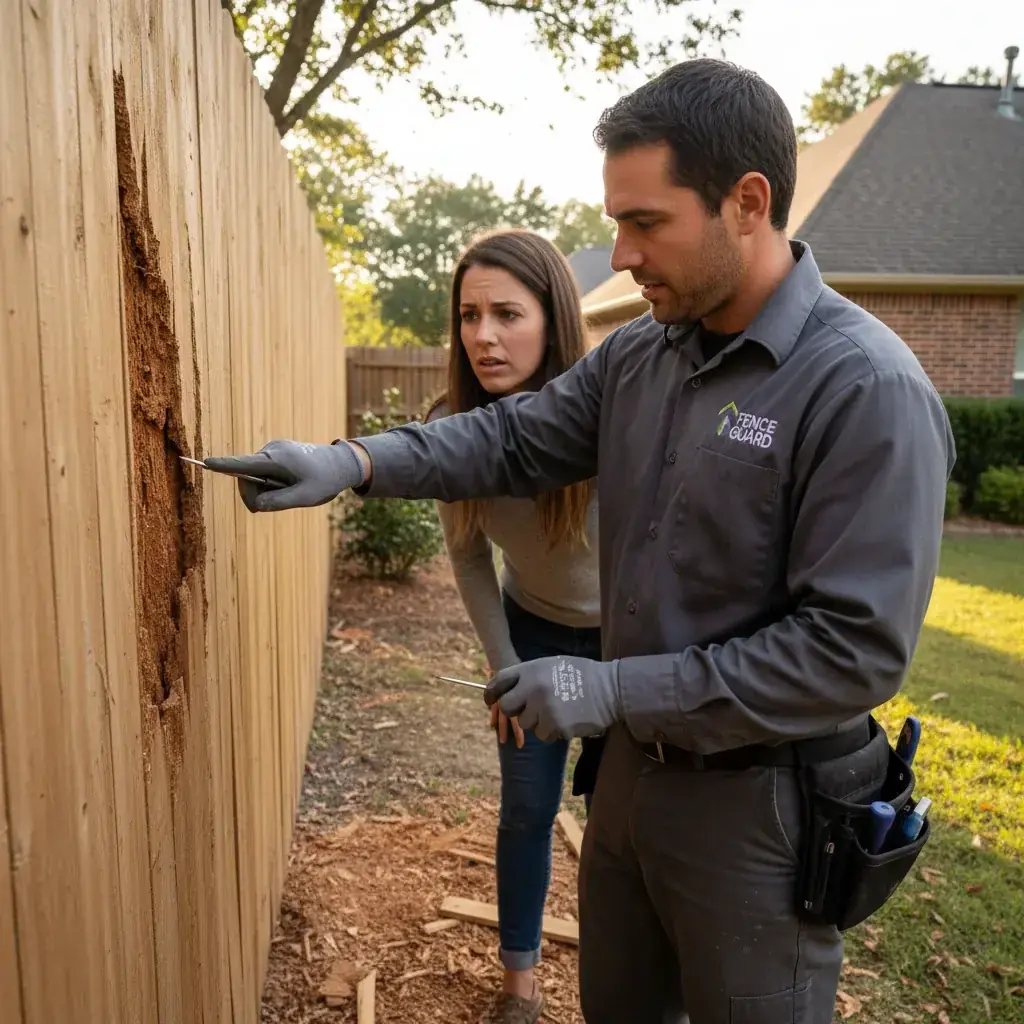
How to compare repair and replacement proposals
Fence Pros San Diego does not publish per-post or per-foot prices. Ask both bids to use the same photos and stationing.
Repair bids should name each post, the new post spec (including whether it is rated for ground contact), concrete, and reattachment. Replacement bids should name tear-down, disposal, height, species, gates, and slope. Coastal hardware is a separate note on Point Loma and Imperial Beach lots.
If the fence is a dividing fence between private owners, Civil Code 841 presumes equal reasonable cost unless you agree otherwise in writing. Give 30 days’ prior written notice before you incur shared-fence costs. Public agencies are not landowners under that section.
Permits: City Table 142-03A uses 7 feet for that division’s building-permit split. Unincorporated PDS 070 excepts qualifying fences not over 6 feet that also meet zoning. Same-height, same-line work is still not a countywide “no permit” letter. Confirm the desk. C-13 covers the fence. It does not replace pest control.
This page does not cite UC4B or UC4C as a verified fence-post code row. Ask the bidder what ground-contact rating they will use.
Frequently asked questions
How much does it cost to repair termite damage on a wood fence in San Diego?
This brand does not set prices. Compare itemized post-replacement and panel lines. If many posts fail, price a full replacement on the same drawing so you can see the overlap.
When should I replace my whole fence instead of repairing termite damage?
When enough structural posts have failed that a patch would still leave a weak line, or when pest treatment plus scattered repairs would rebuild most of the fence anyway. There is no verified percent trigger. Use the contractor’s section map.
Do I need a permit to replace a fence damaged by termites in San Diego?
Not as a blanket yes or no. City 7-foot building-permit split, County 6-foot PDS 070 exception, front-yard height, and pool barriers each change the desk. Confirm the address.
How can I tell if my fence posts have termite damage without taking them apart?
Tap, probe at grade, and look for mud tubes. Soft or hollow posts get photographed and numbered. That is inspection, not a lab report.
What wood is best for replacing a termite-damaged fence in San Diego?
Pressure-treated pine, cedar, and redwood are the usual bid options. Treated ground-contact posts matter more than a species slogan. Ask for the product, not a blog ranking.
Will termites come back after I repair or replace my fence?
They can if the colony was not treated or if new pressure returns. Keep soil and mulch off posts. Recheck for tubes. Pest control owns prevention. The fence job owns the wood.
When to call us
Call after pest treatment is underway or done, when you have photos of soft posts and want a licensed C-13 to compare repair vs replacement. Have the address and whether the line is shared.
Call us at (858) 400-4906 and we’ll connect you with a licensed fence contractor.