Choosing a new fence for your San Diego home often involves balancing aesthetics, durability, and cost. If you’ve been researching options, you’ve probably encountered composite fencing and wondered if its higher upfront price tag truly delivers long-term value. For homeowners in our unique climate, this is a valid question, and the answer might surprise you.
What composite fencing is (and how it’s different from vinyl)
Composite fencing is a modern marvel in the world of outdoor materials, engineered to offer the best of both worlds. It’s typically made from a blend of recycled wood fibers (often sawdust or wood flour) and recycled plastics (like polyethylene or polypropylene), along with bonding agents and additives for UV resistance and color stability. This unique composition results in a dense, durable material that looks and feels much like natural wood, but without the inherent drawbacks.
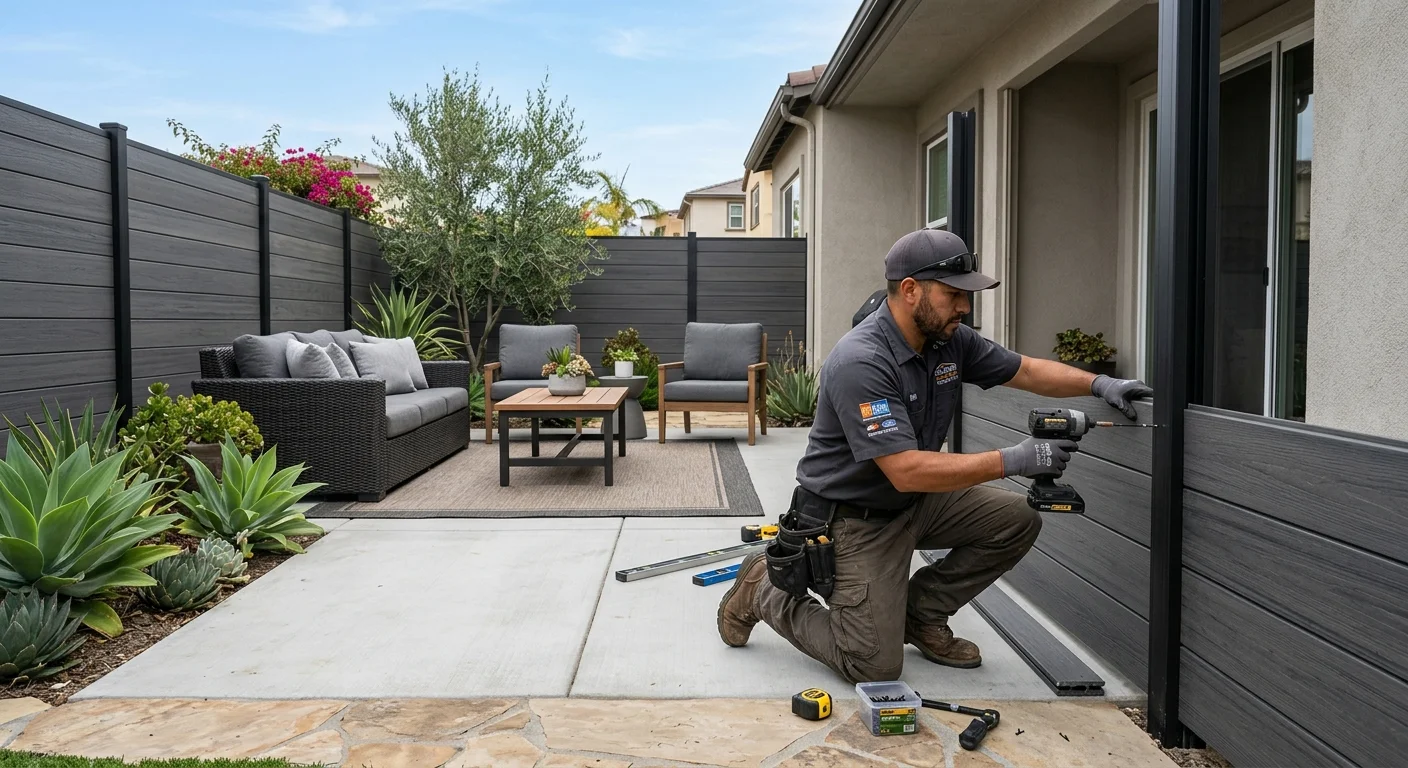
Unlike traditional wood fences, composite won’t rot, splinter, or attract termites – major concerns in San Diego’s climate. It doesn’t require painting, staining, or sealing, significantly reducing ongoing maintenance. The manufacturing process creates a consistent product that resists warping and cracking, providing a uniform appearance that lasts for decades. When you invest in a new fence, especially for a large property, these benefits quickly add up. For quality installation, consider our expert fence installation services.
Composite vs. vinyl: understanding the key distinctions
Many people confuse composite fencing with vinyl fencing, but they’re fundamentally different. Vinyl fencing is made entirely of plastic, typically PVC (polyvinyl chloride). It’s often hollow inside, making it lightweight and relatively flexible. While vinyl is also low-maintenance and resistant to rot, it has a distinct “plastic” look and feel that some homeowners find less appealing. Vinyl can also become brittle over time, especially in extreme temperatures, and may show chalking or discoloration.
Composite fencing, on the other hand, boasts a more substantial, solid feel due to its wood fiber content. This gives it a natural warmth and texture that closely mimics real wood, often with embossed grain patterns. It’s heavier and denser than vinyl, offering superior sound dampening and a more robust presence. While both are excellent low-maintenance choices, composite offers a premium aesthetic and a feel that’s closer to wood, making it a distinct choice for those prioritizing a high-end look without the upkeep.
Pros and cons in San Diego’s sun and coastal air
San Diego’s climate, with its abundant sunshine, occasional coastal fog, and saltwater air near the ocean, presents unique challenges for outdoor materials. Composite fencing is particularly well-suited for these conditions, but it also has a few considerations to keep in mind.
The advantages of composite fencing in San Diego
- Exceptional Durability: The blended material resists moisture, rot, and decay, which is critical in coastal areas where humidity and salt exposure can degrade wood quickly. It’s also impervious to termites, a common and costly problem for wood fences across San Diego County.
- Superior UV Resistance: Modern composite fences are engineered with UV inhibitors that significantly reduce fading and chalking from our intense San Diego sun. While some initial color mellowing might occur, the color remains stable for years, maintaining its aesthetic appeal much better than unprotected wood.
- Minimal Maintenance: This is perhaps the biggest draw for busy San Diego homeowners. Forget the annual scraping, sanding, staining, or painting that wood fences demand. A simple wash with soap and water is usually all it takes to keep a composite fence looking great.
- Long-Term Value: While the initial investment is higher, composite fences often come with extensive warranties (20-25 years or more), reflecting their expected long lifespan. This translates to decades of worry-free privacy and curb appeal.
- Environmentally Friendly: Many composite brands use a high percentage of recycled materials, making it a greener choice for those conscious of their environmental footprint.
- Premium Aesthetic: With a wide array of colors and textures, composite can replicate the sophisticated look of exotic hardwoods or classic cedar, adding significant curb appeal to your San Diego property. It avoids the “plastic” look many homeowners fear.
Considerations for composite fencing
- Initial Cost: This is the primary hurdle. Composite fencing usually has a higher upfront material and installation cost compared to pressure-treated pine or even cedar.
- Heat Retention: Like many dense materials, composite can absorb and retain heat, potentially feeling hotter to the touch than wood on a very warm San Diego day. However, this rarely affects its performance or longevity.
- Weight: Composite panels are heavier than vinyl or many wood types, requiring robust post installations to ensure stability, especially in windy conditions. This adds to installation labor.
- Thermal Expansion: Composite materials can expand and contract slightly with significant temperature fluctuations. Manufacturers design for this with specific gapping requirements between boards, which must be followed during installation to prevent buckling.
- Repairs: While durable, if a composite panel is severely damaged, it can be harder to patch or repair seamlessly than a wood board. Often, the entire damaged section or panel needs replacement.
The real cost of composite vs. wood over 15 years
When considering composite fencing, it’s easy to get fixated on the higher upfront purchase price. However, this is just one piece of the puzzle. To truly understand its value, you need to look at the total cost of ownership over the fence’s lifespan, especially when comparing it to traditional wood. For a deeper dive into material choices, you might also find our article on wood fence vs vinyl fence helpful.
Let’s break down the economics over a typical 15-year period for a fence in San Diego:
Initial installation cost
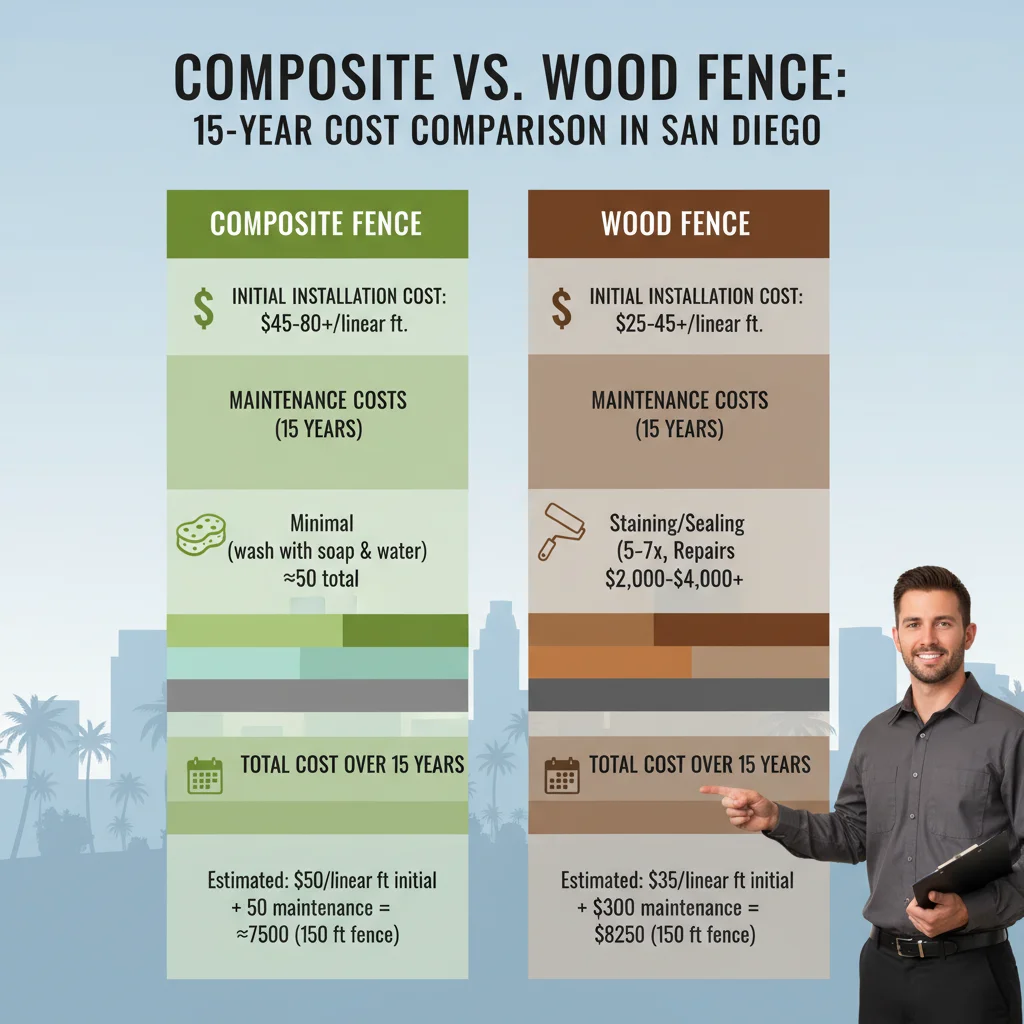
- Wood Fence: Generally, wood fencing (like cedar or redwood, which are popular in San Diego) has a lower initial material and installation cost. You might pay anywhere from $25-$45 per linear foot for a quality wood fence.
- Composite Fence: Composite fencing material is more expensive to manufacture, and its installation can be more labor-intensive due to weight and specific gapping requirements. Expect to pay $45-$80+ per linear foot for composite.
At first glance, wood seems like the clear winner. But this is where the long-term perspective becomes crucial.
Ongoing maintenance costs (over 15 years)
This is where composite fencing truly shines and often overtakes wood in overall affordability.
-
Wood Fence Maintenance: To maintain a wood fence in San Diego’s climate, you’ll need regular attention:
- Staining/Sealing: Every 2-3 years, a wood fence needs cleaning, sanding (sometimes), and re-staining/sealing to protect against UV damage, moisture, and rot. This can cost $5-$10 per linear foot each time, or significant DIY time and material costs. Over 15 years, this could be 5-7 applications.
- Repairs: Wood fences are prone to warping, cracking, splintering, and pest damage (especially termites). You’ll likely incur costs for replacing boards, posts, or sections over 15 years.
- Total Wood Maintenance (15 years): Factor in thousands of dollars for materials and labor for staining/sealing, plus potential repair costs.
-
Composite Fence Maintenance:
- Cleaning: Periodic washing with soap and water to remove dirt or mildew. Negligible cost, minimal time.
- Repairs: While rare, if a panel is damaged, replacement cost might be higher, but the frequency of damage or wear is much lower.
- Total Composite Maintenance (15 years): Essentially zero for traditional maintenance. Any costs would be for accidental damage.
Expected lifespan and replacement
- Wood Fence: Even well-maintained wood fences in San Diego typically last 15-20 years, sometimes less if exposed to harsh conditions or neglect. You might be looking at a full replacement around the 15-20 year mark.
- Composite Fence: With warranties often extending to 25 years or more, a composite fence is built to last significantly longer. You’re unlikely to need a full replacement within 15-20 years.
When you factor in the repeated costs of maintenance and the potential for earlier replacement, composite fencing’s higher upfront cost often evens out or even becomes more economical than wood over 15 years. It’s an investment that pays for itself in time saved, reduced labor, and sustained aesthetic appeal.
Popular brands and styles that work well here
San Diego homeowners appreciate both functionality and style, and composite fencing delivers on both fronts. Modern composite manufacturers have made incredible strides in creating products that are not only durable but also incredibly attractive, offering a wide range of looks that integrate beautifully with diverse architectural styles, from craftsman to contemporary. The days of “plastic-looking” fences are long gone.
Leading composite fence brands
While many brands specialize in composite decking, some have robust fencing lines that are ideal for San Diego:
- Trex Seclusions® Fencing: Trex is a household name in composite decking, and their fencing line carries the same reputation for quality. Trex Seclusions offers a unique interlocking picket design for full privacy, a sturdy structure, and a deep wood-grain aesthetic. It’s available in several natural-looking colors that hold up well to UV exposure and salt air.
- Fiberon Fencing: Known for their innovative composite decking, Fiberon also offers fencing solutions. Their products are designed for durability and low maintenance, often featuring multi-chromatic colors that mimic the subtle variations of real wood.
- CertainTeed® Bufftech®: While primarily known for vinyl products, Bufftech also offers composite-like alternatives that combine the benefits of advanced polymers with wood-look aesthetics, providing a blend of durability and design versatility.
When choosing a brand, look for those that offer strong warranties against fading, warping, and material defects, especially relevant for our sunny San Diego climate.
Popular styles and aesthetics for San Diego
Composite fencing adapts to many design preferences, allowing homeowners to achieve their desired look without sacrificing performance.
- Full Privacy Fences: The most common style, offering complete seclusion and security. Composite privacy fences often feature tongue-and-groove or interlocking panels that leave no gaps, ideal for backyards and pool areas. They provide excellent sound dampening and create a solid, substantial boundary.
- Horizontal Fencing: This modern design choice has gained immense popularity in San Diego. Composite boards installed horizontally create a sleek, contemporary look that can make smaller yards feel larger and provide a sophisticated backdrop to landscaping.
- Semi-Privacy Fences: For those who want some airflow or visual interest while maintaining a degree of privacy, semi-privacy designs incorporate small gaps between pickets. This style can be excellent for front yards or garden areas.
- Board-on-Board and Shadow Box: These classic wood fence styles are now beautifully replicated in composite. Board-on-board offers complete privacy with overlapping pickets, while shadow box creates a visually appealing “good neighbor” fence that looks the same from both sides.
- Colors and Textures: Modern composite fences come in a rich palette of colors, from deep charcoal grays and dark browns to warmer cedar and redwood tones. Many feature embossed wood grain patterns that are nearly indistinguishable from natural timber, providing a high-end, organic look that blends seamlessly with San Diego’s natural beauty and architecture.
Whether you’re aiming for a sleek, minimalist aesthetic or a more traditional, warm wood feel, composite fencing offers a durable, low-maintenance solution that enhances your home’s curb appeal and withstands San Diego’s environmental demands.
When to call us
If you’re considering a composite fence for your San Diego property, or if you’re still weighing the pros and cons against other materials like wood or vinyl, our team is here to help. Installing a composite fence correctly requires specific expertise to ensure its longevity and proper performance, particularly with thermal expansion and structural support. Call us at (858) 925-5546 for a same-day estimate.