A widening gap between a vinyl panel and its post needs a closer look. The loose rail may be the obvious problem, but shifted posts, nearby gate loads, or changes along the grade may also matter.
What loose rails, shifted posts, and panel movement can indicate
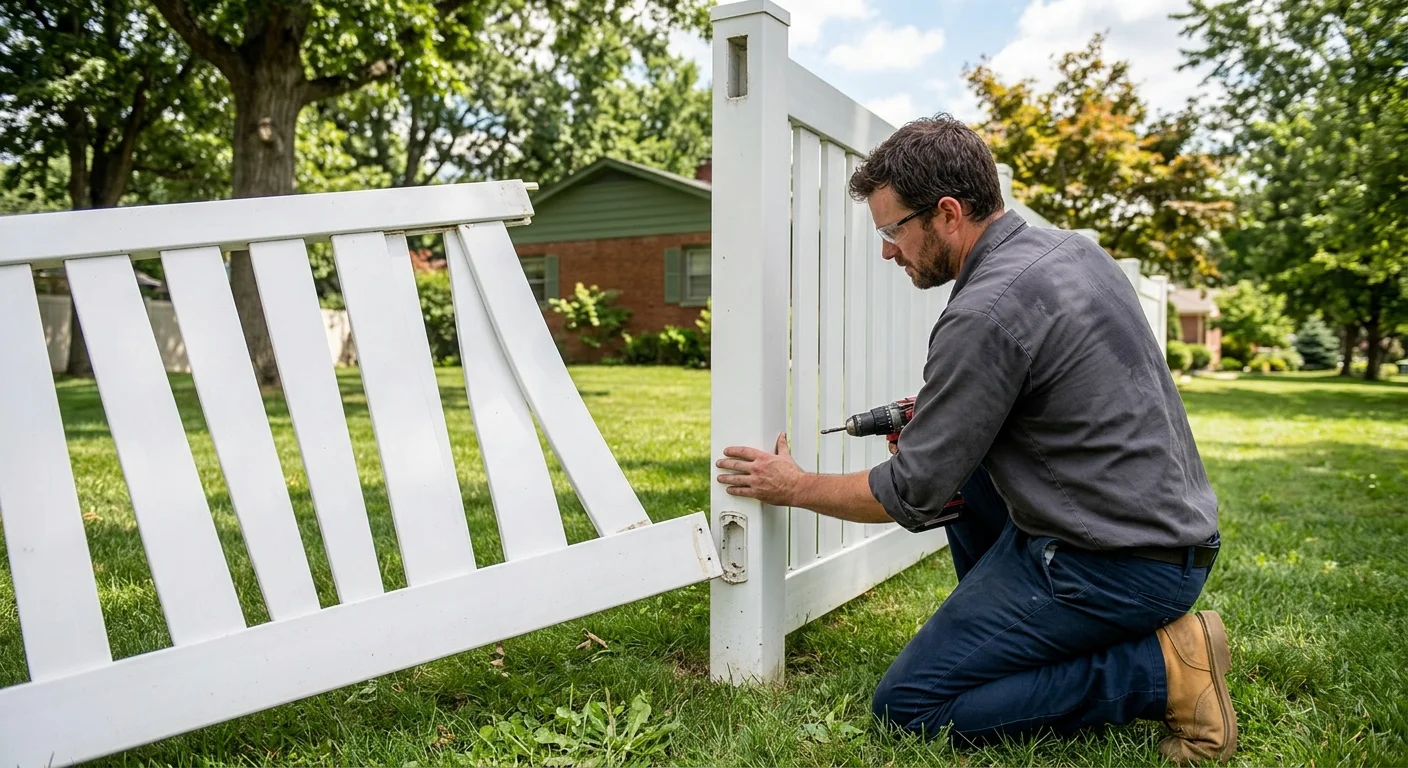
Vinyl fence panels separating usually means part of the connected section has moved. The key question is which part moved first. A contractor may inspect the loose rail, both posts, the panel pieces, and the next sections before suggesting a repair.
Many vinyl fence systems place horizontal rails inside openings in the posts. The exact connection varies by product. Some rails have tabs, notches, brackets, or other retaining parts. A rail that came loose may have slipped from its opening. It may also have a damaged end that no longer stays seated.
The visible gap doesn’t always identify the source. A post may look upright from the patio while leaning along the fence line. A panel may also appear uneven because one rail moved farther than the other. Sightlines from both sides help separate a connection problem from movement across the section.
The contractor may check whether:
- The upper and lower rails remain fully seated
- A rail end has cracked, bent, or lost its retaining feature
- The panel pieces still sit correctly between the rails
- Either post has shifted toward or away from the panel
- The post openings remain intact
- The post cap or trim hides damage near the connection
- Nearby sections show similar gaps or uneven spacing
Movement across several sections deserves a broader assessment. A single loose connection suggests a different repair path than several panels pulling apart in sequence. Our fence repair service can connect you with a local contractor who can inspect the full run and explain which parts appear involved.
How grade changes and gate loads affect nearby sections
A fence section depends on the position of the posts at both ends. When those posts no longer hold the same relationship, the rails may stop sitting squarely inside their openings. The panel can then shift even when its center pieces look undamaged.
Grade changes make that relationship easier to misread. On a sloped yard, sections may step down or follow the grade, depending on the fence design. A contractor first identifies which layout was intended. That matters because an intentional offset shouldn’t be mistaken for separation.
Consider a stepped side yard in El Cajon or a fence crossing a terraced lot elsewhere in East County. The useful comparison is between the loose section and the sections beside it. Matching gaps, rail angles, and post spacing can show whether the movement is isolated or follows the grade.
A nearby gate adds another diagnostic question. Gates place their working load on posts and hardware rather than on a fixed panel alone. If a loose panel meets a gate post, the contractor may inspect the gate opening, hinge side, latch alignment, and adjoining rail connections together. A gate that no longer lines up can be an important clue, but it doesn’t prove which component moved first.
Don’t force a loose rail back into place before documenting the gap. That can hide the original alignment and make the assessment harder. Take clear photos first, then limit unnecessary movement around the section.
For context on how posts, rails, and panels are arranged during a project, see our San Diego vinyl fence installation guide. It explains the larger installation sequence without treating every loose panel as a new-build problem.
When parts can be reset and when replacement may fit
A separated panel doesn’t automatically mean the entire fence needs replacement. It also doesn’t guarantee that pushing the rail back into its opening will solve the problem. The contractor needs to determine whether the parts can still hold their intended positions.
Resetting may fit when the rail and post opening remain usable, the panel still matches the surrounding sections, and the underlying alignment can be restored. The contractor may also look for missing or damaged connection pieces specific to that fence system. The proposed work should address why the panel moved, not only close the visible gap.
Replacement may make more sense when a rail end can’t stay engaged, a post opening is damaged, or the panel pieces no longer sit correctly. The scope could involve one component, one section, or more of the run. That decision should follow an inspection rather than a conclusion drawn from one front-facing photo.
Post damage belongs on a separate diagnostic path. A contractor may compare movement at the base with movement near the rail openings. If the post itself is the concern, our guide to repairing or replacing a damaged vinyl fence post explains what separates those choices.
Before approving replacement, ask the contractor to identify the failed part in plain terms. Useful questions include:
- Did the rail leave an intact opening?
- Is the rail end still shaped to lock into place?
- Has either post changed position?
- Does the adjacent section need correction?
- Can the existing profile still be sourced?
- Will the replacement look different from the older fence?
Fence Pros San Diego doesn’t choose the repair, set its price, or perform the work. We match homeowners with licensed, independent local fence contractors. The homeowner contracts with and pays the selected contractor directly.
How pros match profiles and colors on an existing fence
“White vinyl” isn’t a complete parts description. Existing fences can differ in rail shape, panel construction, post size, surface texture, cap style, and connection design. A close visual match can still be mechanically incompatible.
A contractor starts with the profile. That means examining the rail from the end, measuring its outside shape, and checking how it meets the post. The opening in the post matters too. A replacement rail needs to fit the existing connection rather than merely resemble it from the yard.
Panel construction also affects the search. A privacy panel with interlocking pieces differs from a picket section or a fence with decorative openings. The contractor may need photos of the entire section and close views of individual parts. Any labels, markings, receipts, or leftover pieces can help identify the original product.
Color matching requires the existing fence to be viewed in place. A new component and an older section may not look identical, even when their listed color names match. Light, dirt, surface condition, and changes in the existing material’s appearance can influence the comparison. The contractor can show where a difference may remain visible before parts are ordered.
That discussion is especially useful on prominent sections facing a driveway, patio, or street. A less visible side-yard section may leave more room for a practical match. Browse our vinyl fence service page for the styles and project types a matched contractor can discuss with you.
What photos help a contractor assess the repair
Good photos won’t replace an on-site inspection, but they can make the first conversation more useful. Start with context. Then move closer to the connection that has separated.
Take photos from both sides when you can do so from your property or with the other owner’s permission. Include:
- The entire loose section from post to post
- One wider view showing the sections on both sides
- The upper rail where it meets each post
- The lower rail where it meets each post
- The exposed end of any rail that came free
- The post opening without moving or removing more parts
- The base of both posts
- Any cracked, bent, or missing component
- The nearest gate and its alignment, if applicable
- A matching intact connection elsewhere on the fence
- Any product label or marking already visible
A straight view down the fence line can help show whether posts sit out of alignment. Another photo taken perpendicular to the panel makes the size of the gap easier to understand. If the section crosses a slope, include the ground and the tops of several nearby panels.
Note what you observed without diagnosing it. Tell the contractor whether the gap appeared suddenly or gradually, whether the panel moves when touched lightly, and whether a nearby gate also changed position. Don’t guess at the manufacturer if you don’t know it.
San Diego County covers many distinct settings, from coastal North County to central San Diego, East County, and the South Bay. Include your city or community when requesting a match. That gives the contractor clear location context without assuming that every separated panel has the same cause.
When to call us
Call when a rail won’t stay seated, several panels are moving, a post appears shifted, or the loose section meets a gate. Call us at (858) 400-4906 and we’ll connect you with a licensed fence contractor.