A vinyl fence post that’s cracked at the base or visibly leaning usually needs more than a patch, but not always a full replacement. The right call depends on where the damage is, what caused it, and whether it’s an end post or one buried in the middle of a run.
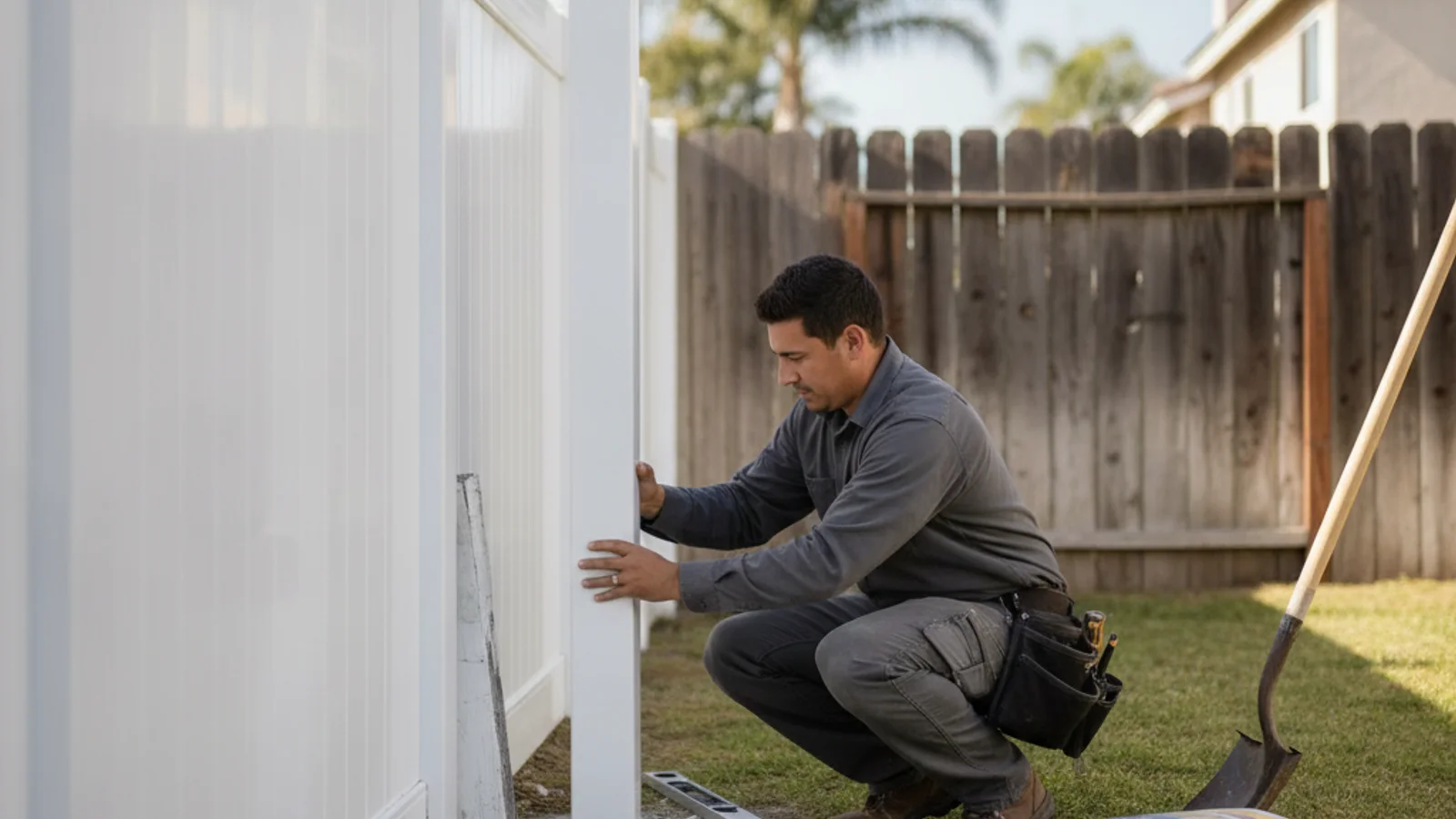
Vinyl holds up well against San Diego’s sun compared to painted wood, but it isn’t immune to failure. Impact damage, years of UV exposure on a south or west-facing fence line, a footing that’s cracked underground, or wind racking during a Santa Ana event can all leave a post compromised in ways that aren’t obvious from a quick look.
What’s actually going wrong with the post
Vinyl fence posts fail in a handful of predictable ways. A direct impact, a car backing into a corner post, a falling tree limb, a mower clipping the base, cracks the material outright, usually in a visible split near ground level. UV embrittlement is slower and less obvious: vinyl that’s spent years facing south or west absorbs more direct sun than a north-facing run, and over time the plastic loses flexibility and turns brittle. A post like that can crack from wind load alone, with no impact involved at all.
A failed footing looks different. The post itself may be undamaged, but if it leans as a unit, tilting from the base rather than bending or cracking partway up, the problem is underground: the concrete collar has cracked or shifted, often from San Diego’s expansive clay soil swelling and shrinking with the seasons. Wind racking shows up as a post that wobbles at the top when you push the adjoining panel, even though it looks straight standing still. Each of these points to a different fix, so the diagnosis matters more than the symptom.
Why a mid-run post is a harder call than an end post
An end post or a corner post carries less structural load and connects to fewer panels, so replacing it in isolation is relatively contained work. A post in the middle of a long run is different. It’s holding two panels in tension, often tied into the posts on either side through the top and bottom rails, and pulling it out to replace it can shift the alignment of everything connected to it.
That’s part of why a mid-run replacement sometimes turns into a two-post or three-post job even when only one post actually failed. A fence pro assessing the damage will usually check the posts immediately adjacent before quoting the repair, since a post that looks fine next to a damaged one may already be under uneven load.
When reinforcement works, and when it doesn’t
Some vinyl post damage can be reinforced rather than replaced outright. An internal insert, typically an aluminum or galvanized steel sleeve dropped into the hollow vinyl post and set in fresh concrete, can restore rigidity to a post that’s cracked above the footing line but still structurally attached. This works best on posts with a single, contained crack and no sign of the vinyl having gone brittle across the whole section, and it’s the kind of targeted fence post repair that’s usually faster and less disruptive than pulling the whole post.
Reinforcement is the wrong call when the crack runs through a load-bearing connection point, like where the rail bracket attaches, when the vinyl shows the chalky, faded texture that signals UV embrittlement across a wide area, or when the footing itself has failed and the post is out of plumb. In those cases, a sleeve or splice treats the visible symptom without fixing the underlying problem, and the post is likely to fail again, sometimes faster than it did the first time, because the reinforced section is now stiffer than the vinyl around it.
How a splice repair differs from a legitimate fix
A splice, cutting out the damaged section of post and joining a new piece of matching vinyl in its place, is a legitimate repair only when the manufacturer’s product line supports it with a compatible splice sleeve or connector designed for that purpose. A splice improvised with adhesive or a generic coupling isn’t a repair a fence pro would typically stand behind, since vinyl expands and contracts with temperature and an unsupported joint tends to separate again within a season or two.
Matching posts, rails, and panels across manufacturers
Vinyl fence systems are largely proprietary. Rail thickness, groove width, and cap design vary between manufacturers, and even between product lines from the same manufacturer. A replacement post from a different line can look close in the yard but not actually accept your existing rails without extra hardware, or at all.
This is the point where vinyl fence installation knowledge matters more than it seems like it should for what looks like a simple post swap. A fence pro who’s matched to the job will usually try to identify the original manufacturer, sometimes from a stamp on the post itself, before ordering a replacement. Our guide to vinyl fence installation in San Diego covers how that system fits together from the ground up if you’re weighing a full section replacement instead.
Where the manufacturer’s warranty fits in
Most vinyl fence products carry a manufacturer’s warranty against cracking, warping, or fading under normal conditions, and that warranty belongs to the manufacturer, not to whoever installed the fence or matched you with an installer. If your post failed from a clear defect rather than impact, wind, or age, it’s worth checking the product documentation or the manufacturer’s site for the claims process before paying for a full replacement out of pocket. Impact damage, footing failure, and normal UV aging are typically outside what any manufacturer’s warranty covers, since those aren’t manufacturing defects.
Frequently asked questions
Can a cracked vinyl fence post be repaired without replacing it?
Sometimes. A single, contained crack above the footing line can often be reinforced with an internal sleeve. A crack through a rail connection, widespread brittleness, or a failed footing usually means replacement is the more durable fix.
Why did my vinyl fence post crack with no visible impact?
Years of direct sun on a south or west-facing fence line can make vinyl brittle enough to crack under normal wind load. A post that’s spent a decade facing full sun ages differently than the same post on a shaded, north-facing run.
Is replacing one vinyl fence post in the middle of a run more expensive than an end post?
It’s typically more involved, since a mid-run post carries two connected panels instead of one, and the posts on either side sometimes need to be checked or adjusted for the fence to stay aligned. The scope depends on the specific fence, which is why an in-person assessment matters more than a quote based on a description alone.
Does the manufacturer’s warranty cover a vinyl post that failed from wind or impact?
Usually not. Most manufacturer warranties cover material defects like cracking or fading under normal use, not damage from impact, storms, or a footing that failed underground. Check your specific product’s warranty terms, since coverage varies by manufacturer.
When to call us
A leaning or cracked vinyl post is worth a professional look before you decide between a sleeve, a splice, or a full replacement, especially if it sits in the middle of a run. Have the fence’s approximate age, any manufacturer markings you can find on the post, and photos of the damage ready when you reach out. Call us at (858) 400-4906 and we’ll connect you with a licensed fence contractor.