For most San Diego backyards, horizontal cedar or redwood slat fences are the strongest choice, offering privacy, a look that complements both mid-century and modern home styles, and enough natural durability to handle the county’s range of climates. Coastal yards in La Jolla or Del Mar do better with vinyl or stainless-steel-hardwared wood to resist salt air, while inland areas like Poway and Escondido call for UV-stable finishes. Knowing your microclimate and your home’s architecture narrows the options fast, and the ideas below cover the most common San Diego scenarios.
What works in coastal vs inland San Diego backyards
San Diego County is really two climates in one. A fence that thrives in Point Loma might struggle in Poway. Understanding your specific microclimate is the first step to choosing a fence that lasts.
Coastal Yards (La Jolla, Del Mar, Carlsbad)
Along the coast, your biggest enemies are salt and moisture. The constant marine layer and salt-laden air can quickly corrode metal and encourage rot in untreated wood.
- Materials are key: Vinyl is an excellent choice for coastal areas. It’s impervious to salt and moisture and won’t rust or rot. If you love the look of wood, you need to be selective. Redwood and cedar have natural resistance to rot and insects, but the hardware is just as important. Always insist on stainless steel or hot-dip galvanized nails, screws, and brackets to prevent rust streaks and structural failure.
- Design for airflow: A solid wall-like fence can trap moisture. Consider styles with small gaps, like a shadowbox or a lattice-top design, to allow for air circulation. This helps the fence dry out and reduces the risk of mold or mildew.
Inland Yards (Poway, Escondido, Santee)
Move a few miles inland and the challenges change. Here, the primary concerns are intense sun, high heat, and dry conditions.
- Beat the heat: The relentless UV rays can break down wood fibers and fade stains quickly. A high-quality penetrating stain with UV inhibitors is essential for any wood fence installation. Re-staining every few years will be necessary to protect your investment. Vinyl fences also do well here, but choose a quality product with titanium dioxide for UV protection to prevent yellowing and brittleness.
- Fire safety: For homes near canyons or open spaces, consider fire-resistant materials. While no fence is truly “fireproof,” materials like vinyl, composite, and metal are less combustible than wood. Some homeowners opt for a stucco wall or a combination of masonry and wood for added protection.
Drought-tolerant landscaping paired with the right fence
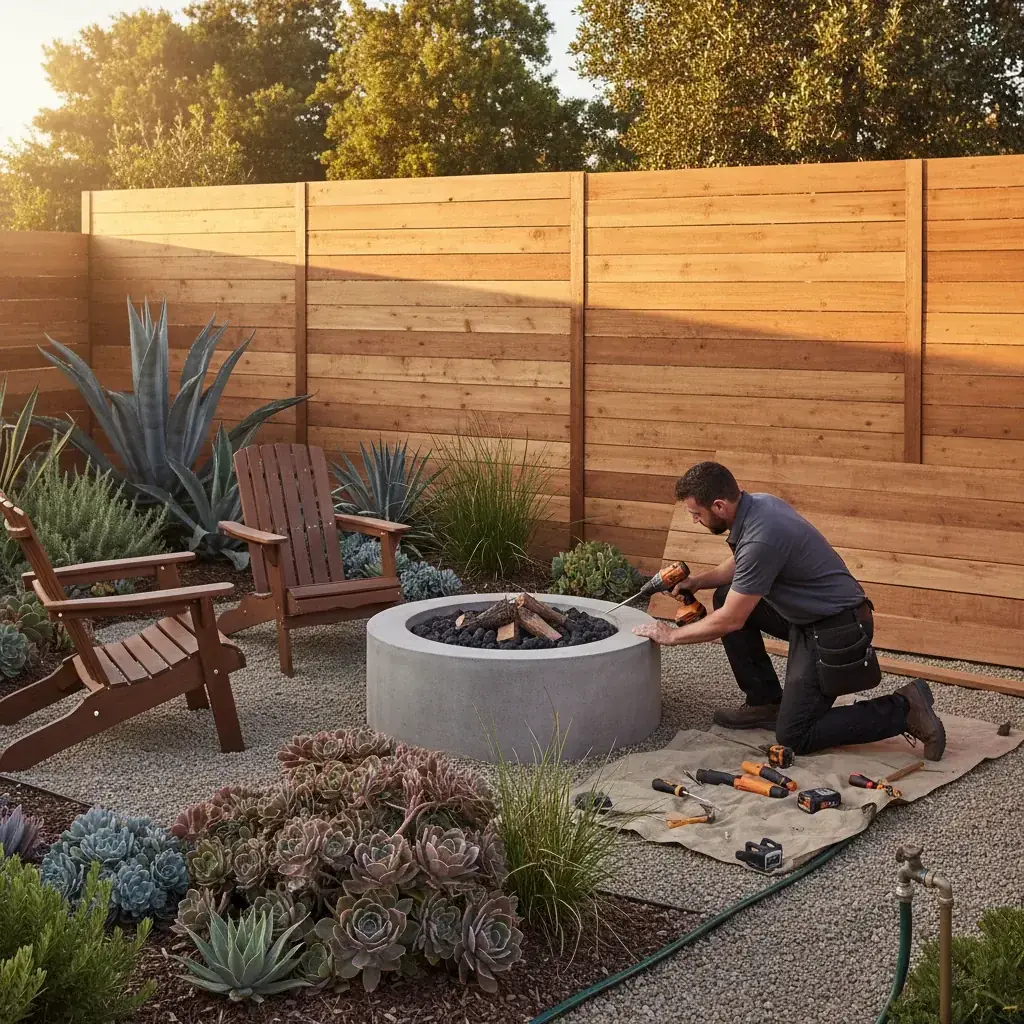
San Diego’s push for water-wise landscaping has transformed our backyards into showcases for succulents, agaves, and native grasses. The right fence doesn’t just enclose this space, it acts as the perfect backdrop. If you’re planning the planting and the fence as one project, it pays to have a landscape crew like Bloom Pro SD design the beds and grading first, then set the fence line around it.
- Modern and linear: The clean, strong lines of a horizontal fence are a stunning complement to the sculptural shapes of drought-tolerant plants. The warm tones of cedar or redwood create a beautiful contrast with the cool greens, blues, and silvers of succulents and aloes. This design creates a serene, resort-like feel perfect for a modern San Diego home. For more on this style, see our guide to horizontal fence design in San Diego.
- Color and contrast: Don’t underestimate the power of color. A fence stained a dark charcoal or near-black makes the vibrant colors of kangaroo paw or the stark form of a barrel cactus pop. Conversely, a crisp white vinyl fence can create a bright, clean canvas that makes a garden feel bigger and more open.
- Texture and material: Think beyond standard pickets. A fence with varying board widths adds visual interest. A combination of wood and metal posts can create a sleek, industrial look. The goal is to choose a texture that complements your plantings, smooth and clean for minimalist gardens, or rustic and natural for more wild, meadow-like landscapes.
Mid-century, Spanish, and modern: matching fence to home style
Your fence is an extension of your home’s architecture. A mismatched fence can feel jarring, while a well-chosen one enhances curb appeal and creates a cohesive design.
- Mid-Century Modern (Clairemont, Allied Gardens, University City): This style is all about clean lines, organic materials, and a connection to the outdoors. The horizontal slat fence is the quintessential choice here. It emphasizes the low-slung, linear nature of the homes. Natural cedar or redwood is the perfect material, showcasing the wood’s natural grain and color. Spacing between the boards can be adjusted to provide the desired level of privacy.
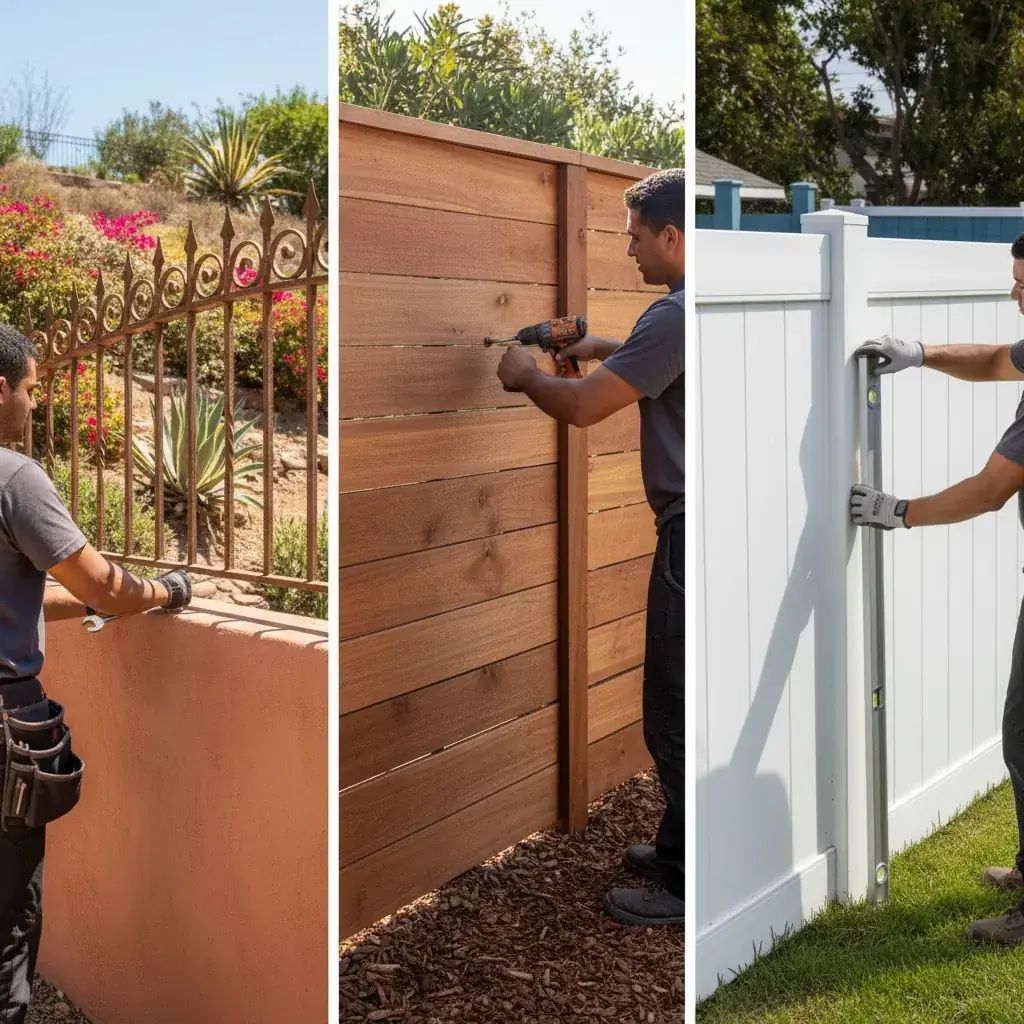
- Spanish & Mediterranean (Kensington, Rancho Santa Fe, La Costa): These homes call for warmth, texture, and a sense of history. A white stucco wall with an arched wooden gate and wrought iron details is the classic look. If a full stucco wall is out of budget, you can achieve a similar feel with a solid wood privacy fence painted white or a warm adobe color, accented with a decorative iron-topped gate or window.
- Modern & Contemporary (North Park, Little Italy, Carmel Valley): Modern homes are defined by bold geometry and a mix of materials. Your fence should reflect this. Consider a dark-stained wood fence with metal posts for a clean, industrial edge. A “picture frame” design, where boards are set inside a trimmed frame, offers a polished, high-end look. Composite fencing is another great option, providing a sleek, uniform appearance with minimal maintenance.
Budget-friendly fence ideas under $5,000
A new fence is a significant investment, but you don’t have to break the bank to get a quality product. With smart choices, a budget of $5,000 can go a long way, especially for a standard-sized San Diego yard. (Note: This figure is an estimate for a straightforward project; costs vary widely with size, terrain, and materials.)
Focus on Materials and Style
- Pressure-Treated Pine: While it doesn’t have the rich color of cedar or redwood, pressure-treated (PT) pine is a durable and cost-effective wood option. It can be stained to achieve a variety of looks and stands up well to insects and rot.
- Classic Dog-Ear Pickets: The simple, classic dog-ear wood privacy fence is one of the most affordable styles to install. The materials are widely available, and the installation process is straightforward for a professional crew, which keeps labor costs down.
- Chain Link with Privacy Slats: For pure function and the lowest cost, it’s hard to beat chain link. While it doesn’t offer the high-end look of wood or vinyl, adding colored PVC privacy slats can significantly improve its appearance and screening ability for a fraction of the cost of other fence types.
Think Strategically About Your Yard
- Fence the important parts: Do you need to fence your entire property, or just the one side that faces your neighbor’s busy patio? Prioritizing the most critical areas for privacy or security can allow you to use a higher-quality material where it counts most.
- Keep it simple: Complex designs, multiple gates, and steep slopes all add to the labor cost. A simple, straight run of fencing on a level lot will always be the most budget-friendly option. Before starting any project, it’s wise to understand the local regulations. You can check the San Diego County zoning and permit rules to see what applies to your property.
Where to splurge and where to save
When you’re working with a budget, knowing where to allocate your funds is critical. Some components of a fence are worth the extra investment, while others offer a chance to save.
Where to Splurge
- Posts and Concrete: Your fence posts are the foundation. They hold everything up and are the most difficult part to replace. Splurge on high-quality, pressure-treated posts rated for ground contact. Ensure they are set deep enough (typically one-third the post’s length) and in a sufficient amount of concrete. This prevents leaning and ensures the long-term stability of your entire fence.
- Hardware: Cheap, electro-plated screws and brackets will rust within a year, especially near the coast. This leads to ugly stains and, eventually, structural failure. Always invest in hot-dip galvanized or, even better, stainless steel hardware. It’s a small upfront cost that prevents major headaches down the road.
- The Gate: Your gate is the only moving part of your fence and gets the most use. A flimsy gate will sag and stop latching properly. Invest in a well-built gate with a steel frame, heavy-duty hinges, and a quality latch.
Where to Save
- Pickets/Infill: The vertical boards or pickets are the “skin” of your fence. You can often save by choosing a slightly lower grade of wood for the pickets. A few more knots won’t impact the fence’s structural integrity, and they are much easier to replace individually than a rotten post.
- Elaborate Design: A custom lattice top or intricate pattern adds significant labor costs. A simple, clean style like a board-on-board or dog-ear privacy fence is just as effective and much more economical. You can always add decorative post caps later for a touch of personality without a big expense.
Frequently asked questions
What is the best fence material for a San Diego backyard?
For most San Diego yards, cedar or redwood with hot-dip galvanized or stainless steel hardware is the top choice. It looks great, holds a stain well, and handles both the marine layer near the coast and the UV exposure inland. Vinyl is a close second for low-maintenance and salt-air resistance, especially within a mile or two of the ocean.
How much does a backyard fence cost in San Diego?
A typical backyard fence in San Diego runs between $3,000 and $8,000 for a standard lot, depending on material, linear footage, and terrain. A simple pressure-treated pine privacy fence sits toward the lower end, while a cedar horizontal slat fence with a framed gate lands in the middle to upper range. Steep slopes or extra gates add to labor costs.
Do I need a permit to install a backyard fence in San Diego?
Most residential fences under six feet tall don’t require a permit in San Diego County, but setbacks, HOA rules, and corner-lot sight-line requirements can apply. It’s worth checking the San Diego County zoning rules before you build, especially if your yard backs up to a canyon or if you’re in a coastal overlay zone.
How long does a wood backyard fence last in San Diego?
A properly installed cedar or redwood fence with quality hardware lasts 15 to 25 years in San Diego’s climate. The main variable is maintenance: re-staining every three to five years extends the life significantly, especially in inland areas where intense UV breaks down wood fibers faster than the coast.
What fence style looks best with San Diego’s drought-tolerant landscaping?
Horizontal slat fences in cedar or redwood pair especially well with succulents, agaves, and native grasses. The clean lines complement the sculptural shapes of water-wise plants, and a dark charcoal stain makes the greenery pop. If you want a full privacy fence that doubles as a design statement, horizontal is the current go-to for San Diego’s outdoor aesthetic.
Is vinyl or wood better for a coastal San Diego backyard?
Vinyl wins on maintenance and salt resistance near the coast. It won’t rust, rot, or need re-staining, and quality vinyl with titanium dioxide holds its color under UV exposure. Wood can work well with the right species and hardware, but it demands more upkeep within a few blocks of the water. For a fence installation in a coastal neighborhood, vinyl is the safer long-term investment.
When to call us
Planning a new backyard fence is exciting, but the installation needs to be done right. Proper post depth, straight lines, and secure gate installation are crucial for a fence that looks great and lasts for decades. If you’re ready to turn your backyard fence ideas into reality, we’re here to help.
Call us at (858) 400-4906 and we’ll match you with a licensed fence pro.