A block wall fence in San Diego is a freestanding concrete-masonry privacy wall, not a stacked garden border. Plain gray CMU, stucco, split-face, and capped runs are different products. California seismic practice and County masonry notes are why the wall needs a poured footing and steel grouted into the cells, which is also why masonry usually bids above wood. Fence Pros San Diego is a referral service. We do not publish 2026 per-foot rates or a lifespan warranty.
What a block wall fence actually is
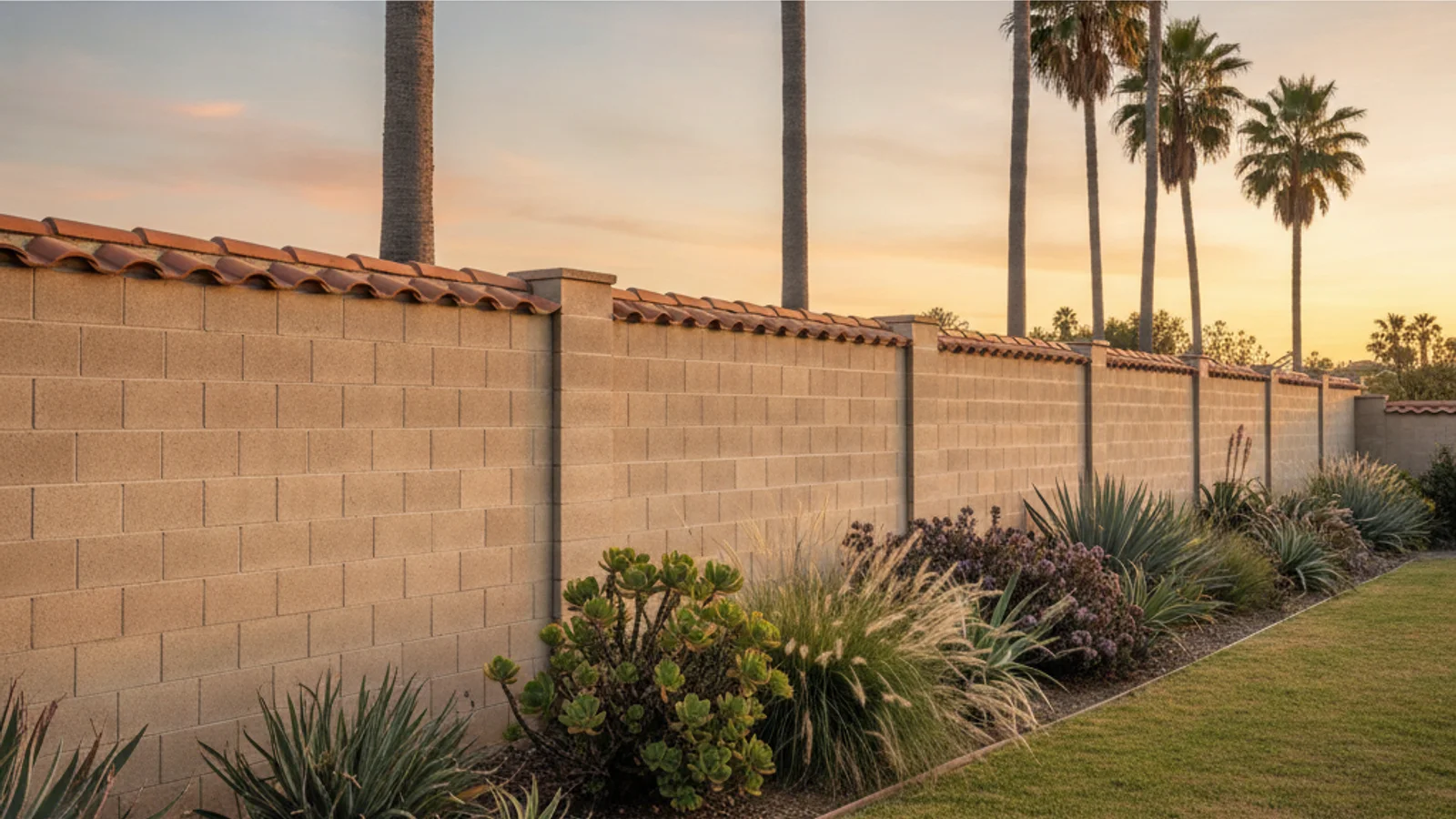
A block wall fence is a freestanding perimeter wall built from concrete masonry units, the gray blocks most people call cinder block. It is common on inland tract lots, hillside property lines, and anywhere a homeowner wants a permanent, low-maintenance barrier that also blocks sound and will not rot or need stain.
A freestanding block wall sits on grade and only has to hold itself up. A retaining wall holds back soil. That is a different structure with heavier engineering and a lower permit trigger. This guide is the freestanding perimeter kind. If the lot has a grade change and you are holding dirt, stop and treat it as a retaining wall.
Residential walls often use 6-by-8-by-16-inch or 8-inch CMU, stacked and mortared, then reinforced. Finish ranges from bare gray block to stucco, split-face or slump texture, or painted precision block. Many San Diego walls get a concrete or clay tile cap so the top course sheds water.
What moves a block-wall bid
Block is a mid-to-premium fence class here. It usually costs more to build than wood or chain link and then needs almost no stain cycle. We are not printing a finish table with dollar bands.
What the contractor should put on paper:
- Wall height and length, and whether the run is straight or stepped
- Block size and finish (plain, stucco, split-face, slump, cap, pilasters)
- Footing width, thickness, and depth
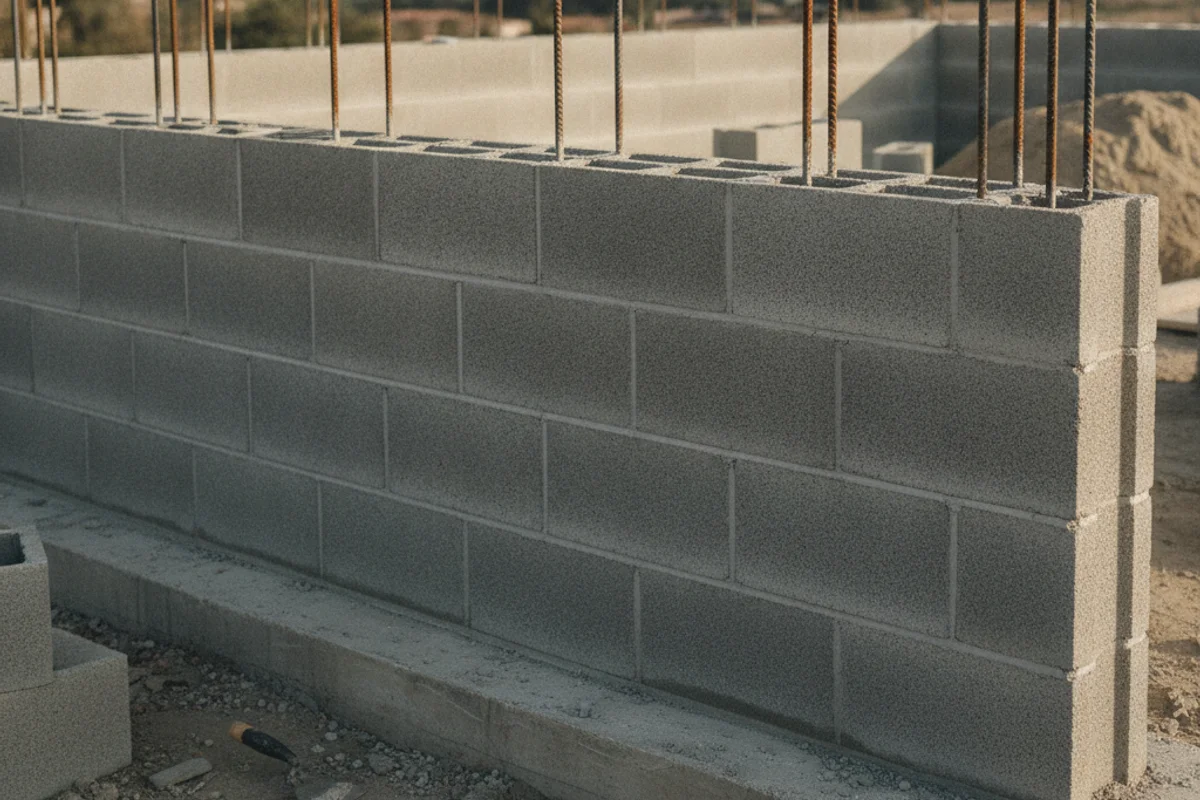
- Vertical and horizontal rebar spacing, grout, and mortar spec
- Soil notes (expansive clay in places like Otay and Rancho Peñasquitos can mean a wider footing)
- Access for a mixer and materials
- Demo of an old fence
- Survey or property-line confirmation before the pour
County of San Diego PDS 070 (Fences) is specific on masonry when that bulletin applies. It calls for ASTM C90 Grade N CMU with all cells grouted solid, the first course set into fresh footing concrete, concrete at least 2500 psi, mortar and grout strength minimums, and deformed reinforcing steel. Table A in that bulletin sizes footing width and vertical steel by wall height (for example an 8-inch block 6-foot wall with a 24-inch-wide footing and #4 vertical bars at 24 inches on center). Those figures are County notes, not a City of San Diego substitute. The city still has its own permit and engineering path. Do not treat this paragraph as a DIY recipe.
For how masonry sits next to wood, vinyl, and metal as a decision, see the 2026 fence cost guide (drivers, not a rate card) and affordable fence options if block is over budget.
Permits and property lines
Masonry is less forgiving than a wood fence if someone skips steel or the survey.
City of San Diego. Table 142-03A: a fence under 7 feet needs no permit from that fence division; 7 feet or greater needs a building permit. A retaining wall 3 feet or greater needs a building permit. Height in required yards is a separate zoning test (see fence height).
Unincorporated County. PDS 070: a building permit is required except for fences and freestanding masonry walls not exceeding 6 feet that comply with zoning. Zoning §6708 in that bulletin: 42 inches in the front or exterior side yard, 72 inches in the rear or interior side yard, unless an exception applies.
Any wall that retains soil is a different permit and usually an engineer’s design. Rules differ in Chula Vista, Escondido, and other cities. Confirm with the jurisdiction on the address. San Diego fence permits walks through who to call.
A block wall is expensive to move. A wall poured a foot onto the neighbor’s side is their wall. Get the line right before the footing.
Block wall vs wood, vinyl, and stucco fences
Block is the heaviest, quietest, least reversible option. It is not the right wall for every yard.
| Fence type | What you are paying for | Best for |
|---|---|---|
| Wood (cedar) | Lower first check, stain cycle, finite life | Warm look, easier small repairs |
| Vinyl | Higher first check than many woods, wash not stain | Low maintenance, no masonry footing |
| Block wall | Footing, steel, grout, finish, permanence | Sound, security, a wall that should outlast a wood run |
Mass is why block blocks noise better than a wood or vinyl panel. It is a poor pick when the budget is tight, when you may move the line later, or when the yard wants wood’s warmth. A common split: block on the street or shared line where sound and permanence pay, wood or vinyl in the back. Compare wood versus vinyl. Street-facing ideas: front yard fence ideas.
Frequently asked questions
How much does a block wall fence cost in San Diego?
There is no published per-foot rate on this site. Finish, height, soil, access, steel, and demo set the bid. Plain gray CMU and a stucco wall with a tile cap are different jobs. Get a written spec for footing and rebar, not a lump sum labeled “block.”
Do you need a permit for a block wall in San Diego?
City of San Diego: building permit at 7 feet and up for a fence, and at 3 feet and up for a retaining wall, per Table 142-03A. County unincorporated: permit except qualifying freestanding masonry walls not over 6 feet. Retaining soil changes the path. Confirm with the jurisdiction.
Is a block wall cheaper than a wood fence?
Usually not on the first invoice. Block carries footing, steel, and finish. Wood needs stain and eventual replacement. We will not invent a lifetime-cost tie. Compare two written scopes.
Why does a block wall cost more in California?
Seismic practice and local masonry bulletins require a footing and grouted rebar so the wall acts as one unit. PDS 070 spells that out for County jobs. Expansive clay can add footing width. That extra work is why the same gray block is not a Midwest stacked-garden price.
Is a block wall the best fence for blocking noise?
A solid, grouted block wall has more mass and fewer gaps than wood or vinyl, so it is the usual choice when road or neighbor noise is the problem. Height and a solid core still have to be built. It is not a magic number of decibels.
When to call us
The parts that matter most, the footing, the steel, and the property line, disappear once the wall is up. A thin footing or short steel is a crack-and-lean job later.
Fence Pros San Diego matches homeowners with independent masonry and privacy fence contractors. We do not mark up the wall, we do not pour it, and we do not “vet” a crew beyond the referral. You compare footing specs and finish on the contractor’s paper. Call (858) 400-4906 with length, height, and finish in mind.