Blotchy fence stain can make a sound fence look unfinished or neglected. The pattern matters because dark boards, pale patches, and shiny areas can each point an inspector toward a different question.
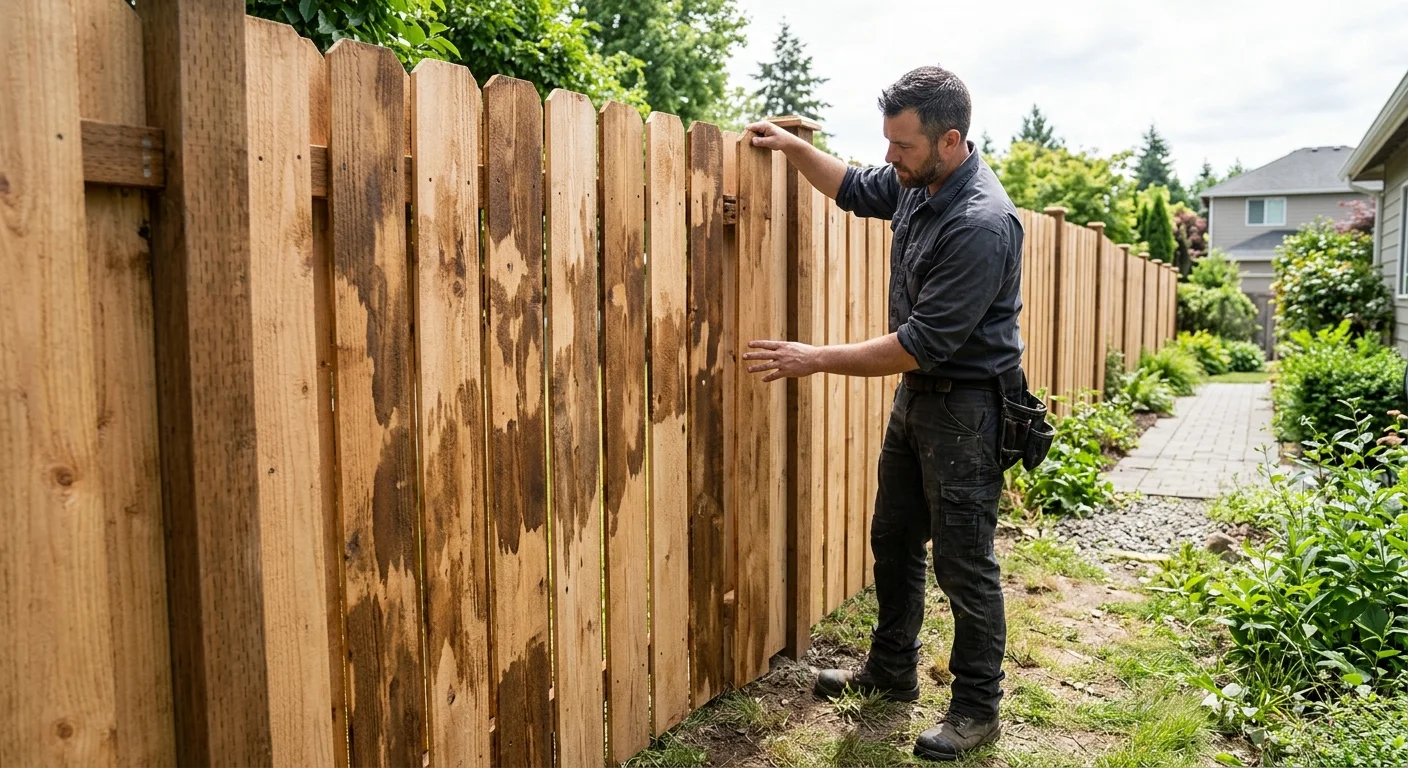
A second coat may change the color without resolving the cause. A fence pro should first inspect the wood, earlier finishes, repairs, and exposure across the full fence line.
What uneven color can reveal about the surface condition
Uneven fence stain is a visible symptom, not a complete diagnosis. A pro starts by mapping the pattern before recommending any refinishing work.
Dark areas may follow certain boards, isolated patches, or the lower fence line. Pale areas may appear around knots, fasteners, board ends, or repaired sections. A glossy patch beside a dull patch also deserves attention. Each pattern gives the inspector a place to begin.
The pro should compare the problem areas with sections that look consistent. That comparison may show whether the issue follows the wood, the earlier coating, or the way the fence faces. A sharp edge between two colors suggests a different question than a gradual fade.
Surface texture matters too. The inspector can look for fuzzy grain, smooth sealed areas, raised fibers, and residue. They should also note cracks, loose boards, open joints, and damaged board ends. These conditions may change the proposed scope even when the main complaint is color.
Moisture near irrigation, sprinklers, planters, or soil should be documented rather than guessed about. So should shaded sections and areas receiving direct exposure. An ocean-facing fence in Encinitas calls for a different exposure discussion than an enclosed fence in El Cajon.
Photos help connect each observation to a location. The goal isn’t to label every dark spot from a distance. It’s to identify which conditions need closer inspection before fence staining and sealing begins.
How old coatings, patched boards, and exposure affect appearance
A fence rarely presents one perfectly uniform surface. Boards may come from different repair periods. Some areas may carry an older finish, while others may be bare or recently patched.
A pro should identify those transitions. They can look along board edges, behind rails, beneath caps, and near gate frames. These areas may preserve clues that aren’t obvious from the street-facing side.
Earlier paint or stain also belongs in the diagnosis. The inspector should determine what remains, where it remains, and whether it appears tightly attached. A surface can look bare from several feet away while still holding coating in its grain or sheltered areas.
Replacement boards need separate attention. A patched section may differ in color, texture, preparation, or weather exposure. Matching it visually may require a different plan from simply covering the entire fence again.
Exposure patterns can vary within one San Diego County yard. A fence near I-5 may have one set of site conditions, while an inland yard in Santee has another. Even within the same property, buildings, trees, slopes, and irrigation can divide a fence into distinct zones.
The inspector should record those zones instead of treating every panel alike. That creates a clearer basis for the work proposal.
Homeowners comparing finish options can review this guide to fence stain types. The final product choice should follow the inspection, existing coating review, and surface assessment.
Why another coat may not address the underlying problem
Adding more stain is tempting when the fence looks patchy. It may darken pale areas, but color alone doesn’t explain what sits beneath the finish.
A second application could interact differently across bare wood, coated patches, and replacement boards. That’s why a pro should test assumptions before proposing another full coat. The inspection should separate an appearance issue from a preparation or repair issue.
The stain’s current condition matters. A pro can note whether it looks dull, shiny, streaked, cloudy, or uneven around board edges. They can also check whether the pattern appears only on the surface or follows damaged wood.
Loose boards, split ends, unstable rails, and failing posts change the conversation. Refinishing a section that first needs structural attention may leave the underlying problem untouched. In that case, fence repair and restoration should be evaluated before the finish work.
Existing paint creates another decision point. Switching between paint and stain shouldn’t be treated as a simple color change. The remaining coating and desired appearance need to be discussed first. Our guide to painting versus staining a San Diego fence explains the questions behind that choice.
A careful proposal may recommend a small sample area before settling on the wider appearance plan. The sample location, preparation, and intended finish should be documented. It’s a checkpoint, not a promise that every board will become identical.
The useful question isn’t how quickly another coat can be added. It’s whether the proposed work addresses the conditions visible across the fence.
What a fence pro should inspect before refinishing
The inspection should cover the full fence, not only the most visible blotch. A useful walk-through follows the color pattern, structural condition, surrounding site, and earlier finish.
The pro should examine both faces when access allows. One side may reveal coating edges, moisture contact, overspray, or repairs hidden from the other. Gates, posts, rails, caps, and board ends deserve separate notes.
The surface review should identify areas that look bare, sealed, painted, patched, rough, or unusually smooth. The inspector should ask what products were previously applied if the homeowner knows. Unknown product history should be marked as unknown.
The fence itself also needs attention. The pro should look for leaning sections, movement, loose fasteners, damaged boards, and weakened connections. Those findings help determine whether refinishing can stand alone or should follow repair work.
Site details belong in the record. Irrigation direction, nearby planting, soil contact, shade, and access can all shape the work discussion. The inspector should note where conditions change along the fence line rather than assigning one explanation to the entire yard.
Photos should show wide views and close details. Each image should connect to a panel, gate, or boundary section. That makes it easier to compare the inspection with the proposed scope.
Homeowners should also confirm who will perform the work. Fence Pros San Diego is a referral service that matches customers with licensed, independent local fence professionals. You can check a contractor through the California Contractors State License Board before signing an agreement.
Which details belong in a staining proposal
A staining proposal should reflect what the pro observed. A vague promise to make the fence look better doesn’t define the work or explain how uneven areas will be handled.
The proposal should identify the fence sections included. It should distinguish full panels from gates, posts, caps, rails, and repaired areas. Excluded surfaces should also be clear.
Preparation needs its own description. The document should state how the contractor plans to address dirt, loose coating, rough areas, and transitions between old and replacement boards. If different sections need different preparation, that distinction belongs in writing.
The proposed finish should be named clearly. The homeowner should know whether the appearance goal is transparent, semi-transparent, or more opaque. Color names alone may not describe how much wood variation will remain visible.
Any test area should have a stated purpose. The proposal can identify where it will be placed and what decision follows the review. If patched boards may remain visually different, the contractor should discuss that possibility before wider application.
Repair work should be separated from finish work. The document should identify boards, rails, posts, or hardware included in the scope. It should also explain which repairs aren’t included.
Access and protection details matter as well. Gates, neighboring property, plants, walls, paving, and nearby fixtures may affect the plan. Those conditions should be discussed during the site visit.
Finally, confirm who supplies the product and who performs each part of the job. Fence Pros San Diego doesn’t perform the work or set contractor prices. The homeowner contracts with and pays the independent fence professional directly.
When to call us
Call when blotchy stain appears beside damaged boards, loose sections, old coatings, or unexplained surface changes. A licensed fence pro can inspect the fence and propose the appropriate repair or refinishing scope.
Call us at (858) 400-4906 and we’ll connect you with a licensed fence contractor.