Cedar is one of the strongest wood fence choices for San Diego, but it needs a real maintenance plan, and service life varies sharply by location. Coastal yards take salt air and moisture. Inland yards in Poway and Escondido take UV. Cedar usually bids above pressure-treated pine. Fence Pros San Diego is a referral service. We do not publish a 12-to-25-year warranty, a 40-to-75-percent markup, or an installed rate. Dimensional stability and natural rot resistance still make cedar the usual long-term pick versus pine for most properties.
Why cedar is the default choice for San Diego wood fences
When people say cedar for a San Diego fence, they usually mean Western Red Cedar. The species brings outdoor attributes that fit this climate. Fence Pros San Diego does not install it.
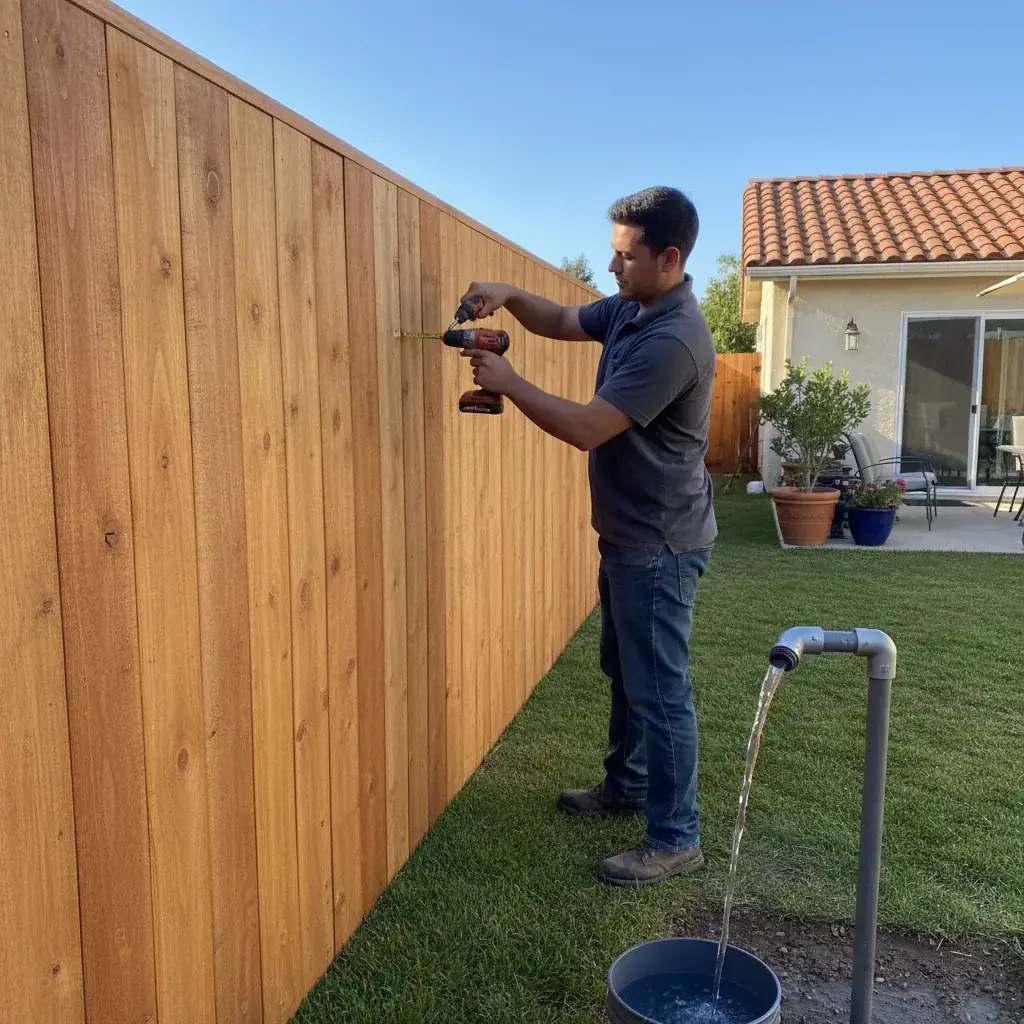
First and foremost is its stunning natural beauty. New cedar boards display a rich spectrum of colors, from light ambers and reds to deep browns. The straight, tight grain gives it a refined look that complements a wide range of architectural styles, from Craftsman homes in North Park to modern designs in Encinitas. This aesthetic appeal alone is a major selling point, providing an immediate upgrade to curb appeal and backyard ambiance.
Beyond its appearance, cedar’s biggest advantage is its dimensional stability. Wood breathes, it expands and contracts with changes in temperature and humidity. Cedar, however, has a very low shrinkage factor. This means it’s far less likely to warp, twist, or cup than other woods. In San Diego County, where we can have dry Santa Ana winds one week and a damp marine layer the next, this stability is critical for keeping your fence straight and true over the years.
The secret to its longevity lies in its natural oils, called tannins. These oils are a built-in defense system, making the wood inherently resistant to two of a fence’s worst enemies: insects and decay. Termites, carpenter ants, and other wood-boring pests find cedar unappealing. The same oils prevent the growth of fungi that cause rot. This natural resistance means cedar doesn’t require the chemical pressure-treatment that woods like pine need to survive outdoors, making it a more natural choice. This combination of beauty and stability is why cedar is the usual material on wood fence referrals. The independent contractor still has to specify grade, posts, and fasteners.
How long a cedar fence actually lasts here (coastal vs inland)
The question homeowners ask most often is how long a cedar fence will last. Generic year counts are not a warranty. In San Diego County the real answer depends on where you live and how you care for it. Our local microclimates create two different environments for wood.
Coastal San Diego (La Jolla, Del Mar, Coronado, Oceanside)
Along the coast, your fence’s primary enemy is the combination of salt and moisture. The salty marine layer that rolls in each evening deposits corrosive salt particles on every surface. This salt accelerates the breakdown of wood fibers and is especially hard on metal fasteners like nails and screws, leading to rust streaks and structural weakness if not addressed.
The persistent dampness also creates a perfect environment for mildew and algae to grow, which can give the wood a blotchy, dark appearance. While cedar is rot-resistant, constant exposure to moisture without the chance to fully dry can eventually take its toll, particularly at the base of the posts where they meet the ground.
With regular cleaning and sealing, a coastal cedar fence can serve for a long time. If it is left to weather with no finish, fasteners fail sooner and boards degrade faster. We do not publish a 12-to-18-year coastal warranty.
Inland San Diego (Poway, Escondido, Rancho Bernardo, El Cajon)
Head east of the I-15, and the challenges change completely. Here, the biggest threat is the relentless sun. The intense UV radiation is incredibly destructive to wood. It breaks down the wood’s lignin, which is the glue that holds the wood fibers together. This is what causes the wood to lose its color and turn that familiar silvery-gray.
This graying isn’t just a cosmetic issue; it’s a sign that the wood’s surface is deteriorating and becoming more susceptible to moisture intrusion when it does rain. The high heat and low humidity of our inland summers also pulls the natural oils out of the wood, causing it to dry out, shrink, and develop cracks or splinters.
Because there is less moisture, rot is less of a concern than at the coast. A UV-protecting stain and sealer, recast when the wood stops shedding water, is the inland plan. We do not publish an 18-to-25-year inland warranty. The work is replenishing oils and shielding the surface from sun.
The main drawbacks: maintenance needs and upfront cost
For all its benefits, a cedar fence isn’t without its downsides. The two most significant factors that give homeowners pause are the upfront investment and the ongoing commitment to maintenance. It’s crucial to understand both before making a decision.
First, cost. Cedar is a premium fencing material. Compared with pressure-treated pine, a cedar fence typically bids higher for materials and installation. The gap belongs on two quotes, not on a 40-75% rule. It is often in the same class as, or slightly below, high-grade redwood. You are paying for appearance, natural durability, and boards that move less after a hot summer. That is not a Fence Pros price.
The second drawback is maintenance. A cedar fence is not a set-and-forget product. To keep service life and color, you need a care routine. If you skip it, the fence will gray and show wear sooner. That gray is not a year warranty either.
Proper cedar fence maintenance involves a few key steps:
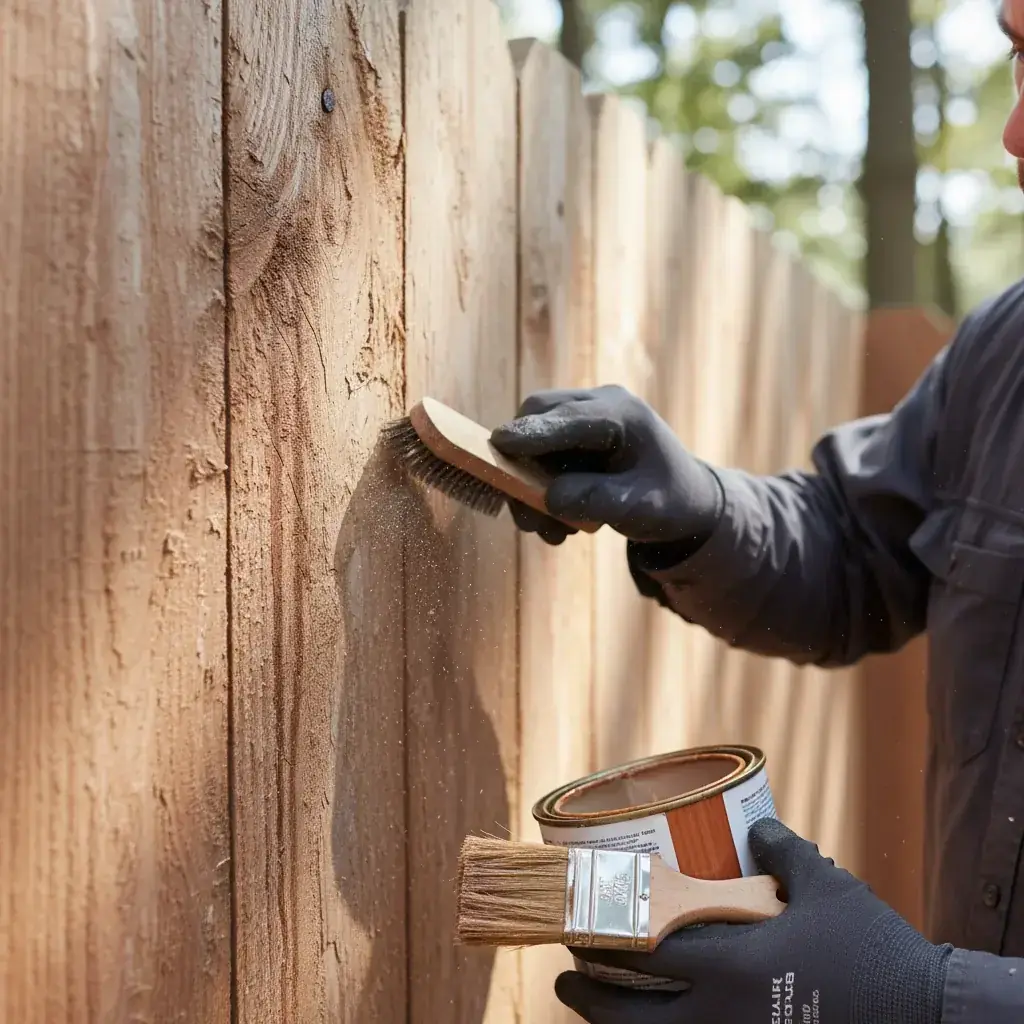
- Annual Cleaning: Gently wash the fence with a dedicated wood cleaner to remove surface dirt, pollen, mildew, and any graying wood fibers. This preps the surface for a new coat of stain or sealer.
- Staining and Sealing: This is the most critical step. A quality stain provides color and UV protection. A sealer sheds water. The two are often combined. The question isn’t if you need to do it, but rather how often to stain a fence in San Diego for that product and exposure. Recast when water stops beading. We do not publish a 2-to-4-year warranty interval.
While some homeowners enjoy the silvery, weathered look of untreated cedar, it’s important to know that this “patina” is a sign of the wood being unprotected. An unstained fence will have a shorter lifespan than a well-maintained one.
Cedar vs other wood options like redwood and pine
While cedar is often the default, it’s not the only wood in the game. Understanding how it stacks up against the other two common choices in San Diego, redwood and pressure-treated pine, can help confirm if it’s the right material for you.
Cedar vs. Redwood
Redwood is cedar’s closest competitor and, in many ways, its sibling in the premium wood category.
- Similarities: Both are lightweight yet strong, dimensionally stable, and contain natural tannins that resist insects and rot. They are both considered top-tier choices for high-end fencing.
- Differences: Redwood, as the name implies, has a richer, more consistently red tone. Some higher grades of redwood can have slightly more tannins, offering a marginal edge in decay resistance. The biggest difference is typically cost and availability. Redwood is often more expensive than cedar, and certain grades can be harder to source.
- The Verdict: For most projects in San Diego, cedar offers nearly identical performance to redwood at a more accessible price point. The choice often comes down to budget and a slight preference for color.
Cedar vs. Pressure-Treated (PT) Pine
This is a comparison of two completely different philosophies. PT pine is all about function and budget.
- Similarities: They can both be used to build a sturdy privacy fence. That’s about it.
- Differences: PT pine is a softer wood that has been chemically treated to resist rot and insects. This treatment gives it a tell-tale greenish hue and a waxy feel. It is significantly less expensive than cedar. However, it is highly unstable. As PT pine dries over the first year, it is very prone to severe warping, cracking, shrinking, and twisting. It lacks the aesthetic warmth and premium feel of cedar entirely.
- The Verdict: If your absolute top priority is the lowest possible upfront cost, PT pine is an option. However, for homeowners who value aesthetics and stability, cedar is a far superior investment that will look better and hold its shape for years to come.
For a deeper dive into these and other materials, you can read our complete guide on choosing the best wood for a fence in San Diego. Ultimately, cedar strikes a fantastic balance, offering the natural beauty and stability of a premium wood without the top-of-the-market cost of redwood.
Frequently asked questions
How long does a cedar fence last in San Diego?
A cedar fence lasts longer with stain and fastener spec than it does left bare. Coastal yards in La Jolla or Oceanside take salt and moisture, so fasteners and finishes fail sooner if they are ignored. Inland yards in Poway, Escondido, or Rancho Bernardo take UV, so a UV-blocking stain matters. There is no 12-to-25-year warranty on this page.
How much does a cedar fence cost compared to other wood options?
Cedar typically bids above pressure-treated pine. It is usually at or slightly below high-grade redwood. Fence Pros San Diego does not publish a percent markup. Compare species, grade, posts, and hardware on the same footage.
Does a cedar fence need to be stained or sealed in San Diego?
Yes. Without stain or sealer, cedar will gray and degrade faster, especially under inland UV or coastal salt. Coastal fences usually need attention more often than inland ones. A combined stain-and-sealer product handles UV and moisture in one coat when the independent contractor specifies it. Recast when water stops beading.
Is cedar fence good for coastal San Diego properties?
Cedar is a solid coastal choice if stainless or hot-dipped galvanized fasteners are specified and the fence is sealed on a real cycle. Natural tannins help against rot and insects in damp air. We do not promise a year count at the post bases.
What’s the difference between cedar and redwood for fencing in San Diego?
Both species are premium, dimensionally stable, and naturally resistant to rot and insects. Redwood tends to have a richer, more uniform red tone and can be marginally more durable in the highest grades, but it’s also typically more expensive and sometimes harder to source locally. For most San Diego wood fence installation projects, cedar delivers nearly identical performance at a more accessible price point.
Do I need a permit for a cedar fence in San Diego?
Permit requirements vary by jurisdiction and fence height. Confirm with the planning department or HOA before anyone starts. An independent fence installation contractor can say what they will pull. Fence Pros San Diego does not pull permits.
When to call us
Choosing the species is only part of the job. Service life also depends on posts, fasteners, and grade on the written quote. If you’re considering a new wood fence, we can connect you with an independent professional who quotes your lot. They set price, schedule, and any product warranty. We do not employ crews.
Call us at (858) 400-4906 and we’ll connect you with a licensed fence contractor.