Six feet is the usual backyard privacy height in San Diego. That is a zoning and neighborhood pattern, not a single county-wide permit rule. In the City of San Diego, solid fences on the front or street-side property line are generally limited to 3 feet. Unincorporated County front or exterior side yards are limited to 42 inches. A 115923 pool enclosure, if you use one, must be at least 60 inches. Building permits are a separate test: City Table 142-03A starts a building permit at 7 feet; County PDS 070 excepts qualifying fences not over 6 feet.
Confirm the address with planning. Overlays, fire zones, and HOAs change the answer.
Height limits and permit triggers at a glance
Zoning height and building permits are not the same column.
| Location on property | City of San Diego zoning (Municipal Code 142.0310) | Unincorporated County zoning (PDS 070 / ZO §6708) | Building permit |
|---|---|---|---|
| Front / street-side property line, solid fence | 3 ft, with listed exceptions (including some arterial offsets) | 42 in front or exterior side yard | City: fence under 7 ft, no permit from the fence division. County: excepted if not over 6 ft and zoning-compliant. Taller needs a permit. |
| Front / street-side, open fence | Open fences (not standard all-metal chain link) may be up to 6 ft on the property line; height may increase toward the setback to 9 ft. Coastal Overlay: 75% open to light; elsewhere 35%. | Same 42 in front/exterior side yard unless an exception applies | Same permit split as above |
| Side and rear required yards | Up to 9 ft; portion above 6 ft must be open | 72 in rear or interior side yard | Same permit split as above |
| Visibility / sight area | 3 ft | Follow County visibility rules; PDS 070 points to zoning | Taller is not a workaround |
| Isolation pool enclosure (if used) | HSC 115923: 60 in minimum | Same state enclosure rule | Pool work can trigger other permits; 115922 is a two-feature rule when a pool/spa building permit is issued |
| Fence on a retaining wall | Measured per 113.0270(b); combined height still has to fit the yard rules | Combined height still has to fit zoning | City retaining wall 3 ft or greater needs a building permit |
Sources in the job file: City of San Diego Municipal Code Chapter 14, Article 2, Division 3 (including Table 142-03A and §142.0310); County of San Diego PDS 070. Pool enclosure geometry: Health and Safety Code 115923. Two-feature trigger: 115922.
A few traps. In the City, a fence under 7 feet can still be illegal if it is too tall for the yard it sits in. Side and rear fences may reach 9 feet only if everything above 6 feet is open, not solid. Height is measured under §113.0270(b). When a fence sits on a retaining wall, the city measures from the higher grade, so the wall counts.
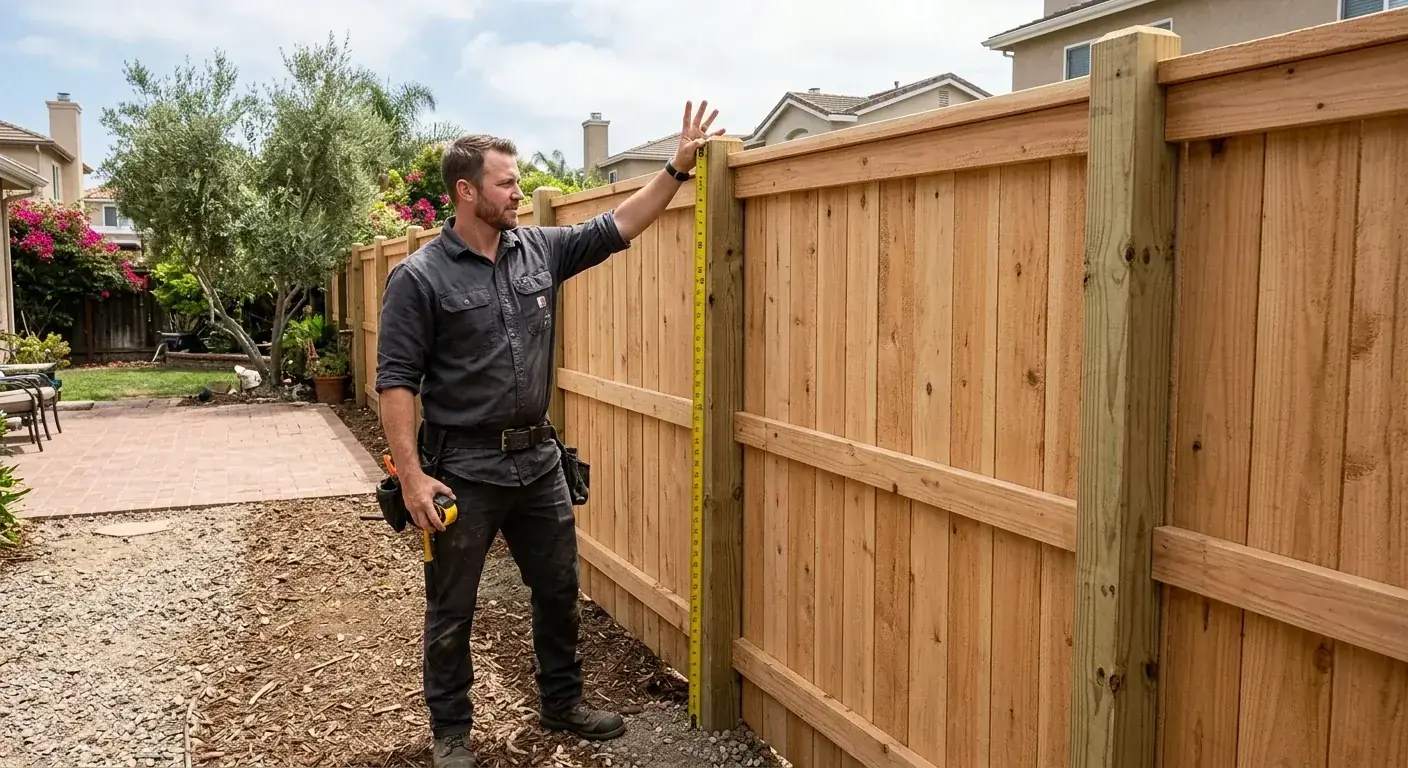
What is the standard fence height in San Diego?
For backyards and interior side yards, 6 feet of solid material is the common build. In the City it is also the height where the open-above-6-feet rule starts. In the County, 72 inches is the rear/interior side zoning cap in PDS 070 unless an exception applies.
For front yards, go lower. The City generally limits solid fences on the front or street-side property line to 3 feet. Open fences can be taller on that line under 142.0310(c)(2). Unincorporated County allows 42 inches in the front or exterior side yard. Those rules keep sightlines open.
The building-permit trigger is not “anything above 6 feet” in the City. Table 142-03A: less than 7 feet, no permit from that division; 7 feet or greater, building permit. The County excepts fences and freestanding masonry walls not exceeding 6 feet that meet zoning. Neither lets you stack extra solid wood on a privacy fence and call it done.
Most fence installation backyard jobs still land at 6 feet because that is the solid privacy ceiling in side and rear yards.
Front yard vs backyard in the City of San Diego
San Diego splits height by yard so streets stay open and corners stay visible.
Solid fence in a required front or street side yard: 3 feet on the property line per 142.0310(c)(1), with a slope-up toward 6 feet at the setback, and a 6-foot exception on some lots that abut a major street, primary arterial, or freeway if offsets are built as the code draws them. Unincorporated County is 42 inches in that front/exterior side yard per PDS 070. Know which desk owns the parcel.
Interior side and rear yards: more room. City: up to 9 feet with the top open. County: 72 inches unless zoning says otherwise. A corner lot’s street-facing side is often treated like a front yard, especially inside a visibility triangle (City: 3 feet).
Building without a required permit, or building over the height limit, can mean a correction notice. Process: San Diego fence permits and permit by city.
Standard picket fence height and front yard options
Picket fences are a common front-yard choice because the face is open. City solid-on-the-line cap is 36 inches; County front/exterior side is 42 inches. Manufacturer “3 to 4 foot picket” kits do not override those numbers. A 4-foot solid picket wall on a City front property line is not automatically legal.
A picket fence taller than the solid front-yard cap needs to qualify as an open fence under 142.0310(c)(2), or it needs a permit path for over-height. In the County front setback you have 42 inches unless an exception applies. Backyard pickets can go to the side/rear cap, but an open picket at 6 feet is not a privacy wall.
The best fence height for privacy from neighbors
For most lots, 6 feet of solid panel is the practical privacy height from a neighbor standing in the next yard. A second-story window or a raised deck will still look over it. Planting or a pergola above the line is a separate code question.
In the City, you cannot add two more feet of solid wood on a 6-foot fence. Height above 6 feet in a required side or rear yard must be open (lattice, spaced slats). That combination can reach 9 feet and, at 7 feet or more, needs a building permit. The County’s 72-inch rear/interior cap is tighter unless you obtain an exception. For solid privacy without that extra process, 6 feet is the usual ceiling.
Solid wood, tongue-and-groove vinyl, or composite make the screen. Independent contractors in the privacy fence network build to the height you and the city agree on. This site does not set posts.
How tall does a fence need to be to contain a large dog?
Height is only part of containment. A 6-foot solid fence is the usual starting point for large dogs because it blocks the view that triggers jumping. Some dogs still climb or jump. Taller solid fencing in the City quickly hits the open-above-6-feet rule and the 7-foot permit trigger. Chain link can be climbed. Diggers need a buried barrier, not just a taller picket.
Design the gate and the bottom gap as carefully as the height. More on layout: dog fences in San Diego.
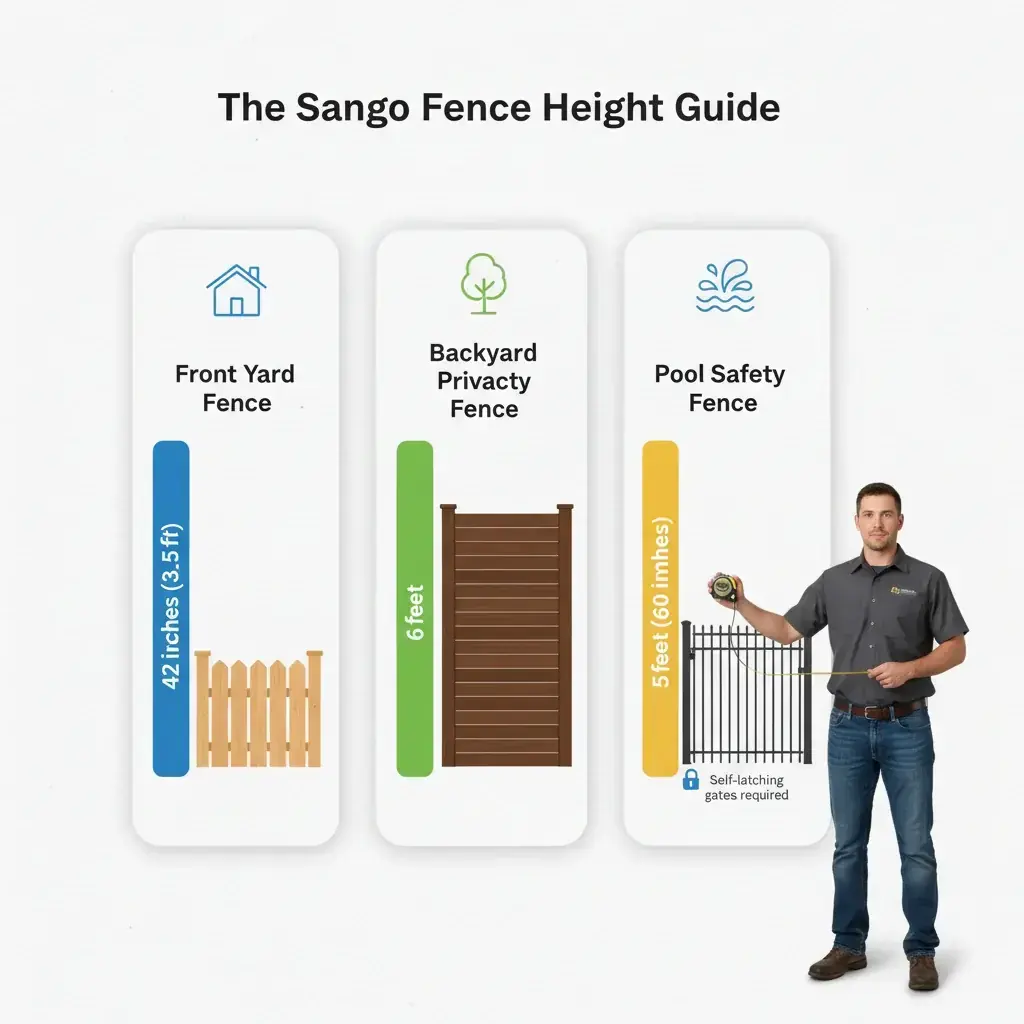
California pool enclosure height (HSC 115923)
If the fence is an isolation enclosure under the Swimming Pool Safety Act, Health and Safety Code 115923 requires all of: gates that open away from the pool and self-close with a latch no lower than 60 inches; minimum height 60 inches; maximum 2 inches from grade to the bottom of the enclosure; no gap that passes a 4-inch sphere; outside face without climbable handholds or footholds for a child under five.
That list is the enclosure. It is not “every pool in California must have a 60-inch fence tomorrow.” 115922 requires at least two of seven drowning-prevention features when a building permit is issued for a new or remodeled private single-family pool or spa. An isolation enclosure is one of those seven. Other options include a qualifying cover, alarms, and door hardware. Some pairs do not count. Full walkthrough: California pool fence code.
Cities may add adopted building-code tests. Always ask the inspector’s checklist. A 54-inch latch is the house-door device in 115922(a)(5), not the enclosure-gate latch.
Frequently asked questions
What is the standard fence height in San Diego?
Six feet of solid fence is the usual side and rear privacy height. City front/street-side solid fences on the property line are generally 3 feet; County front/exterior side yards are 42 inches. Open fences in the City can be taller on the front line if they meet the openness percentages.
What is the maximum fence height allowed in San Diego?
City required side and rear yards: up to 9 feet, open above 6 feet. Outside required yards, 142.0310(e) allows up to 10 feet in many residential zones (12 feet in commercial and industrial), with recreation-court exceptions. County PDS 070: 42 inches front/exterior side, 72 inches rear/interior side, unless zoning exceptions apply. Building permits: City at 7 feet and up; County except qualifying fences not over 6 feet.
What is the standard picket fence height?
Kits are often 3 to 4 feet. Match the kit to the yard rule, not the other way around. City solid front property line is 36 inches. County front/exterior side is 42 inches.
How tall can a fence be in San Diego without a permit?
City of San Diego: a fence under 7 feet needs no permit from the fence division, but it still has to meet height limits for that yard. Unincorporated County: no building permit for qualifying fences and freestanding masonry walls not exceeding 6 feet. Front-yard, visibility, coastal, pool, and retaining-wall rules still apply.
How high does a pool fence have to be in California?
A 115923 enclosure is at least 60 inches high, with the rest of (a) through (e). Shorter on the outside face does not meet (b). 115922 is a separate two-feature rule when its permit trigger is met.
How is fence height measured in San Diego?
City: §113.0270(b). When a fence sits on a retaining wall, measurement uses the higher side, so a short wall plus a 6-foot fence can count as more than 6 feet.
When to call us
Height, permits, pool geometry, and HOA rules stack. The full map is in San Diego fence laws. Fence Pros San Diego matches you with an independent licensed contractor. We do not issue permits. Call (858) 400-4906.